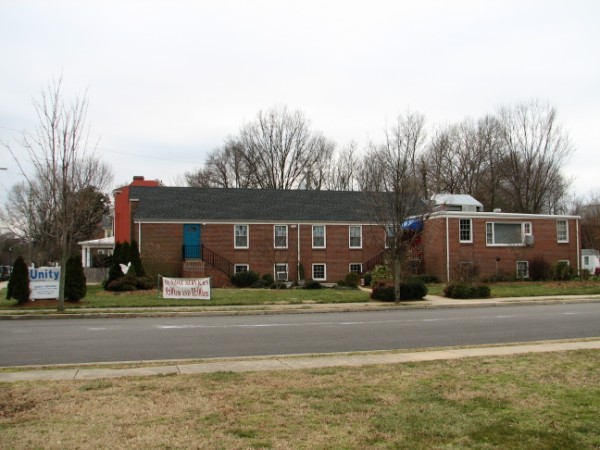
SpiritualMindCenter

Spiritual Mind Center of Richmond

The Spiritual Mind Center of Richmond traces its history to the United Church of Religious Science, founded by Dr. Ernest Shurtleff Holmes. His book, The Science of Mind, was first published in 1926 and is used by congregations as a text that augments meetings. The tradition is currently represented in the Spiritual Mind Center, which describes itself as an “independent Religious Science Community” and which has been present in Richmond since the early 1980’s. According to Pastor Dwight Smith, Holmes’ intentions in creating Science of the Mind were “not necessarily to start a new religion, so much as to get new principles out for people to use in their own churches and everyday life.”

Pastor Dwight Smith and his wife Thelma Smith, are the founders, preachers and facilitators of the Richmond Center. The Spiritual Mind Center encourages an individual’s pursuit of holistic balance: mental, physical, and spiritual harmony with themselves and in their interactions in the world. In explaining the history and tradition of the Spiritual Mind Center, the Smiths credit a divine Creator for “the creation of everything that is,” and explain that “there is a God essence in everything and everyone.” Pastor Dwight Smith states that “Realizing that nothing can be created or destroyed gives us a greater appreciation for everything and everyone, (and in) being ourselves, (in our) divine expression, we can see that nothing opposes God.”

The Center holds religious services on Sundays that emphasize an affirmation of God as creator, revealer, and sustainer of all things known to humanity and beyond human knowledge. The two pastors, both of whom trained as teachers of the Science of the Mind tradition, take turns leading the Sunday service. The average service is attended by a congregation of several dozen members. The congregation is diverse in ethnic and gender composition and consisted primarily of persons seemingly over 35 years of age. Once a week the two teach a class on the elements of Science of the Mind concepts and beliefs.

The atmosphere in the Spiritual Mind Center’s Sunday service is casual, and the majority of the congregation claps casually at the closing of the guitar players’ rendition of familiar songs. A printed program accompanies the Sunday service and provides lyrics for the songs as well as updates about church events. Transitions between the different parts of the service are marked by group and solo singing, silent meditation, or prayer. Some passages from the program are read in unison during the service, such as the Richmond Center’s “Declaration of Principles of Religious Science.” There is a recurring theme in the service and the (quite frequent) vocal interaction between the congregation and the pastors on “the law of cause and effect.” Pastor Thelma Smith explains that “through good works and deeds, good comes back to people” and eventually people can “get a better understanding of what Jesus was trying to preach.” The service is filled with energy as the pastor engages in a speaking, asking, and listening relationship with the congregation. The ending of the service is signified by those in attendance holding hands in a large circle for a prayer and affirmations of the Center’s core beliefs. The service concludes with individuals acknowledging one another’s strengths and insights. At the end of the service visitors also are acknowledged.

Spiritual Mind Center of Richmond
12594 Patterson Ave
Richmond , VA 23238
(804) 784-9830

Sources:
Interview with church pastors

Profile prepared by Daniel Scruggs
May, 2007


Share

RichmondKoreanPresbyterian

RICHMOND KOREAN PRESBYTERIAN CHURCH

In 1967, approximately fifteen Korean individuals met in homes every week and then twice each week to start a Presbyterian congregation. With the passage of an amendment to the Immigration and Nationality Act by the U.S. Congress in 1973 that liberalized immigration quotas, more Korean immigrants began arriving in the U.S. Some of these new citizens settled in Richmond. The congregation then needed a larger space for worship and moved to Union Theological Seminary (UTS) on Brook Road. Visiting pastors at Union Theological Seminary who spoke Korean and/or English led the worship services. The church finally found a full-time pastor, Choon-Duk Suh, in 1974, and he continues to serve as he senior pastor. Richmond Korean Presbyterian continued bi-monthly services at Union Theological Seminary until 1975 when the congregation was allowed to use the Ginter Park Presbyterian Church on Chamberlayne Avenue. Weekly worship services were then possible. Finally, in 1980, the old Saint Andrews Presbyterian Church on Broad Rock Boulevard was purchased. The first phase expansion took place in 1990 when the sanctuary was enlarged and a new wing was developed for more office and education space. In 2005, there was a second phase of expansion that included an education center.

One English and two Korean worship services are held each Sunday morning. The children and youth group meet on Sunday mornings while the Korean young adult or English Ministry (EM) meet in the early afternoon after the entire congregation meets for lunch in the education center. On special occasions the church pays for meals, but on most Sundays a group of two to three families volunteer to cook food and serve the congregation.

Service on Sunday consists of prayer, scripture readings, sermon from the pastors, offerings, choir for adult service, and praise team for the English Ministry and youth group. An early morning service is held Monday through Saturday and a Friday evening prayer service conducted in Korean once a month for all adults. Discipleship programs are long-term commitments consisting of organized Bible study courses that take place on Tuesdays and Thursdays throughout the entire year. The Lord’s Supper and Communion is observed on the first Sunday of every month.

The congregants of the Richmond Korean Presbyterian Church celebrate traditional holidays of Easter, Thanksgiving, and Christmas. The Christmas celebration usually includes a play put on by children and youth, the adult choir performs traditional hymns, the young adult praise team performs, and a special dinner is prepared after the service. In addition to the traditional Christian festivities, the church celebrates Korean Independence Day on August 15 th by singing the Korean National Anthem and making rice cakes for the elderly. Korean Parent’s Day is celebrated On May 8, with floral decorations prepared by children, as well as special songs.

Membership in the church consists of about three hundred and eighty individuals. The average attendance each Sunday is around three hundred and thirty; with the congregation being majority Korean and a handful of non-Korean persons. The church supports a Korean language and culture school on Saturday mornings that has been running since 1975.

The congregation is involved in many outreach programs and ministries. Richmond Korean Presbyterian Church participates in Angel Tree, a non-profit organization that helps children who have an incarcerated parent. Congregants also volunteer for CARITAS (Congregations Around Richmond Involved To Assure Shelter) each year by donating food and supplies for the turkey drive. The church works with Daily Planet, a medical/shelter center for the homeless and lower income families. The congregation is involved in the Habitat for Humanity. Medical mission trips are taken every year. Missionaries have visited Mexico, Nicaragua, and Peru. The youth group is associated with Binneri Presbyterian Church in Dallas, Texas. The two groups raise money for medical mission trips and vacation Bible school. The youth also engages in sporting events with other local Korean youth groups.

Richmond Korean Presbyterian Church
2990 Broad Rock Boulevard
Richmond, VA 23224
(804)-231-6192

Sources:
www.richmondkpc.org

Profile prepared by Joo Yi
May, 2007


Share

TivakIsrael

Tivak Israel

Messianic Judaism emerged as a movement in the 1960s among American Jewish converts to Christianity in the larger context of Hebrew Christianity, which began earlier in the 20 th century. Since the establishment of the first Messianic Judaism synagogue in 1967, tens of thousands have joined congregations in the U.S. A former member of the American Board of Missions to the Jews, Mioshe Rosen, founded Heneni Ministries (Jews for Jesus) in 1973, which is now one of the most well-known of these evangelical Jewish missionary ministries. The movement’s major organization, the Hebrew-Christian Alliance, located in the Chicago area. It is estimated that currently there are about 100,000 Messianic Jews in the U.S. alone, with more joining congregations in Canada, England, Israel, and a number of republics of the former Soviet Union. A vigorous debate occurs over whether Messianic Judaism belongs to the Christian or Jewish faith. One of the main precepts of the tradition is that Jews can reconcile their Jewish culture and faith with Christianity. Their perspective is that Christianity does not conflict with Judaism but completes it. Unlike Christianity, which shares a belief in the savior Yeshua (Jesus in Hebrew), Messianic Judaism is fully Jewish in practice and members of the group identify themselves as a Judaic sect. However, many Jewish Christians are simply members of mainline Christian churches and are only evident through the various independent evangelical Jewish missionary ministries they support.

Tikvat Israel is the first house of worship in the Greater Richmond area to serve the Hebrew-Christian community. The Tikvat Israel worship center on the corner of Grove Avenue and the Boulevard was originally constructed around 1915 as the home of Grace Baptist Church. In the 1940’s, during the Holocaust period, the building experienced a devastating fire. In 1948, the same year that modern Israel became a nation, the Jewish community bought the building and turned it into an Orthodox Jewish synagogue, naming itself Kenneset Beth Israel (the assembly of the house of Israel). Large round stain glass windows with the Star of David were installed. Kenneset Beth Israel remained in the building for thirty years. In the 1970’s Kenneset Beth Israel moved to Patterson Avenue. Since then the building changed hands several times. In December 1990, the building was rented and eventually purchased by Tikvat Israel. Original members of the congregation associate the first services in the building with their own Chanukah miracle – in which four furnace tanks miraculously filled with over 1000 gallons of oil to heat the service.

The main sanctuary seats approximately 500 facing east towards Jerusalem. This is used primarily for Shabbat services on Saturday mornings. There is also a smaller sanctuary used for morning and evening prayers, a bookstore, classrooms, and a library. Another central place for congregation, called the Oneg area, is used for eating. The two adjacent kitchens date to the time when the building was used as an Orthodox Jewish synagogue and reflect the traditional separation of milk and meat products. Tikvat Israel established a subsidiary organization, Russian Immigration Services. The services provided include a food bank, a Russian library, social service needs, legal services, English and citizenship classes.

Tikvat Israel
2715 Grove Avenue
Richmond, VA 23220
(804)-355-5709

Sources:
Rabbi Jamie Cowen
www.tikvatisrael.com

Profile prepared by Julie Philp
February, 2007


Share

SecondPresbyterian


Second Presbyterian Church

The Second Presbyterian Church traces its beginnings from the First Presbyterian Church of Richmond. During the 1800s, the Presbytery membership rapidly grew in Richmond and by 1844 it was decided that a second Presbytery congregation was needed. The Second Presbyterian Church was formed on February 5, 1845. Once the Second Presbyterian Church was officially organized as a separate congregation, members began to meet in the “Lecture Room” which was built on Fifth Street between Franklin and Main Streets.

The Second Presbyterian Church under the direction of its first pastor Reverend Dr. Moses Drury Hoge immediately started plans to build a new church. The Second Presbyterian Church became the first Gothic style church to be built in Richmond. The building committee employed the renowned New York architect, Minard Lafever, a master of the Gothic Revival in America to design the church. and employed the contractors of, A member of Second Presbyterian Church, William McClellan, served as contractor, and George Gibson handled construction of the building.

The Second Presbyterian Church was completed in 1848 and stands as the only Lafever building constructed in the South. This Church was the first gothic building and first gas-lit church in Richmond. It is presently listed in the Virginia Landmarks Register, which calls it the “most beautiful specimen of Gothic (Revival) Architecture in the city.” Additionally, it is listed in the National Registry of Historic Places. The gothic style of the Second Presbyterian Church, located on Fifth Street, stands in stark contrast to the more pervasive classic Greek architecture found in the city of Richmond.

This beautiful gothic style church of the Second Presbytery includes pointed Gothic diamond-paned windows, tall Gothic doors, high cruciform roof, and unique brownstone battlements, distinctive Gothic ironwork along the front of the façade, and a 120 foot bell tower with four stone pinnacles. The church sanctuary includes a hammer-beam ceiling, and all interior woodwork, including the ornate reredos screen behind the pulpit, was painted golden oak.

Additions to the Second Presbyterian Church included the communion table and the Tiffany-made bronze tablets doorways which were added in 1869. The sanctuary transepts were installed in 1873 to create the present cruciform plan, and in the chapel a Tiffany window was installed in 1897. Because cost exceeded budget, the original installation of the church bell was delayed. Finally, in 1995, the bell was installed and was used during the Second Presbyterian Church 150th Anniversary Celebration.

The Second Presbyterian Church aligned with the Confederacy during the Civil War, placing the church in a dangerous but key position. A prominent individual during the Civil War for the Second Presbyterian Church was Moses Hoge. He ministered to the Confederate Congress and to General Lee and was instrumental in acquiring Bibles from England for the church. During one of his visits to England, Hoge had the privilege of preaching to Queen Victoria. As a gift for his services, Hoge was granted his request to take some sprigs of ivy from the Westminster Abbey. This ivy still grows around the building of the Second Presbyterian Church.

The Second Presbyterian Church was the church that Stonewall Jackson attended when he was in Richmond during the war. Stonewall Jackson pew is located in the south gallery, fourth pew from the rear of the sanctuary. It is marked with a small brass plaque. Additionally, during the war the chapel served as a hospital. In 1865, the city of Richmond was burned to keep munitions from falling into the Federalist hands. During the burning of Richmond, one of the munitions piles exploded, causing the church’s stained glass windows to be blown out. The stained glass that could be salvaged after the explosion was stored in the sanctuary attic until the church undertook restoration in 1973. This historic stained glass was reinstalled in the narthex on the Fifth Street side of the church.

Another historic building of the Second Presbyterian Church was the Gibbon-Hoge House, located on the northeast corner of Fifth and Main streets. It was built in 1809 by Major James Gibbon, a celebrated Revolutionary War hero. It became Moses Hoge’s residence during the Civil War. The Gibbon-Hoge House has hosted many famous guests, including the Marquis de Lafayette, Thomas Jefferson, James Madison, James Monroe, Jefferson Davis, Robert E. Lee, Joseph E. Johnston, and Stonewall Jackson. The Gibbon-Hoge House was demolished in 1902, three years after Moses Hoge’s death and the Virginia Building was built in its location.

These unique downtown Richmond buildings have always housed the Second Presbyterian Church. Throughout its history, the Second Presbytery has provided vital social programs to the residents of Richmond. During the twentieth century, the Second Presbyterian Church has been instrumental in founding six other Richmond congregations. Despite strong sentiment among parishioners to relocate into the suburbs during the late 20th century, the Second Presbyterian Church has remained in downtown Richmond.

Second Presbyterian Church of Richmond hosts a large congregation (900 + members), and describes itself as theologically reformed. T he Presbyterian Church of the United States of AmericaBook of Order provides information concerning the PCUSA beliefs.

The congregation consists of primarily middle and upper-middle class families. Most members are of European descent, with a small percentage from different ethnic backgrounds. The congregation is approximately 58 percent female and 42 percent male. The church pastor is Dr. O. Benjamin Sparks and the Associate Pastor is Janet James. They are supported by a large staff, which administers the following programs: music, youth ministries, children’s ministries, daycare, and outreach programs.   

The Second Presbyterian Church of Richmond is a member of the Presbyterian Church of the United States of America (PCUSA), which has headquarters in Louisville, Kentucky. The PCUSA church was formed in the nineteenth century as a result of the disputes issues over slavery, science and modern philosophy within the Presbyterian Church. The PCUSA currently has 2.4 million members, 11,100 congregations, and 14,000 ordained and active ministers.

The content of Sunday services are determined by the local pastor and follow the guidelines of the PCUSA church’s governing body. Sunday service typically includes prayer, music, scripture reading, sermon, sacraments, time for personal response, and community concerns. In addition, Sunday school classes are held each Sunday, and there are evening services held during the week at various locations throughout the community.

According to the Second Presbyterian Church website, “While our name is “Second”… We aim to be FIRST in friendliness and caring, both for our congregation, our visitors, and our community.” The Second Presbytery was the first to open a child care center and the first to provide a prison family service program. Additionally, the Second Presbytery provides internal ministry for its members; these include music, radio, youth and children ministries, educational schools, nursery, and preschool.

The Second Presbytery currently ministers in four downtown Richmond churches and the Salvation Army. The church also provides the homeless with daily meals. Some additional Richmond outreach programs include DCM-Walk-In Ministry, Elder Homes, Homeward, Interfaith Housing Corporation, Public Guardian Project, Habitat for Humanity, and Congregations Around Richmond Involved To Assure Shelter (CARITAS). Finally, the members of the Second Presbyterian Church are supporting international missionaries in foreign countries such as India, Malawi, and Kenya.


Sources:

Second Presbyterian Church website at http://2presrichmond.org/
Presbyterian Church (USA) website at http://www.pcusa.org/

Profile prepared by John Lack
December, 2006
 

Share

ChristadelphiansVideo

This video presents a Christadelphian member discussing
the church’s theological beliefs


Share

UnityChurch

Unity Church History

Unity Church

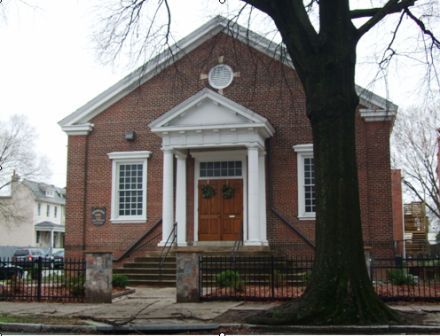
Unity Church of Richmond was established in the early 1960s, initially meeting in various locations, such as the Jefferson Hotel. Since 1994 Unity of Richmond has been at its current Blanton Avenue location, which is a private residence converted into a church. On average the congregation size for the regular Sunday service is 80 to 100 parishioners.

Unity has as co-ministers, Reverend Richard Bunch and his wife Reverend Victoria Bunch. Reverend Victoria Bunch, a former therapist, is a graduate of Virginia Commonwealth University. There are two services each week. On Sunday there is a one hour Sunday Celebration followed by another hour Quest service. On Wednesday evening there is a one hour Silent Meditation service followed by a Guided Meditation service.

Unity of Richmond Church
800 Blanton Avenue
Richmond, VA. 23221
(804) 278-6489
http://www.unityrichmond.org

Sources:

http://www.unityonline.org
Interviews with members

Profile prepared by Norma Montgomery
November, 2006

Share

Chrsitadelphians

Christadelphian Ecclesia
(Video describing Christadelphian beliefs)

The Christadelphians grew out of the Disciples of Christ. John Thomas immigrated to the United States from England in 1832. According to Christadelphian history, when Thomas’ ship encountered a series of dangerous ocean storms, Thomas promised to devote his life to God if he made it safely to America. Upon arriving in New York City, Thomas joined the Disciples, but he left in 1844 over disagreements on biblical doctrines. Thomas re-baptized himself in 1847. He formed a series of groups after 1844 that were dedicated to restoring primitive Christianity and that culminated in the Christadelphians (Bretheren of Christ) around 1848.

The Christadelphians understand their church to be the only true expression of Christianity. They combine Adventist and Unitarian theologies and accept the Bible as inerrant truth. The Christadelphians are non-Trinitarian, believing that Jesus was born to Mary through the power of God (the Holy Spirit) and therefore is the Son of God and not God the Son. They believe in the imminent return of Jesus, who will decide the fate of all those living and dead and will grant immortality to those who have lived righteous lives. Rather than believing that the soul will reside in heaven, Christadelphians believe that humans are mortal and therefore Christ will reign over the Kingdom of God here on earth, most likely centered in Israel. Baptism is required for all new members.
Local congregations are referred to by Christadelphians as ecclesias and are presided over by “serving bretheren” rather than ordained ministers. There is no central authority or hierarchy in Christadelphianism. Serving bretheren are the more mature or senior members, who preside over the church in a rotating fashion. Christadelphians decline public office, military service, and participation in electoral voting.

The Christadelphians do not celebrate religious holidays nor do they practice Christmas because it is not mentioned in the Bible. However they are active in the community through Sunday-School programs and summer camps and are encouraged to do so. They are taught to be tolerant of other religious groups, along with intermingling, but are forbid from participating other religious group’s activities.

John Thomas lived in Richmond during the early days of the church and left an enduring impression on those he spoke to and on the community. He first lived in Richmond in 1846, the year before he founded the church. After two years in England, he returned to Richmond in 1850 and served as a writer for the magazine, Herald of the Kingdom and Age to Come, before moving to New York City. The Christadelphian community in Richmond has sustained 200-250 members since the 1850s with roughly 70-100 attending the chapel on Ellwood Avenue. The ecclesia’s first service was held in May, 1925. Most Christadelphian congregations do not build their own churches; the Richmond ecclesia is an exception, and the debt on the building was retired within its first seven years. The church holds a Sunday school early on Sunday morning followed by a late morning memorial service to remember the death and resurrection of Jesus. During the service, hymns are sung, prayers are given and received, along with a recounting of the message by a senior brother of the community. Following these observances, the community partakes in the bread and wine.

The community is close-knit, and the church this year has organized food and blood drives along with feeding the homeless through the aid of The Freedom House (a local homeless shelter). Along with these contributions, the ecclesia has recently begun a partnership with Big Brothers/Big Sisters of America. The chapel is also a supporting member of the Virginia Christadelphians Youth Camp in Chase City, along with the Williamsburg Christadelphians Foundation, and holds youth camps during the summer months.

Sources:
Christadelphian website
Christian Apologetics and Research Ministry website
British Broadcasting Company website
Christadelphian ecclesia members

Christadelphian Ecclesia
3001 Ellwood Avenue
Richmond, Virginia 23221
(804)-358-7277

Profile prepared by Carson Lucarelli
April, 2009


Share

VictoryTabernacle

Victory Tabernacle Church of God
Musical Presentation at Victory Tabernacle

Victory Tabernacle is a multi-cultural Church of God in Midlothian. The church is part of the Church of God International denomination located in Cleveland Tennessee. The denomination was founded in 1886 and opened its first Bible College in 1918. Control over local churches comes from the centralized leadership of the denomination’s offices. Denominational leaders are approved by the biennial General Assembly, which is comprised of laity and clergy from churches worldwide. The “First Overseer” conducts the general business of the denomination. There are four ranks of the clergy: ordained bishops, ordained ministers, exhorters, and ministers in music and education. In addition to Victory Chapel, the Richmond area has eleven other congregations of the Church of God International.

A priority for Victory Tabernacle and for the Church of God International is fulfilling the Church’s social obligation. In its efforts to return America to Christian values, the church and denomination support Evangelical politicians and work for pro-life and family-friendly-legislation.

The church’s small group program, called “Connecting Points” unites people by common interests rather than by the common method of geography or Bible-study topic. The areas of interest range from classes on apologetics and effective prayer to groups that meet for scrapbooking, NASCAR, fantasy sports and video game tournaments. For those who are interested, the church also provides a program for determining and developing one’s “spiritual gifts;” it is something akin to a personality and aptitude testing for work in churches. A group called “Prime Time” recruits active seniors for volunteer work in the community.

The church has a variety of ministries to help families and individuals in need. In addition to a food pantry, the church has a clothes closet and a counseling ministry, called Walking in Victory, that offers prayer and counseling services to church members as well as the general public. Those seeking marriage, anger-management and addiction counseling, as well as those seeking conflict-resolution services, are evaluated at Walking for Victory; those requiring specialized care are referred to local, licensed therapists.

Victory Tabernacle holds two weekly worship services, one on Sunday morning and the other on Wednesday evening. On Sunday evenings, the church’s classes for religious education meet. On Wednesday night, the church’s youth group holds its own worship service called Fusion. The church also holds services for the Hispanic population of Richmond. The pastor for this group is Juan Carlos, who began serving at the church with his wife Maria Rocca in 2004.

Victory Tabernacle Church-God
13501 East Boundary Road
Midlothian, VA 23112
(804)-744-8881

Sources:
Church of God website
Victory Tabernacle website

Profile prepared by Christine Woodman
January, 2009


Share

ChurchOfTheLivingGod


Church of the Living God
(Video of a Praise Break)

The Church of the Living God originated in a vision that its founder, Rev. Stephen K. Gyermeh, reported receiving in 1982. Gyermeh, a native of Ghana, had preached the Gospel since he was sixteen years of age and pioneered several churches. According to Gyermeh, God spoke to him in 1982, stating that he should “Postpone all of your scheduled meetings and wait on me for further directions.” Gyermeh then spent the next 21 days praying and fasting as he awaited instructions. Gyermeh reports that he then had a vision in which he walked with Jesus and the disciples and was led into a sea filled with drowning people. Jesus stated, “All these are my people perishing, but they don’t know what to do to save themselves. Go and show them how it’s done…” The following year Gyermeh established the Church of the Living God with just fifteen converts and no place of worship. The Church of the Living God is now headquartered in Hyattesville, Maryland, has over 1,500 members, and has established eleven additional congregations in the U.S. Members come from both African and non-African nations, such as Venezuela, Panama, and the Dominican Republic. Gyermeh refers to the Church of the Living God as an “all-nations church.”

The Church of the Living God Richmond is one of eleven branches that have been established through out the United States as full gospel churches. It was first established on October 5, 1997 as a Bible study group and then evolved into church. Members met for a number of years in rented facilities such as the Holiday Inn and Maude Trevette Elementary School until the current church was established in 2007.

The Church of the Living God in Richmond states that its primary mission is to bring different groups of people together to worship and learn about the Bible. The church is working towards the goal of being an international place of worship in the Richmond area, and the majority of the 120 members who make up the congregation currently are immigrants from African nations, such asGhana, Nigeria, and Liberia. There are also African American members.

The Church of the Living God Richmond holds two Sunday worship services, an early morning and noon service. Between these two services the church offers new membership classes, which focus on teaching new members about the history and mission of the church, and a foundation class, which caters to the individual who have never been to church and are not religious. There is also a Sunday School Program, which provides a setting for the congregation to learn more about the Bible and to ask questions, and a Family and Marriage Class, which offers education about marriage and commitment as well as assistance to already married couples.

The Church of the Living God supports several programs that reach out to the community in various ways. There is a Holy Communion every month and feast day celebrations. The annual Anniversary Program features a revival and fundraising. The annual Picnic of Celebration and Teaching is held each summer to bring the general community together and offer information about the church. There is also a prison ministry that provides gospel service in the prisons, and a Virginia Commonwealth University Bible study group, New Generation for Christ.

Church of the Living God Richmond
1 Brenton Street
Richmond, VA 23222
(804)-553-8200

Sources:
Church of the Living God Richmond representative|
Church of the Living God Richmond website
“African missionaries to the U.S.” Christian Century, August 13, 1997

Profile prepared by Salem Mengistu
May, 2009


Share