RichmondFriendsMeeting
Richmond Friends Meeting
 (Brief Quaker History by Richmond Friends)
The Richmond Friends Meeting was established in 1795. The first Meeting House was erected at 19 th and Cary Streets in 1798, making it the second oldest church of any denomination in Richmond. The Meeting House was built by a member of the congregation, George Winston, who was a brick maker and builder. Winston patiently waited until 1816 before he received payment in full for the building. Reflecting Quaker values, Winston’s business practices were somewhat unique in that he did not make use of slave labor; instead, he hired and trained free blacks as his apprentices in the trade. He was also trustee of the Gravely Hill School for blacks. The Meeting House built by Winston was in use until 1862 when it was occupied by Confederate soldiers. For the next century, the Richmond Friends Meeting struggled to find a permanent home. The year 1867-1868 was spent at Springfield Hall at 16 th and M Streets, and then the Meeting moved to Foushee and Clay Streets where it remained for roughly 40 years. In 1909 the Richmond Friends Meeting was forced to move, and for the next twenty years met in the YMCA on Franklin Street. In 1929, the Richmond Friends Meeting purchased a building at 1804 Park Avenue, but soon found it to be too small for their needs. During World War II, meetings were held at Covenant Presbyterian Church. Between 1945 and 1953 Richmond Friends Meeting met at Tabernacle Baptist Church and again at the YMCA. In 1953 Richmond Friends Meeting once again secured property, this time at 2702 Grove Avenue; however, the building was sold in 1957 when the size of the membership exceeded fire code regulations. Finally, in 1957 a church building at 4500 Kensington Avenue was purchased from Colonial Place Christian Church. In 2004 the building was renovated and expanded to accommodate an educational building.
 A typical Quaker service is largely silent. When moved by the Spirit, members may rise and speak words, simply and briefly, such as they are inspired. Richmond Friends Meeting holds services on Sunday mornings (known as First Days), with a twenty-minute session for singing in between. Nursery child care and “ First Day School” are offered for children, and a potluck lunch is held following the Meeting each fourth First Day. Richmond Friends Meeting is also the primary caretaker of The Clearing, a meditative retreat center located on a wooded site in Amelia, Virginia.
Quakers have historically supported a variety of causes, including racial equality and peace. The Richmond Friends Meeting has a long history of supporting both causes. Before the Richmond Friends Meeting was officially established, Richmond-area Quakers (many commuting to White Oak Swamp Meeting in Henrico) established the Virginia Abolition Society in 1790. The first president was Robert Pleasants, who was able to secure the freedom of over ten thousand slaves during his lifetime through various lobbying endeavors, petitions, and court battles. Pleasants Park in Oregon Hill is named for this remarkable figure. His son, James (a maternal cousin of Thomas Jefferson), later served as Governor of Virginia, 1822-1825, and was a staunch supporter of the rights of free blacks. The Society’s goal was the gradual abolition of slavery through both legislation and emancipation. The Society educated free and enslaved African Americans alike in the Virginia tradition of equality and belief that all men have inherent rights of freedom (a belief seldom applied to blacks by others who embraced it). In 1802, the Society of Friends in Virginia sent a Petition Against Slavery to the Virginia legislature. Among its signatories was Samuel Parsons, a prominent Richmond Quaker. In 1871, in response to the massive casualties of the Civil War, Richmond Friends Meeting sponsored and raised initial funding for the Friends Asylum for Colored Orphans (founded by a former slave). Today the organization is known as the Friends Association for Children and has expanded its original mission to provide family and child services to all of Richmond, including child care and career training. The organization is one of only seven Richmond organizations accredited by the Council on Accreditation. Just after the Civil War, Richmond Friends Meeting member Sarah Smiley, along with other Quaker women, established a school for newly freed African Americans, both children and adults. She was also insistent that it was not enough to simply educate and minister to African Americans, but that Quakers ought to share their houses of worship with African Americans as well.
As an historic peace church, the Richmond Friends Meeting affirmed a pacifist stance early during in the War of 1812. Most, but not all Quakers, were conscientious objectors to the Civil War (three members who chose to fight were amiably dismissed from the Meeting). During the first World War, Richmond Friends Meeting distributed peace literature in schools and sponsored a 1916 essay contest for schoolchildren on the subject “Why We Do Not Need a Large Increase in Our Army and Navy.” Relief money was sent to Belgians, English, Armenians, French, and Germans between 1914 and 1920. In 1916 Richmond Friends Meeting wrote letters to Congress and took out ads in newspapers opposing the war. In anticipation of World War II, RFM member Hoge Ricks met with draft-eligible Friends in 1940 to prepare them for the requisite testimony to attain conscientious objector status. Richmond Friends Meeting was opposed to the Selective Service Act of 1948. Several members served in Civilian Public Service Camps rather than take up arms. The Friends hosted the Vietnam Summer Project in 1967, a statewide program opposing the Vietnam War. The Richmond Friends Meeting has continued to oppose war, as well as the death penalty.
Like many religious groups, the Quakers have found the issue of homosexual marriage a divisive one. The Richmond Friends Meeting has declared its opposition to the policy of the Friends United Meeting, which supports the definition of marriage as a relationship between a man and a woman. Richmond Friends Meeting remains in dialogue and communion with Friends United Meeting while fervently rejecting its stance on homosexuality. Richmond Friends Meeting has also written letters to legislators and the Richmond Times-Dispatch opposing recent legislative curtailment of the rights of homosexuals.
Sources:
http://www.richmondfriends.org; http://www.friendsassn.org; http://www.theclearing.net;
Tang, Joyce. “Enslaved African Rebellions in Virginia”. Journal of Black Studies, Vol. 27, No. 5. (May, 1997), p. 608
Profile prepared by Emile Stevenson
November, 2006

Brazilian.English
Brazilian (Seventh-Day Adventist) Community Church(videooftheBrazilian SDA Choir)
The Brazilian Community Church was established by Pastor Samuel Ramos in 1998. He and his family moved from Andrews University in Michigan to build a Brazilian Seventh-Day Adventist church in Richmond where there is a Brazilian and/or Portuguese speaking population. The church initially was a small group of approximately forty members that had their Saturday meetings at the Meadowbridge Seventh-Day Adventist church and their Wednesday meetings in the basement of the Pastor’s house. The group purchased a church located on Bethlehem Road in October, 2000 with about three acres of land and a capacity of two hundred and fifty parishoners. The church has grown to one hundred and ninety official members and is mainly composed of individuals of Brazilian heritage.
 The primary objectives of this church are to provide help for Brazilians in the Richmond community and to allow Brazilians to worship in their native language. Consistent with the Seventh-Day Adventist tradition, services are held on Saturdays instead of Sundays as most Christian churches do. There is a Sabbath School meeting followed by the worship and praise service on Saturday mornings. On Saturday afternoons they have a JA service conducted by young adults that involves plays, competitions, and discussions of issues that young adults face on an every day basis. There also is a prayer night meeting on Wednesday evenings and an adoration night meeting on Sunday.
The church supports the Richmond Brazilian Choir. The choir started in 1999 with eighteen members and has grown to sixty members. The choir performs special cantatas on Christmas and at Easter and has performed in Boston and New York and in a number of states across the country. In July, 2007, the choir recorded a CD titled My Life Is in Your Hands. The church has also an online radio station called “Luz De Vida” (Light of Life) that can be accessed twenty four hours per day, seven days a week through the church’s website. There is also a Word Department in the church that records services on DVDS that are sent out all over the U.S. and to Brazil as a way to tell others about the Word of God
 The church supports a number of services to the community. It offers English lessons and aerobics to the community once a week in the fellowship hall. The Adventist Development and Relief Agency (ADRA) provides help to those in need of clothes, shoes, food, furniture, and other personal and household items. Volunteer work is a major part of the congregation’s Sunday activities as they build ramps for the handicapped, give food to those in need at public locations in the downtown area.
Brazilian Community Church
Seventh-Day Adventist
5201 Bethlehem Road
Richmond, VA 23230
(804) 288-4500
Sources:
http://www.iabr.net
Profile prepared by Lilian Martins
September, 2007

Brazilian
Igreja Adventista Brasileira de Richmond
Brazilian (Seventh-Day Adventist) Community Church[English Translation] (videooftheBrazilian SDA Choir)
A igreja Brasileira de Richmond foi fundada em 1998 pelo Pastor Samuel Ramos. Ele e sua família se mudaram da Universidade Andrews, localizada em Michigan, para organizar uma Igreja Brasileira em Richmond onde há uma população de Brasileiros e de pessoas que falam Português. Inicialmente a Igreja era um pequeno grupo de aproximadamente quarenta membros, que tinham seus cultos aos Sábados na igreja Adventista da Meadowbridge e nas quartas-feiras no porão da casa do Pastor. Em outubro de 2000, o grupo comprou uma igreja localizada na Rua Bethlehem Road com três acres de terra e com capacidade de duzentos e cinquenta pessoas sentadas. A igreja cresceu e agora tem cento e noventa membros oficiais e a maioria das pessoas sao Brasileiras ou descendentes Brasileiros.
O Primeiro objetivo da igreja é providenciar ajuda aos Brasileiros da comunidade de Richmond, e que possam adorar a Deus na sua lingua de origem. Entre umas das tradições da Igreja adventistas, os cultos são realizados aos Sábados em vez de aos Domingos, diferente da maioria das igrejas Cristãs. Aos Sábados de manhã há Escola Sabatina seguido do culto de adoração e louvor. Aos Sábados a tarde há um programa J.A. (Jovens Adventistas), conduzido por Jovens, que envolve peças teatrais, competições, e discuções de assuntos pôlemicos. Às quartas-feiras a noite e de oracao e aos Domingos noite de adoração.
A igreja Apoia o Coral Brasileiro de Richmond desde de 1999 quando foi fundado com dezoito membros, e este número hoje cresceu para sessenta membros. O coral apresenta cantatas especiais de Natal e Pascóa, as quais ja foram apresentadas em Boston, New York e outras cidades do País. Em Julho de 2007 O Coral gravou um CD com o título de Minha vida esta em tuas mãos, (My Life is in your hands). A igreja possui também uma estação de rádio online chamada Luz de vida, que pode ser acessada vinte quatro horas por dia, sete dias da semana pelo website da igreja. Existe também o Departamento da Palavra, que grava os cultos da igreja em DVDS e os mesmos sao enviados por todo o Estados Unidos e Brasil como meio de pregar aos outros sobre a palavra de Deus.
A igreja apoia muitos serviços a comunidade. Oferece Aulas de Inglês e aeróbica uma vez por semana no salão da igreja. O Departamento da ADRA providência ajuda as pessoas que necessitam de roupa, sapato, comida, movéis e outras coisas para casa. Trabalho voluntário e a maior parte das atividades do domingo da congregação, onde eles constroem rampas para os disabilitados e doam comida para os necessitados em lugares públicos da area central de Richmond.
Igreja Adventista Brasileira de Richmond
5201 Bethlehem Road
Richmond, VA 23060
(804) 288-4500
Citação:
http://www.iabr.net
Perfil Preparado por Lilian Martins
Setembro de 2007
BrazilianVideo
This video clip presents a song by the
Brazilian Seventh-Day Adventist Choir
RayofHopePentecostal
Ray of Hope Pentecostal Church
The Ray of Hope Pentecostal Church was founded in 1960 by Reverend Carl L. Campbell. It was initially located on Fairmount Avenue and subsequently moved to it current location on Chatham Road. Ray of Hope is a member of the Redemption Ministries, which is located in Prince George County. Redemption Ministries, in turn, is a conference of the International Pentecostal Holiness Church, which is headquartered in Oklahoma City, Oklahoma.
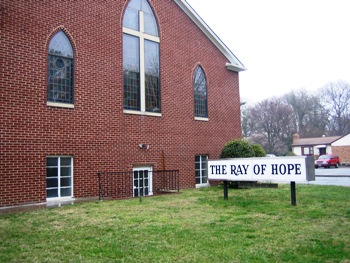 The church has approximately one hundred members, and most of them are middle age adults, though there is a sizeable contingent of youth from grade school to high school ages. The members come from mostly middle to upper-middle class families. The church has membership from New Kent County, Mechanicsville, Northside Richmond, Chesterfield County, Highland Springs and Sandston. Currently, its membership is mostly American Caucasian, but the church has had a long history of African-American and Hispanic- American membership as well, and it reaches out to all ethnicities, cultures and nationalities.
The church’s three formal services take place early and late on Sunday morning and again on Sunday evening. The church pastor describes the services at the church as less formal than most churches. For example, in addition to readings of scriptures and prayers, the pastor will also take requests from members about any personal or community issues that concern them that they would like to have addressed by the church. The church does not request offerings from its members, but does occasionally give money to struggling families or community members, or provide them with assistance, such as lawn work or home repairs.
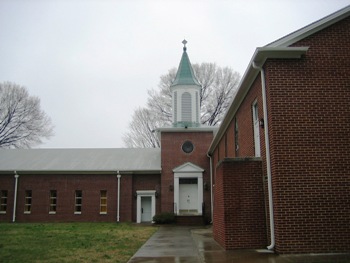 Ray of Hope Pentecostal Church contributes books, clothing, food and money to various charities, such as the Central Virginia Food Bank, Goodwill, and the Salvation Army. The church also sponsors missions, both foreign and domestic. Internationally, the church sponsors missionaries in the Ukraine, the Philippines, Africa, Germany, and Spain. Locally, the church conducts home Bible study outreach programs that take place in selected communities. These Bible studies consist of discussions of community goals and purposes, Bible readings, and prayers. Currently, there are five of these local study groups led by the church pastor every month and are advertised by fliers. Two are in Mechanicsville, one in the Parham Road Regency Mall area, one at the Patterson Avenue YMCA, and one in the Highland Springs and Sandston area. The church is also trying to establish a sixth, which would be located in Northside. The church’s pastor is gradually training other members to assume responsibility for leading the Bible studies.
Ray of Hope Pentecostal Church
3105 Chatham Road
Richmond, VA 23227
(804) 353-8351
Sources:
Ray of Hope Pentecostal Church pastor
Profile prepared by Anthony Grillo
May, 2009
GaytonKirk
Gayton Kirk Presbyterian Church
The Gayton Kirk Presbyterian Church is located in a thriving residential neighborhood. The congregation can trace its roots back to the early 1980s when members met at the Steward School for weekly services. The Reverend Richard A. Brand and a small group of members established Gayton Kirk Presbyterian in its current location in 1985. The congregation is a member of the Presbytery of the James. The Gayton Kirk Presbyterian has a strong Scottish heritage dating back to John Knox and John Calvin when the Presbyterian Church was the main religion of Scotland.
Gayton Kirk Presbyterian states its mission as follows: “To enable individuals to learn, practice, live, and share the word of God” and its worship style as “casual, respectful, and creative.” The church extends a welcome to all who enjoy learning and stimulating their minds in the word of God. The church offers a Sunday service and adult and children’s Sunday school services weekly. Beyond weekly services the church offers a children’s choir and art class during the week. The adult Chancel Choir performs weekly at the Sunday worship service. The Kirk Players, which consists of both adults and children, also performs during the worship service by incorporating scripture and music into the service. Gayton Kirk Presbyterian also offers an Art Center that consists of various classes such as drama and art as well as a culinary arts class where the members are able to learn cooking one-on-one with a master chef.
Gayton Kirk Presbyterian sponsors the Kirk Festival annually, which consists of a full day planned with games and food. The festival celebrates the congregation’s Scottish heritage and is open to everyone for a small donation. The Kirk Festival offers an opportunity for families to get together and participate in a range of family activities, from children dancing to family potato sack races.
With respect to outreach programs, Gayton Kirk Presbyterian participates in the Eastminster Project and Camp Hanover. The Eastminster Project was originated by the Eastminster Presbyterian Church. The project consists of a “free store,” supported by donations of items from groceries to toiletries from congregational members, that offers items to those in need. Camp Hanover is a volunteer project through which church members contribute their time to maintaining the camp property at Camp Hanover, which is sponsored by the congregations belonging to the Presbytery of the James.
Gayton Kirk Presbyterian Church
11421 Gayton Road
Richmond, VA 23238
(804)-741-5254
Sources:
Gayton Kirk Presbyterian Church website
Gayton Kirk Presbyterian minister
Profile prepared by Robbin Arrington
August, 2008
RichmondCitadel
Richmond Citadel (Corps)
The Corps serves as the ministry’s church location for spiritual guidance and outreach. It has been a major part of the Richmond Community for decades and has been at its current location on Orcutt Lane since the 1980’s. The Citadel is currently led by Pastor/Major Curt Sayre and Captain Natalie Sayre.
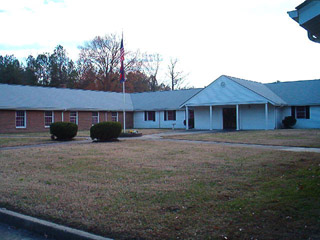 The Corps in Richmond serves not only as a center for worship and service, but also provides community outreach activities. There are activities almost every day of the week. On Sundays there is a morning worship service and an evening praise service for adults along with a Sunday school for children. Monday is youth night; Wednesday is senior night; Thursday is Bible study, Women’s ministry, and Men’s Club night; Friday is teen night. In addition to worship services and Bible study groups, the Corps offers a Sunday school, music program, senior programs, a summer day camp, youth activities and volunteer outreach for men, women and children. The music ministry includes a brass band composed of members of the Corps.
To help build strong character and nurture Christian faith in youth, the Corps has weekly scouting programs for boys and girls. They are called, Sunbeams for elementary school girls, Girl Guards for older girls and Adventure Corps for boys. Youth also have the opportunity to learn music education in the chorus or by learning to play the brass instruments. There is also a fine arts program.
The church follows the same traditions as it did over 100 years ago, with their officers or laymen holding military-like ranks. Corps officers are required to wear their uniforms during church services and corps business. The church is also distinctive in its requirement that unmarried female officers are required to marry within the church and must give up their positions if they marry non-members. The church consists of approximately 50 members who come from all walks of life. The corps officers are made up of sergeants or deacons. The congregation is ethnically mixed with around 60 percent Caucasian and 40 percent African American.
Richmond Citadel
5327 Orcutt Lane
P. O. Box 24249
Richmond, VA 23224
(804) 745-5524
Profile prepared by Amanda Sandiford
December, 2006
GinterParkPresbyterian
Ginter Park Presbyterian Church
Ginter Park Presbyterian Church, located on Seminary Avenue, celebrated its centennial anniversary in 2007. The church was initially founded through the combined efforts of Dr. Walter W. Moore, Lewis Ginter, and George Watts. Dr. Moore, a former student and then instructor at Union Theological Seminary, initiated the project when he concluded that for the seminary to grow and flourish it needed to be in a more urban than rural environment. The project and location originally had been intended to become an expansion of the Union Theological Seminary. Ginter, a former linen merchant and General in the Confederate Army general, enjoyed great financial success in Richmond through real estate ventures, involvement in the city’s first electric trolley system, and the formation of American Tobacco Company, along with Watts, in 1890. Moore asked Ginter to donate almost twelve acres to the Union Theological Seminary, which he did willingly. Watts donated the main building in Ginter Park, allowing the space for classes, a dorm, and offices. He also donated money a few years later, in 1898, to finance the construction of the Union Theological Seminary Chapel, which was built in 1900. The historical account presented in Ginter Park Presbyterian Church, The First Hundred Years states that “ Watts then gave additional money for the Chapel, which was built in 1900 as an octagonal-ended annex to the initial Seminary building, and both were named for their benefactor.” It was not until 1907 that the area was canvassed and it was determined that local residents wished to establish a formal congregation. Since its early development, that congregation, Ginter Park Presbyterian Church, has continued to grow and add buildings. The church has prospered through difficult times and experienced significant changes in the make-up of its congregation.
 Ginter Park Presbyterian Church holds its worship service on Sunday mornings. Prior to the service there are lectures, programs, and a Peace Forum. The average congregation size is about three hundred. The children are not separated from adults during services but instead sit up at the front of the church and are given coloring materials. Ginter Park Presbyterian Church is associated with the Micah Program, which partners with Ginter Park Elementary School in tutoring and volunteering for special activities. Church members also tutor inner city children. The church actively supports the Virginia Interfaith Center for Public Policy and advocates for the rights of the poor with the Virginia General Assembly.
Ginter Park Presbyterian Church has a long history of mission work. Its first organized mission occurred in 1911 when the church paid the salary of a student who had completed his academic work for a mission in what was then the Belgian Congo. The church began publishing Missionary Survey on a monthly basis, providing information on other international missions. The most recent missions have been to Pakistan, the Philippines, Korea, Palestine, Japan, and Africa. The mission “season” begins in February. Ginter Park Presbyterian Church started a Korean church from within its walls. The missionary programs are based on the church’s stated commitment to peace, social justice issues, morality, education, and overall welfare of human beings. The international missionary activity of the church is mirrored in Union Theoretical Seminary as the institution enrolls students from Africa, Taiwan, and India. Over eighty percent of the international students are from Korea.

Ginter Park Presbyterian Church
3601 Seminary Avenue
Richmond , VA 23227
(804)-359-5049
Sources:
Ginter Park Presbyterian Church website
William E. Phipps. Ginter Park Presbyterian Church: The First Hundred Years, 1907-2007
Interview with a member of the congregation
Profile prepared by Cat McCarthy
May, 2008
RichmondGraceFellowship
Richmond Grace Fellowship
Worldwide Church of God began as a radio ministry in Oregon in the early 1930’s. Herbert Armstrong, an advertising designer, started a radio ministry known then as The World Tomorrow as well as the companion magazine, The Plain Truth. Armstrong later moved the ministry to Southern California for greater radio access. He subsequently created a small school, Ambassador College , to train leaders for the church. Graduates of the school were sent to various cities to gather believers into the church. The church grew rapidly through the 1950s and 1960s, with the radio ministry becoming a television program and the magazine becoming the largest circulated magazine worldwide. As the church continued to grow, it changed names several times, eventually becoming Worldwide Church of God.
 Armstrong had supreme doctrinal authority within the church and based his doctrine on three theological assertions: God is the creator, the Bible is true, and the Bible does not change the Sabbath to Sunday. He did not accept the doctrine of the Trinity. Members were required to tithe and were not allowed to vote, serve in the military, marry after divorce, seek medical attention from physicians, or wear cosmetics. The church did not observe individual birthdays or the Christmas and Easter holidays. Any person judged to be disloyal to the church and its teachings was likely to be expelled from the fellowship.
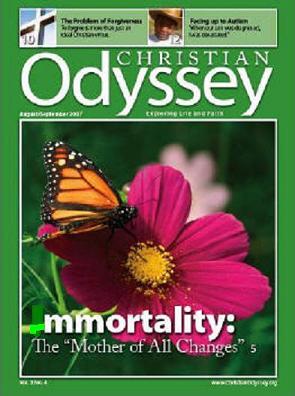
In the early 1980s the Worldwide Church of God was regarded as a heretical group in conservative Christian circles. After Armstrong’s death church doctrines and practices changed in a more traditionally Christian direction. The church began teaching that it was permissible for members to seek help from medical personnel, to use medicine, observe birthdays, and wear cosmetics. The church was divided over these doctrinal revisions, and by the late 1980s, several thousand members had left Worldwide Church of God to form the Philadelphia Church of God, a church that preserved Armstrong’s original teachings. The 1990s brought additional changes as church leaders challenged the biblical basis for Armstrong’s teachings. The church then accepted the doctrine of the Trinity, declared that the cross was not a pagan symbol, decided that Christians may vote, and permitted the observance of Christmas and Easter. Friends and families were split. A budgetary reduction began to affect the television broadcast, which eventually was cancelled. Most of Armstrong’s literature was discontinued or edited. The companion magazine is now called Christian Odyssey and has less than 20,000 subscribers.
 As the church modified its doctrines, the evangelical churches re-evaluated their stance toward the Worldwide Church of God, and in 1997 the church was accepted as a member of the National Association of Evangelicals and a partner denomination of Mission America and the American Bible Society. The Worldwide Church of God is now regarded as a conventional Christian denomination. With its headquarters still located in California , the church has approximately 64,000 members worshiping in 860 congregations in about 90 nations.
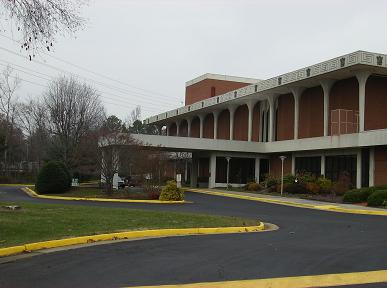
One of these congregations is located in Richmond on Hermitage Road . Richmond Grace Fellowship was founded in November, 1963 by a traveling pastor sent to Virginia by the Worldwide Church of God. Richmond Grace Fellowship has a small congregation of about sixty members of various ethnic backgrounds, with ages ranging from infants to elderly. Regular services are held every Sunday morning consisting of a Christian Living Class followed by Intercessory prayer, worship in song, and a sermon. After the sermon, the floor is opened for discussion. The congregation then may gather for a snack while they enjoy fellowship with one another. A communion service is held on the first Sunday of every month at Richmond Grace Fellowship in celebration of the common unity humanity has with one another and with God, the Trinity in Jesus. The congregation joyously acknowledges the Lords Supper in the spring with a special service that includes a foot washing ceremony and also holds special services for Christmas and Easter.
The congregation as a whole strongly believes in the pastoral care of the sick and infirmed. Each Sunday, the congregation will lift the sick up in prayer and will anoint with olive oil those that are in attendance. For those not able to attend the service, members will visit their homes or pray with them and offer encouragement by phone. The church purchases medicine for those who cannot afford it and have built wheelchair ramps for the handicapped. Richmond Grace Fellowship supports and helps staff Higher Grounds Summer Camp each year. The church also holds various outreach events and festivals throughout the year for the community; members regard these events not as a membership drive but as a means to share Gods love.
Richmond Grace Fellowship
Scottish Rite Temple
4204 Hermitage Road
Richmond , VA 23227
(804) 239-2027
Sources:
Pastor Bill Winn
Richmond Grace Fellowship website
Worldwide Church of God website
Profile prepared by Christina Williams
October, 2007