Susan Goodier

Susan Goodier, PhD, recently held a long-term fellowship at the Massachusetts Historical Society. Prior to that she taught history at the State University of New York at Oneonta. She is a member of the New York Academy of Historians, a Lecturer for the Organization of American Historians Distinguished Lecturer Series, and on the board of directors for both the New York History journal and the Women’s Rights Alliance of New York State. Her first book, No Votes for Women: The New York State Anti-Suffrage Movement appeared in 2013, and her second book, coauthored with Karen Pastorello, Women Will Vote: Winning Suffrage in New York State (2017) won an Award of Excellence from the American Association of State and Local History. She is currently preparing a biography of Louisa Matilda Jacobs. She wishes to extend her sincere gratitude to Mary Maillard, who identified and edited a collection of letters written by Jacobs, and who, with Jordan Watkins and Louise Knight, read and offered comments on this essay.


Share

Louisa Jacobs

LOUISA MATILDA JACOBS TIMELINE

1833 (October 19):  Louisa Matilda Jacobs was born into slavery in Edenton, North Carolina to Harriet Jacobs and Samuel Tredwell Sawyer.

1833:  Jacobs was baptized at St. Paul’s Episcopal Church, Edenton, NC.

1835:  Jacobs’ mother, Harriet Jacobs, went into hiding to escape her lecherous master. Harriet Jacobs’ grandmother, Molly Horniblow, raised Louisa and her brother after Samuel Tredwell Sawyer secretly purchased them from James Norcom.

1840:  Six-year-old Louisa Jacobs was taken North by her father, living first in Washington, D.C., then taken to Brooklyn, New York to live with Sawyer cousins.

1842:  Jacobs was reunited with her mother in Brooklyn, New York.

1844:  Jacobs moved to Boston, Massachusetts with her mother.

1849–1850:  Jacobs attended the integrated Kellogg Young Ladies’ Domestic Seminary, Clinton, New York.

1850:  The U.S. Congress passed the Fugitive Slave Act, which required seizure and return of runaway slaves who had escaped from slave-owning states; Congress repealed it in 1864.

1854 (August 1):  Jacobs attended the Massachusetts Anti-Slavery Society celebration at Abington, Massachusetts.

1856 (May 8):  Jacobs and her mother attended the American Anti-Slavery Society meeting held at Shiloh Presbyterian Church, Manhattan, New York.

1856 (July) – 1858 (April):  Jacobs lived with newspaper columnist Fanny Fern (Sara Payson Willis Parton) as governess and companion to her daughters.

1857 (March 6):  According to the U.S. Supreme Court decision in Dred Scott v. Sandford, African Americans were not and never could be U.S. citizens.

1860:  Abraham Lincoln elected president of the United States.

1860:  Jacobs worked as a clerk in Dr. Samuel T. Birmingham’s Indian Botanical Drug shop.

1860 (January 20):  Jacobs attended the Twenty-sixth National Anti-Slavery Anniversary meeting, Boston, Massachusetts.

1861 (January):  Jacobs’ mother, Harriet Jacobs published Incidents in the Life of a Slave Girl.

1861 (April 12):  The American Civil War began.

1863 (November) – 1865:  Jacobs joined her mother in Alexandria, Virginia.

1864 (January 11):  The Jacobs Free School opened with Jacobs as a teacher.

1865 (January):  The Ladies Sanitary Committee of the African Episcopal Church of St. Thomas in Philadelphia, Pennsylvania sent the proceeds from a fundraising fair to Louisa Jacobs in Alexandria, Virginia.

1865 (May 9):  The American Civil War ended.

1865 (July 20):  Jacobs and her mother left Alexandria, Virginia.

1865 (November 20):  Jacobs founded Lincoln Freedom School (also known as the Hospital School) in Savannah, Georgia and boarded with Dr. Alexander T. Augusta and his wife, Mary.

1865 (November 29):  Jacobs’ father, Samuel Tredwell Sawyer, died in Bloomfield, New Jersey.

1866 (July):  Jacobs and her mother left Savannah, Georgia.

1867 (February–April):  Jacobs lectured with the American Equal Rights Association across upstate New York.

1867–1868:  Jacobs and her mother traveled to England to raise funds for orphans and the elderly in Savannah, Georgia.

1868–1869:  Jacobs taught at the Thaddeus Stevens School in Washington, D.C.

1869 (March 10):  Jacobs brought a lawsuit against the Atlantic Navigation Company for discrimination in Savannah, Georgia.

1869–1877:  Jacobs and her mother ran boarding houses in Cambridge, Massachusetts.

1873 (December 19):  Jacobs’ uncle, John S. Jacobs died in Cambridge, Massachusetts.

1879–1881:  Jacobs and her mother established a boarding house for white politicians in Washington, D.C.

1882 (Summer):  Jacobs worked in a jam and jelly business in Willowbrook, near Auburn, New York.

1883:  Jacobs started a jam, jelly, and catering business in Washington, D.C.

1884–1886:  Jacobs taught at the Girls Industrial School of Howard University, Washington, D.C.

1885:  Jacobs and her mother established a new boarding house for African American patrons in Washington, D.C.

1888:  Their boarding house closed and Jacobs and her mother took domestic jobs.

1891 (April 9):  Jacobs hired by the Federal Census Bureau for three months.

1891 (Fall):  Jacobs hired by the U.S. Treasury Department for three months.

1897 (March 7):  Harriet Jacobs, Louisa’s mother, died in Washington, D.C.

1898–1903:  Jacobs worked as matron at the National Home for the Relief of Destitute Colored Women and Children in Washington, D.C.

1903–1908:  Jacobs worked as a matron/preceptress at Miner Hall, Howard University, Washington, D.C.

1914:  Jacobs moved to the home of Edith Willis Grinnell in Brookline, Massachusetts.

1917 (April 5):  Louisa Matilda Jacobs died in Brookline, Massachusetts.

BIOGRAPHY

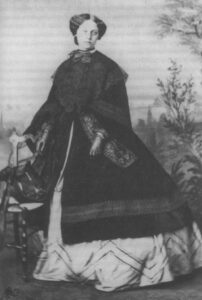
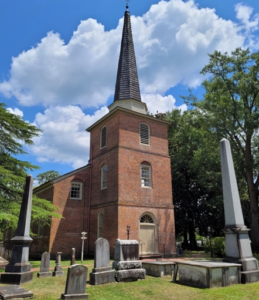
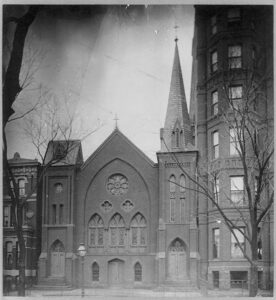
Louisa Jacobs, [Image at right] the daughter of Harriet Jacobs, author of Incidents in the Life of a Slave Girl (1861), and Samuel Tredwell Sawyer, a wealthy white politician, was born into slavery in Edenton, North Carolina. Sawyer had shown interest in Harriet, who responded to his interest partly because she thought that it might keep her lecherous master, Dr. James Norcom, from continuing his sexual pursuit of her. With Sawyer, Harriet had a son, Joseph, born about 1830, and then, three years later, she gave birth to a daughter (Yellin 2008:27–28). One Sunday when Norcom had left town to see a patient, Harriet and her grandmother took the children to St. Paul’s Episcopal Church to be baptized [Image at right below]. The daughter of Harriet’s father’s master offered to be godmother and to give her own name to the infant,
Louisa Matilda (Yellin 2004:40).

Because Norcom continued his relentless harassment, Harriet finally made the decision to go into hiding. To flush Harriet out, Norcom put two-year-old Louisa, five-year-old Joseph, their uncle and Harriet’s brother, John S. Jacobs, and Harriet’s Aunt Betty, into the local jail. At about the same time, Louisa contracted measles. Vulnerable because of the lack of a nutritious diet, the measles affected her eyes, and Norcom attempted to treat her. She sobbed and begged for her family at the jail; Norcom gave up trying to treat her and sent her back. The disease “left her eyes affected” for the rest of her life (Jacobs 1861:154–56; Yellin 2004:46).

To remove her family from Norcom’s authority, Harriet Jacobs arranged with Sawyer to purchase her children and her brother secretly through a slave trader. After finalizing the sale, Sawyer allowed Harriet Jacobs’ maternal grandmother, Molly Horniblow, to raise Louisa and Joseph. Harriet described her grandmother, who attended St. Paul’s Episcopal Church, as faithful and devout. A dominant influence in Harriet’s life, Horniblow “most earnestly [strove] to make us feel that [slavery] was the will of God: that He had seen fit to place us under such circumstances; and though it seemed hard, we ought to pray for contentment” (Jacobs 1861:28). When Louisa and Joseph arrived at her home, “the happy grandmother cuddled the little ones to her bosom,” Harriet Jacobs wrote. “They hugged her, and kissed her, and clapped their hands, and shouted. She knelt down and poured forth one of her heartfelt prayers of thanksgiving to God” (Jacobs 1861:163; Yellin 2004:46–47). Harriet, by that time hiding in the crawl space over her grandmother’s woodshed where she would live for almost seven years, drilled tiny holes in the wall so she could watch her children play and grow. John, Harriet’s brother, worked as Sawyer’s valet until he escaped during a trip to the North, first to New Bedford, then to Boston.

In 1840, in Louisa’s sixth year, Sawyer, who had married Lavinia Peyton, a white woman, decided he would take the child away from Edenton to be a nursemaid to his newborn daughter (Jacobs 1861:209; Yellin 2004:57–59). Harriet begged her grandmother to allow Louisa to stay with her the night before she left. The child had not seen her mother in four years, although Joseph frequently spoke of their mother and often drew his sister to play near their mother’s hiding place. In one of the most poignant scenes in Incidents, Harriet Jacobs describes their night together and extracts a promise from Louisa never to tell anyone that she saw her mother (Jacobs 1861:211–13; Yellin 2004:60). Louisa did not speak of that night until long after her mother’s death (Boit Diary, vol. 11, August 31, 1905:197).

About six months after Sawyer first took Louisa to Washington, D.C. to care for his infant daughter, he sent her to Brooklyn, New York, to his cousin, James Iredell Tredwell. The Tredwells promised to care for and educate the child, then claimed that Sawyer had “given” Louisa to a daughter as a “waiting maid” (Jacobs 1861:209, 215–16; Yellin 2004:60). Meanwhile, it took Harriet Jacobs nearly two years to escape from Edenton and to make her way to her daughter. [Image at right] When she visited the Tredwell house, she discovered that Mary Tredwell had neglected Louisa’s physical care and education (Jacobs 1861:250–51; Yellin 2004:68–69). Harriet had to find a way to earn the money to support herself and her daughter before she could get her out of the Tredwell house. She found employment with the family of Nathaniel Parker (N. P.) Willis, a prominent editor and author, and began saving money to enable her to make a home for herself and her children (Jacobs 1861:254; Yellin 2004:70).

In October 1843, Louisa found torn scraps of a copy of a letter (which she had to have someone read to her), written to the Norcom family and giving instructions for how to find Harriet Jacobs (Yellin 2004:74). Harriet hurriedly made plans to join her brother in Boston before Norcom could travel to New York to force her back to Edenton. She convinced Mary Tredwell that she wanted her daughter with her for a couple of weeks, remade one of her own garments to fit the poorly clothed child, and relocated with Louisa to Boston. Moving in with friends, at first Harriet homeschooled eleven-year-old Louisa Jacobs, who suffered the shame of her lack of education (Jacobs 1861:274; Yellin 2004:77). Within ten months, N. P. Willis, whose wife had recently died in childbirth, asked Harriet to travel with him to England and take care of his daughter, Imogen. Harriet left Louisa in the care of a friend for the ten months she spent abroad. By then, Louisa had enrolled in intermediate school, the equivalent of today’s junior high school. Slavery and the Norcom family haunted the Jacobs family until 1852 when Cornelia Grinnell Willis, N. P. Willis’ second wife, paid $300 for Harriet’s freedom (Jacobs 1861:300–01; Yellin 2004:115–16). Cornelia Willis and her children would remain generous friends to Harriet and Louisa Jacobs the rest of their lives.

Meanwhile, John Jacobs encouraged the then-sixteen-year-old Louisa to attend the Young Ladies’ Domestic Seminary in Clinton, New York. Founded by Presbyterian minister Hiram H. Kellogg in 1833, it holds the distinction of being “the first racially integrated female seminary in New York, if not in the entire North” (Baumgartner 2019: 47, italics in original). Kellogg had been educated at the Auburn Theological Seminary in Auburn, New York, noted for its support for anti-slavery, women’s rights (it would become one of the first theological schools in the country to educate women), temperance, and reforms that benefited the poor. “By involving [an] ideology of Christian domesticity,” historian Kabria Baumgartner points out, “Kellogg politicized the home, and, along with it, the cause of women’s education” (Baumgartner 2019: 52). When Kellogg left the school to become the president of Knox College from 1841 to 1845, a group of Free Will Baptists took over. Kellogg administered the school upon his return to Clinton in 1847, so he would have known Jacobs during her time there between 1849 and 1850.

Her deeply religious great-grandmother and mother had influenced Louisa Jacobs, but the open-mindedness of the Kellogg school administrators and faculty may have strengthened Jacobs’ independence of thought and confidence in her faith. In an 1881 letter she wrote, “Each must be governed in religion by his own needs and convictions looking into God for the right power of action,” and many of her letters exhibit a profound faith in the love of Jesus Christ (quoted in Maillard 2017:78, 79). Any further evidence of Jacobs’ education is vague. An acquaintance of Jacobs claimed that she told him that her father funded her later education at one of the “Mass Normal Schools,” although this school has not yet been identified (Boit Diary, vol. 11, August 31, 1905:199: Yellin 2008:859–61).

Influenced by her education and the evangelical religion of the 1850s, Louisa Jacobs took to heart the mandate to engage in activism for the betterment of others. Sometimes accompanied by her mother and sometimes accompanied by friends, she attended several anti-slavery meetings. In 1854, she attended the Massachusetts Anti-Slavery Society meeting in Abington, and she and her mother attended the American Anti-Slavery Society meeting in Manhattan, New York two years later. Jacobs also attended the Twenty-sixth National Anti-Slavery Anniversary meeting held in Boston in 1860. It is probable that she attended more meetings, but the evidence is, so far, scant. Jacobs and her mother lived together off and on for most of their lives and engaged in social justice activism, especially the anti-slavery cause and women’s advancement. When not living with her mother, Jacobs lived with both African American families and white families.

By 1856, Louisa Jacobs lived in New York City with the white Fanny Fern (Sara Payson Willis Parton), sister to N. P. Willis and the highest paid newspaper columnist in the nineteenth-century United States. She acted as governess to Fern’s younger daughter, and as a companion to her elder daughter, but Fern may not have paid Louisa a salary. This left her free to travel frequently to New York City, Philadelphia, or to Idlewild on the Hudson River, the home of the N. P. Willis family. There Louisa took over some of the domestic duties so that her mother could write her pseudonymous autobiography, Incidents in the Life of a Slave Girl, which she would publish in January 1861. Although it remains unclear what caused the rift, by April 1858, Fern forced Louisa Jacobs to leave (Yellin 2004: 132–33). Upon her dismissal from Fern’s home, Louisa relocated to Boston and boarded with the John Jay Smith family; she found a position as a shop clerk for Dr. Samuel T. Birmingham, a native botanic physician.

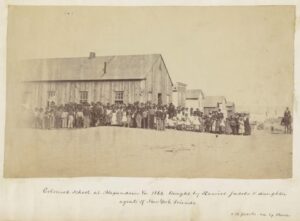
Despite the coming of the Civil War in 1861, Jacobs may have continued working at the shop almost until November 1863, when she joined her mother in Alexandria, Virginia, to teach so-called “contrabands” at the Jacobs Free School. [Image at right] (Contrabands was a term used to describe people who had escaped enslavement in the Confederate states; considered enemy property, they did not need to be returned.) In addition to her duties at the Jacobs Free School, Louisa taught Sunday school and helped her mother distribute clothing and other necessities to the needy in the city. Additionally, she visited several hospitals and the sick in their homes. The Ladies’ Sanitary Committee of the African Episcopal Church of St. Thomas in Philadelphia, Pennsylvania sent the proceeds of a fundraising fair to Louisa Jacobs in January 1865. Members of the committee had long known the Jacobses and felt assured that Louisa would distribute its contributions to the neediest people and soldiers in Alexandria (Goodier 2024:45, 47).

Exhausted by the time the war ended in April 1865, Louisa Jacobs’ doctor advised her to rest. Instead, she chose to travel again, viewing Lincoln’s body as it lay in state in Washington, D.C. (Yellin 2004:187), then helping her mother and a group of white women distribute clothing to the poorest people of color in Richmond, Virginia. By November, she and her mother moved to Savannah, Georgia.

In Savannah, Jacobs taught at a school she founded and named the Lincoln Freedom School, eventually located on the premises of the new freedmen’s hospital. The Jacobses boarded with Dr. Alexander T. Augusta and his wife, Mary. They had met Dr. Augusta, the first African American doctor to hold a commission with the rank of Major in the Union army, in Alexandria (Yellin 2004:194, 199). It is not clear when Louisa Jacobs learned that her father, Samuel Tredwell Sawyer, had died November 29, 1865 in New Jersey. Louisa and Harriet remained in Savannah until July 1866.

Then, from February to April 1867, Louisa Jacobs became a lecturer and toured with the American Equal Rights Association to promote universal suffrage across upstate New York. A friend, Charles Lenox Rémond (1810–1873) may have convinced her to join the tour that included Susan B. Anthony (1829–1906), the Reverend Olympia Brown (1835–1926), and several other well-known activists (Goodier 2021:198, 203). They spoke in at least twenty-eight cities and towns along the Hudson River and the Erie Canal (Yellin 2008:682–85). Again, the venture into public speaking, like those into teaching, lasted only a short time. By December of that year, Louisa and her mother were on their way to England to raise money for a home for orphans and old folks in Savannah. They met with little success. The following fall, Jacobs taught a semester at the Thaddeus Stevens School in Washington, D.C., named after the staunch abolitionist and architect of Reconstructionist programs to help newly freed people. It is not clear why she left the position. Perhaps her mother again asked for her help.

Louisa spent the next two and a half decades assisting Harriet Jacobs run boarding houses, first in Cambridge from 1873 to 1877, where they catered to Harvard professors and tutors. In 1873, her beloved uncle, John S. Jacobs died, and Louisa convinced prominent abolitionist William Lloyd Garrison (1831–1865) to officiate at his funeral. Louisa and Harriet relocated to Washington, D.C. in 1877, and ran a boarding house which accommodated white politicians they knew from Massachusetts, including William Crapo (1830–1926) and William Claflin (1818–1905). Running boarding houses required such arduous physical work that Louisa Jacobs often tried other ways to contribute to her and her mother’s support. She spent the summer of 1882 running a jam and preserves business at Willowbrook, a farm located on Lake Owasco, near Auburn, in upstate New York (Maillard 2017:75). For several summers in Washington, she ran her own preserves and pickle business. For two years, beginning in January 1884, Louisa taught for the Industrial School at Howard University, but the school failed, and therefore the university did not rehire her in the fall of 1886. In the early 1890s, she worked two temporary jobs for the U.S. government, once for the Census Bureau and once for the Treasury Department. Periodically, both she and her mother returned to live-in domestic work when they could not find boarders, or could not rent a house, or all other ways of making money eluded them.

During their time in Washington, D.C., Louisa often visited Francis Grimké (1850–1937), pastor of the Fifteenth Street Presbyterian Church, [Image at right] deepening her relationship with her third cousin, his wife, Charlotte (1837–1914). Francis Grimké also visited Louisa and her mother in their home and presided over at least one of the dinners they prepared for elderly women. When Harriet Jacobs died on March 7, 1897, Grimké, probably at Louisa Jacobs’ request, offered the eulogy at her funeral (Yellin 2008:762, 767, 827–30). Jacobs took her mother’s body to be buried in the family plot at Mount Auburn Cemetery in Cambridge, Massachusetts.

Although she often traveled to visit friends in New England, Louisa Jacobs resided in Washington, D.C., finding ways to support herself. From 1898 until 1903, she worked first as an assistant matron, then as matron at the National Association for the Relief of Destitute Colored Women and Children. Despite a diagnosis of angina pectoris, she returned to Howard University, working as a matron/preceptress from 1903 to 1908 for a salary that included room and board (Yellin 2004:264).

It is not clear how she supported herself or if she shared a home with someone in the years after her retirement at about the age of seventy-five, although at least one of the Willis children, Grinnell (also known as Nelt), a textile merchant and philanthropist in Morristown, New Jersey, sent her a monthly stipend. Jacobs traveled frequently, visiting friends, especially in the Boston area. By 1914, she moved permanently into the Brookline home of Edith Willis Grinnell (1853–1938). [Image at right] It is not yet clear how involved in the Episcopal Church of Our Saviour, less than a block from her home, Louisa became, but when she died on April 5, 1917, the church hosted her funeral, and its pastor, Reginald Heber Howe, officiated. Her friends buried her next to her mother and near her Uncle John in the family plot she had purchased at Mount Auburn Cemetery.

TEACHINGS/DOCTRINES

Despite being born into slavery and enduring a lifelong struggle to make a home for herself, Louisa Jacobs must be understood as a member of the elite. Like other African Americans of her time, she was “literate, ambitious, and ‘race conscious’ . . . and exercised some control over her destiny and environment” (Lapsansky 1984:4, 7). Her frequent moves and varied careers may be interpreted as representing her autonomy. One acquaintance described her as “a woman of rare beauty, refinement, and intelligence, and in character high toned, religious and true” (Boit Diary vol. 11, August 31, 1905:199). Known also for her grace and compassion, she moved elegantly through both African American and white communities. Several observers claimed that she could pass as white, but she apparently did not do so intentionally, and she proudly identified as Black. Her religious commitment facilitated her entry into both Black and white communities, for consistent church attendance and an unwavering faith in a benevolent God affirmed her as worthy of elite status.

Any nineteenth-century single woman like Louisa Jacobs found steady church attendance to be a way to clearly announce her respectability. That respectability would have been critical for making a good impression on others. As a single woman of color who relocated and/or traveled along the Eastern Seaboard throughout her life, frequently living in the homes of others, her presence in a church brought Jacobs friendship, community, and the comfort of her Christian faith. It also provided the bona fides of respectability and trustworthiness. However, her independence of mind allowed her to take a day off from church services without apology or regret, and she expressed her religious views and her relationship with God with “confidence and certainty.” As she wrote to her friend, Genie Webb, “God understands the situation and will judge accordingly” (quoted in Maillard 2017: 16, 90).

Very few nineteenth-century African American women left personal records of their thoughts, or their religious doctrine or convictions, so it is remarkable that fifty-eight letters Louisa Jacobs wrote between 1879 and 1911 are extant. References to God, church, and her religious perspectives saturate the letters and provide us with a sense of the importance of a religious life to Jacobs and to other women of her class and race. Still, Jacobs “was devout enough,” yet not “obsessed” by religious doctrine or teachings as some of her friends and many other women of the time were (Maillard 2017:14). She went to various churches in the communities where she lived. In Boston from 1859 to 1863, she probably attended the African Meeting House (variously known as the African Baptist Church of Boston, the First Independent Baptist Church, or the Belknap Street Church), which connected her with Reverend J. Sella Martin (1832–1876), an abolitionist. She attended the Bethel African Methodist Episcopal Church during her time in Civil War Alexandria. During various periods, she attended services at Episcopal, Presbyterian, and Unitarian Churches (Maillard 2017: 79), and, very likely, the Baptist church or the Anglican church when staying with friends in upstate New York or New Jersey. When Genie Webb questioned her about attending the Unitarian Church, she responded,

I am too well founded in my faith and love of Jesus Christ to fear a Unitarian doctrine. It is not a fear that I will be influence[d] by the doctrine but a matter of principle that I should go to a church where the divinity of the Son of God is denied. It is sad, unfortunate that a body so large and generous in humanitarian feeling and doing should put from them so precious a truth. Never fear for me[,] child. I have not been since, but may go again for the music is heavenly and does me good (quoted in Maillard 2017:79).

Secure in her faith, she could listen to views that challenged her own.

Louisa Jacobs appreciated the music, the ceremony, and the formality of various church services. Neither gullible nor complacent, she listened critically as ministers preached their sermons and then made up her own mind about what she accepted as truth. She had extremely high expectations when it came to the sermons, however. For example, when Alexander Crummell (1819–1898), the founding minister of St. Luke’s Episcopal Church in Washington, D.C., preached a sermon on the greatness of Christ on Thanksgiving Day 1879, two months after the church opened its doors, Jacobs remarked that listeners “feel the truth and wisdom of his words but not the soft tenderness that melts and bows the heart” (quoted in Maillard 2017: 57, 177n11). In Jacobs’ opinion, Crummell’s sermon did not inspire his listeners to follow the example of Jesus Christ to commit themselves to help those who suffered.

The evangelistic spirit of the nineteenth century, linked so closely with an energetic activist mindset, dominated Jacobs’ life. From as early as the 1840s, she moved through anti-slavery circles, surely influenced by her uncle, John S. Jacobs (1815/17–1873), who spoke on the lecture circuit until he went to sea in 1855. In the 1850s, she attended anti-slavery conventions, donating money when she could, although she did not hold office. She helped freed people during the Civil War, and she lectured for universal suffrage after the war. Even as she struggled for a home and livelihood, she helped organize holiday meals for poor, elderly women. Her commitment to helping others may have extended to her choice of a position with the National Home for Destitute Colored Women and Children. As many of her letters written in the 1870s and 1880s show, living her faith through moral action remained intrinsic to her life and wellbeing. All evidence from those who knew her and the letters she wrote point to the sincerity of her convictions.

With the Civil War (1861–1865), the United States “embarked on a new relationship with death,” with the loss of hundreds of thousands of soldiers (and perhaps as many civilians) because of war, disease, and starvation. For those who lived through the war, the “texture of the experience, its warp and woof, was the presence of death” (Faust 2008:xi–xiii). Long before and long after the Civil War, Jacobs nursed sick and dying friends, and during the war she helped her mother nurse those in need in Alexandria. When in 1868 Elizabeth Stuart Phelps (1844–1911) published The Gates Ajar, a timely and “enormously popular” book about heaven and an afterlife (it sold 80,000 copies in the United States and more than 100,000 copies in England, and was then translated into at least four other languages), Phelps sought to make sense of the “spiritual disquiet created by the advance of science and the erosion of traditional Christianity” (Sootin Smith 1964:vi). Phelps’ book stressed Liberal Christianity, along with the “immanence of God, the humanity of Christ, and the perfectibility of man,” which other authorities had done, but it also added the “concrete promise of personal immortality” (Sootin Smith 1964:xxiv–xxv). For many Americans, the book helped make sense of the deaths of so many of the people they had once known. People could find solace in the knowledge that they would be reunited with the fathers, sons, brothers, lovers, or husbands they had lost in the war. A perfect heaven awaited them after their own deaths.

Many of the letters Jacobs wrote in the late 1870s and 1880s highlight the struggle she faced as she sought to reconcile herself to the loss of those she loved most deeply. When her dear friend, Delie Sanders Chew, died of consumption (tuberculosis) on November 5, 1879, she described to Genie Webb how she felt:

It was a rare friendship, such as comes but once-in-a-lifetime. God has seen fit to break the link, and I bow to his behest, looking beyond sorrow and self to that hereafter, where my heart is, there to be united to the lost and loved through the endless ages of eternity (quoted in Maillard 2017:55).

Yet, she still suffered the agony of the loss of her friend: “This thought is a help to me and yet it does not comfort me now as it ought. . . . Oh! If our hearts were not so clinging in their selfishness we would not mourn a day. And yet I believe God does not chide us for that since it is not rebellious grief” (quoted in Maillard 2017:55).

Although there is no evidence that Jacobs read Phelps, she did take comfort in her reading of the poet Adelaide Proctor (1825–1864) and the late nineteenth-century ideology of Mizpah, a “belief that an all-understanding God watched over separated friends and preserved their bond.” Mizpah applied to both temporary absences, offering “a nearness and strengthening in friendship when friends mention one another in their prayers,” as well as those wrought by death. In another letter to Webb, she quoted Proctor’s inspirational poem, “One by One,” thereby helping each other look “beyond sorrow” and to remind them of “faith, humanity, and hope” (Maillard 2017:15–16, 55–56, 176n8). Especially comforting are Proctor’s lines regarding sorrow: “Do not look at life’s long sorrow; See how small each moment’s pain; God will help thee for to-morrow, so each day begin again” (Proctor 1873:9). Rather than focusing on death and the possibility of heaven, one must live fully in the moment, attending to the tasks of one’s own life.

Jacobs relied on her faith to comfort herself and those she loved, yet she could not accept the idea that those friends who had died watched over those they left behind. As she wrote to Webb in 1883:

I used to believe there was recognition with the spirits of the other world of what befell those whom they had loved here, but somehow the belief has left me. How could it be if Heaven is a place of perfect happiness? No, the discordance and trials of life would distract and disturb happy souls” (quoted in Maillard 2017:111).

Louisa Jacobs exhibited leadership primarily in her frequent role as a Sunday, or Sabbath, school teacher. The record is incomplete, but we know Jacobs taught Sunday school during the time she lived in Alexandria, Virginia, from 1863 to 1865, and again during the 1880s at St. Luke’s Episcopal Church in Washington, D.C. (Maillard 2017:14, 90). It is likely she taught Sunday school wherever she lived long enough to establish herself. She may have taught Sunday school in Boston and Savannah; many day schoolteachers also taught Sunday school. Sunday school teachers used any opportunity they had to reinforce the spiritual mission of the congregation they represented.

Sunday schools run by African American congregations played a critical role in furthering the spiritual mission of the church at the same time they reinforced the education of the children (Boylan 1988: 9). Both the American Sunday School Union, and after 1882, the African Methodist Episcopal Church Sunday School Union, published sources for teaching materials. Sunday schools throughout the United States “complemented each other” in terms of education, but they may have provided the only schooling some African American children received (Boylan 1988:4, 22, 29–30). Sunday school could help children learn to read and write, as well as to “develop character, learn good manners, and gain a grounding in Scripture” (McMillen 2001:44). Jacobs did not leave records of her lesson plans, but we can imagine that she taught hymns, prayers, the Ten Commandments, and shared a sense of her own faith and devotion with the children.

ISSUES/CHALLENGES

The most obvious challenge Louisa Jacobs faced, like virtually all people of color in the United States, was racism, with that racism most particularly apparent when traveling. In 1866, when Jacobs and her mother tried to leave Savannah, they faced racism at least twice. Despite Louisa having purchased first class tickets to travel aboard the steamship Leo, the captain forced them off the ship because they refused to travel in steerage, and they had to sail on a different ship. They eventually arrived in New York, but Jacobs sought restitution through the courts (Yellin 2008:669–71). According to the Daily Phoenix (a Columbia, South Carolina newspaper) issue of March 18, 1869, Louisa Jacobs took the parent company of the Leo, the Atlantic Navigation Company, to court. She lost the case when members of the jury were unable to agree on a verdict. That Jacobs did not bring other lawsuits may indicate the futility of doing so, or it may be that she did not have as much trouble traveling when she did so alone.

Another challenge Louisa Jacobs faced would have been Christian churches’ reluctance to take a public stance against the institution of slavery prior to the Civil War. As early as 1839, Maria Weston Chapman quoted the Reverend J. T. Woodbury, who referred to the selling of the enslaved: “Though the auctioneer is a church member, the seller, and the buyer, and the poor slave, all members of the same Church, yet the Church does not censure the deed. It is all right” (Chapman 1839:17, italics in the original). Because members of the congregations of most churches benefited in some way from slavery, and the issue remained controversial even into the time of the Civil War, many ministers, both Black and white, avoided the topic in their sermons. But slavery could not be ignored, and in the 1840s, several churches split over the issue: the Baptist church in 1843, the Episcopal church in 1844, the Methodist church in 1845, and the Presbyterian church in 1847 (Yellin 2008:liv). Even some of the Black churches recoiled from announcing anti-slavery views publicly, perhaps reluctant to draw too much attention to their institutions. For example, as late as 1848, the African Episcopal Church of St. Thomas in Philadelphia would not let Frederick Douglass, Martin R. Delany, or Charles Lenox Rémond use its building for anti-slavery speeches, despite many of its parishioners being involved with the Underground Railroad (Douglass 1848:16; Quarles 1969:83).

When the Fugitive Slave Law, requiring federal marshals to return any people who had escaped slavery to their former owners, passed in 1850, it prompted a more public response from ministers. Reverend Thomas H. Skinner (1791–1871), educated at Edenton Academy and a lawyer in the town for several years, and who surely knew Harriet Jacobs, gave a Thanksgiving Day sermon in New York in response to the new law. He preached compliance with the law, stating that Christianity did not teach adherents to “resist directly the civil power, except where that power forbids the exercise of true religion; and that authorizing slavery simply does not amount to this.” While he affirmed “the intrinsic and enormous evil of Slavery,” the law must be obeyed. Furthermore, “If the destruction of the government would be for the advantage of the slaves, would this compensate the evil in which it would involve the interests of the nation and of mankind?” (Skinner 1850:24, 25, 26, 28). Obedience to the law remained the only course of action, although Skinner insisted that those who disagreed with the law could petition the government to change that law.

Skinner’s friend Albert Barnes (1798–1870), a Presbyterian minister, argued that slavery “periled the existence of the American Union” (Barnes 1857:8). Furthermore, Barnes argued, because the “influence of the church on all moral questions is so great,” the subject “must be agitated and discussed in the churches” (Barnes 1857:153). Certainly, he and Skinner were not the only preachers who abhorred the institution of slavery. We have no evidence of how Jacobs felt about the lack of a clear anti-slavery stance on the part of the church, or on its role in helping those in need. It is possible she essentially overlooked that lack, since her own faith in God never faltered. She did not need the church or a minister to tell her the difference between right and wrong.

After the Civil War, during a period of debates about the status of no longer enslaved women and men, controversy arose over who should obtain voting rights. Most men, both African American and white, considered the question of women’s right to the ballot as a “‘distraction’ to what they perceived as the more ‘urgent cause of black [male] rights’” (Goodier 2021:198). Jacobs, who instinctively chose moderate methods to express her views when she joined the tour, gave a speech in Troy, New York, recorded by a reporter. She argued that the “corruptions of the ballot box” would continue if women did not gain the right to vote along with men, and affirmed that:

The nation needs woman’s assistance and the support which her voice in its affairs would bring it. Full and large justice to the women of the land and to all the men is the only safety of the hour (quoted in Goodier 2021:207).

Jacobs left the tour in April, before its completion, although it is not entirely clear why she did so. It may have been because of the increasing racism of the mainstream movement. Later, Jacobs’ friend, Charlotte Forten Grimké articulated what both women thought about the racism of the women’s suffrage movement when she observed that it “strengthen[ed] a most unjust and cruel prejudice” (Grimké 1898:5). Nonetheless, Jacobs continued to support suffrage for women, since when Susan B. Anthony, one of the most prominent leaders of the women’s suffrage movement, visited a mutual friend, Julia Wilbur, in Washington, D.C. in 1884, Wilbur invited Jacobs to join them. Two years later, Anthony visited again to attend a National Woman Suffrage Association convention held February 17–19, 1886. Jacobs agreed to distribute suffrage literature to the people she knew. It is not clear if she attended the convention, although it is likely (Goodier 2021:210).

SIGNIFICANCE TO THE STUDY OF WOMEN IN RELIGIONS

Louisa Jacobs epitomized a woman of deep faith characteristic of the evangelical tradition of the nineteenth century. Her faith and church attendance guaranteed her acceptance into the various communities where she lived. Although baptized in and buried from the Episcopal Church, [Image at right] she attended several different churches during her life, drawn more to specific churches at different times by their extraordinary music, the eloquence of their ministers, or by her own curiosity than by the doctrine of the church itself. Living at a time when many people were deeply religious, Jacobs kept her deep faith and love for Jesus Christ, yet she consistently maintained her independence of thought.

This combination of independent thought and unwavering faith also prompted Louisa Jacobs to help those less fortunate than herself. Nineteenth-century evangelical religion encouraged social justice activism, yet not all believers put that mandate into practice. Jacobs engaged in social justice activism from a wellspring of kindness and morality, usually reinforced by the teachings of the church, but she did not depend upon the church to give her the energy she expended on helping others. Despite the difficulty of determining the source of Jacobs’ care and concern for others, clearly her church attendance nurtured her faith.

IMAGES

Image #1: Photograph of Louisa Matilda Jacobs, daughter of Harriet Jacobs. In the public domain, courtesy of Jean Fagan Yellin. Unknown photographer. Picture taken between 1852 and 1870. https://cdm16694.contentdm.oclc.org/digital/collection/p16694coll52/id/635.
Image #2: St. Paul’s Episcopal Church, Edenton, NC, where Louisa Jacobs was baptized. Photograph by Chris Anderson, July 2023. Used by permission.
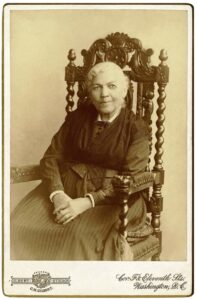
Image #3: Harriet Jacobs, the mother of Louisa Jacobs. In the public domain.
Image #4: The Jacobs Free School, Alexandria, VA. Taken in 1864, this photograph shows students in front of the Jacobs school. The “x” marks Harriet Jacobs. It is not certain if Louisa Jacobs is pictured in the photograph. https://encyclopediavirginia.org/jacobs-school/.
Image #5: Fifteenth Street Presbyterian Church, Washington, D.C. [1899?]. Reproduction Number: LC-DIG-ds-07872. https://loc.gov/pictures/resource/cph.3b15749/.
Image #6: 55 Monmouth Street, Brookline, MA, where Louisa Jacobs lived from 1914–1917. Photograph by Susan Goodier, October 2023. Used by permission.
Image #7: Church of Our Saviour Episcopal Church, Brookline, MA. Reverend Reginald Heber Howe officiated at Louisa Jacobs’ funeral. Photograph by Susan Goodier, October 2023. Used by permission.

REFERENCES

Barnes, Albert. 1857. The Church and Slavery. Philadelphia, PA: Parry & McMillan.

Baumgartner, Kabria. 2019. In Pursuit of Knowledge: Black Women and Educational Activism in Antebellum America. New York: New York University Press.

Boylan, Anne M. 1988. Sunday School: The Formation of an American Institution, 1790–1880. New Haven, CT: Yale University Press.

Chapman, Maria Weston. 1839. Right and Wrong in Massachusetts. Boston: Dow & Jackson’s Anti-Slavery Press. In the Massachusetts Historical Society, Boston, MA.

Douglass, Frederick. 1848. “St. Thomas Church, Philadelphia.” North Star, December 8.

Faust, Drew Gilpin. 2008. This Republic of Suffering: Death and the American Civil War. New York: Alfred A. Knopf.

Goodier, Susan. 2021. “Doublespeak: Louisa Jacobs, the American Equal Rights Association, and Complicating Racism in the Early U.S. Women’s Suffrage Movement.” New York History 101:195–211.

Goodier, Susan. 2024. “Louisa Jacobs and the St. Thomas Sanitary Committee Fair of 1864.” Pennsylvania Magazine of History and Biography 148:21–53.

Grimké, Charlotte Forten. 1898. “The Rights of the Negro,” Washington Post, February 24, p.5.

Jacobs, Harriet. 1861. Incidents in the Life of a Slave Girl, Boston: Published for the Author, Boston Stereotype Foundry. In the Massachusetts Historical Society, Boston, MA.

Lapsansky, Emma Jones. 1984. “Friends, Wives, and Strivings: Networks and Community Values among Nineteenth-Century Philadelphia Afroamerican Elites.” Pennsylvania Magazine of History and Biography 108:3–24.

Maillard, Mary, ed. 2017. Whispers of Cruel Wrongs: The Correspondence of Louisa Jacobs and Her Circle, 1879–1911. Madison: University of Wisconsin Press.

McMillen, Sally G. 2001. To Raise Up the South: Sunday Schools in Black and White Churches, 1865–1915. Baton Rouge: Louisiana State University Press.

Proctor, Adelaide A. 1873. The Poems of Adelaide A. Proctor. Boston: James R. Osgood and Company.

Phelps, Elizabeth Stuart. [1868] 1964. The Gates Ajar, ed. Helen Sootin Smith. Cambridge, MA: Belknap Press of Harvard University Press.

Quarles, Benjamin. 1969. Black Abolitionists. New York: Oxford University Press.

Yellin, Jean Fagan. 2004. Harriet Jacobs: A Life. New York: Basic Civitas Books.

Yellin, Jean Fagan, ed. 2008. The Harriet Jacobs Family Papers, Two Volumes. Chapel Hill: University of North Carolina Press.

SUPPLEMENTARY RESOURCES

Anderson, James. 1988. The Education of Blacks in the South, 1860–1935. Chapel Hill: University of North Carolina Press.

Ballard, Allen B. 1984. One More Day’s Journey: The Story of a Family and a People. New York: McGraw-Hill.

Butchart, Ronald B. 2010. Schooling the Freed People: Teaching, Learning, and the Struggle for Black Freedom, 1861–1876. Chapel Hill: University of North Carolina Press.

Crummell, Alexander. 1882. The Greatness of Christ and Other Sermons. New York: Thomas Whittaker.

Ginzberg, Lori D. 2024. Tangled Journeys: One Family’s Story and the Making of American History. Chapel Hill: University of North Carolina Press.

Luker, Ralph E. [1991] 1998. The Social Gospel in Black and White: American Racial Reform, 1885–1912. Chapel Hill: University of North Carolina Press.

Schroeder, Jonathan D. S., ed. 2024. The United States Governed by Six Hundred Despots: A True Story of Slavery. Chicago: University of Chicago Press.

Whitacre, Paula Tarnapol. 2017. A Civil Life in an Uncivil Time: Julia Wilbur’s Struggle for Purpose. Lincoln: Potomac Books/University of Nebraska Press.

Williams, Heather Andrea. 2005. Self-Taught: African American Education in Slavery and Freedom. Chapel Hill: University of North Carolina Press.

Post date:
15 March 2025


Share

Claire Borowik

Claire Borowik is a communication and development consultant for non-profits with an MA in Intercultural and International Communications. She was the co-director of Worldwide Religious News Service (WWRN), an online non-profit resource for scholars, from 1997 to 2017. She served as the director of international public affairs for the Family International from 2006 to 2010, and subsequently authored numerous articles on the movement and its transformation to online religion. Her most recent publications include: “Digital Revisionism: The Aftermath of The Family International’s Reboot” in Singler and Barker’s Radical Transformations in Minority Religions (Routledge 2022), and From Radical Jesus People to Virtual Religion: The Family International(Cambridge University Press, 2023).

Share

Alexa Blonner

Alexa Blonner is an independent scholar situated in Australia, specializing in new religious movements. A book entitled Reimagining God and Resacralisation, based on her doctoral dissertation, was published in 2019 by Routledge. She has presented papers at conferences in Australia and internationally, some of which have been published in books and journals.  Among these have been: “Religion in the Pandemic – An Exercise in Hope: The Unification Experience,” in Socio-Anthropological Approaches to Religion: Environmental Hope (2024), Kim and Wright, eds.; and “Heaven’s Way in Korea’s New Religions:  A Reinterpretation of Salvation” in Journal of Koreanology (2017).  Alexa’s research interests also include religious theory, ethics, philosophy, and, more recently, the Culture War.


Share

Unificationism (1920-2012)

UNIFICATIONISM TIMELINE

1920 (February 25):  Sun Myung Moon was born Mun Yong-Myeong in Jeongju, modern-day North Korea (Gregorian Calendar).

1930:  Moon’s traditionally Confucianist family converted to Presbyterian Christianity.

1935 (Easter Sunday):  Moon reported that Jesus had appeared to him and asked him to take up the work that was left unfinished by his crucifixion. Moon accepted the mission.

1941-1943:  Moon attended and graduated from a technical school in Tokyo associated with Waseda University.

1943 (February 10):  Moon’s future wife, Hak-Ja Han, was born in Anju, North Korea.

1943 (November):  Moon married Sun-Kil Choi. The couple had a son three years later.

1945 (August 15):  Moon began preaching his message in Seoul.

1946 (June 6):  Moon traveled alone to Pyongyang, North Korea, and founded a new flock.

1946 (August 11):  North Korean officials arrested Moon and charged him with spying for the government of South Korea. After months of beatings and torture, he was left for dead in November but nursed back to health by his followers.

1948 (February 22):  North Korean officials arrested Moon for a second time, this time for “disturbing public order.” He was sentenced to five years hard labor in the Hŭngnam labor camp, which was later reduced to three years and four months.

1950 (June):  The Korean War broke out.

1950 (October 14):  Moon was freed from the labor camp when prison guards abandoned their posts as United Nations troops advanced.

1950 (December 4):  Moon and two male disciples commenced trekking south to Pusan to find safety as the war situation deteriorated. He arrived in Pusan on January 27.

1951 (May 11):  Moon began writing down the essentials of his teachings, which he called Wolli Wonbon (the Original Divine Principle).

1952 (May 10):  Moon finished Wolli Wonbon and began preaching again.

1953 (March):  Moon formally changed his name to Mun Sun-Myeong.

1953 (September 17):  Moon moved the base of movement operations to Seoul, South Korea.

1953:  Moon divorced his first wife, Sun Kil Choi.

1954 (May1):  The Holy Spirit Association for the Unification of World Christianity (HSAUWC) was founded in Seoul, South Korea.

1955:  Organized opposition coalesced around the Ewha-Yonsei incident, in which six professors and sixteen students were expelled from two universities for not giving up their Unificationist associations.

1955 (May):  The HSA-UWC established the Collegiate Association for the Research of Principle (CARP).

1955 (July):  Moon and four of his church leaders were arrested by the South Korean government for draft evasion. Moon was acquitted on October 4 and released.

1957 (July 27):  The first country-wide, forty-day, summer witnessing campaign commenced. It covered 120 locations.

1958-1959:  The first international missionaries were sent out, to Japan in 1958 (July 15), and the United States in 1959 (January 2 and September 18).

1960 (April 11):  Moon married for the second time, to seventeen year-old Hak Ja Han. The couple ultimately gave birth to fourteen children.

1961:  Moon established the “Blessing” marriage/rededication ceremony. Thirty-six couples were married in the first such ceremony. Moon matched the couples who were not already married.

1962 (May 5):  The Little Angels Children’s Folk Ballet of Korea troupe, which subsequently became The Little Angels, was initiated.

1962:  The first Unification-owned business, Tong-il Industries, was created to finance church administration and missionary activities.

1962:  In Japan, a major breakthrough occurred with the conversion of a few dozen members of the Rissho-kyoseikai sect.

1963:  The HSA-UWC was legalized by the Korean Government.

1963 (June-September):  Fifteen mobile witnessing teams covered 3,000 locations throughout South Korea. These became the prototype for the later One World Crusades.

1965 (January 28-August 10):  Moon embarked on his first World Tour the purpose of which was to sanctify Holy Grounds in forty nations.

1965 (September-December):  The Little Angels performed in the United States, its first performance outside Korea.

1965:  The Collegiate Association for the Research of Principles (CARP), the Unification student wing, was established in Japan and was subsequently established in other nations.

1966:  Unification theology was updated in a new edition, Wolli Kang-Ron (Explanation of the Principle). The English translation was simply entitled Divine Principle.

1967:  Organized opposition to the UM in Japan commenced in earnest, largely facilitated by left-wing groups opposed to its anti-Communist work.

1968 (January 13):  The International Federation for Victory Over Communism was established in Korea, and a few months later in Japan, to counter the growing influence of Communism in those nations.

1969:  Moon and his wife embarked on a second World Tour, during which they Blessed forty-three non-Korean couples for the first time.

1971:  Moon moved to the United States while retaining his citizenship in the Republic of Korea.

1970s:  Organized opposition to the Unification Church, along with several other new groups, began in the United States.

1971:  The Unification Church of the United States had grown to as many as 500.

1972:  The first mobile fundraising and witnessing team efforts were organized in the United States and Europe.

1972 (December 21):  Moon decided to move his family to the United States and made the U.S. the movement’s World Mission Headquarters.

1973 (November 21):  The first International Conference on the Unity of the Sciences (ICUS) was held.

1974:  Unificationist members Mose Durst and Onni Soo Lim launched the Creative Community Project in San Francisco.

1974-1976:  Moon gave a series of public speeches in the U.S.: Madison Square Garden (1974), Yankee Stadium (1976), Washington Monument (1976).

1975:  The Unification Theological Seminary (UTS) was founded in Barrytown, New York to train future movement leaders.

1976:  The News World (later renamed the New York City Tribune) was founded by News World Communications in New York City.

1978:  The Home Church focus commenced, in which members concentrated on local community involvement.

1980 (December):  CAUSA International was founded in New York as an anti-communist educational organization.

1982 (July 1):  A Blessing of 2,075 couples in New York’s Madison Square Garden became the first large-scale Blessing held outside Korea.

1982:  Moon was convicted in federal court in the United States of income tax fraud and was incarcerated for thirteen months in the Federal Correctional Institution in Danbury, Connecticut.

1982:  The Washington Times newspaper was founded.

1983 (May-June):  Moon commenced a thirty-city speaking tour.

1985:  The UM sponsored the World Assembly of Religions, attracting 600 participants from over eighty nations.

1988-1989:  The Black Heung-Jin Revival took place when a Zimbabwean member claimed to be the re-embodiment of the Moons’ second son by Hak Ja Han who died in a car accident in 1983.

1990s: The Daemo-Nim Providence commenced at Cheong-Pyeong Lake during which a spiritualist member reportedly brought spirit messages from Mrs. Moon’s recently deceased mother.

1990’s: The South American Jardim Providence commenced after the movement acquired properties in the Pantanal and surrounding areas that were to become an ecological paradise.

1990 (April):  Moon traveled to the Soviet Union and met with the nation’s president, Mikhail Gorbachev.

1991 (December):  Moon met with Kim Il Sung, the President of North Korea.

1992 (April 10):  Hak Ja Han founded the Women’s Federation for World Peace (WFWP).

1992 (August 19-28):  Moon presided over the Blessing of 30,000 couples at the Seoul Olympic Stadium, the largest to that time.

1992 (August):  Moon publicly declared for the first time that he and his wife were the True Parents of Humankind and together were the fulfillment of the Second Advent.\

1992:  The Unificationist-associated consortium, the Professors World Peace Academy, raised just over $50,000,000 to bail out the failing Bridgeport University in Massachusetts and financially supported it for the next decade.

1994:  Moon announced that the era of HAS-UWC had ended, and The Family Federation for World Peace and Unification (FFWPU) was established.

1994:  Unificationist investment in Uruguay reached $150,000,000.

1995:  For the first time the Blessing was extended to non-members.

1998:  The Unification Church constructed a church in North Korea.

2001 (January):  Moon conducted a Coronation Ceremony for the Kingship of God.

2001:  An African Catholic Archbishop caused controversy when he participated in a Unification Blessing ceremony and married a Korean Unification member.

2001:  Moon declared the establishment of Cheon Il Guk, the nation of Cosmic Peace.

2002:  A Unification Movement affiliate, Pyeonghwa Motors, invested more than $300,000,000 in North Korea’s automobile industry.

2003:  A member of the Unification Movement founded a political party in South Korea, “The Party for God, Peace, Unification, and Home.”

2004 (March 23):  The Unification Movement organized a ceremony in Washington’s Dirksen Senate Office Building at which Moon was awarded the “Crown of Peace,” in the presence of a number of government officials.

2008 (April):  Moon appointed Hyung Jin Moon, his youngest son, as International President of the Unification Church and heir apparent of the worldwide Unification Movement.

2009:  Hyun Jin, the Moons’ eldest surviving son, officially split with his family in disagreement over his younger brother’s church direction, setting off decades of legal battle as he sought to retain assets that had been put in his name.

2012 (September 2):  Moon died.

2012:  Moon was awarded North Korea’s National Reunification Prize.

FOUNDER/GROUP HISTORY

An estimated 300-500 new religious movements (NRMs) have arisen in Korea over the last 150 years. These have largely innovated from the four main traditions of Daoism, Confucianism, Buddhism and indigenous spiritism. In East Asia, a fusion or overlapping of the main religious traditions has been common, and Korea’s new religious movements carry on that syncretistic impulse, often even borrowing from each other. The catalyst for such extensive religious innovation in Korea was the encounter with Western spirituality. The influence of Christian thought on Korea’s new religions is evident in greater or lesser form, depending on the lineage of the group, but the syncretic blend is very clear in the case of the Unificationism.

Unificationism is not the largest of Korea’s NRMs, but it has the widest spread, with members or associates in 185 nations. It is also one of the thoroughly studied by scholars and pilloried by opponents (Lofland 1966; Sontag 1977; Bromley and Shupe 1979b; Barker 1984; Fichter 1985; Chryssides 1991; Introvigne 2009; Mickler 2023). The  movement’s current membership is estimated at from 250,000-300,000 worldwide, the bulk of which is in South Korea and Japan. In addition, there are many people whose belief systems have been influenced by Unification thought, such as those who belong to the several breakaway groups that largely retain Unification teachings and several newer, innovatory groups in Korea and Japan that show some doctrinal similarities.
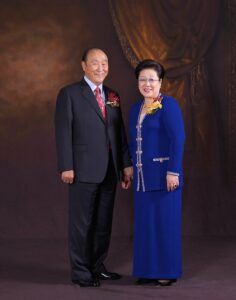
Unificationism was founded by Mun Yong-Myeong, born in on February 25, 1920 (Gregorian calendar) in contemporary North Korea. [Image at right] He changed his name to Mun Sun-Myeong in 1953. His family converted to the Presbyterian denomination of Christianity when he was ten years old. Like many Koreans of that era, he was very devout.

During an all-night prayer vigil on top of a peak near his home he claims that in the early hours of Easter Sunday 1935 he experienced a spectacular spiritual encounter with Jesus Christ. Jesus told him that because of his early death he had been unable to finish his mission and that he wanted Moon to complete it. Over the next nine years Moon relates that he lived an inner life of close spiritual contact with Jesus and the saints in heaven, during which the actual meaning of biblical accounts, particularly the Fall of Man, and other Christian mysteries were gradually revealed to him.

After completing a diploma in electrical engineering in Japan in 1943, he returned to Korea and married, eventually settling in Seoul. He began cautiously preaching the revelations he had received but didn’t make much headway. In June 1946, he was “directed by Heaven” to move to Pyongyang. This meant leaving his wife and baby son behind because the Communists by this time had firmly entrenched themselves in the northern half of the Korean peninsula and it had become very dangerous to enter the north.

He made a few converts but was reported to the local Communist authorities and arrested for allegedly “spying for South Korea.” He was held for a few months during which he almost died as a result of beatings and torture. He made more converts but was arrested again in 1948 for “disturbing the public order” following complaints from some family members of his converts. He was sentenced to five years of hard labor in a large nitrogen fertilizer factory on the mid-east coast of North Korea. The Korean War broke out in June of 1950. In October, when he had served about half of his sentence, the area where the camp was located was bombed by United Nations forces under the command of General Douglas Macarthur. The guards deserted their posts, allowing the surviving prisoners to escape. Moon returned to Pyongyang on foot.

The tide turned against United Nations forces following Chinese intervention on behalf of Kim Il Sung’s Communist government. Hundreds of thousands of Koreans from the north began fleeing south. Starting in mid-December, Moon together with two of his male disciples began a trek to the bottom of South Korea. They reached Pusan at the end of January. Pusan was in absolute chaos. Housing and jobs were almost non-existent, and so it took Moon and his few remaining disciples quite some time to achieve some semblance of safety and stability. In May 1952, he finished a hand-written version of his teachings and began preaching again.  At the end of 1953 there were Unification groups in Pusan, Taegu and Seoul.

The Armistice and formal partition of the northern and southern parts of Korea of July 1953 stabilized conditions. The main base of operations of Moon’s group, which by this time was being informally labeled the Unification Church (UC), was moved from Pusan to Seoul at the end of the year. The group was formally established as the Holy Spirit Association for the Unification of World Christianity (HSA-UWC) on May 1, 1954. By then, Moon had a following of about fifty.

By this time Moon had reunited with his wife, Sun Kil Choi, and his son. The couple had wed in 1943 and had a son in 1946, but his wife actively opposed his religious work, and their relationship ended irreparably. He would marry his life partner and ultimate successor, Hak Ja Han, in 1960.

A breakthrough occurred in 1955 when dozens of students from Ewha (Women’s) and Yonsei (Men’s) Universities began attending Unificationist lectures. This alarmed the universities’ heads, and through influential political connections an extensive media oppositional campaign was launched against the Unification Church. Students were then forbidden to further associate with the church. Sixteen students and six professors were expelled for refusing to follow this directive.

In July of that year, Moon and several other Unificationist leaders were arrested for draft evasion, and he was found guilty and sentenced to two years imprisonment. He appealed, and his trial was held on October 4. Able to prove he had received an exemption from military service, he was set free.The negative publicity eventually died down, and in July 1957 the group launched the first of its annual summer forty-day witnessing campaigns. Conversions were reportedly made in thirty locations. These campaigns continued for some time afterwards, and a winter campaign was added. From this point the movement made steady headway growth.

A member named Sang-Ik Choi, using his Japanese name, Nishikawa, (during the Japanese occupation Koreans were required to adopt a Japanese name), made his way to Tokyo in 1958  to become the first permanent missionary outside Korea. Choi had a very slow start, but in 1962 a few dozen members of the Rissho-kyoseikai sect joined en masse. The Japanese branch rapidly progressed from that point. Nishikawa was deported in 1964, and Osami Kuboki assumed leadership.

Two more missionaries, Young-Oon Kim and David San-Chul Kim, relocated to Oregon in the United States (in January and September of 1959, respectively). In the first part of 1960, several converts were made. Also in that year, the Young-Oon Kim contingent relocated to San Francisco where several Germans joined. The new recruits returned to Germany in 1963 to start new branches in Germany and then Austria in 1964. A Dutch convert in Los Angeles moved back to Holland to start a group there in 1964.

A third Unification missionary, Lt. Col. Bo-Hi Pak, who had been appointed Assistant Military Attaché at the Korean Embassy in Washington, D.C., moved to the Washington area in March 1961 with the intention to start a Unification branch there.

On April 11, 1960, Moon, now forty, married a seventeen-year-old girl, Hak Ja Han, who was in her last year of high school. Five days later he and his new wife gave what came to be called the Holy Marriage Blessing to the three chief disciples of the Unification movement and their hand-picked partners. The following year Moon married thirty-three more couples, making thirty-six couples in all, who became “the Elders.” Ever-larger massed wedding Blessings of members continued at various intervals, eventually becoming annual. Mrs. Moon bore fourteen children in all, the first was a daughter named Ye-Jin born in 1961 and the last was another daughter named Jeung-Jin, who was born in 1982.

Moon and a small entourage embarked on Moon’s first world tour in 1965, during which he established Holy Grounds in forty nations. He stayed with the Pak family in Washington from March through June, attempting to reorganize and coordinate the American branch. Young-Oon Kim and Sang-Ik Choi accompanied Moon on much of this world tour. In October, Kim moved to Washington to assume national leadership, while Choi settled in in San Francisco with the intention of establishing a fourth missionary arm, with the assistance of several hand-picked members from Japan.

From September to December 1965, the Little Angels Folk Dance Troupe of Korea, founded by Moon and a few Unification members in 1962, made its international debut in the United States. Its tour started in Washington, where it performed to a socialite-studded crowd. The Troupe also performed before former president Dwight Eisenhower in Gettysburg.

The movement responded to mounting Marxist influence in Korea, Japan and Western universities by establishing the International Federation for Victory Over Communism (IFVOC) in 1968. It sponsored numerous anti-Communist rallies in Korea, Japan and other Asian countries and Victory Over Communism lectures developed by a Korean member outlined the contradictions and fallacies of Marxist ideology. The Japanese and South Korean governments, in an effort to safeguard their young democracies, encouraged police cadets and bureaucratic officials to attend. The Collegiate Association for the Research of Principles (CARP) that developed in Japan in 1965 to meet the needs and aspirations of the many youth who were joining the movement, was also well placed to absorb some of this IFVOC work. At the end of 1980, Confederation of Associations for the Unification of American Societies (CAUSA) was also initiated, which adapted presentations to more specifically counter Marxist penetration of the Americas.

Moon, accompanied by his wife and other Korean church officials, made a second world tour in 1969, during which the first non-Korean Blessings were conducted. This involved forty-three couples, twenty-one of which were Japanese, thirteen American and nine European. Included was one Black American couple.

By 1970, Choi’s Bay area group had attracted both recruits and opponents through the implementation of several novel introductory methods. The Kim group also began to make some headway in Washington. Noteworthy progress was also seen in Berkeley and New York under the leadership of members who were from the Pak Washington lineage. Paul Werner, transferred from Austria to Germany by Moon in 1969, produced a significant number of converts.

In 1972, Moon undertook a third world tour, the focus of which was public speaking engagements in hired halls in a dozen or more different countries. During the American segment of this tour he pressed members into teams to promote his public-speaking events, in the process completely uprooting American branch structures. The Western branches were far behind those of Korea and Japan in terms of initiative and dedication. At the end of this world tour Moon made arrangements to move himself and his family to the United States so that he could take direct charge of the American movement. The United States became the hub of the movement, with the Unification Theological Seminary, administrative headquarters in New York City, and Moon’s personal estate in Tarrytown. A network of profit and not-for-profit organizations soon followed (Bromley 1985, 1998b). During this period Moon stimulated the development of mobile witnessing, fundraising and building procurements, which became significant in financing the American branch of the UM. He encouraged the establishment of newspapers, businesses, academic conferences to discuss world problems and numerous other initiatives.

Over the next few years Moon undertook more speaking tours, which later became known as the Day of Hope tours. There were also large-scale speaking events at Yankee Stadium, Madison Square Garden, and the Washington Monument. He also spoke at an anti-Communist rally at Yoido Island in Seoul that reportedly attracted an audience of over 1,000,000. As always, world expansion was high on his list of priorities, and in May 1975 a missionary each from the United States, Germany and Japan were assigned to break new ground in ninety-five countries after undergoing instruction at the movement’s new training center in New York.

The high public profile Moon adopted in the United States attracted numerous new members but also a great deal of criticism and opposition, both from established Christian denominations and the families of UM recruits (Shupe and Bromley 1980; Cowan 2003). While Christian churches had long campaigned against religious interlopers, families of converts were more immediately threatened by  Unificationism and other new religious movements of the 1960s and 1970s (Bromley 2006). Many of these new groups challenged established religious tradition doctrines and practices, and the high demand organization of some of them directly threatened parents’ role in transitioning young adults into conventional family and career trajectories.

In the Unificationism case, families were particularly threatened by rapid “conversions,” assertions by Moon that he and his wife were the True Parents of converts, and Moon’s selection of partners for members eligible for Blessing. Accusations of “brainwashing” or mind control as the source of UM affiliation (Bromley 1998). A new kidnapping and “deprogramming” network arose to “free” those who had been “lured” into these groups (Patrick 1976). The Creative Community Project (CCP), an offshoot of the Choi group in San Francisco established in 1974, was the source of much of the criticism. The CCP continued methods Choi had developed but changed the orientation from Choi’s “ideological community” to a “spiritual community” and it streamlined his methods (Bromley and Shupe 1979b). Because the group was quite successful in attracting new members and proselytized under another name (Creative Community Project), detractors accused it of practicing “heavenly deception” (Bromley and Shupe 1981).

Another movement milestone was reached in 1982 when a large-scale Blessing was staged in Madison Square Garden that involved 2,075 couples. This event was the first mass Blessing held outside Korea, and it made headlines, particularly in the United States.

Shortly after this event, Moon was convicted of tax evasion and was sentenced to two years imprisonment in a federal prison facility in Danbury, Connecticut. He served thirteen months of that sentence before being paroled. Moon’s incarceration did not diminish his leadership of the movement, however, and he presented his willingness to serve his sentence as a self-sacrificial act. Moon immediately reassumed his preaching mission upon his release from prison. Moon’s prosecution also produced some backlash from mainstream religious leaders who viewed the basis of prosecution as one that potentially could be deployed against their churches.

While during the 1970s, a number of new religious movements flourished as a product of the availability of young adults who participated in the various 1960s protest movements, this pattern did not continue. As the protest movements ran their course, so did NRM recruitment, including for Unificationism. The result was that while the recruitment rates declined sharply, the high membership turnover rates that had been present through the movement’s history did not (Bromley 2004). Indeed, by the late 1980s U.S. membership probably matched mid-1970s membership.

By contrast, in the 1980s and 1990s, the Church’s businesses expanded greatly and achieved significant financial success, leading Unificationism to become wealthy despite its declining  membership, but with a more secure organizational base. In response, Moon announced in 1991 that members should return to their homes and continue their missionary work locally. In contrast to the two preceding, then, by the mid-1990s many Unification members had received the Blessing and had settled into normal family lifestyles. This brought an end to the earlier full-time proselytization, and greater reliance on procreation for continued movement growth.

The reconceptualization of the movement’s structure and mission was evident in 1994 when Moon announced that a new organization would supersede the Unification Church. This organizational change became official in 1996 when the Family Federation for World Peace and Unification was formally launched. The new leaders included Moon’s second son by Hak Ja Han, Hyun-Jin. They sought to move into a post-church, practical settlement format. The emphasis changed to family, community and peace initiatives. This era saw the sponsoring of soccer teams, the buying properties in South America, and development of the property at Cheong Pyeong Lake, outside of Seoul. The Daemo-Nim Providence also began, in which a member who claimed to be in spiritual contact with Mrs. Moon’s late mother was installed in Cheong Pyeong as the medium supreme. Members began coming to gatherings at a large hall that was built on the property to hear her speak, be healed, and have their ancestors blessed.

A number of Peace organizations were established during this era, one of the most active of which was the Women’s Federation for World Peace (WFWP), which was established in 1992. This brought Moon’s wife Hak Ja Han into the limelight. With her child-bearing years behind her, she spent much of this decade traveling the world headlining or supporting speaking tours that promoted the various initiatives.

What the new leaders envisioned was a spiritual and ecumenical movement that, though funded and largely run by Unificationists, would include anyone of goodwill. This reflected a shift from doctrinal exclusiveness to wider values education and exploration. With this new impetus, the Blessing was opened to non-Unificationists, starting on a very limited scale in 1995 and opening further from the 1997 RFK Stadium Blessing.

This change was not universally welcomed as many members felt disenfranchised within their own church communities. There was a toll on morale, capped by the damaging, tell-all book by the Moons’ eldest son Hyo-Jin’s first wife, published in 1998, which portrayed the Moon family as far from the idyllic model movement leaders projected publicly (Hong 1998).

In the early 2000’s, two major, related initiatives were mounted. The first was the creation of the American Clergy Leadership Conference, an ecumenical movement within clergy. This organization became the backbone of the second, which was the Middle East Peace Initiative. The initiative consisted of peace pilgrimages to Israel that began in 2003 and continued into 2005. In 2005, most of the “peace” initiatives were consolidated under a new organization called the Universal Peace Federation (UPF). The UPF then remained at the center of Unification values-promotion activities.

A restructuring of Unification business interests also occurred during this period. Investments were made in the hospitality industry, with the purchase of hotels and the development of resorts in South Korea. Investment was also made in North Korea, which included a joint venture automotive project. A Peace Center was also built in Pyongyang in 2007, with the top floor of which was retained for Unificationist use.

Moon was a highly active leader until his last days. Toward the end of his life he began addressing the issues of leadership succession. The conflicts that emerged ultimately resulted in the formation of schismatic movements, although his wife was able to maintain control of the largest segment of the movement (See, Issues/Challenges). In August 2012, however, he developed a cold, which developed into pneumonia. He was hospitalized on two occasions and passed away on September 2. In between hospitalizations, he clearly understood that he was in his final moments on earth. He reportedly spent his last conscious hours wandering around his home with his wife, looking at everything as if for the last time. He wrote down some last words, which were: “I have completed everything.” He was succeeded by Hak Ja Han who assumed leadership in a now deeply divided and diminished movement.

DOCTRINES/BELIEFS

The doctrines of the Unification faith are laid out in its Divine Principle (HAS-UWC 1977; Kim 1980). A more philosophical treatment was also developed, called Unification Thought. Unificationist teachings are generally dispensed in a lecture style that has been followed since Moon’s chief disciple Hyo-Won Eu developed that format in the early 1950s. There are three main segments to Unificationist teachings: The Principle of Creation, which largely fuses Korean Neo-Confucian and Christian ontology; The Principle of the Fall, which reinterprets the Christian Fall of Man doctrine as a sexual sin that passed its effects down through the succeeding generations; and the Principle of Restoration, which discusses the various pre-Jewish, Jewish and Christian dispensations it claims God used to retrieve this situation.

God in the Unification system is the Heavenly and loving Parent of all things, but this Parentage is not exclusively male. Lectures use the Yin-Yang, dual but complementary energy, symbol to denote God. God created the universe in goodness, though not yet in maturation. The spiritual maturation of humanity was to have been set in motion by Adam and Eve. They were intended to grow into spiritual maturity under the tutelage of the Archangel Lucifer and become the parents of a sinless society, humanity’s True Parents. Unificationists refer to the “Four Position Foundation” (father, mother, child, God), the family centered on God. Instead, Lucifer tempted them into sexual sin as Eve was physically seduced by Lucifer and then, as a result of a subsequent sexual relationship with Adam, created a human lineage that created a blood-lineage mixture of good and evil as the Four Position Foundation was now centered on Satan. This was the first Fall of Man, which has haunted humanity ever since with crime, war, and rampant promiscuity.

Human history has ever since attempted to retrieve this Original Ideal by restoring the True Parents. There was a second Fall that occurred when Cain slew his brother Abel. This fratricide constituted a division of humankind into two camps, the satanic, Cain-positioned and the righteous, Abel-positioned camp. In the current era, this division is recapitulated through atheistic communism and God-fearing democracy. The true meaning of Messiahship is resolving these two ancient problems haunting humanity by restoring humanity to a God-centered lineage and uniting nations to peace and divinely intended purpose.

Unification teachings outline the missions that various dispensational figures had to fulfill in order to prepare the path for the coming of Jesus. Jesus, a spiritually perfected man, was to wed a similarly prepared woman. He was crucified before he could find this person, and so his mission was only partially fulfilled. His female counterpart was fulfilled through the coming of the Holy Spirit. Jesus and the Holy Spirit established the means for achieving spiritual salvation, but the means of physical salvation, the Kingdom of Heaven on earth, would be fulfilled in the Second Coming.

Another set of cycles was necessary before this third and final attempt at finding the True Parents could be mounted. Moon claimed that in overcoming all the challenges Satan set before him and finally finding the ideal female counterpart to become the True Mother, he and his wife, Hak Ja Han, were the fulfillment of the Second Coming and the historical achievement of the True Parents of Humankind. The Second Advent or Messiah is not one person, a male, but two persons, a united male and female. Followers believe the Moons have met the conditions to be the starting point for a new and spiritually mature civilization, the Kingdom of Heaven on Earth that God originally intended. They believe civilization will grow in spiritual maturity under the influence of Unification thought and values.

While a reconceptualized Christianity was at the heart of Moon’s teachings, he also incorporated a vision of a global theologically led social order, the political reality of a divided Korea, the ongoing hostility of Communist North Korea, and an ordering of national roles in realizing God’s plan for humanity. These are consistent themes in his theology as well as in his organizational network.

As Bromley and Shupe observed (1979b:43):

Moon’s expectations for the worldwide social order to emerge after universal acceptance of his message called for a “worldwide socialist theocracy…” Church and state, theology and science, economy and religion: all were to become one in the ideal society to follow, united under the messiah and restored to God in His realized Kingdom on earth. Separate religions would have no further reason to exist.

Nor would religion and politics be separate spheres (Bromley and Shupe 1979b:112-13). Indeed, Moon taught that Satan thrived on divisions:

…In the Medieval Ages, they had to separate from the cities-statesmanship from the religious field –  because people were corrupted at that time. But when it comes to our fate, we must have an automatic theocracy to rule the world. So, we cannot separate the political field from the religious…Separation between religion and politics is what Satan likes most.

Moon’s vision of global unification under messianic leadership illuminates the movement’s missionizing, integration of businesses with the movement, links forged with scientists, academics, and other religious leaders, establishment of newspapers that would provide a Unificationist perspective on world events, and persistent anti-communist campaigns.

Moon’s reinterpretation of the biblical history era as well as his own messianic quest for world restoration included both specific claims for his personal role as messiah and assignments for nations to play in the restoration process. In Moon’s rendering, human history had witnessed a succession of attempts and failures at restoration to original divine purpose. The mysteries revealed to Moon meant that he understood, even more clearly than Jesus, providential history. As he put it “Unless you know the meaning behind it, the Bible can reveal very little….The Divine Principle gives the true meaning of the secret behind the verse (Bromley and Shupe 1979b:45).

Beyond Moon’s conceptualization of his messianic role, he also articulated roles for nations (Bromley and Shupe 1979b:99-101). In his formulation, South Korea was the new Israel, Japan the new Eve, America the new archangel. God had appeared to Moon, a Korean, in Korea, and the Korean peninsula was divided between communist and democratic governments. Defeating communism in Korea was the first step in its worldwide defeat. America was the preeminent military power and Christian nation in the world and had been selected for an historic role in Restoration. This was to be the final battle between God and Satan, with a divided Korea as the front line.

RITUALS/PRACTICES

The central Unification ritual is the “Blessing.” This ritual creates the new God-centered lineage that is at the heart of Unificationism’s promise. It unites male and female in imitation of the twin energies of attraction and creativity that underlie the structure of the universe, from micro sub-particles to macro systems. The Blessing is the starting point for a couple to become True Parents in their own right. The most significant moment in the Blessing ceremony is drinking Holy Wine, which contains microscopic amounts of the blood of Father and Mother Moon, thereby changing the recipients’ lineage from the Fallen Parents (birth parents) to the “perfected” new ones. Following the Blessing there is a forty-day separation to “indemnify” humanity’s corrupted history, followed by the Three-Day Ceremony which allows couples to proceed with conjugal relations and the Four Position Foundation envisioned by the Creator.

The children of Blessed marriages are believed to be born free of Original Sin as a result of this change of lineage. Children born in Blessed marriages then become the building blocks of a sinless, God-centered lineage. Early movement members often waited years for the Blessing as that was the moment when they joined the ranks of the elect in a world-transforming movement (Bromley, Shupe and Oliver 1981). Being members of a movement that was going to change the course of human history and being the first generation initiates of that change was extraordinarily empowering to many new members.

The Blessing also symbolizes the achievement of the first milestone in the mission to which every person is born. It symbolizes that the two individuals have changed their life commitment to developing and maintaining high spiritual standards in preparation for the Blessing; they also pledge that following the Blessing they further commit to fostering those standards in their family, community and worldly lives.

The first Blessing ceremony was officiated by the Moons in 1961 for thirty-six couples in Seoul, South Korea shortly after their own marriage in 1960. All the couples were church members. Moon selected Blessing partners (matched) all of the couples, with the exception of twelve who had married prior to joining the church. Subsequent Blessing ceremonies were larger but observed a similar format, with Moon having primary responsibility for matching couples. The first Blessing outside of Korea took place in 1982 when Moon gave the Blessing to 2,000 couples in New York’s Madison Square Garden. Six years later Moon conducted a Blessing of Korean with Japanese members, with the goal of advancing unity between the two traditionally antagonistic nations. Over time Blessings began to be held without Moon’s personal participation, and some Blessings involved a partner who was not a movement member.

The format of congregational worship services evolved gradually. They usually have been held on Sunday morning with different members of the congregation leading individual services. Two large armchairs are positioned at the front of the sacred space, reserving a place for the True Parents. The service typically is initiated with congregational singing, often along with a choir or musicians. There is then prayer and recitation of the Pledge, which commits members to the Cheon Guk vision. Moon described Cheon Il Guk in the following way (Moon 2003):

What is the meaning of Cheon Il Guk. Two persons become one. Up and down, left and right, front and back. Every dimension of the pair relationship is united as one. That is the Kingdom of God on earth. Centered on the blessed family we can build the Kingdom of God.

The service closes following a sermon and prayer.

ORGANIZATION/LEADERSHIP

As a multidimensional movement, Unificationism has consisted of several major components through its history: Moon and his leadership group, several important national organizations, business and outreach organizations, and a supporting membership base.

From Unification’s inception, Moon was its center and apex, performing regularly as the messianic figure he claimed to be. He promulgated the Divine Principle, which outlined a plan for saving humanity from original sin, combating the continuing influence of Satan and restoring humanity to God’s original purpose. He steadily expanded his charismatic stature, ultimately anointing himself the Lord of the Second Advent and he and his wife as the True Parents of Humankind. He launched a number of global speaking tours, courted luminaries from a variety of institutional arenas, and met personally with a range of governmental and religious leaders. His continuing flow of visions, revelations and inspirations reaffirmed his charismatic authority. Toward the end of his life he announced that he had successfully completed the requisite messianic course that he himself had enunciated. His leadership team consisted primarily of a small coterie of largely Korean longtime disciples, supported by a larger contingent of largely figurehead leaders of individual projects and initiatives.

While Moon maintained an often high profile personal presence, particularly in the U.S., Unificationism arguably achieved the impact and influence it did as a product of its complex network of business enterprises that made Moon’s personal agenda and organizational initiatives possible. The organizational network had two primary components, the profit-generating businesses, only a few of which proved to be highly profitable, and non-profit organizations and projects (Bromley 1985). The connection between the two components initially was Unification Church International (UCI), a profit-making (and therefore tax paying holding company) which received funds from the profit-making organizations and redistributed them to the non-profits. UCI therefore “unified” business and religion by funding the Unificationists’ complex network of religiously sponsored programs. From a theological standpoint, the profit and non-profit organizations together were understood within the movement as realigning a broad range of social organizations under messianic leadership.

Moon began building a set of corporate entities in post-war Korea, largely industrial initially, but later a highly diversified network (Bromley 1985). Members sometimes started new businesses and later folded them into the movement’s corporate holdings. Sometimes these business were staffed by movement members, which created a competitive advantage for them. Examples of the diversity in this set of movements includes: industrial corporations (Tong-il Industries, Il Shin Stoneworks), the seafood and ship building companies (International Oceanic Enterprises, Master Marine industry), newspapers (News World and Washington Times), religious and diversified consumer items items (Shiawa Sa Co.Happy World), luxury jewelry ( Christian Bernard ). Some of these businesses clearly linked Unificationist economic and missionary interests. For example, the Tongil Group and the government of North Korea founded Pyeonghwa Motors, the first automotive manufacturer in North Korea, in Nampo, North Korea in 1998 as part of Moon’s attempt to reunify Korea. Happy World sold religious items but also became a primary financial resource for the movement. Some of these businesses, such as the Washington Times, were supported despite incurring major financial losses as their economic cost was perceived as secondary to their movement mission.

The financial resources generated by movement mobile fundraising teams, although helpful in establishing the American wing of the movement, paled in comparison to the funding generated by the business interests along with cash infusions from wealthy benefactors, primarily in Japan. At the same time, for individual movement members fundraising was significant as it constituted visible evidence of their personal contribution to their world-saving cause and also generated spiritual credits toward an eventual Blessing. Since Unificationism was widely rejected as a “cult,” fundraisers often encountered hostility and rejection. However, this too could be interpreted as a test of members’ spiritual commitment and rationalized as giving others an opportunity to participate, even unwittingly, in the restoration of God’s providence.

The corresponding set of outreach mission organizations were established around primary themes in Unificationist theology. Examples of these themes and organizations include anti-communist groups (Confederation of Associations for the Unification of American Societies (CAUSA), International Federation for Victory over Communism), unity of religion and science/education (International Conference on the Unity of Sciences, The Collegiate Association for the Research of Principles), unity of religions (World Assembly of Religions), peace (Women’s Federation for World Peace, Professors World Peace Academy), the arts (Little Angels Folk Dance Troupe), evangelism (One World Crusades).

For ordinary members, participation in achieving movement missions could be extremely empowering. They could understand themselves to be leading edge of realizing world restoration; working closely with the messiah; being the first generation of a new spiritual lineage; generating new members, funds, and spiritually perfect families that were building blocks of a restored world. In short, members were models for a new world just being born.

From a larger movement, messianic perspective this elaborate organizational network constituted the pursuit of world restoration and unification. At an organizational and institutional level this process involved moving economic resources, material goods, and organizational leadership from the Satanic domain to Messianic dominion. Accomplishment of this goal required acknowledgement of Moon’s messianic status by the full range of economic, political, and religious leaders on behalf of their organizations and membership. These leaders would assume the Cain position and offer themselves in service to the Messiah. The economic system that would ultimately emerge would be “altruistic capitalism.”

ISSUES/CHALLENGES

Unificationism has experienced sometimes intense opposition through its history, in Korea and the United States and Japan. Much of the opposition has been centered on Moon personally. He endured nearly fatal incarceration and punishment from communist authorities in North Korea and was arrested for draft evasion, but later exonerated, in South Korea. He served a U.S. prison sentence from the American court system for tax evasion. Somewhat surprisingly, perhaps, Moon’s sexual history did not have the kind of impact that later NRM leaders faced. Given Moon’s doctrines on the sanctity of marriage and requirement that members remain celibate prior to the Blessing, his divorce and remarriage, adultery, fathering a child outside of marriage, and allegations of other sexual relationships had relatively little impact on his leadership.

The larger movement experienced and persistent opposition from countercult and anti-cult groups in Europe, and particularly in the United States, amid a broader “cult scare” (Bromley and Shupe 1981). A range of religious denominations decried Unificationism’s heretical theology, its numerous interfaith initiatives notwithstanding (Cowan 2003). In the case of Judaism, Jewish leaders took exception to Moon’s claim that John the Baptist failed to recognize Jesus as the Messiah. Various Christian groups rejected Moon’s claims that Jesus was intended to marry, that his crucifixion was necessary, and that there would be a literal second coming. Unificationism had a more mixed relationship with Islam, but the movement was sometimes criticized for being islamaphobic. The tax evasion case was one of the few exceptions to religious opposition to Moon as a number of conservative religious opposed his conviction due to concerns that this “selective prosecution” might also affect their financial practices.

The secular anti-cult movement, which later became international (Shupe and Bromley 1994), first emerged in the U.S. While there was organized opposition to a range of new religious movements, for a time Unificationism was a primary target. During the 1970s, media coverage of Unificationism was intense and hostile (Bromley 1988a). Entrepreneurial “deprogrammers” physically abducted “brainwashed” adult movement members and constrained them with the objective of extricating them from the movement. Deprogramming was relatively successful for movement novitiates but also increased movement mistrust and isolation (Bromley 1979a). A shift from abduction to “exit counseling” took place when deprogrammers began to face prosecution for kidnapping and attempts to create legal legitimacy for brainwashing theories failed.

There were ongoing internal challenges to Moon’s charismatic authority. One of the most important of these began in 1974 with the formation of the Creative Community Project branch of Unificationism in San Francisco by members Mose Durst and Onni Soo Lim. That branch developed a more humanistic orientation than its East Coast counterpart, one that made it the most effective recruitment component (Bromley and Shupe 1979b:). Moon ultimately resolved this challenge by appointing Durst as the head of the American church, eliminating his independence (Bromley and Bobbitt 2009). In another incident in the late 1980s, the Black Heung-Jin Revival took place when a Zimbabwean member claimed to be the re-embodiment of the Moons’ second son by Hak Ja Han who died in a car accident in 1983. In the 1990s, the Daemo-Nim Providence commenced at Cheong-Pyeong Lake during which a spiritualist member reportedly brought spirit messages from Mrs. Moon’s recently deceased mother. Moon simply stopped recognizing these messages and claims as legitimate. While there were a number of these incidents, none seriously challenged Moon’s charismatic authority even when he was imprisoned.

The most consequential challenge for Moon and Unificationism began in the years before Moon’s death. In his last decades, Moon obviously was assessing which among his children could best carry the True Parents’ legacy into the future and was willing to grant the two main contenders, Hyun-Jin and Hyung-Jin, some scope in developing their ideas. His last years also saw an effort to consolidate his legacy. He established an official compilation of his speeches and other articulations of his teachings. He declared that the era of Cheon Il Guk (CIG), the Kingdom of Heaven on Earth, as having begun and set the Foundation Day to take place in February 2013. He and his wife conducted various ceremonies and events to demonstrate and define this milestone.

Moon’s efforts to negotiate continuity in the movement did not succeed. Soon after Moon’s death, the Global Peace Foundation, which had been founded in 2009 by Moon and Han’s son Hyun Jin Moon and church leader Chung Hwan Kwak, distanced itself from the Federation for World Peace and Unification led by Hak Jan Han. In 2017 they also founded the Family Peace Association (Introvigne 2017). In 2014 Moon and Han’s younger sons Hyung Jin Moon and Kook-jin Moon founded the Rod of Iron Ministries (also known as the World Peace and Unification Sanctuary Church). It was later to become controversial for its advocacy of private ownership of firearms and for its rhetorical support for the January 6 United States Capitol protest (Chryssides 2017). Although these movements never attracted large followings and Moon’s wife retained control of the largest component of the movement, the conflict created legal and financial consequences that left the movement divided, considerably smaller.

There is little evidence that these divisions will be resolved in the near term, which is perilous for a movement in which family unity is a core value. The potential for membership growth outside of Korea has long since passed, which makes the kind of family unification the movement envisioned unlikely. The splintering of movement financial resources after the schisms deprives the movement of its resource base, which always was its major means of influence. Movement leadership and culture has remained distinctly Korean, and the theology assigns a preeminent place to Korea in the unfolding of history, which runs counter to historical and cultural sacralizations of history and culture in other nations, such as the United States. It appears likely that Unificationism will survive the considerable challenges it has faced but not play a major role in the groups of religions with international impact.


IMAGES

Image #1: Sun Myung Moon and his wife, Hak Ja Han. Credit: WikiCommons. Creative Commons Attribution-Share Alike 4.0.
Image #2:  The Blessing Ceremony. Credit: WikiCommons. Creative Commons Attribution-Share Alike 4.0.
Image #3: The Unificationism logo. Credit: WikiCommons. Creative Commons Attribution-Share Alike 4.0.

REFERENCES

Barker, Eileen. 1984. The Making of a Moonie: Choice or Brainwashing? London: Blackwell.

Bromley, David G. 2006. “Affiliation and Disaffiliation Processes in New Religious Movements.” Pp. 42-54 in New and Alternative Religious Movements in America (Volume 1), edited by Eugene V. Gallagher and W. Michael Ashcraft. Westport, CT: Greenwood Press.

Bromley, David G. 2004. “Leaving the Fold: Disaffiliation from New Religious Movements.” Pp. 298-316 in Oxford Handbook of New Religious Movements, edited by James Lewis. New York: Oxford University Press.

Bromley, David G. 1998. The Politics of Religious Apostasy: The Role of Apostates in the Transformation of Religious Movements. Westport, CT: Praeger Publishers.

Bromley, David G. 1988a. “Deprogramming as a Mode of Exit from New Religious Movements: The Case of the Unificationist Movement.” Pp. 166-84 in Falling from the Faith, edited by David G. Bromley. Newbury Park: SAGE Publications.

Bromley, David G. 1988b. “Economic Structure and Charismatic Leadership in the Unificationist Movement.” Pp. 335-64 in Money and Power in the New Religions, edited by James  Richardson.  Lewiston: Edwin Mellen Press.

Bromley, David G. 1985. “Financing the Millennium: The Economic Structure of the Unificationist Movement.” Journal for the Scientific Study of Religion 24:253–74.

Bromley, David G. and Anson Shupe. 1981. Strange Gods: The Great American Cult Scare. Boston: Beacon Press.

Bromley, David G. and Anson Shupe. 1979a. “Atrocity Tales, the Unification Church, and the Social Construction of Evil.”  Journal of Communication 29:42-53.

Bromley, David G. and Anson Shupe. 1979b. Moonies in America. Beverly Hills: SAGE.

Bromley, David G and Rachel Bobbitt. 2009. “Challenges to Charismatic Authority in Unificationism.” Pp. 129-46 in Sacred Schisms: How Religions Divide, edited by James R. Lewis and Sarah M. Lewis. Cambridge: Cambridge University Press.

Chryssides, George D. 2017. “The Sanctuary Church.” World Religions and Spirituality Project. Accessed from https://wrldrels.org/2017/08/03/sanctuary-church/on 1 February 2025.

Chryssides, George D. 1991. The Advent of Sun Myung Moon: The Origins, Beliefs and Practices of the Unification Church. London: Macmillan,

Cowan, Douglas E. 2003. Bearing False Witness? An Introduction to the Christian Countercult. Westport, CT: Praeger.

Cowan, Douglas E. and David G. Bromley. 2008. “The Invention of a Counter-tradition: The Case of the North American Anti-cult Movement.” Pp.97-116 in The Invention of Sacred Tradition, edited by James Lewis and Olav Hammer. Cambridge: Cambridge University Press.

Fichter, Joseph. 1985. The holy family of Father Moon. Kansas City, Mo: Leaven Press

Holy Spirit Association for the Unification of World Christianity. 1977. Divine Principle. HAS-UWC. Washington, DC.

Hong, Nansook. 1998. In the Shadow of the Moons: My Life in the Reverend Sun Myung Moon’s Family. Boston: Little Brown.

Introvigne, Massimo. 2017. “Family Peace Association.” World Religions and Spirituality Project. Accessed from https://wrldrels.org/2017/04/19/family-peace-association/ on 2/1/2025.

Introvigne, Massimo. 2000, The Unification Church, Salt Lake City: Signature Books.

Kim, Young Oon, 1980. Unification Theology. Barrytown, NY: Unification Theological Seminary.

Lofland, John. 1966. Doomsday Cult: A Study of Conversion, Proselytization, and
Maintenance of Faith. Englewood Cliffs: Prentice-Hall.

Mickler, Michael. 2023. The Unification Church Movement. New York: Cambridge University Press.

Moon, Sun Myung. 2003. “What is Cheon Il Guk? Accessed from https://www.tparents.org/Moon-Talks/SunMyungMoon03/SM030131e.htm on 15 February 2025.

Patrick, Ted. Patrick. 1976. Let Our Children Go!. New York: Ballantine.

Pokorny, Lukas. 2018. “Unification Movement.” Pp. 321-42 in Handbook of East Asian New Religious Movements, edited by Lukas Pokorny and Franz Winter and Lukas Pokorny. New York: Brill

Shupe, Anson and David G. Bromley. 1994. Anticult Movements in Cross-Cultural Perspective. New York: Garland Publishers.

Shupe, Anson and David G. Bromley. 1980. The New Vigilantes: Anti-Cultists, Deprogrammers and the New Religions. Beverly Hills: SAGE Publications.

Publication Date
6 February 2025

Share

Unarius

UNARIUS ACADEMY OF SCIENCE TIMELINE

1900 (August 18):  Ruth E. Norman was born Ruth Nields in Indianapolis, Indiana.

1904 (November 11):  Ernest Norman was born in Logan, Utah. on November 11, 1904.

1940s-early 1950s:  Ernest Norman was a spiritualist minister who gave psychic readings.

1954:  Ruth met Ernest at a psychic convention. The Normans established Unarius. Ruth acted as a “helpmate” as Ernest channeled messages from beyond.

1956:  The couple married at a Self-Realization Center.

1956:  Ernest Norman published his channeled book, The Truth about Mars. Unarius released The Voice of Venus about Ernest’s astral flights to the planet. Ernest gave a course in the Unarius Science based on channelings of the later published book, The Infinite Concept of Cosmic Creation (1970). The Normans developed a mail-order psychic business in addition to personal psychic readings by Ernest.

1959:  Ruth had a vision of angelic beings, the Unarius Brotherhood.

1960s:  In the early 1960s, Louis Spiegel (aka Vaughan and Charles or Antares) made first contact with Unarius. A young Thomas Miller joined Unarius with his mother.

1971:  Ernest Norman died.

1972:  Spiegel moved to San Diego to help Ruth by acting as her subchannel. Thomas Miller also became a subchannel.

1973:  The “Brothers” told Ruth she had been crowned Queen Uriel, a healing archangel.

1974:  The channeled knowledge of thirty-two planets of the Interplanetary Confederation was published in the Tesla Speaks book series. The prophecy of a spacefleet landing began.

1975 (February):  Unarius Academy of Science opened in El Cajon, California and filed for tax-exempt status as a non-profit educational foundation.

1970s Late:  Unarius started making mostly unscripted films about Ruth/Uriel and the past lives of students.

1979:  Unarius captured on the film Annabelle Lee a past life of Ruth Norman/Uriel.

1979:  Thomas Miller, a subchannel of Uriel, left Unarius after a disagreement with Uriel during the filming.

1980:  The film, The Arrival, told the story of Zan, a prehistoric man who learned of his past and future lives when he encountered the Space Brothers and their spaceship. Ruth channeled the Higher Intelligence of Ioshanna (1972–1979). After 1980, she took on the spiritual mantle of Archangel Uriel, who lived as part of the Spiritual Hierarchy.

1970s-1980s:  Uriel made predictions of Space Brother landings; disconfirmation was explained away by “reliving” of past lives in the Isis-Osiris cycle.

1980s Late:  Ruth Norman’s health started to fail, which distressed her students.

1993:  Ruth Norman died. Her ashes were scattered at sea. Spiegel (Antares) coordinated the center.

1999:  Spiegel died.

2000:  A board of directors, comprised of faithful students, took over the running of the center.

2001:  The long-awaited millennial prophecy of a spacefleet landing was disconfirmed. Unarius explained that the warlike nature of humans prevented the Space Brothers from completing the mission.

2000s:  The Unarius Academy of Science has continued and has held regular classes.

2012:  Cinematographer Bill Perrine made the tongue-in-cheek, Children of the Stars, a documentary about Unarius.

2024:  Documentary filmmaker, Jodie Wille, released Welcome Space Brothers, a film about Unarius.

FOUNDER/GROUP HISTORY

Not a great deal is known about the Normans’ early lives. [Image at right] Ruth Norman was born Ruth Nields in 1900 in Indianapolis, Indiana. She was not highly educated and had a checkered occupational history. When she was in her forties she developed an interest in psychic phenomena, and it was through that interest that she met, and then married Ernest Norman. It was her fourth marriage. His family moved to California when he was seventeen years-old. He was wedded for the first time in 1929 and had one son. He worked as a spiritualist church minister for fifteen years. During the early 1930s he began to experiment with psychic phenomena. The couple met in 1954 at a spiritualist convention in Los Angeles.
The Unarius Academy of Science (Universal Articulate Interdimensional Understanding of Science) claims a long history as El Cajon’s most unique nonprofit educational institution. The group differentiates itself from religion stating that it bases its knowledge and inquiry on “the Science” set down by co-founder Ernest L. Norman (Tumminia 2021:392):

Unarius began with Ernest Norman (1904–1971) who gave psychic readings (Tumminia 2005). When he did a reading for Ruth, they instantly fell in love on February 14, 1954. Thus, the Unarius Mission began. Ernest Norman had a spiritualist background which spilled over into received messages from extraterrestrial intelligences, as well as many individuals who resided beyond the earthly plane such as George Adamski or Niels Bohr to name two. Called the Moderator, Ernest said he was a reincarnation of Jesus of Nazareth among other notables. He also occupies a place in the Spiritual Hierarchy.

Ernest channeled the “Science” from Higher Intelligence eventually condensing it down into his magnum opus, The Infinite Concept of Cosmic Creation (1970), a collection of lessons in inter-dimensional physics. Inter-dimensional physics postulates that all is energy including human beings and the entire universe. It presupposes a fourth-dimensional reality available for contact and study. Everything can be understood through this Science. Particularized energies travel in oscillating frequencies on wave forms. Every cell in the human brain is a television receiver that processes these frequencies into interpretable information based on the spiritual advancement of the soul. Humans have psychic anatomies that contain frequency harmonics with past lives. All disease and disorder can trace their origins to acts in past lives. Although he eschewed religion, he gave explanations of reincarnation, disincarnate entities, thought-form obsessions, and interplanetary travel using the astral body. He also expounded on the existence of spiritual planets and higher worlds.

Ernest and Ruth did psychic readings and published the works that he channeled, such as The Voice of Venus (1956). Ernest kept a modest following by giving talks on the Science. People sought out his help to solve personal problems through readings and advice. Followers called themselves students of the Science. Students in turn professed the effectiveness of the Science through spoken and written testimonials.

Co-founder Ruth E. Norman (1900-1993) took over Unarius after her husband’s death, directing the organization until she passed away. Ruth came to be known as Uriel, the Archangel, a channel to Higher Intelligence and a cosmic visionary.  She and her students opened their center in El Cajon, California in 1975. It initially was called the Academy of Parapsychology, Healing, and Psychic Science, but the name soon changed to the Unarius Academy of Science (Tumminia 2005). In her channelings, assisted by her subchannels, Charles Spiegel and Thomas Miller, she prophesied that a fleet of thirty-three spacecraft would land near San Diego, thereby ushering in a new age of world peace, healing, and free energy (Norman 1974; 1985a; 1985b). The thirty-two planets of the Interplanetary Confederation were each to send ships; one additional ship would be sent as a present for Earth. Although no visible spaceships landed in 2001 despite a well-publicized prediction, loyal members still believed in the eventual coming of the Space Brothers at a future time when Earth was ready.

DOCTRINES/BELIEFS

Unarius has demonstrated a foundational belief in clairvoyance. It has published well over a hundred books based on channelings (called transmissions). Similarly, its art including movies are believed to manifest through higher energies of communication. Transmissions have been received from eminent scientists, like Albert Einstein and Nikola Tesla. Transmissions are also received from leaders (called polarities) on other planets, which are known or have been revealed through clairvoyant communications. For instance, in Preparation for the Landing (Norman 1987) messages are voiced by Charles Spiegel (Antares) from polarity Alta of the planet Vixall. One message explained that a spaceship from planet Myton, which carries Space Brothers called Muons, will be the first wave of the predicted landing.

Incorporating Ernest Norman’s version of physics, Unarius philosophy focuses upon healing the body and the inter-dimensional energy of the self (Norman 1983). Each person is considered an energy unit that has reincarnated many times to accompany Unarius leaders on their enlightened journeys to uplift
every consciousness. For example, when Ernest and Ruth incarnated as Osiris and Isis, their followers killed them before they could leave in a spaceship. This curtailed the Unarius Mission of illuminating the cosmos (See, Tumminia 2005 for additional reincarnation stories). [Image at right] Teachings touch on the infallibility of the Science to heal. Other themes espouse self-mastery through studying the Science, inspired guidance through Higher Knowledge, and the coming of a new age to be brought about by Space Brothers.
Members do not use the term, flying saucer, although its iconography prevails in Unarius art. They prefer to use the terms, spaceships or Vehicles of Light. This has led to the incorrect description of Unarius as a flying saucer cult or a UFO religion. Unarius members have set up information tables, and they have spoken at UFO conventions. However, they will be quick to point out the difference. While there may be many types of UFOs originating from different planets and dimensions, they are not necessarily the spaceships of the Space Brothers who come from the Unarius Brotherhood.

The prophecy of a space landing began in 1974 with Volume 7 of the Tesla Speaks book series (Tumminia and Kirkpatrick 1995; Tumminia 1998; Tumminia 2005). In Countdown!!! to the Space Fleet Landing, or George Adamski Speaks Again from Planet Venus, a revelation dated March 17, 1974, states that the landing will be undertaken for the purposes of informing Earth’s people of the Intergalactic Federation’s plans to start a new age. Unarius had purchased sixty-seven acres of land in the mountains for the landing of starships. After other disappointments, the year 2001 was chosen for the arrival of the Space Brothers, who would usher in a golden age of scientific logic and reason. The Vehicles of Light would bring higher knowledge and technology. The starships would land on top of each other, and the resulting tower would become a hospital and a university. [Image at right] The ships are described as extremely large, sometimes five miles in diameter. Each ship will bring one thousand scientists, a total of 33,000 interplanetary scientists who will work for the betterment of humankind. Only after the Space Brothers stabilize the world’s consciousness will they become visible. They are expected to land first in the Bermuda Triangle to recover the libraries of Atlantis and Lemuria. The Brothers will train technicians to build crystal and gold computers and other astounding technology. Each level of the multi-level university formed by the spacecraft will be devoted to a particular science, and with technology the Brothers will solve all economic and social problems. The university and medical center will be open to everyone free of charge. They will be equipped with advanced healing machines that can heal every mental and physical disease. They will empty all hospitals, prisons, and asylums. Drug use and alcoholism will be unheard of after the Space Brothers arrive. In 2001, the prophecy proved unconfirmable, but committed members continue to expect that the Brothers will eventually come when Earth is ready.

During the time she was an active leader, Ruth Norman/Uriel engendered devotion in her students, who believed in her spiritual extraordinariness. They considered her a divine healer and a conduit for otherworldly energies. They honored her as Queen Uriel, the Goddess of Love, Spirit of Beauty, the Cosmic Generator, and the Liberator among other lofty titles. To celebrate her charismatic personas, Unarius art made her a major subject of depiction. She was treated with great deference in all social interactions and public gatherings. The majority of Unarius movies were made about her past lives, which gave students a chance to dress up and enact their spiritual history with her (Kirkpatrick and Tumminia 1989; 1992).

Ruth/Uriel’s past lives include a long list of historical VIPs, as well as names revealed from channeling. These include Hatshepsut, queen/pharaoh of Egypt, Socrates, Quetzalcoatl of the Aztecs, Mumtaz Mahal of India, Mona Lisa, the Peacock Princess of Atlantis, Vishnu, Krishna, Mary of Bethany, Atahualpa of the Incas, Peter the Great, and Maria Theresa of Austria. By “tuning into” such information, members believed they might be able to remember their own past lives with her.

RITUALS/PRACTICES

Unarius members practice psychic readings of individuals and channelings or transmissions of spiritual messages of mystical importance. Another common practice is past-life therapy, which is accomplished in several ways: through psychic readings, class discussions and events, everyday conversations, revelations, and reenactments of past-life experiences for Unarius movies. One example of this is the Unarius film, Annabelle Lee (1979), which tells the story of a past life of Ruth/Uriel as a Southern Belle who was pushed over the side of a riverboat by her maid, who was played by an Unarius student. In Unarius terms, the filming brought about a healing of everyone involved in those collective past lives. Unarius films can be viewed in several public venues, such as YouTube and Vimeo. The videos first became known through their airing on public-access channels around the country. The group sells some of its films as DVDs. The films became controversial as few outsiders understood their content but many viewers admired their creativity, special effects, and science-fiction themes. There has been documentary coverage of these films (Perrine 2012; Wille 2023).

The backbone of Unarius can be found in its classes, which involve both regular members and the welcoming of new students. The classes vary from lessons in the Science and the reading of Unarius books or viewing of films to creativity workshops, where attendees do art projects. Home study courses are also available through which a student can utilize a notebook. One example is Exploring Your Past Lives (2012); it includes five CDs, a journal, lessons, and an explanation of how spiritual leaders can help students overcome the negativity stemming from reincarnation.

Unarius holds ceremonies to honor important events in its history. In February, they celebrate the anniversary of the meeting of Ernest and Ruth Norman. In August, they commemorate Ruth Norman’s birthday. The most elaborate celebration occurs in October, the Interplanetary Confederation Day (also called the Conclave of Light). (Image at right) In the past, this event has been marked by speeches, the March of the thirty-three Planets, the release of doves from the miniature flying-saucer-shaped ship called Starship Hope, the showing of a Unarius film, and a transmission from the Space Brothers (See, Swanson 1981 for stories of the emergence of the Interplanetary Confederation).

ORGANIZATION/LEADERSHIP

During the time that Ruth/Uriel was alive, the group relied on her charismatic leadership. There were two basic statuses, leader and student. Few, if any students, would disagree with her decisions or actions in public. Her flamboyant leadership based on charismatic authority turned Unarius into an explosion of creativity (The Universal Hierarchy 1982). As Max Weber (1992) emphasized, charisma lives in the reciprocal relationship between leader and followers that fosters excitement and deep emotional attachments.

While Ruth/Uriel’s power was unbounded, her students enjoyed egalitarian relationships with each other. The spirit of volunteerism by students energized the organization. At the core, dedicated students, called the nucleus, saw to the everyday tasks of running the center. As with other new groups, members helped each other out and exchanged resources. Unarius maintained an open-door policy toward participation. Students came into the group through various channels. According to Norman (1987), Thomas Reed found a Unarius book in a local library, and he then decided to move to El Cajon. Billie Stafford heard about it from a friend. Ernest Stafford heard about it on the radio. Crystal Hampton came upon it at a UFO convention. Some people just walked in off the street.

Students had different reactions to Ruth Norman’s death. During its heyday, charismatic leadership was enough to motivate people to join Unarius’ many activities. Students expressed a deep love for their teacher, and they spoke of the gratitude they felt for her healing. When the group lost its leader, some members drifted away, while others resolved to carry on the Unarius Mission. There was a routinization of charisma process in the organization (Weber 1992). Members who remained assumed leadership roles in what had previously been a token board of directors.

ISSUES/CHALLENGES

One issue faced by Unarius has been mockery and misinformation from outsiders. For example, Alex Hanton’s (2020) “The California UFO Religion (That Looked Like an LSD Prom)” characterized Unarius as ridiculous and irrational. Likewise, Diane Kossy (1990), enshrined Unarius in her internet’s Kooks Museum. Adam Parfrey (1995) wrote “The Gods Must Be Crazy: The Latter Days of Unarius.” There was even a case of such misinformation on an academic site (Hoffman 2001). Because Unarius’ cosmology is so elaborate, it is easily misunderstood and misrepresented by outsiders. In addition, the group has been branded as a “cult” based on its unconventional belief system (Neil 2011; Shupe and Bromley 1994).

Unarius also faced a schism. Thomas Miller, who left Unarius in 1979 after a disagreement with Ruth/Uriel, formed a splinter group now called Unariuns United (Unarius Wisdom 2024). Not associated with the Academy, it focuses solely on the teachings of Ernest Norman. Miller disavows the teachings of Ruth Norman. He contends that Ernest called him his son. Unarius United operates a website that connects with Unarius Wisdom (2024), which operates physical and online meetings on the teachings, as well as other metaphysical subjects. Unarius has disputed Miller’s right to use Ernest Norman’s teachings.

Unarius has survived the death of its charismatic founder-leader, which has been a dangerous moment for many new religious groups. [Image at right] Unarius has continued to hold creativity workshops and classes in past-life therapy. In addition, the center serves as a library for its extensive collection of channeled (“inspired”) books. The group supports itself through the sale of books, mugs, t-shirts, sweatshirts, hoodies, posters, and DVDs.

IMAGES

Image #1: Ernest and Ruth Norman. Image courtesy of Unarius Academy of Science at www.unarius.org.
Image #2: Uriel and students reenacting the Isis-Osiris cycle for a Unarius film. Image courtesy of Unarius Academy of Science at www.unarius.org.
Image #3: Uriel depicted with tower the spaceships will make when they land. Image courtesy of Unarius Academy of Science at www.unarius.org.
Image #4: An annual ceremony for the Conclave of Light also called Interplanetary Confederation Day.  Image courtesy of Unarius Academy of Science at www.unarius.org
Image #5: The interior of the Unarius Center in El Cajon, California. Image courtesy of Unarius Academy of Science at www.unarius.org.

REFERENCES

Hanton, Alex. 2020. “The California UFO Religion (That Looked Like an LSD Prom).” Cracked. Accessed from https://www.cracked.com/article_28478_the-california-ufo-religion-that-looked-like-lsd-prom.html on 10 January 2025.

Hoffman, Ross. 2001. “Unarius Academy of Science.” New Religious Movements Homepage. http//cti.itc.virginia.edu/~jkh8x/soc257/nrms/Unarius.html (now defunct).

Kirkpatrick, R. George, and Diana Tumminia. 1992. “California Space Goddess: The Mystagogue in a Flying-Saucer Group.” Pp. 299-311 in Twentieth-Century World Religious Movements in Neo-Weberian Perspective, edited by William H. Swatos, Jr. Lewiston, NY: Edwin Mellen Press.

Kirkpatrick, R. George, and Diana Tumminia. 1989. “A Case Study of a Southern Californian Flying-Saucer Cult.” Paper presented at the American Sociological Association in San Francisco, CA.

Kossy, Diane. 1990. ”Unarius Academy of Science.” (originally for Zontar Magazine). Kooks Museum. Accessed from https://web.archive.org/web/20011121002958/http://home.pacifier.com/~dkossy/unarius.html on 10 January 2025.

Neil, Lynn S.  2011. “They’re Freaks!”: The Cult Stereotype in Fictional Television Shows, 1958–2008. Nova Religio: The Journal of Alternative and Emergent Religions 14:381-407.

Norman, Ernest L. 1970. The Infinite Concept of Cosmic Creation. Glendale, CA: Unarius.

Norman, Ernest L. 1956. The Voice of Venus. Sixth Edition. El Cajon, CA: Unarius.

Norman, Ruth. 1987. Preparation for the Landing. El Cajon, CA: Unarius Educational Foundation.

Norman, Ruth. 1985a. The Unarius Educational Foundation: A Biographical History. Volume 1. El Cajon, CA: Unarius Educational Foundation.

Norman, Ruth. 1985b. The Unarius Educational Foundation: A Biographical History. Volume 2. El Cajon, CA: Unarius Educational Foundation.

Norman, Ruth. 1983. Testimonials by Unarius Students. El Cajon, CA: Unarius Educational Foundation.

Norman, Ruth. 1974. Tesla Speaks: Countdown!!! to Space Fleet Landing, or George Adamski Speaks Again from Planet Venus. Volume 7. El Cajon, CA: Unarius-Science of Life.

Parfrey, Adam. 1995. “The Gods Must Be Crazy: The Latter Days of Unarius.” In Cult Rapture. Portland, OR: Feral House.

Shupe, Anson and David G. Bromley, eds. 1994. Anti-Cult Movements in Cross-Cultural Perspective.  New York: Garland.

Swanson, Jeff, inspired by Uriel. 1981. The Restoration: Rejoining the 33 Planets Confederation Planets. El Cajon, CA: Unarius Educational Foundation.

The Universal Hierarchy. 1982. A Pictorial Tour of Unarius. El Cajon, CA: Unarius Educational Foundation.

Tumminia, Diana. 2021. “A Retrospective on the Unarius Academy of Science.” Pp. 389-402 in Handbook of UFO Religions, edited by Benjamin E. Zeller. Leiden/Boston: Brill.

Tumminia, Diana G. 2005. When Prophecy Never Fails. New York: Oxford University Press.

Tumminia, Diana. 1998. “How Prophecy Never Fails: Interpretive Reason in a Flying-Saucer Group.” Sociology of Religion 59:157-70.

Tumminia, Diana, and R. George Kirkpatrick. 1995. “Unarius: Emergent Aspects of an American Flying Saucer Group.” Pp. 85-104 in The Gods Have Landed, edited by James R. Lewis. Albany, NY: State University of New York Press.

Weber, Max.1992. Sociology of Religion, translated by Talcott Parsons. Boston: Beacon.

Unarius Academy of Science. 2012. Exploring Your Past Lives. El Cajon, CA: Unarius.

Unarius Wisdom. 2024. Accessed from https://www.unariunwisdom.com/un-ar-i-us-united-com/ on 10 January 2025.

Wille, Jodi. 2023. Welcome Space Brothers. Documentary Film. Accessed from https://jodiwille.com/films on 15 January 2025.

Publication Date:
14 January 2025

Share

Diana Tumminia

Diana Tumminia retired from California State University Sacramento in 2011, where she taught Social Psychology, Sociology, Social Theory, and Women’s Studies. She wrote When Prophecy Never Fails (2005), and she co-authored A Study of the Movement of Spiritual Inner Awareness: Religious Innovation and Cultural Change (2013) with James R. Lewis. She edited Alien Worlds: Social and Religious Dimensions of Extraterrestrial Contact (2007) and co-edited How Prophecy Lives (2011) with William H. Swatos. In 2022, she published “Winning Our Freedom: Life Story of FGM Crusader Jane Frances Kuka.” in This Bridge Called Woman. (FEMRITE Uganda). Her doctoral degree is from UCLA where she studied Social Psychology and EPOS (Ethnomethodology, Phenomenology, and Observational Sociology). She now practices her artistic side with Women’s Wisdom Art.

Share

Dera Sacha Sauda

DERA SACHA SAUDA TIMELINE

1948:  Mastana Balochistani (“Shah Mastana Ji Maharaj”), follower of Sawan Singh (“Baba Sawan Singh Ji Maharaj,” the second spiritual head of Radha Soami Satsang Beas), founded the Dera Sacha Sauda (DSS) spiritual organisation in Sirsa, Haryana state, North India.

1960:  Mastana Balochistani died.

1963:  Shah Satnam Singh (‘Param Pita Shah Satnam Ji Maharaj’) succeeded Balochistani as DSS spiritual leader/presiding guru.

1990:  Gurmeet Ram Rahim Singh (“Saint Dr Gurmeet Ram Rahim Singh Ji Insaan,” “MSG,” “Pita Ji”) succeeded Shah Satnam Singh as DSS spiritual leader/guru; he has held this status continuously since.

1991:  Shah Satnam Singh died.

2003:  The first of numerous (chiefly, but not exclusively, charity-focused) Guinness World Records was achieved by the DSS under Gurmeet Ram Rahim Singh’s leadership (15,432 DSS devotees donate blood to blood banks on a single day; subsequently, the DSS has surpassed this with still higher numbers).

2007:  Gurmeet Ram Rahim Singh initiated the ritual of Jaam-E-Insaan. Photographs from its first enactment provoked protests by Sikhs in areas of Punjab, Rajasthan, Haryana and Delhi from May-June, with the loss of several lives.

2008: There was a failed assassination attempt on Gurmeet Ram Rahim Singh.

2015:  The “Bargari sacrilege cases,” in which DSS involvement was alleged, occurred. These lead to protests by Sikhs throughout Punjab and serious ongoing political repercussions.

2015:  Gurmeet Ram Rahim Singh released his debut feature film, MSG: Messenger of God. Initially, it was banned by the government censor board for “promoting superstition.” The ruling political party’s close relationship with the guru ensured that it was eventually released. Four more film releases followed, each written by and starring the guru himself.

2017:  Gurmeet Ram Rahim Singh was found guilty of two counts of rape and sentenced to twenty years in prison. The verdict was followed by widespread civil unrest, with at least thirty DSS devotees killed by police.

2018:  Investigative journalist Anurag Tripathi published Dera Sacha Sauda and Gurmeet Ram Rahim: A decade-long investigation.

2019: Gurmeet Ram Rahim Singh was found guilty, along with three others, of the murder in 2002 of journalist Ram Chander Chhatrapati, who had been investigating the rape allegations against Gurmeet. He was awarded a life sentence.

2020:  Gurmeet Ram Rahim Singh was released on parole for a day. Multiple paroles have subsequently were granted for as many as fifty days at a time.

FOUNDER/GROUP HISTORY

The Dera Sacha Sauda (DSS), a spiritual and social welfare organization, was founded in 1948 by Mastana Balochistani, a Sufi figure from Balochistan who had been associated with the Radha Soami Satsang Beas. Its headquarters are located in Sirsa, Haryana state, in North India. Like all such devotional orders, the DSS has denied the sect status ascribed to it by Sikh authorities and media commentators: “Sacha Sauda is not a new religion, cult, sect or wave. Sacha Sauda is that spiritual activity by which God is worshipped under the guidance of Satguru” (Dera Sacha Sauda website 2021). Like other devotional movements with their origins in the north Indian sant heritage (the creed of the saints, a tradition associated with such figures as Kabir and Nanak) (Babb 1986:17). The DSS is an avowedly social reformist spiritual organisation, which aims (according to its official website, to “save people from the complexities, malpractices and superficial rituals that had been afflicting religion” (2021).

The name “Sacha Sauda” (True Deal) references a story from Guru Nanak’s life, emphasizing charity and selflessness. This connection underscores the DSS’s syncretic origins, rooted in the fluid religious boundaries of Punjab, where traditions like Sikhism, Hinduism, and Sufism coexisted and intermingled. Initially a localized movement, the DSS gained prominence as a spiritual refuge for marginalized groups seeking alternatives to mainstream religious traditions that had failed to deliver on their egalitarian promises. Under Gurmeet Ram Rahim Singh, the DSS expanded dramatically, transforming from a modest organization into a vast socio-religious empire. His leadership, assumed at the age of twenty-three, marked a departure from his predecessors’ low-key approach. His charisma, entrepreneurial spirit, and strategic vision positioned the DSS as one of the most influential deras in North India (S.K. Singh 2017).

Deriving from the Persian word Derah, deras are religious congregations led by a living guru. Sikh deras adhere to Sikh traditions, while non-Sikh deras follow other or mixed traditions, often incorporating devotion to a living guru, which Sikh religious bodies view as blasphemous. This stems from the Sikh tradition’s rejection of living gurus after Guru Gobind Singh, leading to tensions as non-Sikh deras are seen as a challenge to panthic norms (i.e. the principles upheld by the Sikh community (S.K. Singh 2017)).

Shah Mastana’s leadership was defined by his charismatic engagement with followers across diverse social backgrounds. He emphasized simplicity in worship and strongly opposed ritualistic practices, viewing them as barriers to true spirituality. Shah Mastana was succeeded by Shah Satnam Singh in 1960, who formalized the DSS’s organizational structure and institutionalized its seva (selfless service) activities. Shah Satnam’s tenure saw the introduction of Naam Charcha Ghars (prayer halls) and practices such as mass weddings to combat dowry systems. He expanded the DSS’s reach and initiated projects addressing social issues like illiteracy and access to healthcare (S. Singh 2024).

In 1990, Shah Satnam Singh appointed Gurmeet Ram Rahim Singh as his successor.  Investigative journalist Anurag Tripathi (2018) has suggested that this was at the point of a gun. Gurmeet Ram Rahim Singh transformed the DSS into a multifaceted institution with global influence. His leadership emphasized media engagement, producing films and music albums to connect with younger generations. The DSS under his leadership also expanded its focus on large-scale blood donation drives, environmental sustainability campaigns, and disaster relief efforts. However, his tenure also brought significant controversies, including criminal convictions and allegations of serious misconduct.

Scholars such as Santosh K. Singh (2017) have claimed that the DSS represents a new phenomenon within the broader dera culture. Unlike traditional deras that focus on asceticism or community-specific identity, the DSS operates as a modern religious corporation. Its syncretic practices, entrepreneurial ventures, and media-savvy leadership distinguish it from more traditional, low-profile deras.

DOCTRINES/BELIEFS

The DSS promotes a syncretic approach to spirituality, blending practices from various religious traditions while emphasizing equality, service, and devotion to God. The central belief revolves around the remembrance of God’s name (“Ram Naam”) as a path to spiritual enlightenment. This principle aligns DSS with the bhakti movement, emphasizing personal devotion and a direct connection with the divine. In addition to recitation of the name of god, its signature list of “rules” include vegetarianism and refraining from untruths.

The DSS explicitly rejects caste hierarchies and other forms of social discrimination. Followers adopt the title “Insaan” in place of caste monikers to signify their commitment to humanity. While many deras in Punjab are associated with Dalit (formerly “Untouchable’”) identity politics, the DSS takes a different approach. Unlike the Dera Sachkhand Ballan, which prominently displays icons like B.R. Ambedkar to assert Dalit pride, the DSS avoids overt caste-based symbolism. Instead, it emphasizes human unity and universal values, attracting a broader demographic that includes Dalits, OBCs, and other marginalized groups. This inclusive rhetoric allows the DSS to position itself as a universal spiritual movement, even as its appeal remains strongest among those excluded from mainstream religious hierarchies (S.K. Singh 2017).

A key tenet of the DSS is seva, seen as both a spiritual obligation and a practical means of improving society. Followers are encouraged to engage in social welfare activities, including blood donation drives, tree planting, and disaster relief.

The DSS’s doctrines promote interfaith harmony, frequently emphasizing the shared spiritual goals of major religions. This inclusive approach has attracted followers from diverse backgrounds but has also drawn criticism from orthodox groups for perceived appropriation of religious elements.

Bochkovskaya (2018) had demonstrated the significance of the role of the Spiritual Q&A Book for the DSS, a text that serves as a counter-scripture to mainstream religious texts like the Guru Granth Sahib. The book features 725 questions with concise answers provided by Gurmeet Ram Rahim Singh. These responses, framed as the bani (sacred word) of the guru, establish his teachings as central to the DSS’s spiritual framework while subtly challenging the authority of other scriptures.

The text emphasizes several core themes, including the omnipotence of God, the necessity of meditation (nam simran), the guru’s divine role, and the universality of DSS’s ideology. By reiterating ideas of human unity and moral values, the Spiritual Q&A Book reinforces the DSS’s claim to offer a universal religion (sarvadharam), transcending sectarian divides.

Importantly, the book’s digital and physical iterations reflect the DSS’s adaptability. Initially hosted on the DSS website, the book evolved into accessible web pages and was later replaced by publications like Holy Discourses and Spirituality: A Plethora of Answers. This shift highlights a strategic move to control narratives while appealing to both local followers and international audiences. The text also functions as a diplomatic instrument, sidestepping overt challenges to Sikhism while asserting the guru’s supremacy as a living repository of divine knowledge.

This counter-scripture strategy is essential for legitimizing the DSS as a distinct spiritual entity. The guru’s words acquire a sacred status that both consolidates the dera’s ideological coherence and addresses controversies, such as the 2007 Sikh-DSS conflict, addressed below. By framing the bani as the ultimate source of spiritual guidance, the DSS situates itself as an independent religious movement while engaging with global audiences through modern media channels.

In the context of other north Indian deras, DSS teachings are fairly standard, mediocre even (Copeman 2017). Famously, Tom Gunning (1990) coined the term “cinema of attractions” to refer to the dominance of special effects and technological wonders over narrative coherence in early cinematography. Whatever the value or the coherence of DSS teachings may be, since Gurmeet Ram Rahim’s succession they have tended to be completely eclipsed (in devotional practice, reportage and scholarship) in part no doubt by the politics of caste and electoral alliances associated with the movement (discussed below), but most of all by the sheer escalating spectacle of the guru himself. The message of his guruship progressively came to be overshadowed by the command “See!,” by devotional novelties, by his ability (like that of the cinema of attractions) to show, but far less to tell (Copeman 2017).

RITUALS/PRACTICES

At the core of the DSS’s spiritual practices is meditation, specifically the remembrance of God’s name (“Ram Naam”). Followers are encouraged to meditate daily, focusing on the divine name as a means to attain spiritual enlightenment and inner peace. Satsangs, or spiritual discourses, are another vital component of the DSS’s practices. These gatherings provide a platform for the dissemination of the guru’s teachings and the reinforcement of core DSS values such as equality, compassion, and selfless service. Satsangs typically include devotional singing, multimedia presentations, and interactive discussions, making them engaging and accessible to followers from diverse backgrounds. During these events, the guru often addresses contemporary social issues, linking spiritual principles to practical solutions for societal challenges (Copeman 2009; Bochkovskaya 2018).

A distinctive ritual unique to the DSS is the “Jaam-e-Insaan” (“Wine of Humanity”) ceremony. This symbolic act involves the sharing of a communal drink among followers, representing their commitment to ethical living and shared humanity. The ritual is designed to break down caste and social barriers, reinforcing the DSS’s egalitarian ethos. Participants affirm their dedication to ethical conduct, self-discipline, and devotion to the teachings of the guru. Critics, however, have accused the DSS of appropriating elements from Sikh initiation rites, leading to tensions with orthodox Sikh groups (Duggal 2015). Further, despite its rhetoric of equality, caste hierarchies persist in its leadership structure, with upper-caste members often occupying key roles (Tripathi 2018).

Festivals and celebrations within the DSS are characterized by a vibrant and theatrical approach, particularly under the leadership of Gurmeet Ram Rahim Singh. These events often feature grand processions, cultural performances, and elaborate stage productions. The guru himself frequently plays a central role, making dramatic entrances on modified vehicles or engaging in symbolic acts that captivate the audience. These celebrations, which draw thousands of followers, serve not only as expressions of devotion but also as opportunities to showcase the DSS’s social initiatives and cultural contributions (Copeman and Duggal 2023a).

The DSS’s philanthropic activities are central to its public image and regional influence. Two of its most notable initiatives are mass marriages for underprivileged couples and drug de-addiction camps. These programs address pressing social issues in Punjab and Haryana, such as gender imbalances caused by female foeticide and rampant drug addiction among rural youth. By offering practical solutions to these problems, the DSS fills a gap left by the state, particularly in the wake of the Green Revolution’s socio-economic fallout, which led to agrarian distress and widespread disillusionment.

The mass marriages, often involving inter-caste couples, challenge traditional hierarchies and resonate with marginalized communities seeking alternatives to caste-based discrimination. Similarly, the drug de-addiction camps provide families with hope and support, fostering deep loyalty to the DSS among those who have benefited from these initiatives (S.K. Singh 2017).

The DSS’s activities in promoting blood donation have been particularly high-profile. For the DSS, blood donation transcends its medical utility, becoming a deeply devotional act offered as a form of guru-seva (service to the guru). Devotees perceive it as simultaneously benefiting humanity and glorifying the guru. Indeed, Gurmeet Ram Rahim Singh has played a pivotal role in mobilizing mass participation in blood donation, functioning as a mediator who channels devotees’ gifts of blood to humanity. By framing blood donation as a sacred duty, the guru ensures both widespread participation and a form of bio-spiritual allegiance, transforming followers into a “donor constituency.” The DSS exemplifies what Copeman (2009) terms “virtuous utility,” where utility (such as the life-saving potential of blood) is imbued with moral and religious significance. DSS reconfigures traditional Indic gift-giving (dana) concepts, emphasizing the anonymous and altruistic nature of blood donation as a modern form of dana, while preserving the spiritual benefits traditionally associated with giving.

Further, blood donation has served as a site of competitive religious spectacle for the DSS and other devotional orders. The DSS organizes large-scale blood donation camps as a conspicuous display of seva, aimed not only at spiritual merit but also at enhancing the organization’s visibility and influence in India’s socio-religious landscape. These events demonstrate DSS’s ability to merge devotion with public service, while simultaneously fostering institutional legitimacy. While acknowledging the DSS’s success in increasing voluntary blood donation, Copeman critically examines ethical tensions surrounding the mobilization of devotees. He explores the asymmetrical power dynamics in guru-disciple relationships, where devotion can obscure the voluntariness of these acts. The DSS’s ability to frame seva as both altruistic and obligatory raises questions about autonomy and coercion in devotional giving. By blending seva, spirituality, and public health, DSS exemplifies the creative and sometimes contentious interplay between religion, social service, and governance.

Environmental sustainability and disaster relief are also key focuses of DSS’s seva activities. [Image at right] The organization has launched large-scale tree-planting campaigns, promoted organic farming practices, and organized initiatives to clean rivers and other natural resources. These efforts reflect the DSS’s belief in the interconnectedness of spiritual and environmental well-being. Followers are often mobilized in large numbers to participate in these activities (Bochkovskaya 2018). Meanwhile, the Shah Satnam Ji Green “S” Welfare Force Wing, a DSS volunteer group established in 2001, has been instrumental in responding to natural disasters across India. From providing food and medical aid to rebuilding infrastructure, DSS volunteers have played a key role in disaster-stricken regions. Notable examples include relief efforts during floods in Kerala and Uttarakhand, as well as aid provided during the COVID-19 pandemic.

ORGANIZATION/LEADERSHIP

The organizational structure of the DSS reflects its dual role as a spiritual institution and a socio-economic powerhouse. At its helm is the guru, who is revered as both a spiritual guide and an administrative leader. This central authority, combined with a vast network of volunteers and structured management, allows the DSS to execute its wide-ranging activities efficiently (S. Singh 2019). Financially, the DSS generates revenue through its commercial ventures, such as organic farming, food production, and the sale of herbal products. Internationally, the DSS has established a significant presence through its diaspora followers, who have set up Naam Charcha Ghars and organized community service initiatives in countries such as the United States, Canada, and the United Kingdom. The DSS’s global outreach highlights its relevance and adaptability in diverse cultural and social contexts.

Santosh K. Singh (2017) describes the DSS headquarters in Sirsa, Haryana, as a “little fiefdom,” borrowing the term from British colonial descriptions of Indian villages as “self-sufficient republics.” The DSS enclave is self-contained, featuring schools, hospitals, and even its own security forces. Followers provide labor in exchange for basic needs such as food, healthcare, and shelter, creating a deeply hierarchical yet mutually dependent community. It also features infrastructure for sustainable farming and production facilities for goods sold under the DSS’s brand. This structure reflects the DSS’s ability to provide services often neglected by the state, particularly in marginalized regions. By offering free education, medical care, and social security, the DSS not only attracts followers but also reinforces their loyalty. The Sirsa headquarters operates as a physical and ideological space that insulates followers from external influences, amplifying the guru’s authority. This aligns with broader analyses of gurus as “local sovereigns,” operating with near-total control within their jurisdictions. The DSS guru’s operations highlight the intersection of religious authority and extra-legal governance, raising questions about the accountability of such figures in democratic systems. The headquarters is supported by a decentralized network of Naam Charcha Ghars (prayer halls) across India and internationally. These centers function as hubs for worship, spiritual discourse, and the coordination of community service initiatives.

Following Peter Sloterdijk’s (2011) philosophical exploration of spheres (symbolic, social, and material spaces created to shield humans from existential vulnerabilities), the DSS under Gurmeet Ram Rahim Singh can be understood as a “sphere” offering spiritual, emotional, and socio-economic protection to its followers. As a refuge for marginalized communities, particularly Dalits and economically disadvantaged groups, the DSS addresses social inequalities, caste discrimination, and alienation that these groups often experience in mainstream religious traditions like Sikhism and Hinduism. By providing an alternative identity (e.g., the adoption of the surname Insaan to replace caste markers) and essential services such as healthcare, housing, and education, the DSS functions as an immunological system, safeguarding its members from the ‘toxicity’ of an unequal social order.

Sloterdijk emphasizes the importance of a central “node” or figure to hold the sphere together. Gurmeet Ram Rahim Singh embodies this role as the charismatic nucleus of the DSS. His presence projects stability, spiritual authority, and social guidance, enabling followers to align their lives within the protective bubble he constructs. At the same time, we can observe a dual-layered immunology: while the DSS sphere protects its followers from external vulnerabilities, it also shields the guru himself. Through political alliances, theatrical spectacles, and control over his followers, Gurmeet Ram Rahim Singh creates layers of immunity against external challenges, including legal scrutiny and media criticism, as explored in the sections below.

A defining feature of the DSS’s organizational model is its capacity for large-scale mobilization. This ability is showcased in events such as record-breaking blood donation drives and extensive environmental campaigns. Such activities are made possible through meticulous planning and the devotion of followers, who view seva (selfless service) as a spiritual duty (Copeman 2009). For example, during natural disasters such as floods or earthquakes, the DSS can swiftly deploy thousands of trained volunteers to provide aid, including food, medical care, and infrastructure rebuilding. The DSS’s organizational strength also lies in its ability to adapt to changing circumstances and needs. For example, during the COVID-19 pandemic, the organization swiftly reoriented its resources to provide essential supplies, set up vaccination camps, and support frontline workers. This adaptability underscores the DSS’s capacity to address both spiritual and material needs in a rapidly changing world (Bochkovskaya 2018).

The organization runs programs to train volunteers in various skills, from disaster management to public relations and technological proficiency. These training initiatives not only enhance the effectiveness of DSS operations but also empower individuals with practical skills that benefit their personal and professional lives. Leadership training emphasizes values such as humility, discipline, and dedication to service, aligning with the DSS’s spiritual principles (Ram 2024).

Set within the broader landscape of Indian religio-political movements, the DSS’s organizational approach sees it maintain a dual identity as both a spiritual institution and a socio-political actor, leveraging its follower base for electoral influence while maintaining its spiritual mission. Combining traditional spiritual guidance with modern management practices, the DSS’s organizational and leadership framework has allowed it to mobilize resources, execute large-scale initiatives, and adapt to contemporary challenges. While the guru’s central authority remains a defining feature, the DSS’s philanthropic contribution is equally attributable to the dedication and discipline of its followers, who view service as both a spiritual and social imperative. Indeed, the DSS guru’s guruship is marked by its reliance on mass participation. His followers actively contribute to his spectacles, including record-setting blood donation drives and cinematic productions. [Image at right] This participatory dynamic fosters a sense of collective achievement while centralizing credit and authority in the figure of the guru (Copeman and Duggal 2023a; 2023b).

Gurmeet Ram Rahim Singh’s leadership style is characterized by flamboyance and spectacle. Unlike traditional dera leaders who often emphasized humility, Gurmeet cultivated a larger-than-life persona. The DSS has been described as embodying “bhakti at the speed of light” (Copeman and Duggal 2023a), characterized by rapid-fire production of spectacles, media appearances, and grand events. This frenetic pace aligns with modern consumerist and cinematic cultures, positioning the DSS guru as both a spiritual and entertainment figure. Prior to his imprisonment in 2017, the guru starred in films like the MSG (Messenger of God) series, performed pop songs, and frequently appeared in public wearing elaborate costumes. These ventures, which blend entertainment with propaganda, showcased the DSS guru as a superhero-like figure embodying spiritual and nationalistic authority, creating a messianic image of him as a multi-faceted leader who transcends spiritual guidance to become a savior, entertainer, and moral reformer. His MSG film series has been highlighted as exemplifying the phenomenon of the “more-than-guru” or “guru but not only,” where the spiritual leader translates his authority across multiple domains, including film, music, and social service (Copeman, Duggal and Longkumer 2023).

In a double movement, the MSG series of films, which innovatively combined the mythological and feature-film genres of Indian cinema, at once produce existing devotees as film spectators and seek to convert non-devotee spectators into future devotees (Copeman and Duggal 2023b). The films are also notable for their vivid incorporation of neo-Hindutva themes such as cow protection, anti-Pakistan
nationalism, and shuddhi (reconversion), aligning with and amplifying Hindu nationalist ideologies (Copeman and Duggal 2023a). [Image at right] However, while the DSS’s explicit alignment under Gurmeet Ram Rahim with Hindu nationalist politics, particularly its support for the BJP and Narendra Modi, is significant, it should not be overstated: though the DSS had long propounded a Hindutva-lite philosophy, it had no deep investment in Hindutva politics. Its guru’s support for Modi was expedient. Indeed, it is important to clarify that the fact that many public gurus operate “an service of and in conjunction with PM Narendra Modi’s Hindu nationalist government” (Lucia 2021:422) is not indicative of some larger coordinated movement on their part towards and in favour of Hindutva politics. Their participation, instead, is usually primarily about advancing their own self-interest by aligning with the dominant political forces (Copeman, Duggal and Longkumer 2023).

The DSS has used spectacles such as blockbuster movies and rock concerts strategically to attract younger audiences and expand its appeal beyond conventional religious boundaries. DSS events, such as mass congregations, feature stalls selling merchandise (including posters and calendars) depicting the guru in various “avatars,” such as an astronaut, athlete, and rock star. This visual iconography reinforces his charisma and positions him as an omnipotent figure capable of addressing every aspect of life (S.K. Singh 2017; Copeman and Duggal 2023b). The DSS’s hybrid style, while criticized by elite audiences as “kitsch,” resonates deeply with non-elite followers, for whom the guru embodies aspirational values and spiritual potency.

The DSS guru is thus a figure of constant reinvention, inhabiting multiple roles and identities. From his fashion experiments to his ever-expanding titles, his persona is marked by fluidity and unpredictability, keeping followers engaged and ensuring a steady supply of new spectacles. This constant reinvention underscores a sense of his ungraspable and all-encompassing nature (Copeman and Duggal 2023a).

ISSUES/CHALLENGES

The DSS has garnered significant attention for its spiritual and social contributions, but its history is equally marked by a series of challenges and controversies. These issues span a wide range of areas, including syncretism, performance of miracles,  desecration, political influence, criminal conduct, absolutistic authority, self-aggrandizing use of media, and lack of accountability within the organization. The controversies surrounding the DSS have had significant internal and external implications. They have tested the DSS’s resilience but also raised broader questions about the role of socio-spiritual movements in contemporary India.

The DSS has consistently emphasized a universalist identity, claiming to transcend religious boundaries. Gurmeet Ram Rahim Singh’s addition of “Ram,” “Rahim,” and “Insaan” to his name symbolizes this attempt at bridging Hindu, Muslim, and humanist identities. However, the DSS’s syncretism has also provoked controversy, particularly among Sikh panthic bodies.

The most notable instance occurred in 2007 when the guru was accused of blasphemy for mimicking Guru Gobind Singh’s attire and introducing the Jaam-e-Insaan (Nectar of Humanity), a ritual closely resembling Sikh baptism (Amrit Sanchar). This appropriation was seen as a deliberate challenge to Sikh orthodoxy, particularly its foundational principle that there would be no living gurus after Guru Gobind Singh. The controversy triggered violent clashes between DSS followers and Sikh groups across Punjab, exacerbating long-standing tensions between the DSS and Sikh panthic bodies. The DSS’s perceived challenge to Sikh religious boundaries highlights the fraught relationship between alternative movements and established traditions (S.K. Singh 2017). The DSS’s simultaneous replacement of caste-based family names with “Insaan” (Human) may be viewed as a critique of Sikhism’s failure to fully eradicate caste. This was, then, an act of “corrective mimesis,” for it not only copied Sikh practices but portrayed the DSS as improving upon them. The Sikh backlash may be understood as a struggle over “ritual-intellectual property.” The DSS guru’s imitation was seen as an illegitimate appropriation of Sikh symbols and rites, igniting debates about who can claim authority over these representations (Copeman 2012).

The guru’s use of cinematic miracles in his MSG films represents a departure from his earlier critiques of supernatural feats performed by other spiritual figures. While these miracles are presented as social reformist acts (combating evils like drug addiction), they are also designed to cultivate an aura of divinity. These spectacles blur the line between realism and fantasy, creating a “not-miracle, not-not-miracle” effect that sustains the guru’s authority. The state censor board sought to ban the film due to its depiction of miracles, arguing that the guru, essentially portraying himself, could not be separated from the acts shown (which was exactly the DSS’s intent). The BJP-led government, whose electoral success had been supported by the guru’s directive to his followers, worked to overturn the ban, underscoring the deep ties between gurus and political power (Copeman and Duggal 2023b). Protests erupted in Punjab and Haryana against the decision to clear the film for release. Leela Samson, India’s censor board chief, resigned in protest at the overturning of her board’s ban, citing corruption and coercion (BBC 2015).

In 2015, incidents of desecration of the Guru Granth Sahib, the Sikh holy scripture, were reported in Punjab. The desecration of the holy text in Bargari village sparked widespread outrage, leading to mass protests and violent clashes between Sikh communities and the authorities. Followers of the DSS were accused of involvement in these incidents, further straining relations with Sikh groups. The accusations extended to other cases of desecration reported in Bathinda and Faridkot districts, creating an environment of heightened communal tension (Misra 2023).

Desecration of the Guru Granth Sahib is regarded by Sikhs as an attack on their living Guru, making these incidents deeply traumatic for the community. The emotional and symbolic resonance of such acts has made sacrilege allegations a flashpoint in Punjab’s religious and political landscape. Community leaders, including the Shiromani Akali Dal (SAD), have accused the DSS of deliberately provoking such controversies to consolidate its influence, a claim the DSS has strongly denied (Sandhu 2019).

These allegations have also led to vigilante justice and extrajudicial violence. Accused individuals have faced social ostracism, threats, and even lynchings. For example, in 2015, protests in Behbal Kalan led to police gunfire that killed two Sikh protesters, further exacerbating the rift between Sikh groups and the state. Many activists have argued that the sacrilege incidents reflect deeper socio-political fissures, including the marginalization of rural Sikhs and the failure of governance to address their grievances (Singh and Mann 2022:149).

In addition, these sacrilege allegations have had significant political implications. The incidents have been used by various political parties to galvanize voter bases and frame narratives of cultural and religious identity. Critics have accused political entities, including the SAD and Congress, of exploiting these controversies for electoral gains, often at the cost of social harmony. The inability of the state machinery to deliver timely justice in these cases has further eroded trust in the system, with many Sikh groups demanding stricter laws and harsher penalties for sacrilege (Misra 2023).

The DSS’s organizational power and mass following have made it a significant political player in Punjab and Haryana. Gurmeet Ram Rahim Singh’s influence in the Malwa region enabled him to sway elections and forge alliances with political parties, particularly the BJP. Political parties across the spectrum have sought the DSS’s support, often offering patronage in exchange for votes. This proximity to power shielded the DSS from scrutiny for years, despite allegations of rape, murder, and other crimes against the guru.

However, the guru’s conviction in 2017 for raping two female disciples marked a turning point. Santosh K. Singh (2017) describes this as the moment when the “little fiefdom” of the DSS collided with the larger Indian state. The conviction exposed the DSS’s vulnerabilities and highlighted the risks of unchecked charismatic authority, particularly when it operates beyond legal and ethical boundaries. The DSS’s political clout has also drawn criticism for blurring the lines between religion and politics (Ram 2024).

The DSS’s political influence has also been reflected in its ability to influence public policy. The organization has lobbied for policies supporting organic farming, gender equality, and drug de-addiction, aligning with its social mission. However, critics argue that these efforts often mask a deeper agenda of consolidating power and resources. The dual role of DSS as a spiritual and political force has thus been a source of ongoing tension and debate (S. Singh 2019).

The most significant controversies surrounding the DSS center on legal challenges and criminal allegations against its leadership. In 2017, the guru was convicted of rape, a landmark case that exposed systemic issues within the DSS and prompted widespread protests. The conviction was the culmination of a lengthy legal battle, initiated by a letter from an anonymous victim detailing instances of sexual assault within the dera. The case not only tarnished the DSS’s reputation but also triggered violent riots, resulting in loss of life and property damage (Copeman and Duggal 2023:18). Following the 2017 conviction, additional allegations resurfaced, including the murder of a journalist who had reported on misconduct within the DSS and charges of forced castration of male devotees. These cases have raised questions about the concentration of power within the organization and the lack of accountability mechanisms.

The castration allegations against the DSS guru may be understood within intersecting frameworks of authoritarianism, religious devotion, and masculinized control. [Image at right] Drawing on Hindu ascetic traditions and Mughal-era practices, the castrations seem to have served multiple overlapping purposes: ensuring the guru’s exclusive access to his female ascetics, neutralizing potential male rivals, and securing lifelong allegiance through the irreversible act of bodily sacrifice (Copeman 2024). Key here is the notion of “surplus men,” a concept explored by demographers and others, which highlights the challenges posed by unmarried, disenfranchised males in highly hierarchical polygynous societies. In this case, it has been argued, the castrations addressed the structural issue of “excess men” who might otherwise disrupt the guru’s carefully constructed order by competing for influence or access to women within the dera. By eliminating reproductive potential and cultivating total dependency, the castrated sadhus (ascetics) could be reimagined as an elite force, loyal guards and symbolic protectors of the guru’s fiefdom (Copeman 2024).

The surgeries both align with and depart from longstanding Indic traditions of bodily sacrifice, such as those found in ascetic practices and bhakti devotion, where physical self-offering signals ultimate surrender to a guru or deity. However, in the DSS context, this surrender is forcibly reconfigured as an act of domination and control, with castration functioning not as a spiritual choice but as a coerced marker of submission. The guru’s actions also seem to have drawn on Mughal-era fantasies, where eunuchs symbolized loyalty and trustworthiness in the royal court, tasked with protecting harems and serving sovereigns. Similarly, the DSS guru appears to have co-opted these historical templates to position himself as the singular masculine authority within his domain, ensuring his rivals’ incapacity and heightening his own symbolic potency. The act of castration, then, is both practical, eliminating threats, and symbolic, reinforcing his unique position as the only “complete man” in his spiritual empire. Such practices embody the extreme authoritarianism and exploitative dynamics inherent in certain guru-based movements, where bodies are not only devoted but also commandeered to uphold the guru’s vision of loyalty and cosmic order.

A connected area of concern has been the DSS’s response to the legal challenges it has faced. While the organization officially distances itself from the actions of individual members, its followers’ sometimes violent protests in defense of Gurmeet Ram Rahim Singh suggest a deeper issue of cult-like loyalty. These events have underscored the risks associated with centralized and unaccountable leadership within spiritual movements (Tripathi 2018).

The centralized leadership model of the DSS, while effective in mobilizing resources and followers, has also been criticized for its potential to concentrate power excessively. Gurmeet Ram Rahim Singh’s absolute authority within the organization has left little room for dissent, creating an environment where abuses of power can go unchecked. This dynamic has been highlighted in accounts of former devotees who have described a culture of fear and unquestioning obedience within the DSS (Tripathi 2018).

Efforts to address these governance issues have been limited, partly due to the unwavering loyalty of the DSS’s core followers. The organization’s emphasis on seva and community welfare has helped maintain its base, even in the face of controversies. However, critics argue that the lack of internal checks and the conflation of spiritual and administrative roles continue to pose significant risks (Tripathi 2018).

The DSS’s use of media has been both a strength and a source of criticism. Under Gurmeet Ram Rahim Singh, the organization produced films, music albums, and social media campaigns that showcased its social welfare initiatives. These efforts were instrumental in crafting a progressive image for the DSS but have also been criticized for self-aggrandizing narratives that overshadowed its controversies. Studies have examined the role of media in shaping the DSS’s public image, particularly during crises. By employing its media productions to frame controversies as attacks on the DSS’s socio-spiritual mission, the organization has sought to maintain the loyalty of its core followers while engaging in damage control (Copeman and Duggal 2023b). Meanwhile, concepts of “wonder effects” and “wondertraps” have been employed to describe how the DSS guru generates awe and devotion through spectacles that borrow from Bollywood and pop culture aesthetics. These spectacles aim to create a sense of awe that both captivates and traps devotees into ongoing engagement (Copeman and Duggal 2023a).

The controversies surrounding the DSS have had profound implications for its followers and broader communities. For many devotees, the organization’s spiritual teachings and social initiatives remain a source of inspiration, outweighing the scandals. Indeed, despite his conviction and imprisonment for grave crimes, Gurmeet Ram Rahim Singh continues to hold a profound sway over most devotees, illustrating the enduring nature of his charisma. For many followers, his incarceration is interpreted as a test of faith, intensifying their devotion rather than diminishing it. Devotees’ comments on online platforms like YouTube express longing and unwavering loyalty, with messages imploring his return and affirming their connection to him as a spiritual and emotional anchor (Copeman and Duggal 2023a).

His media archive, particularly his films, has gained renewed significance among devotees. Viewed after his imprisonment, these productions are seen as prophetic, with followers interpreting scenes of his departure and promise to return as foreshadowing real events. For many, the films provide emotional solace, reinforcing the belief that his imprisonment is part of a divine plan, a form of seva (service) for humanity. This reimagining of his absence as purposeful underscores his continued role as a “virtual guru,” accessible through recorded sermons and media, which sustain the DSS community’s spiritual and emotional cohesion.

Even as debates persist about his legal and moral accountability, Gurmeet Ram Rahim Singh’s ability to maintain much of his following, both virtually and through periodic paroles, highlights the complex dynamics of charisma and devotion in contemporary religious movements. The DSS sphere remains resilient, with its guru’s imprisonment reframed by followers as an act of sacrifice, further solidifying their allegiance (Copeman and Duggal 2023a, 2023b).

But this is not the whole picture according to Tripathi (2018). The consistently growing negative publicity and legal challenges have also created divisions within the DSS community, he suggests, with some followers distancing themselves from the organization.

At the community level, controversies have sometimes undermined the DSS’s social initiatives, with critics questioning the motives behind its welfare activities. Despite this, the organization’s ability to mobilize resources and deliver tangible benefits, such as free healthcare and disaster relief, continues to earn it support from marginalized groups. This resilience underscores the complex interplay between the DSS’s socio-spiritual mission and the challenges it faces (Ram 2024).

In sum, initially begun as a socio-spiritual organization aimed at promoting equality and addressing caste discrimination, under Gurmeet Ram Rahim Singh’s leadership the DSS transitioned into a powerful institution that combined spiritual, humanitarian, and political activities. The guru’s experiments in sartorial self-presentation and cinematic roles project him as a versatile figure who transcends boundaries of caste, religion, and nationality. Through cinematic spectacle, in particular, the DSS guru was able to construct a totalizing image of himself, blending devotion, social reform, and authoritarian charisma in a manner that is both innovative and deeply entrenched in India’s religious and cultural history (Copeman and Duggal 2023b). It was his dynamic leadership style that facilitated the movement’s growth into a transnational organization with millions of followers and vast infrastructure in India and abroad. The DSS under Gurmeet Ram Rahim Singh is a case study in the adaptability and complexity of dera culture. The DSS’s rise illustrates how alternative religious movements can leverage charisma, media, and social service to fill gaps left by the state, while its controversies reveal the tensions between these movements and established social and religious norms. The guru’s downfall serves as a cautionary tale about the dangers of unchecked authority in charismatic religious organizations.

IMAGES

Image #1: Current DSS guru Gurmeet Ram Rahim Singh consoling victims of a fire. Souece: Auroraaddy, CC BY-SA 3.0 <https://creativecommons.org/licenses/by-sa/3.0>, via Wikimedia Commons.
Image #2: Gurmeet Ram Rahim Singh blessing DSS blood donor. Source: “Blood Donation | Blood Pump | Dera Sacha Sauda | Gurmeet Ram Rahim | Dr.MSG,” on YouTube channel Sach Kahoon Punjabi. (https://www.youtube.com/watch?v=kXs1ZetS3Jk)
Image #3: Gurmeet Ram Rahim Singh in advertisement for MSG Lion Heart-2. Source: “Blood Donation | Blood Pump | Dera Sacha Sauda | Gurmeet Ram Rahim | Dr.MSG,” on YouTube channel Sach Kahoon Punjabi. (https://www.youtube.com/watch?v=ZTLb9VcTeI8).
Image #4: Still from ‘Desh’. Source: “Desh | Video Song | MSG: The Messenger,” on YouTube channel Hakikat Entertainment Pvt Ltd. (https://www.youtube.com/watch?v=ZTLb9VcTeI8)
Image #5: Still from TV news debate about castration allegations. Source: “The Newshour Debate: Dera Chief In Castration Controversy – Full Debate (26th Dec 2014),” on YouTube channel TIMES NOW (https://www.youtube.com/watch?v=Ld2T1UVlzFc&t=1s).

REFERENCES

Babb, Lawrence A. 1986. Redemptive Encounters: Three Modern Styles in the Hindu Tradition. Berkeley: University of California Press.

BBC. 2015. “MSG Messenger of God: Indian critics pan guru film.” BBC, February 13. Accessed from https://www.bbc.co.uk/news/world-asia-india-31450646 on 1 January 2025.

Bochkovskaya, Anna. 2018. “Promoting Punjabi Deras’ ideologies online: A case of Dera Sacha Sauda.” Pp. 164-82 in Religion and Technology in India : Spaces, Practices and Authorities, edited by Knut A. Jacobsen, and Kristina Myrvold. London: Routledge.

Copeman, Jacob. 2024 (draft, forthcoming) ‘“Mass castration’: Slavery, surgery and as if devotion in a north Indian guru movement.”

Copeman, Jacob. 2017. “Devotion of Attractions.” India Today, October 16.

Copeman, Jacob. 2012. “The mimetic guru: Tracing the real in Sikh–Dera Sacha Sauda relations.” Pp. 156-80 in The Guru in South Asia: New interdisciplinary perspectives, edited by Jacob Copeman and Aya Ikegame. Abingdon: Routledge.

Copeman, Jacob. 2009. Veins of Devotion: Blood Donation and Religious Experience in North India. New Brunswick, NJ: Rutgers University Press.

Copeman, Jacob and Koonal Duggal. 2023a. “‘Guruji Rocked … Duniya Shocked’: Wondertraps and the full-palette guruship of Dera Sacha Sauda guru Dr Saint Gurmeet Ram Rahim Singh Ji Insaan.” Pp. 271-305 in Wonder in South Asia: Politics, aesthetics, ethics, edited by Tulasi Srinivas. New York: SUNY Press.

Copeman, Jacob, and Koonal Duggal. 2023b. “The Total Guru: Film Star Guruship in the Time of Hindutva.” Pp. 375-417 in Gurus and Media: Sound, Image, Machine, Text and the Digital, edited by Jacob Copeman, Arkotong Longkumer, and Koonal Duggal. London: UCL Press.

Copeman, Jacob, Koonal Duggal and Arkotong Longkumer. 2023. “Hindu Nationalism, Gurus and Media.” Religions 14:1089. Accessed from https://www.mdpi.com/2077-1444/14/9/1089 on 1 January 2025.

Duggal, Koonal. 2022. “The ‘Vexed’ Status of Guru Images: Visuality, Circulation and Iconographic Conflict.” South Asian Popular Culture 20:97–117.

Duggal, Koonal. 2015. “Crossing Religious Boundaries: Representation, Caste, and Identity in Contemporary Punjab.” PhD dissertation, English and Foreign Languages University, Hyderabad.

Gunning, Tom. 1990. “The Cinema of Attractions: Early Film, Its Spectator and the Avant-Garde.” Pp. 56-62 in Early Cinema: Space, Frame, Narrative, edited by Thomas Elsaesser. London: British Film Institute.

Lucia, Amanda. 2021. “The global manifestation of the Hindu guru phenomenon.” Pp. 413-27 in The Routledge Handbook of South Asian Religions, edited by Knut A. Jacobsen. New York: Routledge.

Lucia, Amanda. 2018. “Guru Sex: Charisma, Proxemic Desire, and the Haptic Logics of the Guru-Disciple Relationship.” Journal of the American Academy of Religion 86:953–88.

Misra, Shubhangi. 2023. “Punjab’s Most Hated: Sacrilege Accused Live in Hiding, Face Death, Can’t Use Phones.” ThePrint.in, November 3. Accessed from https://theprint.in/ground-reports/punjabs-most-hated-sacrilege-accused-live-in-hiding-face-death-cant-use-phones/1830336/ on 1 January 2025.

Ram, Ronki. 2024. “Intertwined Critical Realms: Caste, Babas, Deras, and Social Capital Formation in Punjab (India).” Religions:1188). Accessed from https://www.mdpi.com/2077-1444/15/10/1188 on 1 January 2025.

Sandhu, Amandeep. 2019. Panjab: Journeys Through Fault Lines. Chennai: Westland Publications.

Singh, Santosh K. 2017. “Deras as ‘Little Fiefdoms:’ Understanding the Dera Sacha Sauda Phenomenon.” Economic and Political Weekly 52:20–23.

Singh, Surinder. 2019. “Social cleavages, Deras and politics in Eastern Punjab: A study of Dera Sacha Sauda.” Journal of Social and Administrative Sciences 6:47–65.

Singh, Surinder. 2024. “Deras, Identity, and Caste Cleavages in the Sikh-Dominated Society of Punjab.” Religions 15:1039. Accessed from https://www.mdpi.com/2077-1444/15/9/1039 on 1 January 2025.

Singh, Pritam and Rajkamal S. Mann. 2022. “The Illusion and Reality of anti-Modi Wave in the Punjab 2019 General Election: A Note.” JSPS 27:147-55.

Sloterdijk, Peter. 2011. Spheres Volume I: Bubbles: Microspherology, translated by Wieland Hoban. Los Angeles: Semiotext(e).

Tripathi, Anurag. 2018. Dera Sacha Sauda and Gurmeet Ram Rahim: A decade-long investigation. Gurgaon: Penguin Books.

Publication Date:
2 January 2025


Share

Jacob Copeman

Oportunius Research Professor, University of Santiago de Compostela, since 2021. He has taught at Edinburgh University 2009-2021; Junior Research Fellow, Jesus College, Cambridge, 2006-2009. He is a socio-cultural anthropologist working in the areas of medical, linguistic and religious anthropology, and South Asian studies more broadly. He holds several Anthropology degrees: PhD, University of Cambridge, 2007; MPhil (by Research), University of Cambridge, 2003; Masters (taught), University of Cambridge, 2002. 

Share