THE FAMILY INTERNATIONAL TIMELINE
1919: David Brandt Berg was born in Oakland California.
1935: Berg graduated from high school in Monterey, California.
1944: Berg married Jane Miller.
1946 (July): Karen Elva Zerby was born in Camden, New Jersey.
1948: Berg became a minister in the Christian and Missionary Alliance, leading a congregation in Valley Farms, Arizona.
1954: Berg met Fred Jordan, head of the Soul Clinic located in Los Angeles, and partnered with him in ministry.
1968: The Children of God was founded.
1968: Berg separated from his wife, Jane Berg, and married Karen Zerby (known within the movement as Maria Fontaine).
1969: Berg wrote the first in his series of “Mo Letters,” which became the means by which he communicated with followers.
1971 (April): Berg and Maria relocated to London.
1972 (February): Berg announced his status as God’s prophet and therefore his voice.
1972: Members began migrating to Europe, Latin America, and East Asia at Berg’s behest. The movement claimed 130 communities in seventy nations with 10,000 members.
1975 (January 25): Richard P. Rodriguez (Ricky), was born to Karen Zerby in Tenerife, Spain.
1978: Berg introduced the doctrine of the Law of Love, permitting sexually liberal practices.
1978: The Children of God changed its name to the Family of Love.
1978: Berg implemented a reorganization of the movement, the “Reorganization Nationalization Revolution.”
1986: Maria forbade sexual contact between adults and minors. This prohibition subsequently became an offense that warranted excommunication.
1987: “Flirty Fishing,” a sexually liberal form of proselytization was officially discontinued.
1991: The Family of Love shortened its name to The Family.
1991 – 1994: Dozens of communal households of Family members were the target of government raids in seven countries on three continents, with ensuing court cases.
1994 (October): David Berg died in Costa de Caparica, Portugal. Karen Zerby assumed leadership of the movement and married another group leader, Steve Kelly.
1995: The Family’s Charter of Rights and Responsibilities was instituted.
2001: The Family adopted digital platforms for all communications and publications and developed a public online presence.
2002: The Family Board Structure was introduced on local, regional, national and international levels to democratize the leadership structure.
2004: The Family changed its name to The Family International.
2005 (January 5): Karen Zerby’s son, Ricky Rodriguez, murdered former group member Angela Smith and committed suicide.
2010: A far-reaching reorganization, known as “the Reboot” was initiated.
FOUNDER/GROUP HISTORY
The Children of God/The Family International was founded by David Berg (referred to as Moses or Mo in the early years of the movement). Berg was born in Oakland, California in 1919. His maternal grandfather had been a Methodist circuit rider and later the leader of a movement within the Disciples of Christ. Berg’s parents, Hjalmer Emmanuel Berg and Virginia Lee Brandt, were both Christian evangelists. After they parted ways with the group (that later became the Disciples of Christ) over doctrinal issues, they joined the Christian and Missionary Alliance, but they pursued their mission largely independently. During his childhood Berg often traveled with his parents as they evangelized. For much of Berg’s early life evangelizing took place around Miami, Florida where his parents led a number of large revival meetings.
After Berg graduated from high school in 1935, he became a minister in the Christian and Missionary Alliance in Valley Farms, Arizona in 1948. He was subsequently expelled from his ministry position after some conflict with local church authorities involving “integration policies and radical preaching that they should share more of their wealth with the poor” (Van Zandt 1991:32).
Berg took a three-month course on evangelism conducted by Fred Jordan, who ran the Soul Clinic in Miami, Florida in 1954. He went on to work with Jordan, booking his radio programs in stations across the country. He also established a small clinic of his own, the Florida Soul Clinic. Berg persisted amid considerable conflict with local authorities for a period after which Jordan commissioned Berg and his family to run a branch of the Soul Clinic located on a ranch near Mingus, Texas as a missionary training school. Ultimately, Berg and his family left Florida to evangelize independently. It was during this period that his musically inclined children formed a singing group, Teens for Christ (Bainbridge 1997:218).
The Berg family returned to Jordan’s ranch in 1964. The following year Berg’s mother visited the ranch and reported that she had received a Warning Prophecy that the Endtime was imminent and the Antichrist would appear (Bainbridge 1997:218):
Even now the skies are RED, RED with WARNING, and BLACK, BLACK with clouds gathering for the GREAT CONFUSION which is ALMOST UPON YOU!
Berg became convinced of the accuracy of his mother’s prophecy.
Berg and his family moved to Huntington Beach, California in 1967 to be close to his mother, who died the following year. She had appealed to him to come to California to reach the hippie generation. Berg then determined that he was called to rescue the members of the hippie counterculture who he regarded as a lost generation. He and his four children began this initiative through a gathering place for young adults, the Light Club coffee house in Huntington Beach, California. Berg’s children ministered on the beaches and evangelized through the coffee house where they offered free meals.
Berg embraced the anti-establishment orientation of the 1960s counterculture, offering as a solution the withdrawal from corrupt, established institutions and a total commitment and devotion to Christ (Bainbridge 1997:219). In line with this iconoclastic stance, his children and the early followers began picketing local churches, which Berg referred to as “old bottles” and part of a religious system he referred to as “churchianity” (Van Zandt 1991:33). The resistance from the churches and local law enforcement and a prophecy that one of the new recruits received in 1969 warning that an earthquake would strike California led to a decision in 1969 to organize the fledgling group of followers into a caravan and embark on an evangelizing mission that centered on proselytization and Bible study. The group attracted considerable publicity as a result of its public demonstration which featured members proclaiming a message of warning to America while dressed in red sackcloth, carrying Bibles and long staffs. Their foreheads were smeared with ash, and they wore large wooden yokes around their necks that symbolized their mourning for America’s forsaking God. They proclaimed their message with large scrolls that contained a Warning Prophecy (Van Zandt 1991:35). A local reporter took note of the group and referred to them as The Children of God and to their leader as Moses (Bromley and Cowan 2015:103). By the end of the 1960s, the group had about fifty members.
Early in 1970, the caravan arrived at the 400-acre Texas Soul Ranch. This began a period of change, organization and growth. As there were now children in the group, they began developing a system of child socialization and established a communal lifestyle. Members adopted biblical names. The group also gained use of an abandoned building in Los Angeles and used it as a proselytization center. The movement was very successful in its proselytization during the early 1970s, establishing a number of colonies in the U.S. and Europe. There was, however, a falling out with Fred Jordan with the result that the group left the ranch and formed colonies in a number of other locations.
The movement’s mobility, aggressive evangelization, and recruitment successes soon attracted opposition, not only from churches but also from parents of converts. The organization of opposition, media coverage, and the emergence of “deprogramming” to “rescue” members created a more hostile environment for the movement. (See, Issues/Challenges) Partly as a result of this more hostile climate, Berg and Maria moved to London in 1971 and thereafter communicated with movement members solely through “Mo Letters.” Over the following decades Berg would write and distribute to movement members some 3,000 letters containing his revelations, teachings on the Bible, and directives for organizing the movement and its missional activity. This distancing from his followers served to increase and preserve Berg’s charismatic standing.
Berg also encouraged members to exit the U.S., and 1972 witnessed the beginning of a mass exodus to Europe, South America and parts of Asia. For group members this exodus represented a rejection of corrupted western societies and bringing the gospel to third world nations. Soon a majority of the membership had migrated to other nations and began forming colonies and proselytizing in their new locations, often with less targeted opposition.
The emphasis on proselytization and new opportunities created by migration produced movement growth to around 1,400 members in 1972. A year later the movement claimed another thousand members in 140 colonies in forty nations. As the movement spread out geographically and into other cultural settings, the size of the individual “colonies” that were formed was reduced and their cultural diversity increased. Another effect was that the small, separated colonies relied on the Mo Letters for movement continuity. These letters grew in importance in February 1972 when Berg announced that he was the voice of God and God’s prophet (Van Zandt 1991:42). In 1973, Berg decided to use the Mo Letters for public distribution through “Litnessing,” which effectively combined proselytization and fundraising.
In January 1975 Richard P. Rodriguez (Ricky), was born to Karen Zerby and Carlos Rodriguez as the result of a flirty fishing liaison while the group was residing in Tenerife, Spain.
In February 1975, more radical changes were made to the group’s organization and structure. The “New Revolution” placed a “renewed emphasis on recruitment and personal proselytization and sought to reorganize and democratize local colony life” (Van Zandt 1991:44). This had the effect of limiting the size of colonies and the rate at which they could admit new members. By the year’s end there were 725 colonies in 70 countries with 4,215 full-time members (Van Zandt 1991:44). Recruitment techniques, at this time, were focused more on educated people who were both more receptive to the message than dropouts as well as brought along fewer personal problems to deal with and solve. Younger potential converts were also being allowed to participate though not to live in the colonies, and a new designation of “catacomb member” was given to them. The New Revolution also established new, elected leadership positions.
What proved to be a significant event in the movement’s history took place in 1976 when a series of Mo Letters was published displaying the theme “King Arthur’s Nights.” In those letters Berg outlined a new form of missionizing that came to be known as “flirty fishing” (or FFing, as it was called), which he connected back to a biblical passage referring to Jesus calling his disciples to be “fishers of men.” The idea originated when Berg and Maria were on the island of Tenerife in 1974. When Maria danced with a man named Arthur in a nightclub, Berg saw the potential for incorporating this kind of relationship into proselytization, using dating and sexual attraction to create the conditions for sharing a spiritual, salvationist message (Barker 2016:408). Berg began experimenting with this approach, which came to include sexual relationships (Bainbridge 1997:222). He and Maria first experimented with this followed by other women in Berg’s colony. Out of these experiences he developed a script for such encounters and went on to promote the practice from 1976-1977. The practice spread through some, but not all segments of the movement, until it was discontinued in 1987, in part due to the dangers of sexually transmitted diseases. By the movement’s own account, about 1,000,000 individuals had been approached in this way, and 200,000 of these relationships involved some form of sexual connection.
In January 1978, Berg initiated yet another radical change in movement leadership. After receiving reports of abusive practices by leaders at various levels, some of which were his own family members, he announced the “Reorganization Nationalization Revolution” (RNR) (Bainbridge 1997:222; Melton 2004:8-10). The leadership structure was dismantled, and many members left the movement. The governance structure was replaced by a democratic system at the colony level. Since the movement had expanded into many nations, representation of national and cultural groups was emphasized. All members now received all Mo Letters personally and were free to correspond with Berg directly. The year following the RNR a Mo Letter was circulated, inviting members who had exited to return. A level of membership was also established whereby non-communal members could affiliate with the movement.
In the aftermath of the murders/suicides at the Peoples Temple in Guyana Berg grew concerned that the movement could be swept up in the media coverage warning of dangerous cults. He wrote a series of letters under the title “Nationalise Re-organise Security-wise Revolution” encouraging members to seek a lower profile in their missional activities and to return home for family visits. This combination of events made it difficult to maintain movement solidarity and reduced proselytization activity of the membership (Van Zandt 1991:52). Berg addressed the issue of movement cohesiveness in 1981 with the “Fellowship Revolution,” which represented an attempt to coordinate weekly gatherings amongst local homes, as well as on a regional and national level (Melton 2004:9-10). At the same time, Berg reaffirmed himself as the movement’s prophetic source of authority. The Fellowship Revolution was followed in 1984 by publications encouraging “combos,” larger homes formed by combining smaller ones.
One the innovations that the movement incorporated in the early 1980s was musical ministry. A Music with Meaning international radio program ministry, developed in 1980, became very popular, particularly in Asia and its counterpart, Musica con Vida in Latin America and aired in hundreds of radio stations. Despite its success, Berg was not enthusiastic about this as he considered radio programs to be a form of mass evangelism, which he considered less effective as a proselytization tool and he worried about drawing undue attention to the movement. This led to the production of music cassettes and eventually CDs for personal evangelism, as well as videos, which the members distributed in multiple languages around the world and became a significant means of financial support.
By the late 1980s, childhood socialization and education had become a significant issue, as hundreds of children were born into the movement. Homeschooling was the preferred method for education and the movement began producing materials to support the upbringing of the children within the Family’s worldview (Bainbridge 2002:150-52). For example, “Kiddie Viddies” which were music videos of children singing inspirational songs, were developed and distributed to the general public, as well as viewed internally. Not surprisingly, religious education was a major concern. As parents began homeschooling, World Services, the movement’s international administrative infrastructure, issued publications to families that were intended to provide a suitable educational curriculum and appropriate teaching techniques.
Around 1990 a major demographic development began as migration reversed with some families returning to Europe and North America and establishing Family centers. At this time, a new category of membership was developed, TRF Supporter. These members expressed commitment to movement teaching and supported it with their tithes but stopped short of communal commitment. This development created greater potential support for the movement. A “Disciples Only” (DO) category was created for full-time members in communal settings. There was also an effort to strengthen member obligations to childcare and home responsibilities (Bainbridge 1997:224).
The early 1990s were an extremely tense period for the movement as there was a succession of raids on Family homes in several nations, which had a major impact on the movement, the members, and its future trajectory. Although the movement was successful in the legal forums in each case, these events were disruptive and unsettling and resulted in far-reaching organizational change. In particular, during a child custody dispute between a mother and grandmother, Berg was severely reprimanded by the presiding judge, who demanded certain assurances from Family leadership (See, Issues/Challenges).
In the midst of this highly tumultuous period, David Berg died in 1994 at age seventy-five. Berg, who had been in semi-retirement for several years, had already prepared for leadership succession, and Maria quickly assumed the reins of leadership. Shortly thereafter, Maria married another movement leader, Steve Kelly (known within the movement as Peter Amsterdam), which re-established a family leadership unit (Bainbridge 1997:225).
In the aftermath of Berg’s passing and the court cases, movement reshaping began in 1995 with the adoption of the “Love Charter,” or as it was subsequently retitled, Charter of The Family International. This document, prepared by World Services under Peter Amsterdam’s direction, consisted of two parts, the Charter of Responsibilities and Rights and the Fundamental Family Rules. The creation of the Charter was a collaborative project, drafted in consultation with both legal counsel and input received from members via a series of grassroots workshops conducted around the world, and voted on by the continental leadership. The Family’s Charter was a legal, rational-statutory document, created in response to internal pressures that arose due to the second generation’s demands for change and external pressures in response to the government raids and court cases of the early to mid-1990s (Shepherd and Shepherd 2007:235–36).
The document defined the movement’s identity, beliefs, goals and mission. Notably, it described members’ rights and responsibilities, while documenting the rights of parents and children. Three levels of membership were introduced to accommodate people’s varying levels of commitment as members progressed through the life cycle of the movement, as well as the difference in experience and commitment of second-generation members approaching adulthood. The Charter emphasized the implementation of democratic processes for leadership roles in all aspects of movement governance. Those unwilling or unable to accept the membership terms specified in the Charter for the “Disciples Only” category were offered a choice between two new, more flexible affiliation categories: Missionary Member or Fellow Member.
In 2002, to further expand democratization in the oversight and development of the Family and its growth agenda, the Board Vision was introduced, which resulted in the creation of a board structure for core elements of the Family. Boards were formed on the national, regional and international levels that addressed various areas of Family life, including church growth and outreach, children and parenting, homeschooling education; coaching and shepherding; and public relations. While the boards were introduced to democratize and promote areas of the Family’s life and mission, it also afforded WS a more effective system of institutional guidance and control of the communal homes’ Christian outreach programs and basic home standards (Shepherd and Shepherd 2005:76-77).
As second-generationers came of age and began to depart from the movement in increasing numbers from the mid-1990s onward, corporate direction in the writings became focused primarily on TFI’s internal world, the sheltering of youth from corrosive influences, and the preservation of “the spirit of the Revolution for Jesus” (Fontaine 2001). As the leadership sought to retain the purity of its beliefs and communal lifestyle, authority became increasingly more centralized. The use of corporate prophecy for guidance and direction for the movement was institutionalized from the late 1990s onwards, and prophecy was regularly published with specific instructions on policy and lifestyle issues and beame the essential mechanism for directing the Family’s communal way of life (Shepherd and Shepherd 2009:740–42).
In 2006, Peter and Maria announced that the focus of the movement would be shifted from internal matters to its evangelical mission in what was referred to as “the Offensive.” Numerous missives were published to that end and homes were required to meet and create strategies for enhancing their evangelistic reach and growing the membership of the movement in a new category of congregational style “general members” loosely affiliated with the movement (Amsterdam 2006). In preparation for growth, a process of examination of the movement’s communal lifestyle, worldview and approaches were the subject of in-depth analysis by leadership in 2009 and the “Change Journey” was enacted with the goal of making the movement more relatable to the contemporary world (Amsterdam 2009). Unexpectedly, this process would result in the disassembling of the movement’s governance structure and communal homes at the Reboot in 2010 and the movement’s transition to online religion (Shepherd and Shepherd 2013:79).
DOCTRINES/BELIEFS
Many of the movement’s doctrines are consistent with central conservative Christian doctrine (the Bible as the inspired Word of God, the Trinity, the Virgin birth, salvation by faith in Christ), but was distinctive in other respects up until 2010. Similar to the beliefs of the Jesus People Movement from which it came out, the Children of God embraced biblical literalism, the conviction that followers were living in the “time of the end,” and the urgency of sharing the Gospel with the unsaved. An “essentially anti-intellectual, anti-historical, and anticultural view of the world” were evident in Berg’s writings (Enroth et al. 1972: 16). For committed members, there was a clear biblical injunction: “So likewise, whoever of you does not forsake all that he has cannot be My disciple” (Luke 14:33). Members were expected to “drop out” of the World (referred to as the System) and “forsake all” by abandoning their studies, possessions and careers. This total commitment was strengthened by the belief that the moral and spiritual corruption of contemporary society was so profound that a moment of divine reckoning was at hand.
Prophecy and revelation were prevalent in the writings of the movement from its early days, with David Berg being proclaimed as in those writings as “the Endtime prophet” and in corporate prophecy published after his death from 1995-2010. Berg’s writings, and subsequently Maria’s, were considered to be “God’s Word” for today and placed on an equal footing with the Bible up until the Reboot in 2010. Berg’s prophetic ministry was focused on eschatological interpretations, including the prediction that the fulflillment of the book of Revelation in the Bible and the end of the world would occur in the early 1990s during the lifetime of the membership. Maria later developed a collaborative process for the publishing of corporate prophecy, which involved the participation of members of World Services, the Family’s administrative body, and an editing process (Shepherd and Shepherd 2006:44).
Evangelism has been central to the movement’s belief system throughout its history, as expressed in its Mission Statement (The Family International 2012):
The Family International (TFI) is committed to sharing the message of God’s love with people around the globe. We seek to bring hope and spiritual renewal through the unconditional love of Jesus Christ that knows no borders or boundaries of race, creed, or social status. We strive to make a difference in our world by offering spiritual solutions for the challenges of life and translating God’s love into actions that manifest kindness and compassion and improve the lives of others. We endeavor to follow the example of Jesus, whose ministry was ‘to preach the Gospel … to heal the brokenhearted, to proclaim liberty to the captives and recovery of sight to the blind’ (The Bible, Luke 4:18 NKJV).
We are committed to:
Making the World a Better Place: Sharing the message of God’s love for humankind.
Spiritual Development: Providing spiritual and emotional support for managing the challenges of modern life.
Humanitarian Assistance: Enhancing the quality of life of the disadvantaged, displaced, and those without hope.
Beyond the movement’s idealistic, salvationist message Berg’s writings from 1968-1978 clearly expressed an uncompromising, iconoclastic message that challenged the established social order, the “System.” Berg critiqued the entire range of established institutions for its adherence to the status quo, materialism, oppression of the poor, and abandonment of preaching the Gospel. His message called for adherence to the basic message of the Gospel of love of God and love for others as the path to elimination of human suffering and division. As Berg expressed it in his early writings):
Jesus Christ was a revolutionary! He was not a reformist! He attacked the System of His day!—Not the Roman government, that was ordained of God, but He attacked tooth and tong in no uncertain terms the false religious system and its advocates and participants and leaders.—If you don’t believe it, just read the Bible! (See Matthew 23)
The most controversial component of Berg’s theological doctrines was the Law of Love, in particular its applications to sexuality. These emerged out of Berg’s announcement that Christians were no longer beholden to the Mosaic Law but through the introduction of Christ’s Law with his death and resurrection were to be guided by the Law of Love. This doctrine was based on Jesus’ proclamation in the Bible that all the law depended on two commandments: “Love the Lord your God with all your heart, and with all your soul, and with all your mind” … “Love your neighbor as yourself” (Matthew 22:36-40).
Berg’s pronouncement meant that the Ten Commandments no longer applied, which included prohibitions of extramarital relationships. Therefore, consensual sexual relationships amongst the membership that did not cause harm were deemed acceptable (Berg 1984; Melton 2004:11–12). This conclusion was part of Berg’s wide ranging consideration of those implications. According to Van Zandt, at one point Berg concluded that “neither incest nor sex with capable children was prohibited by God and that there should be no age or relationship limitations on sexual activity” and cited cases from other cultures in which young children were married (Van Zandt 1991:54).
In 1986, Maria published a prohibition of sexual contact between adults and minors, which was pronounced an excommunicable offense in 1989, and previous publications by Berg that speculated on the boundaries of sexual interactions were banned and officially removed from circulation in a movement wide “Pubs Purge” (Melton 2004:55-56).
The Law of Love doctrine also served as the rationalization for the implementation of “flirty fishing” into the movement’s proselytization campaigns. Flirty fishing (introduced in 1977 and discontinued in 1987) led to sensationalized media coverage of the movement as a “sex cult” (Wallis 1979:78–80; Van Zandt 1991:46–48; Barker 2016:408–09).
RITUALS/PRACTICES
From its early days as the Children of God, the movement was organized as a communal society, with members living under one roof and common-potting expenses and sharing in homecare duties, the care of children, outreach, and the procurement of food (known as “provisioning”). The movement adopted the model of the early church, as per Acts 2:44 in the Bible: “All who believed were together and had all things in common. And they were selling their possessions and belongings and distributing the proceeds to all.” As the movement grew and spread to different regions and cultures, life in the communes became increasingly institutionalized. Each home was financially autonomous and responsible to procure donations and other means of financial support.
Throughout much of the movement’s history, secular employment and education were considered incompatible with full-time missionary membership, and children were homeschooled within the communal homes. Children’s educational resources were created in-house, in particular for religious education, many of which were also made available to the public.
Prophecy and revelation were core beliefs of the Family from its early Children of God days. In his prophetic role, Berg’s writings contained revelations and prophetic claims, which confirmed his charismatic status and oriented the periodic disruptive restructuring, known are revolutions, introduced into the movement (Shepherd and Shepherd 2006:35). Prophetic revelations published by Berg, and subsequently Maria, were considered to be the “Word of God” on a par with, and an extension of, the Bible (Chancellor 2008:19). Members were also encouraged to exercise the “gift of prophecy” as noted in the Bible for their personal direction, as well as within the communes for guidance for their collective work.
Most significantly, Berg predicted that the Second Coming was imminent, potentially during the early 1990s. He predicted that America would be destroyed forty days after the Comet Kohoutek’s appearance in 1973. There also were several predictions of economic collapses. He took the precaution of not forecasting these crises with absolute certainty. He also created plausible deniability in some cases by suggesting that his prophecy had been misinterpreted or that prophesied events had occurred but were not visible to humans (Van Zandt 1991:55; Borowik 2023:21-22). After Berg’s death, Maria introduced a new understanding of disconfirmed prophecy, theorizing that God’s sovereign will was changeable and fluid, due to the decisions of people or nations or other intervening factors (Fontaine 1994).
Following Berg’s death Maria introduced the practice of channeling messages from Jesus and other figures, referred to as “spirit helpers,” who were departed Christians or angelic beings. Messages were also channeled on occasion by mythic figures, recontextualized as angelic beings (Merlin, Aphrodite) or famous people (Elvis, Marilyn Monroe, Winston Churchill).
Routine movement activity also was ritualized. For example, as has been the case with many Christian groups, proselytization was not simply about membership growth; it was a spiritual encounter in which proselytizing members understood themselves as offering the gift of spiritual salvation. Similarly, in “flirty fishing,” members understood themselves as engaging in sexual intimacy in order to present the Gospel message. Ritualization of sexuality extended into sexual relations among members, as well as in their personal devotion through the introduction of the “Loving Jesus Revelation” by Maria in 1995, whereby members could imagine Jesus engaging with them in sexual activity.
ORGANIZATION/LEADERSHIP
From the early days, Berg was the undisputed leader of the movement, as his charismatic status gradually increased to the status of prophet. In 1972, Berg announced through the letter The Laws of Moses that his letter were “the voice of God Himself” and that he was God’s prophet (Van Zandt 1991:42). In 1970, Berg introduced a leadership hierarchy, which included a structure for leadership on the local, regional, national and international levels (Davis and Richardson 1976:328-30). Initially, he appointed his family members to key leadership positions, but in 1978 during the RNR he disassembled this structure. By 1982, during the “Fellowship Revolution,” a new structure had been implemented, providing oversight on the regional, national and international levels. While variations to this leadership framework were introduced over time, the Family maintained some version of this form of structure until 2010.
When Berg left the U.S. in 1972 and urged his followers to do likewise, he went into seclusion and from that time onward, the location of his home was not disclosed to the public or to the membership. He communicated to followers exclusively through the Mo Letters from that time until his death, and was not directly involved in the leadership and administration of the homes or in international leadership meetings, known as Summits. In 1975, Berg implemented a movement-wide administrative infrastructure, known as World Services, tasked with the printing and distribution of publications, collection and analysis of reports, creation of evangelistic and children’s publications, and financial management of monthly tithes from the homes. World Services functioned as the Family’s administrative and oversight body until 2010, at which time it was disassembled.
Throughout the movement’s history, the communal units (colonies, homes) varied in size as movement priorities changed. The composition of homes also changed as movement members moved to Europe, South America and then Asia. Homes assumed characteristics of the surrounding culture both as a practical matter and because home culture individuals joined the movement. Two basic principles structured the movement: communal organization and family. The basic unit of the movement was the communally organized “home” where disciples followed the early church model of holding all things in common. Followers understood themselves to collectively constitute the “Bride of Christ” family and pledged total commitment to the movement and its mission.
All of this changed, of course, with the stunning announcement in 2010 of the “Reboot” (Borowik 2018:62–63).
ISSUES/CHALLENGES
The movement has faced a variety of challenges through its history: oppositional groups, governmental raids on movement homes, membership attrition, and the murder/suicide of Maria’s son Ricky.
Oppositional groups constituted a major challenge for the movement. When Berg and his children began their outreach at a coffee house in Huntington Beach, California amid the youthful protest culture, they quickly attracted a following. The then small group soon began a mobile witnessing and proselytizing campaign that stretched into Canada. The group’s high visibility and successful recruitment quickly drew opposition. What was then the Children of God and other new groups, such as the Unification Church and Divine Light Mission soon were labeled “cults” (Bromley and Shupe 1981). The early efforts to combat “cults” focused primarily on “rescuing” individual members. Much more significant for movements were elements of the opposition that were able to gain access to governmental legislative and regulatory mechanisms.
The first oppositional group to appear in the U.S. was FREECOG (Free Our Children from the Children of God), which was formed by William Rambur and other parents whose offspring had joined The Children of God (Shupe and Bromley 1980). FREECOG asserted that young affiliates actually had been brainwashed or programmed by various means, and sought the “rescue” of the recruits. The first “deprogrammer,” Theodore “Ted” Patrick, who was serving in the Great Society Program in California, was the first to offer his services to extract movement affiliates at the behest of parents of a young adult who had joined the Children of God. A deprogrammer network quickly developed that was moderately successful in extracting individuals who had only a short-term relationship with the movements it targeted (Patrick 1976). The threat of deprogramming created a more adversarial, defensive relationship between a number of new religious movements and outsiders, attracted enormous media coverage, and produced a number of former members willing to support cult/brainwashing claims. A steady stream of books, and newspaper articles, and television documentaries have followed the movement through its history, featuring brainwashing and abuse claims (Shupe and Bromley 1980; Williams 1999; Hough 2021; Young 2022). Berg’s daughter, Deborah Davis, collaborated with her husband one of these negative depictions, The Children of God: The Inside Story, that received considerable publicity (Davis 1984).
Oppositional groups also sought political support for their cause, particularly legislation that would allow parents to gain legal custody over their adult offspring. They led an effort that resulted in the production of a negative assessment of the movement by the New York state attorney general in 1974 (Wallenstein 1974). However, by that time the movement had largely completed its relocated to Europe, South America and Asia.
By far the most significant external campaign against the movement occurred over a five-year period from 1989-1994, during which time there was a series of investigations and government raids on movement homes. . These occurred in Argentina (1989 and again in 1993), Peru (1990), Spain (1990), Australia (1992), Brazil (1992), France (1992), and Venezuela (1992). The 1990 raid in Barcelona, Spain resulted in twenty-one children being taken into custody. Although medical and psychological evaluations did not show evidence of abuse or neglect, the children were held in state custody for nearly twelve months. The appeal’s court found no supporting evidence for the removal of the children and exonerated the movement, while expressing outrage at the procedures and comparing the conduct of the police to the excesses of the Spanish Inquisition (Bainbridge 2002:10–12; Melton 2004:34-35). The 1992 raid in Australia involved six communities and 142 children were taken into custody; after a week the children were all returned to parental custody. A subsequent suit on behalf of the children resulted in a confidential financial settlement (Palmer 2011:60-62; Richardson 1999:180-81).
In 1993, two homes in France were raided by armed police, and ninety children were taken into custody. Some of the children were held for over a month. The cases took some time to resolve through the appeals court, but in 2000 all of the charges were dismissed by the appellate court (Borowik 2014:15-16; Richardson 1999:181). In that same year, five Homes in Buenos Aires, Argentina were raided at night; twenty-one adults were incarcerated on a pre-trial basis and 132 children were taken into state custody for examination. The adults remained incarcerated and the children were held in state custody in institutions for nearly four months before all charges were dismissed upon appeal. Similar to the case, in Spain, the appellate court castigated the lower court judge, comparing the raid ordered by the court to a witch hunt (Wright and Palmer 2016:73-92).
The raids, the seizure of over 500 children, the ensuing court cases, and the negative publicity attending them had a significant impact on the movement (Richardson 1999:181). The movement launched protests, invited journalists and court officials to visit and academics to interview members. It developed a public affairs department and became proactive in religious freedom issues (Borowik 2023:33-40).
A wardship case filed in 1992 had a major organizational impact, as remedial steps were introduced to satisfy the demands of the court. The presiding judge concluded that the Story of Davidito book (removed from circulation in 1989) was evidence that child abuse had occurred within the movement. Following a three-year investigation, the judge ordered the movement to distance itself from Berg’s teachings on childrearing, amongst other things before he would award the Family member in question the custody of her child to be raised in a Family home. Peter and Maria formally acknowledged that Berg’s influence and views were the source of sexually inappropriate behavior that had harmed children (Fontaine 1995; Barker 2022:23–24). The judge acknowledged that reforms had been instituted and that “the wrongs of the past had been stamped out” and granted custody of the child in question to the mother (Bradney 1999:217–18).
The requirements made by the court would impact the group at the organizational level, as it resulted in the drafting of the Family Charter, the implementation of standardized educational requirements for children, and establishing better relations with former members, as the leadership offered apologies to disaffected former members and sought reconciliation and dialogue. In 2007, the movement published “The Family’s History, Policies, and Beliefs Regarding Sex” in which it acknowledged and apologized for its past practices and the misapplication of Berg’s law of love doctrine (Amsterdam 2007; Fontaine and Amsterdam 2008).
Another significant challenge to the moment has been member disaffiliation. The movement’s growth in its early years derived from a surplus of conversions over defections, and membership turnover rates were always high, as they were for other movements of this era. Essentially, expansive membership growth was only achieved during the period when there was a large pool of available seekers. Procreation within the movement could only partially offset growth through new affiliates, and children also shifted members’ time and group resources to childrearing and away from full-time proselytization (Bromley 2013:254). Crises and restructurings within the movement, such as the RNR and the efforts to maintain a low profile where the movement was controversial, took a toll on membership, and its numbers declined during the 1990s. A further challenge to the movement occurred during the early 2000s as a significant number of second-generation members began to drift away from the movement. Some former members maintained contact for a time through the Moving On website (defunct since 2009) that offered resources for the transitional process.
The murder/suicide of Ricky Rodriguez in 2005 exacerbated the already contested image of the movement. Maria gave birth to Richard P. Rodriguez (Ricky) in 1975. Ricky was expected to become the movement’s guide for the endtimes, and his childhood years were recorded in The Story of Davidito, written by his caregiver as a model for childrearing. However, Ricky left the movement, reporting sexual abuse that he and other children growing up in David Berg’s household had experienced. In 2005, he murdered former member Angela Rodriguez who was previously a member of WS and then committed suicide. He left a video note describing the violence as retribution for the abuse that he and other children had experienced.
The movement has had an interesting trajectory, one that parallels other movements of its era and another that diverges substantially. The movement took advantage of the 1960s protest environment, locating in one of its most active areas in Southern California, successfully recruiting more new members than it lost, and offering an attractive countercultural vision. It outflanked initial opposition by relocating outside the U.S. and building numerous outposts with potential for membership growth. There were no serious schisms. The RNR did result in a loss of membership and the formation of opposition to the movement, but it was not a serious challenge to the movement. It survived numerous “revolutions” and prophetic disconfirmations that might have undermined Berg’s charismatic stature. There was a smooth leadership transition at the passing of the founder/leader. After Berg’s passing, numerous democratizing changes were introduced, first through the introduction of the Charter and then the board structure. The missionizing was also modernized through the publishing of resources geared toward a larger audience, in particular with the Family’s signature magazine, Activated, which has been in print for over 20 years in 19 languages.
The movement faced new challenges from 2002-2009, which led to monumental change being introduced at the Reboot, essentially disassembling the organizational structure, disavowing its extrabiblical doctrines and deconstructing its communal household model. The Reboot was the final result of numerous issues and challenges the movement was dealing with from the early 2000s onwards, including the coming of age of the second generation and their dissatisfaction with the world-rejecting philosophy of the movement and desire for modernization; the aging of the first generation and implications of their care, and the inability to successfully build congregational style membership due to the internal focus of the writings and its communal lifestyle, and the controversy surrounding the movement from past issues.
At the same time, the movement ultimately was unable to prevent opponents from influencing governments in a number of countries to undertake police actions against the movement. While the movement was successful in countering most of these initiatives, they were disruptive and discrediting. The sexual abuse allegations were particularly damaging as they overlapped the wave of scandals that impacted many religious traditions and offered a new angle of attack for opponents. The movement undertook a number of initiatives to distance itself from its earlier history, but the damage had been done and has continued to haunt the movement given the ease of dissemination of information online. Internally, the movement faced the kind of mobilization fatigue from first generation members and loss of passion among second generation members that has beset many new movements. This combination led to the sudden “Reboot” that essentially brought the communal experiment to an end. While the movement continues to have an online presence, there is little evidence that there will be a regeneration of the movement to its earlier form and vision.
IMAGES
Image #1:
REFERENCES
Amsterdam, Peter. 2009. The Change Journey. Internal document. The Family International.
Amsterdam, Peter. 2007. The Family’s History, Policies, and Beliefs regarding Sex, Parts 1–3. Internal documents. The Family International.
Amsterdam, Peter. 2006. Training for the Winning Offensive. Internal document. The Family International.
Bainbridge, William S. 2002. The Endtime Family: Children of God. Albany, NY: State University of New York Press.
Bainbridge, William Sims. 1997. The Sociology of Religious Movements. New York: Routledge.
Barker, Eileen. 2022. “What Did They Do about It? A Sociological Perspective on Reactions to Child Sexual Abuse in Three New Religions.” Pp. 13–38 in Radical Transformations in Minority Religions, edited by Beth Singler and Eileen Barker. London: Routledge.
Barker, Eileen. 2016. “From the Children of God to the Family International: A Story of Radical Christianity and De-radicalising Transformation.”Pp. 402-421 in Handbook of Global Contemporary Christianity: Movements, Institutions, and Allegiance, edited by S. J. Hunt. Leiden: Brill.
Berg, David. 1984. Amazing Grace!—Free at Last! Internal document. The Family.
Berg, David. 1977. “Our Declaration of Love.” Children of God. Accessed from https://childrenofgod.com/en/message/ on 19 February 2025.
Borowik, Claire. 2023. From radical Jesus People to virtual religion: The Family International. Cambridge: Cambridge University Press.
Borowik, Claire. 2018. “From Radical Communalism to Virtual Community: The Digital Transformation of the Family International.” Nova Religio 22:59–86.
Borowik, Claire. 2014. “Courts, Crusaders and the Media: The Family International.” Pp. 19-40 in Legal Cases, New Religious Movements, and Minority Faiths, edited by James T. Richardson and François Bellanger. Farnham: Ashgate.
Bradney, Anthony. 1999. “Children of a Newer God.” Pp. 210-23 in Children in New Religions, edited by Susan Palmer and Charlotte Hardman. London: Rutgers University Press.
Bromley, David. 2013. “Changing Vision, Changing Course: Envisioning/Re-Visioning and Concentration/Diversification in NRMs.” Pp. 247-60 in Revisionism and Diversification in New Religious Movements, edited by Eileen Barker. Burlington, VT: Ashgate.
Bromley, David. G. and Anson Shupe. 1981. Strange Gods: The Great American Cult Scare. Boston: Beacon Press.
Chancellor, James D. 2008. “The Family International: A Brief Historical and Theological Overview.” Sacred Tribes Journal 3:5–32.
Cowan, Douglas E. and David G. Bromley. 2015. Cults and New Religions: A Brief History (Second Edition). Oxford: Wiley Blackwell.
Davidito, Sara. 1982. The Story of Davidito. Spain. The Family. [Publication removed from circulation in 1989.]
Davis, Deborah (Linda Berg). 1984. The Children of God: The Inside Story. Grand Rapids, MI: Zondervan Books.
Davis, Rex and James T. Richardson. 1976. “The Organization and Function of the Children of God.” Sociological Analysis 37:321-39.
Enroth, Ronald., E. E. Ericson, and C. B. Peters. 1972. The Jesus People: Old-time Religion in the Age of Aquarius. Grand Rapids, MI: Eerdmans.
Fontaine, Maria. 2001. “Be True to the Revolution!” Internal document. The Family.
Fontaine, Maria. 1995. “An Answer To Him That Asketh Us!” Internal document. The Family.
Fontaine, Maria. 1994. “The Jonah Phenomenon!” Internal document. The Family.
Fontaine, Maria and Peter Amsterdam. 2008. “An Open Letter of Apology to Current and Former Second-Generation Family Members.” The Family International. Accessed from https://thefamilyinternational.org/en/about/letters-of-apology/ on 10 May 2025.
Hough, Lauren. 2021. Leaving Isn’t the Hardest Thing. New York: Vintage.
Melton, J. Gordon. 2004. The Children of God: ‘The Family’. Salt Lake City: Signature Books.
Palmer, Susan J. 2011. “Rescuing Children? Government Raids and Child Abuse Allegations in Historical and Cross-Cultural Perspective.” Pp. 51-79 in Saints under Siege, edited by Stuart. A. Wright and James T. Richardson, eds. New York: New York University Press.
Patrick, Ted and Tom Dulack. 1976. Let Our Children Go! Dutton.
Richardson, James T. 1999. “Social Control of New Religions: From Brainwashing Claims to Child Sex Abuse Accusations.” Pp.172–86 in Children in New Religions, edited by Susan J. Palmer and Charlotte E. Hardman. New Brunswick: Rutgers University Press.
Shepherd, Gary and Gordon Shepherd. 2013. “Reboot of The Family International.” Nova Religio 17:74–98.
Shepherd, Gary and Gordon Shepherd. 2005. “Accommodation and Reformation in the Family/Children of God.” Nova Religio 9:67–92.
Shepherd, Gordon and Gary Shepherd. 2009. “Prophecy Channels and Prophetic Modalities: A Comparison of Revelation in the Family International and the LDS Church.” Journal for the Scientific Study of Religion 4:734–55.
Shepherd, Gordon and Gary Shepherd. 2007. “The Family International: A Case Study in the Management of Change in New Religious Movements.” Religion Compass 1:229–44.
Shepherd, Gordon and Gary. Shepherd. 2006. “The Social Construction of Prophecy in The Family International.” Nova Religio 10:29–56.
The Family International. 2025. “Charter of The Family International.” Accessed from https://portal.tfionline.com/en/pages/charter/ on 10 May 2025.
The Family International. 2011. “The Legacy of the Children of God.” Children of God. Accessed from https://childrenofgod.com/en/legacy/ on 19 February 2025.
The Family International. 2011. “The Message of the Children of God.” Children of God. Accessed from https://childrenofgod.com/en/message/ on 19 February 2025.
Van Zandt, David E. 1991. Living in the Children of God. Princeton, NJ: Princeton University Press.
Wallenstein, H. J. 1974. “Final Report on the Activities of the Children of God.” Report Submitted to Louis J. Lefkowitz, Attorney General of the State of New York.” New York: Charity Frauds Bureau.
Wallis, Roy. 1979. Salvation and Protest: Studies of Social and Religious Movements. New York: St. Martin Press.
Williams, Miriam. 1999. Heaven’s Harlots: My Fifteen Years as a Sacred Prostitute in the Children of God Cult. Pasadena, CA: Quill.
Wright, Stuart A. and Susan J. Palmer. 2016. Storming Zion: Government Raids on Religious Communities. New York: Oxford University Press.
Young, Daniella Mestyanek. 2022. Uncultured: A Memoir. New York: St. Martin’s Publishing.
World Services. 1995. The History of the Family. Zurich, Switzerland.
Publication Date:
16 May 2025

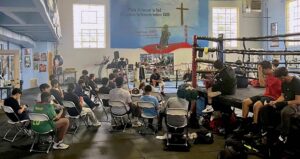 who began Victory Boxing Club in Omaha, Nebraska. [Image at right] The program was first held in his garage and later in a warehouse, after receiving support from local law officers and members of the community. Upon being released from prison, Perales became a minister and, remembering the positive outlet boxing provided him as a youth, felt called to begin a boxing ministry and community center. A faith-based program, Rev. Perales emphasizes Christian values for the youth who participate, offering weekly Bible studies and praying with those who need it.



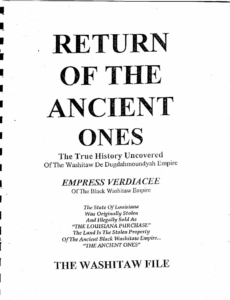
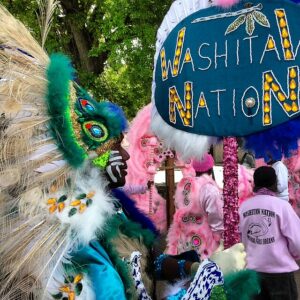
 Members of the Washitaw de Dugdahmoundyah movement claim to be the descendants of the original settlers of the New World. They point to prehistoric mounds across the U.S. and, sometimes, other parts of America, as evidence of legal claims to territory, with particular focus on the northern half of the current state of Louisiana. The Washitaw call this land“Washitaw Proper” and identify it as the heart of their ancient empire and the site of what many Washitaw hope will be sovereign land, at least on the model of Native American reservations.