EMMAÜS TIMELINE
1912 (August 5): Abbé Pierre was born Henri Marie Joseph Grouès in Lyon, France.
1931—1939: Abbé Pierre became Capuchin.
1942—1945: Abbé Pierre joined the Resistance movement.
1945—1951: Abbé Pierre became deputy and pacifist.
1949: The Emmaus movement was established through three significant milestones: the founding of the first Emmaus Association (summer), the reception of the first companion (September), and the arrival of the first homeless family (December).
1954 (February 1): Abbé Pierre delivered a radio appeal in support of the homeless, garnering substantial national and international resonance.
1957: Abbé Pierre fell seriously ill and was hospitalized in Switzerland. Concurrently, amid allegations related to a morality scandal, he was marginalized by certain members of the association and the Church, precipitating a severe internal crisis and leading to fractures within the Emmaus movement.
1963: Abbé Pierre survived a shipwreck in the Río de la Plata. Initially presumed dead, this experience profoundly impacted him, reinforcing the necessity of establishing a formal international structure for the movement.
1969: The “Universal Manifesto” of Emmaus was promulgated, setting forth the movement’s fundamental principles and global mission.
1971: The first statutes of Emmaus International were formally adopted, providing a legal and organizational framework for the movement’s international activities.
1985: Emmaus France was officially established, with the aim of unifying and structuring the diverse Emmaus groups operating within the national territory.
1996: During the “Garaudy affair,” Abbé Pierre publicly supported his friend Roger Garaudy’s work denying the Holocaust, resulting in widespread public outrage and significant controversy surrounding his figure.
2001: A major organizational reform led to the restructuring of Emmaus into three distinct “branches,” enhancing its operational clarity and governance.
2007 (January 22): Abbé Pierre died in Paris, France at ninety-four.
2024: A major scandal erupted as numerous women accused Abbé Pierre of sexual violence, casting a new and serious shadow over his historical role.
2024-2025: Three investigatory reports on sexual violations were released containing corroborating evidence of the violations.
FOUNDER/GROUP HISTORY
The founder, born Marie Joseph Henry Grouès, and later widely known as Henri Grouès (he himself sometimes wrote it with an I, sometimes with a Y), was born on August 5, 1912 in Lyon into an upper-middle-class Catholic family. His father, Antoine Grouès, came from a lineage of textile merchants. Having begun to make his fortune in Mexico, he returned to become one of the board members of the Alliance Textile de Lyon and of the Fonderies du Rhône. His mother, Eulalie Perra, was the daughter of a manufacturer specializing in tulle and muslin.
The family members were devout Catholics. Antoine was actively involved in charities, notably the Hospitaliers-Veilleurs, an old association devoted to washing, grooming, and shaving beggars each Sunday. Henri vividly recalled when his father, at the age of eleven or twelve, first introduced him to the charity’s activities. The family also experienced a traumatic event, that would cast a long shadow over Henri’s life. In 1920, Antoine’s sister, Louise Grouès, was accused of murdering her husband; after a widely publicized trial, she was convicted in 1922 and sentenced to twenty years of hard labor (Leroy 2018).
In 1925, Henri joined the scouts, where he was given the totem name “Meditative Beaver.” He pursued most of his education at the Jesuit College, followed by studies at the Catholic Faculty of Lyon. In late 1926, during his adolescence, he fell in love with a boy named Yves, whose “voice was like that of an angel,” a passion that deeply tormented him for four years (Violet 2007).
A turning point came during a 1927 visit to Assisi, where he experienced a spiritual revelation centered on the figure of Saint Francis, solitude, and renunciation. Frail in health and often bedridden, he spent considerable time reading and reflecting, gradually forming a religious vocation. This process culminated in his decision to become a monk, a path he saw as a way to atone both for his personal sexual turmoil and his family’s disgrace. In November 1931, he took his vows with the Capuchins, the most austere branch of the Franciscan order, which he regarded as the most ascetic. In 1932, now known as Brother Philippe, he entered the convent at Crest (Drôme), where he studied for seven years. He was ordained a priest on August 24, 1938. Yet archival records reveal a series of crises during his monastic life, which he eventually left in April 1939. He was then assigned to the Diocese of Grenoble as vicar of the Basilica of Saint Joseph.
Following military mobilization and a bout of pleurisy, he took up a post as hospital chaplain (September 1940), then as a priest overseeing religious instruction at a state orphanage (January 1941). In the summer of 1942, he returned to Grenoble as vicar of the cathedral, marking the beginning of his involvement in the Resistance. Initially tasked with sheltering Jews and helping them escape to Switzerland (July 1942), he went on to establish Alpine smuggling routes and forge identity documents.
By February 1943, he began hiding men evading the Service du travail obligatoire (Compulsory labor service in Germany for French men). He founded a Resistance group (maquis) in the Chartreuse mountains, later expanding into the Vercors, and launched a newspaper for training maquis leaders. He also produced and distributed underground leaflets titled Résistance, promoting the spiritual dimension of the movement and assisting in the dissemination of Témoignage chrétien publications. Forced to flee Grenoble, he went into hiding in Lyon in September 1943, adopting the pseudonym “Abbé Pierre.” From November 1943 to January 1944, he worked with the regional Resistance headquarters and served as a liaison officer. He also aided in the escape of General de Gaulle’s paralyzed brother to Switzerland. Pursued by authorities, he relocated to Paris in February 1944 under the alias “Abbé Houdin” and joined the Information and Documentation Centre (CID) of the National Resistance Council. Arrested by the Gestapo in May on his return from Spain, where he was organizing a Pyrenean escape network, he managed to escape and was subsequently sent to Algiers. There, he served in the Information and Diplomatic Departments, met General de Gaulle, and continued his Resistance work as a naval chaplain in Morocco. In January 1945, he was appointed to the Ministry of the Navy in Paris. At the end of the war, he was decorated with several honors. It was also during the war, in 1943, that he met Lucie Coutaz-Repland (1899–1982), a Christian trade unionist, affiliated with the Daughters of the Heart of Mary, and member of the Resistance. She became his devoted collaborator from 1945 until his death.
In the postwar period, he was invited to stand for election to the National Constituent Assembly as a deputy for the Mouvement Républicain Populaire (MRP), serving from 1945 to 1951. He resigned from the party in protest over the government’s repression of the Brest construction workers’ strike in April 1950 and its colonial war policies in Indochina. During his tenure as a deputy, he advocated for the legal recognition of conscientious objection.
Simultaneously, he became an active pacifist and was elected vice-president of the Universal Movement for a World Confederation, an organization promoting global peace. In December 1947, he contributed to the work of the United Nations Commission on the drafting of the Universal Declaration of Human Rights in Geneva, where he met Albert Einstein. In 1948, he also helped found the Support Committee for Garry Davis, a pacifist activist and self-declared “citizen of the world.”
As deputy, he rented in 1947 a large, dilapidated house in the Paris suburb of Neuilly-Plaisance in which to reside during sessions of the National Assembly. He began renovating the property with the intention of transforming it into both a youth hostel and an international reception center for Christians (including seminarians and priests associated with the Mission de France). This initiative coincided with a period during which Christians sought to recover hope in the aftermath of the Shoah. The center was named “Emmaus” by Abbé Pierre, in reference to the biblical account of Easter Monday, when the disciples, encountering the resurrected Jesus, regained their hope.
In September 1949, a former convict from Cayenne (Guyana), Georges Legay, attempted suicide. Upon returning to France, he had lost everything (his wife, his daughter) and had fallen into complete despair. He was brought to Abbé Pierre. Shortly thereafter, in December, a family left homeless shortly before Christmas also found refuge there. At the end of the 1940s, France was indeed grappling with a very severe housing crisis, exacerbated by decades of political inertia, wartime destruction, rural exodus, and the post-war baby boom. The plight of isolated men (former legionnaires, ex-prisoners, alcoholics…) was similarly neglected by existing social structures. The development of what would become the modern Emmaus movement thus emerged at the intersection of these two pressing needs: welcoming isolated men into communities where, through salvaging and constructing homes, they could serve homeless families.
From 1950 onwards, the Emmaus movement expanded significantly, welcoming an increasing number of isolated and destitute men, as well as homeless families. However, its real breakthrough occurred following Abbé Pierre’s widely publicized appeal on February 1, 1954, broadcast on two major French radio stations. Within a month, the campaign raised the equivalent of $28,650,000. The appeal was further amplified by L’Osservatore Romano, the Vatican’s official newspaper, and received international press coverage. Referred to as the “insurrection of kindness,” this mobilization led to the creation of numerous shelters and Emmaus communities across France.
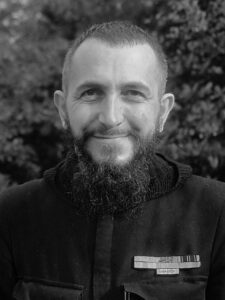
In the years that followed, Abbé Pierre [Image at right] enjoyed widespread international acclaim and was invited to speak at conferences around the world. These included the United States and Canada (1955), Germany (1956), the Netherlands and Portugal (1957), Austria, India, Sweden, and Belgium (1958), Lebanon and South America (1959), and Gabon alongside Dr. Albert Schweitzer (1960). During his travels, he developed relationships with Indian leaders and disciples of Gandhi, including Vinoba Bhave, and established lasting friendships with Dom Hélder Câmara, then Auxiliary Bishop of Rio de Janeiro, and Mgr Georges Mercier, Bishop of Laghouat in the Sahara, both of whom shared his commitment to the cause of the underprivileged. Convinced that development was integral to peace, Abbé Pierre became one of the first French Christian leaders to advocate for the development of the Global South and the fight against world hunger.
Emmaus groups were subsequently established in numerous countries, each pursuing diverse missions: assisting individuals affected by leprosy (Rwanda), maintaining a presence in shantytowns (Argentina, Peru, Brazil), organizing ragpickers’ cooperatives (Japan, Lebanon, Italy, Canada), sending volunteers to developing countries (Sweden, Denmark), supporting men in distress (United States), expanding health and social services (India, Indonesia), and caring for war orphans (South Korea). Some of these groups formally joined the Emmaus movement after initially engaging in related activities independently, while others were founded by returning volunteers inspired by their experiences in France or by the example set by Abbé Pierre.
The history of Emmaus was profoundly shaped by two major events. Between late 1957 and July 1958, Abbé Pierre was hospitalized in Switzerland under the official pretext of illness and exhaustion, although a personal inclination towards women, then considered unspeakable, was the principal reason for the decision. The decision was made by the highest authorities of the French Church under pressure from the Vatican. This hospitalization, orchestrated jointly by the Church and Emmaus leadership, led to significant tensions and an internal split within the movement.
Following his discharge, Abbé Pierre became less involved with the French groups, focusing instead on the international expansion of Emmaus. A second turning point occurred in July 1963, when, during a trip to South America, he survived a shipwreck on the Rio de la Plata. Having been initially presumed dead, he came to recognize the urgent need to formalize the organization’s structure. This realization led to the adoption, in 1969, of a “Universal Manifesto” articulating Emmaus’ core values and principles, followed by the establishment of its first international statutes in 1971.
In the 1970s, various Emmaus groups across the world shifted towards the left, influenced by Marxist ideologies and/or liberation theologies, while others remained more conservative, maintaining a charitable, apolitical stance. As a result, the movement as a whole did not adopt a unified political orientation.
In the early 1980s, in the aftermath of the oil crises and the economic downturns of the previous decade, mass unemployment and homelessness re-emerged prominently in France. Once again sought after by the media, Abbé Pierre experienced a renewed period of widespread fame throughout the 1980s and 1990s. In 1984, to mark the 30th anniversary of his 1954 appeal, he played a central role in “Abbé Pierre’s Christmas,” a major fundraising campaign that triggered an outpouring of donations. That same year, he was invited by the Prime Minister as part of the government’s anti-poverty initiatives, and contributed to the launch of Food Banks in France. In 1989, he was again in the spotlight during the 40th anniversary of the Emmaus movement, marked by the release of the widely publicized film Hiver 54 (Winter 1954). From 1990 to 1994, he remained a prominent figure in the media, adopting a notably avant-garde position on the issue of undocumented and homeless people. During this time, he was even voted France’s most popular public figure sixteen times.
During the 1980s-1990s, in response to growing social needs, Emmaus significantly expanded its initiatives targeting the unemployed (through various work integration programs), the homeless, and those living in substandard housing, extending its activities well beyond its traditional communities. In 1992, the Fondation Abbé Pierre pour le logement des défavorisés (Abbé Pierre Foundation for Housing the Disadvantaged) was established, the only Emmaus entity to bear the founder’s name.
Internationally, the movement was strongly influenced by alter-globalization currents between 1980 and 2000. This turning point is particularly due to Abbé Pierre. In October 1987, he publicly advocated for the cancellation of foreign debt in developing countries (a cause then supported by the Pontifical Commission for Justice and Peace) and co-signed a letter addressed to the International Monetary Fund. In July 1989, he participated in the foundational mobilization of the alter-globalization movement in Paris and endorsed an open letter to the G7 heads of state. He was subsequently invited to serve as an international expert at TOES (The Other Economic Summit), a counter-summit representing the seven poorest countries. In 1994, alongside Ricardo Petrella, he spoke on behalf of Emmaus International at the meeting held in parallel with the G7 summit.
Abbé Pierre also maintained a steadfast commitment to peace: supporting democratic renewal in Benin with Emmaus International in 1990; campaigning against the Gulf War in 1991; meeting the Dalai Lama at the Interfaith Days for Peace in 1992; and, in 1995, traveling to besieged Sarajevo.
Abbé Pierre had been awarded France’s highest honors (Grand Cross of the Legion of Honor in 2004). He passed away on January 27, 2007 at the age of ninety-four. His death prompted widespread national tributes.
Since 2000, Emmaus has continued to diversify its activities in France, placing particular emphasis on supporting refugees and undocumented migrants, as well as aiding in the rehabilitation of individuals completing prison sentences, or developing innovative approaches to reconcile social assistance for vulnerable populations with the imperatives of ecological transition. Internationally, the organization has broadened its mission to encompass the fight for social justice, world peace, universal access to fundamental rights, and the linking of social and environmental struggles, while also promoting the concept of universal citizenship. Emmaus now comprises 300 groups within France and operates in forty-one countries worldwide. Its activities include recovery and recycling; promoting access to health care, education, housing, culture, and peace; advocating for democracy, gender equality, access to clean water, and environmental protection; supporting fair trade, micro-credit initiatives, and efforts to combat over-indebtedness.
DOCTRINES/BELIEFS
Until the 1960s, the majority of Emmaus activists, like French society at large, were Catholics, drawn from both the political right and left. Abbé Pierre once envisioned the creation of an “Order of Monks of Misery,” although this project never materialized. Each community, and often groups of communities, had its own chaplain, a practice that persisted in some cases into the 1970s or 1980s. Subsequently, the role of chaplains gradually diminished. Since the 1980s, Emmaus has been explicitly non-denominational, although it continues to include a number of Christian members.
From its inception, Emmaus has promoted autonomy through work, even if, in practice, this ideal could not be fully realized across all activities, particularly those involving the care of homeless individuals or people living in inadequate housing. The dual objective is to empower individuals, through recovery work that restores their dignity, providing not merely “something to live on” but rather “a reason to live.” It also ensures the financial independence of the organizations themselves, thereby preserving their autonomy from public authorities.
Among other foundational principles, Emmaus advocates solidarity with the most disadvantaged and adheres to the guiding ethic of “serving those who suffer most first.”
RITUALS/PRACTICES
The community, in which “companions” live and work together, has been the most emblematic form of Emmaus since its inception, reimagining the utopian ideal of the Christian community. For many years, communities observed religious practices such as reciting grace before meals and celebrating Mass; however, these rituals gradually disappeared from the 1980s onward.
ORGANIZATION/LEADERSHIP
Non-community structures were established as early as 1954, including groups of volunteer “friends” assisting individuals in debt, sending milk shipments or volunteers to the Global South, maintaining a presence in shantytowns, supporting persons with disabilities, and other activities (See, Group History). These initiatives have expanded significantly since the 1980s to encompass work-based social integration programs, shelters for the homeless and inadequately housed, reception centers for asylum seekers, and rehabilitation facilities for individuals nearing the end of their prison sentences.
Since 1957, Abbé Pierre has not served as the president of any Emmaus organization, either in France or abroad. Nevertheless, he continued to act as a tutelary figure, offering advice, participating in general assemblies, and maintaining a strong symbolic presence across the movement.
In France, starting in 1954, various activities began to organize autonomously: a social housing company, community groups, a newspaper, and “committees of friends without communities,” among others. Over time, “federations” of communities emerged, each advocating different principles; for instance, whether or not to professionalize communities, whether or not companions should be granted responsibilities, whether to emphasize national or international solidarity, and whether to welcome women, couples, and children. By the 1990s, there were as many as seven federations of communities.
As activities diversified, an umbrella organization, “Emmaus France,” was established in 1985 to serve as the institutional representative of the movement vis-à-vis public authorities. Since 2001, Emmaus France has been structured into three “branches:” communities; social action and housing; and solidarity economy and inclusion.
In parallel, Emmaus International was founded in 1971 to unite all Emmaus groups worldwide. Since 2000, continental groups have also been formed. All member groups are required to adhere to the Emmaus International Charter and to pay an annual membership fee.
ISSUES/CHALLENGES
Throughout its history, Emmaus has faced several local financial scandals, although these were isolated incidents. It has also been revealed that Paul Desort, one of Abbé Pierre’s key collaborators from 1953 to the early 1970s, led a life marked by fraudulent activities (both before, during, and after his time with Emmaus), including the embezzlement of funds within the organization (Leray 2016).
More recently, in 2023, Emmaus was significantly affected by a case involving the exploitation of undocumented migrants in certain communities in northern France.
Additionally, Abbé Pierre himself was implicated in two scandals, both of which had repercussions for Emmaus: one during his lifetime and the other posthumously. The first, known as the “Garaudy affair” in 1996, involved Roger Garaudy, a former Communist Party official and member of parliament from 1946, who had remained close to Abbé Pierre throughout their lives. Garaudy, having been expelled from the Communist Party in 1970 due to disagreements over policy, converted to Islam in 1982. In December 1995, Garaudy published Les Mythes fondateurs de la politique israélienne (The founding myths of Israeli policy), which included statements that denied the Holocaust. This led to legal action against him in the spring of 1996. The situation escalated when Abbé Pierre, without apparently really reading the book, publicly supported his friend’s work in April 1996. He persisted in his support for several weeks, despite mounting controversy. Abbé Pierre’s stance was widely condemned by the political class, and as a result, Emmaus was forced to temporarily exile him to Italy. From that point onward, Emmaus assumed full control over media coverage, which had previously been dominated by Abbé Pierre.
The second major scandal emerged in July 2024, set against the backdrop of the #MeToo movement and the revelations of widespread sexual abuse by clergy. In France, this led to a comprehensive independent investigation and the 2021 publication of a high-profile report by CIASE, the “Independent Commission on Sexual Abuse” in the Catholic Church. In 2023, initial testimony regarding sexual violence committed by Abbé Pierre was presented to the Church authorities, prompting a request for a broader investigation. Emmaus then commissioned Egaé, a firm specializing in sexual violence, to conduct the inquiry and issued a public call for testimonies. Three reports were published, one in July 2024, another in September 2024, and the final one in January 2025. It was revealed that Abbé Pierre had committed sexual assaults throughout his life, from at least the early 1950s to 2006. The majority of the incidents involved inappropriate touching of women’s breasts and forced kissing, though more serious allegations, including rape, incest, and pedophilia, were also reported. A total of fifty-seven cases have been documented to date, with thirty-three of these fully corroborated; but it is likely that these represent only a fraction of the assaults perpetrated by the priest.
These reports garnered significant media attention and spurred further journalistic investigations. In September 2024, the French Church agreed to open its archives on Abbé Pierre to journalists and researchers, prompting new journalistic investigations and numerous revelations about the priest’s life, including its darker aspects (Cherel and Etchegoin, 2025).
IMAGE
Image #1: Abbé Pierre, by Wim van Rossem, in the World Union Conference Peace Organisation at Pieterberg, 27 August 1955 (Nationaal Archief, Fotocollectie Anefo).
REFERENCES**
** Unless otherwise noted, the material in this profile is drawn from Axelle Brodiez-Dolino, Emmaüs et l’abbé Pierre. Paris: Presses de Sciences Po, 2009.
SUPPLEMENTARY RESOURCES
Bonnet, Roland and Marin, Gérard. 1969. La grande aventure d’Emmaüs. Paris: Grasset.
Brodiez-Dolino, Axelle. 2017. “1954. Vers un nouvel humanitaire.” pp. 654-57 in Histoire mondiale de la France, edited by Patrick Boucheron. Paris: Le Seuil.
Brodiez-Dolino, Axelle. 2009. Emmaüs et l’abbé Pierre. Paris: Presses de Sciences Po.
Brodiez-Dolino, Axelle, with Mary, Brigitte. 2014. “GROUÈS Marie, Joseph, Henri, dit l’abbé Pierre.” dans Le Maitron. Dictionnaire biographique du mouvement ouvrier français, en ligne. Accessed from https://maitron.fr/spip.php?article157926 on 12 May 2025.
Chabaud, Céline. 1998. Hiver 1954: l’apparition de l’abbé Pierre et d’Emmaüs dans la conscience sociale française. Mémoire de maîtrise d’histoire, Université Paris X-Nanterre.
Cherel Laetitia and Etchegoin Marie-France. 2025. Abbé Pierre: La fabrique d’un saint. Paris: Allary Editions.
Chevallier, Bernard. 1979. Emmaüs ou venger l’homme. Paris: Le centurion.
Coutaz, Lucie. 1976. Avec les chiffonniers d’Emmaüs. Charenton: SCEPES.
Doudet, Sophie. 2022. L’abbé Pierre. Paris: Gallimard.
Dreyfus, Michel. 2009. “GARAUDY Roger, Jean, Charles.” dans Le Maitron. Dictionnaire biographique du mouvement ouvrier français, en ligne. Accessed from https://maitron.fr/spip.php?article50436 on 12 May 2025.
Emmaus International, Emmaus France, Abbé Pierre Foundation. 2024. Investigation Report. Paris, France.
Lefevre, Denis. 2001. Les combats d’Emmaüs. Paris: Le Cherche-midi.
Leray, Gérard. 2016. Monsieur Paul, l’escroc qui aimait les pauvres. Lèves: Ella Éditions.
Leroy, Michel. 2018. Le Procès de Madame Bassarabo: La ténébreuse affaire de ” l’Amazone rouge.” Paris : L’Harmattan.
Lunel, Pierre. 1992. Quarante ans d’amour. Paris: Éditions n°1.
Lunel, Pierre. 1989. L’abbé Pierre, l’insurgé de Dieu, Paris: Éditions n°1/Stock.
Rodet, Anne-Sophie. 2003. Naissance et fonctionnement d’Emmaüs International (1949-1988), un rassemblement d’initiatives autour de l’esprit “Emmaüs,” Mémoire de maîtrise, Université Paris IV-Sorbonne.
Simon, Boris. 1971. L’abbé Pierre et les chiffonniers d’Emmaüs. Paris: Le Seuil.
Violet, Bernard. 2007. L’abbé Pierre. Paris: Fayard.
Publication Date:
22 May 2025
