C3 Church


C3 CHURCH TIMELINE

1952 (May 21):  Phil Pringle was born in Masterton, New Zealand.

1971:  Phil had a vision of the devil circling him. Frightened, he called out, “Jesus!”

1971:  Phil and then-girlfriend Christine (known as a “Chris” within the movement) responded to an altar call at an Assembly of God Church in Sydenham, a suburb outside of Christchurch. They were born again.

1971 (August 8):  Phil and Chris were married.

1972:  While living in Oxford Terrace, New Zealand, a pastor from Sydney, Paul Collins, attended one of Phil and Chris’s house meetings. He made the comment, “Oh, we need something like this in Sydney,” thereby planting the seed of Phil’s vision that he would one day start a church in Sydney.

1973:  Pastor Dennis Barton was ousted from the Sydenham Assembly of God Church. Phil and Chris followed him to his new church in Christchurch, where they become Youth Leaders.

1978:  Phil received an invitation to preach in Madras, India. On his route back to New Zealand from South Asia, his plane landed in Sydney. He then heard a voice (which he interpreted as the voice of God) saying, “I want you to come to Sydney.”

1979:  In Lyttleton, New Zealand, Phil envisaged starting a church in Sydney that had an associated Arts and Bible College.

1980:  Phil and Chris moved from Lyttleton to Sydney to start Christian Centre Northside Church.

1980:  The church hosted its first service (an Easter Service) at Dee Why Surf Club in Oxford Falls. Only twelve people attended.

1984:  Oxford Falls Grammar School and C3 College were established.

2008:  At the “Here We Go” global conference held in Hawaii, Christian City Church announced that it would officially change its name to “C3 Church.”

2020:  C3 Church oversees 594 churches in sixty-four countries, and a global membership of more than 100,000.

FOUNDER/GROUP HISTORY

Phil Pringle was born on May 21, 1952 in Masterton, New Zealand to an upper-middle class family. When he was very young his mother passed away from brain cancer. Christine Pringle (known as “Chris” within the C3 movement) came from a lower-class background, and her father died when she was only an infant. The two first met as young kids growing up in Masterton, but it wasn’t until they both attended Wairarapa College, where they took the same English and History classes, that they became friends, and eventually, high school sweethearts. The two connected over their shared passion for art, music, and drama (Shin 2014). After high school Phil began working as a garbage-collector and attending Arts School, while Chris studied to become a Kindergarten teacher.

Coming of age in the 1960s, the couple were heavily involved in the New Zealand hippie movement; in their teens they grew their hair long, experimented with psychedelics, and studied Eastern philosophy and religion. According to Chris, at the time, “the only people we knew were clairvoyants or card readers” (Shin 2014). In 1971, while living together in Christchurch, Phil had a vision of the devil while in a semi-conscious state. In a panic, he woke up and cried out, “Jesus!” Deeply frightened, the couple said the Lord’s Prayer together. The next morning, they phoned a friend of theirs, Dorothy, for advice. Dorothy, who read tarot cards, recommended they visit a psychic society. However, Dorothy’s mother, May, who had just converted to Christianity three weeks earlier, overheard the conversation. May got the couple’s number from Dorothy and phoned them back, putting them in touch with an Assembly of God (Pentecostal) church. The following Sunday, Phil and Chris visited the church, which was located in Sydenham, a suburb outside of Christchurch, and led by a pastor named Dennis Barton. At the end of the service, the pastor invited all of the congregants to receive Jesus Christ. Both Phil and Chris walked to the front and were born again. Three weeks later, at the request of the church, the couple got married (Barclay 1987). [Image at right]

Under the direction of pastor Dennis Barton, Phil and Chris became Youth Leaders at the church. They also moved into a large house with other church members, holding prayer meetings on Monday nights that attracted between seventy to one hundred people. In 1972, a pastor from Sydney, Australia, Paul Collins, attended one of their house meetings. He made the comment, “Oh, we need something like this in Sydney.” Phil recalls this event as the moment God gave him the vision that he would one day lead a church in Sydney (Barclay 1987).

In 1973, pastor Dennis Barton was asked to step down as pastor and leave the church. This caused massive rifts within the congregation. Phil and Chris struggled with the decision over whether or not to leave. In the end, they followed Barton and helped him plant a new church in Christchurch (Barclay 1987).

Sometime after serving as an associate pastor with Barton in Christchurch, Phil felt a strong call to start a church in Sydney. He received an offer from pastor Paul Collins to serve with him at his congregation in Sydney. Phil convinced Chris to make the trip, confident that his vision would soon come to fruition. However, after only five months in Sydney, it became clear that this was not the right time. Having found little success in their new venture, the couple were forced to return to Christchurch. Phil fell into a deep depression. He decided to quite the ministry for good, and he took up a job as a postman (Pringle 2005:71).

While working as a postman, Phil’s desire to become a pastor gradually returned. He and Chris made the decision to move to Lyttleton, a suburb outside of Christchurch, to start their own church. They ran this church for three years. During this period, Phil allegedly received signs from God that he would one day plant a church in Sydney, as well as found a Christian College. In 1978, Phil received an invitation to preach at a crusade in Madras, India. On his return trip back to New Zealand, his plane stopped in Sydney. Upon landing, Phil heard what he interpreted as the voice of God say, “I want you to come to Sydney” (Barclay 1987).

Later that year, Phil and Chris put a deposit down on a home in Lyttleton. However, soon after placing the deposit, Phil regretted the decision, feeling strongly that he and Chris needed to make the trip to Sydney to plant a church. He convinced her to forfeit the deposit, and in 1980 they made the move to Sydney with their three children, Daniel, Rebekah, and Joseph. They were followed by Simon and Helen McIntyre, Alison Easterbrook, and Phil’s brother.

In 1980, Phil and Chris started Christian Centre Northside Church, which they took over from Paul Collins, who had moved to Hong Kong to do mission work. Their first service, an Easter Service, was held at the Dee Why Surf Club in Oxford Falls and had only twelve people in attendance. However, within four years, their church grew to four hundred members.

Throughout the 1980s, Phil spearheaded a number of church plants, first around Sydney, and then into other parts of Australia. Over this period, they renamed the church, “Christian City Church.” In 1984, Phil founded the Oxford Falls Grammar School as well as Christian City Church (now C3) College. In 2008, at the “Here We Go” global conference held in Hawaii, the church officially changed its name to “C3 Church.”

C3 Church has come a long way from its humble beginnings. While Oxford Falls still houses the church’s primary campus, C3 SYD Oxford Falls (which includes an arts and bible college, a grammar school, television studio, café, art gallery, and auditorium), one can find C3 Churches around the globe (on every continent except Antarctica). [Image at right] As of 2020, C3 Church Global boasts more than 500 churches in sixty-four countries (C3 Church Global 2020a).

Much of the success of the C3 movement is the result of Phil Pringle’s leadership skills and relentless entrepreneurialism. Since the movement’s beginnings, he has doggedly sought to expand the reach of C3 to the four corners of the earth, which he has accomplished by means of energetic preaching, impressive charisma, stoking intense missionary zeal, and harnessing the most up-to-date mass media technologies and marketing methods. Phil has long been a sought-after public speaker, both in religious and secular (business) contexts, speaking on topics as diverse as Christian faith, leadership, personal finances, and church planting. He regularly travels around the world to speak at conferences, [Image at right] preaching a combination of neo-Pentecostal and prosperity theology, which is highly tailored to appeal to contemporary late modern (and secular) sensibilities.
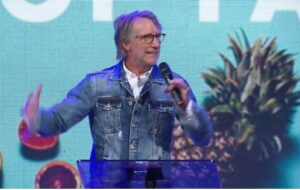
In many respects, Phil’s message resembles a kind of Christianized self-help, focused on empowering individuals to become prosperous leaders. However, his counter-cultural and artistic backgrounds also shape his teachings. For example, he places a sizeable emphasis in his talks on the themes of creativity, personal authenticity, and self-realization. Phil also hosts a television program, “Your Best Life with Phil Program,” which has appeared on ACC in Australia and TBN in Europe, and is today broadcast on YouTube. And in addition to speaking publicly, Phil has penned over seventeen books, which include: Moving in the Spirit (1994), Keys to Financial Excellence (2003), Faith: Moving the Heart and Hand of God (2005), Parable of the Dog (2014), and Leadership 101 (2018). Though none of his books have become international best-sellers they have nevertheless served to give substance and form to an overarching “C3 Culture.”

Chris Pringle has also played a significant role in spreading the reach of C3 Church. In the 1980s and 1990s, she was a singer in a Christian rock group. As co-leader of the movement, she regularly preaches at C3 conferences and events, and has from the start served as Senior Minister at the main church campus in Oxford Falls. And since 1998, Chris has led the Everywoman Gathering, an annual women-only C3 conference meant to empower and strengthen C3’s female community. In 2005, she published Jesse: Found In Heaven, which recounts her experience suffering a miscarriage, and how she grieved her unborn child.

As of this writing, Phil is the President of C3 Church Global, the President of the Oxford Falls Grammar School Board, and the President of C3 College. Moreover, Phil and Chris are presently the Senior Ministers of all of the C3 Churches in Sydney [Image at right] (though in November 2021 they plan to step down and become Pastor Emeritus (C3 Church Sydney 2020). Thus, while C3 Church may be an international movement, encompassing hundreds of churches around the world, Phil and Chris’s personal imprint are never difficult to detect.

DOCTRINES/BELIEFS

As of November 2020, the C3 Church Global website lists the Church’s core beliefs as follows:

There is one God: God the Father, God the Son, and God the Holy Spirit.

In the deity of our Lord Jesus Christ the Son of God; we believe in His virgin birth, in His sinless life, in His miracles, in His victorious and atoning death, in His bodily resurrection, in His ascension to the right hand of the Father, His constant intercession and in His imminent return.

In the person and work of the Holy Spirit with His fruits and gifts available in the Church.

The Bible is the living word of God. It is infallible, authoritative and everlasting and is the foundation of all Christian doctrine.

In the existence of an evil spiritual being known as the devil.

In the spiritually lost condition of all people and the essential need for the new birth by faith in Jesus Christ.

In the baptism of the Holy Spirit as a gift available to believers subsequent to the new birth, with normal evidence of speaking in other tongues

In the sacraments of the Lords Supper and baptism by full immersion in water for all believers.

In the resurrection of both the saved and the lost, the one to everlasting life and the other to everlasting separation from God.

In the church being the body of Christ, and each member being an active part of a local church, fulfilling the Great Commission.

Marriage was instituted by God, ratified by Jesus, and is exclusively between a man and a woman. It is a picture of Christ and his church.

Sex is a gift from God for procreation and unity, and it is only appropriate within and designed for marriage. (C3 Church Global 2020b)

As this statement of beliefs makes clear, C3 Church falls squarely within the conservative evangelical camp inasmuch as it subscribes to traditional positions on doctrines, such as the virgin birth of Jesus Christ, the reality of miracles as reported in Scripture, and the imminent return of Christ. And in addition to theological conservatism, C3 Church likewise espouses social conservatism, viewing marriage as the exclusive remit of heterosexual couples, and same-sex sexual relations as sinful. However, C3 Church also clearly belongs to the “Pentecostal” family, stressing as Phil and Chris do, [Image at right] baptism in the Holy Spirit, glossolalia (speaking in tongues), the existence of spiritual warfare, and the promise of divine healing.

The Pentecostal aspects of Phil and Chris’s version of Christianity can be traced back to their conversion in an Assembly of God Church in Sydenham. However, it’s clear that, if the couple did ever subscribe to classical Pentecostalism (and this is doubtful), over the years they have increasingly deviated from it (for instance, C3 Church does not belong to the wider Pentecostal church network in Australia, the Australian Christian Churches (ACC)). In fact, C3 theology is best thought of as a synthesis of Pentecostal or Charismatic Christian motifs and ideas with the prosperity gospel.

The prosperity gospel has its principal roots in the nineteenth century religious movements, New Thought (sometimes called “mind-cure) and Christian Science, which, in one form or another, espoused a high anthropology, conceived of the inner self as itself divine, and championed a universal right to prosperity and physical healing (Coleman 2000: 47). Having said that said, twentieth-century prosperity preachers liberally blended these metaphysical religious traditions with secular modes of thought such as positive thinking, self-help, and positive psychology, a trend that is becoming increasingly common (Coleman 2000:127). In any case, the prosperity gospel stands firmly within the American tradition of rugged individualism and self-reliance.
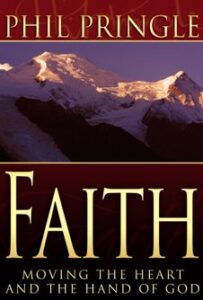
According to historian Kate Bowler (2013) the prosperity gospel centres on four themes: faith, wealth, health, and victory (2013:7). Each of these themes is prominent in C3 theology. For instance, in Faith: Moving the Heart and Hand of God, [Image at right] Phil Pringle (2005) writes, “Faith is a time rebel. It travels through time into the future; it feels the experience of a yet future event. But it feels that event in the ‘now.’ Faith is not pretending that it’s there. It is not hoping that it’s there. It is not imagining that it’s there. Faith knows it’s there because it has the substance of the experience, or the thing, in itself. Faith is the substance of a ‘thing’; it feels the ‘thing’ existing within the heart right now. Because it exists inside me, I know that it exists” (2005:66).

What Phil is championing here is a form of “positive confession,” which refers to the idea that “words spoken ‘in faith’ are regarded as objectifications of reality” (Coleman 2000: 28). According to C3 theology, real faith is not passive but active, capable of manifesting things in the external world. Interestingly, in this way, C3’s prosperity message has striking resemblances to New Age Spirituality (Watts 2019).

Furthermore, the accumulation of wealth plays a pivotal role in C3 teachings. Not only are C3 members encouraged to become affluent, but wealth is generally considered a sign of divine blessing. In Keys to Financial Excellence [Image at right] Phil Pringle (2003) writes, “Those who spend copious amounts of time embracing the tenets and teachings of Scripture are going to inherit the same spirit and principles of success and abundance that accompanied the lives of the wealthy and accomplished men who wrote it” (2003:45). He adds, “the Lord wants to give us an overflowing abundance!” (2003:50). Of course, if God wants all faithful Christians to be rich, then it stands to reason that if someone is poor it is because they lack faith. And indeed, this idea is intimated, if not outright endorsed, in Phil’s writings (see for example, Pringle 2005:186) (see picture of book cover).

And as for the themes of health and victory, it is a basic tenet of C3 theology that to become prosperous is not only to be financially well-off, but also to have good health and a positive self-image. According to Phil (2005), “A poor self-image is not just a minor handicap in life. It is not just some extra baggage that is unpleasant to carry around. It is a serious problem for our lives in God.” Accordingly, he counsels changing our “self-loathing” into “self-love” (2005:151). Moreover, Phil Pringle’s conception of spiritual warfare is couched almost entirely in therapeutic terms: “The Devil is the one who wants to keep you feeling unworthy and undeserving” (2005:154). Thus, within C3 thought, a mentality of victory (which entails feeling good about oneself, having self-confidence, and being upbeat) is idealized, while a victim mentality is tacitly pathologized. Phil sums this up, “Faith is an attitude of victory within” (Pringle 2005:32).

While C3 Church may fall within the conservative Protestant camp in terms of its stated beliefs, it is quite evident that in terms of both style and substance, it has eagerly embraced the counter-cultural and therapeutic ethos of the 1960s. Anthropologist Simon Coleman (2000) refers to this as the “‘Californication’ of conservative Protestants,” which refers to the way certain religious conservatives “have accommodated to the anti-institutional, therapeutic, cultural preferences of the baby boomers” (2000:24). One stark example of this accommodation shows up in the ways Phil and Chris regularly proclaim that C3 is “not a religion,” so much as a “faith,” a rhetorical strategy which mirrors the claim to being “spiritual but not religious” that has become commonplace in late modern societies (Watts 2020). Indeed, it is in large part owing to the church’s accommodation to the expressive individualism that defines mainstream Western culture in the twenty-first century that C3 Church has been uniquely successful in attracting young “hipsters” who see the church as an innovative and rebellious way to “do church” (Watts 2020b).

RITUALS/PRACTICES

 While not all C3 churches can be considered megachurches proper (those with over two-thousand regular attendees), even the C3 campuses which have smaller congregations seek to recreate the aesthetic, style, and feel of the Oxford Falls campus. The reason for this is that C3 worship services have proven extremely effective at enabling the church to attract and convert members.
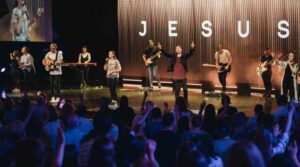
A critical factor in their success is the role of worship music. C3 Church has long marshalled the use of the most innovative sound equipment and performance technologies in order to give their Sunday services the feel of a contemporary rock concert [Image at right].

Moreover, at every C3 service one generally finds attractive young people (singers and instrumentalists) performing songs whose lyrics are projected on massive screens which hang at the back of the stage. They sing a combination of popular Christian worship music and music recorded and produced at C3 College. Indeed, the creation and dissemination of their original worship music has been pivotal to the church’s mission strategy (one can easily download C3 music on most streaming apps). However, the role of those onstage is not merely to perform for members in the audience, but also to “model the correct way to experience the presence of God” (Jennings 2008:163). Thus, from the moment one enters a C3 worship service, one is being trained in the art of “metakinesis,” a term which anthropologist Tanya Luhrmann (2004) uses to refer to the various ways individuals learn to identify and discern the presence of God in their subjective experiences (2004:522). It follows that the use of worship music in Sunday services plays a key role in creating a distinct auditory environment, which increases the likelihood that attendees will experience the presence of God (Wellman et al. 2014).

Another reason for C3’s success revolves around aesthetics. In order to attract newcomers, C3 church seeks to remove the potential barriers to cultural participation. So, instead of hymns, popular Christian music that closely resembles Top-40 radio is played; rather than taking place in old church buildings, services commonly take place in warehouses or amphitheatres; and rather than traditional vestments, a dressed-down hipster dress code is tacitly normalized. Indeed, C3 churches tend to resemble other common sites of leisure in modern societies, such as the mall, the sports arena, or the movie theatre (Maddox 2012:153). [Image at right]

Of course, in keeping with their neo-Pentecostal background, C3 Church leaders do practice supernatural healing, full immersion baptisms, and speaking in tongues, however, these practices are often shielded from the general public. That is, they tend only to take place at exclusive C3 services and conferences, where media is generally prohibited. Thus, the church goes to great lengths not to alienate those whose cultural sensibilities might align with the mainstream in late modern societies.

Finally, in evangelical fashion, C3 members are regularly encouraged, while away from church, to read their bibles daily, participate in C3 activities and events, socialize with other Christians, and closely monitor their emotions and experiences for evidence of both God and the Devil. In this way, C3 theology asks of its members to stringently discipline themselves in conformity with its message of personal empowerment and material prosperity.

ORGANIZATION/LEADERSHIP           

C3 Church Global, registered as a charity based out of Sydney, oversees the international church movement. C3 Church Global’s Board of Directors, headed by Phil Pringle, provides direction, vision, and goals for the movement at large. Under them sit the Regional Directors (all of whom are heterosexual married couples) who oversee the various C3 churches within a particular geographic region. These regions include Australia (with 106 churches), the Americas (with forty-six), Canada (with nineteen), East Africa (with eighty), Mena (with forty-six), East Asia (with three), Europe (with thirty-eight), South Asia (with eighty-four), South East Asia (with seventy-five), Southern Africa (with twenty-six), West Africa (with nine), and Pacific (with fifty-five) (C3 Global 2020c). Within specific regions, Church Oversees are tasked with providing structure and support to local pastors. And each C3 Church is headed by Senior Pastors, who are sometimes supported by Junior Pastors.
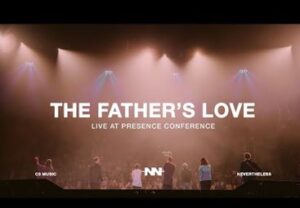
The overall coherence and consistency of the Church Movement is maintained through annual events and conferences, which draw C3 leadership and members from around the globe. The largest of these is the annual “Presence Conference,” [Image at right] held in a different location each year, which offers an opportunity for local C3 groups to hear their Senior Pastors preach in person, as well as an opportunity for leadership to announce new goals and directions for the movement.

At the same time, C3 College in Oxford Falls has long functioned as an incubator for aspiring C3 pastors; many who now hold leadership positions completed a degree at the college. At C3 College, students can take courses in biblical studies and theology, music, film, and media, both in person and online. [Image at right]

There is a strong focus on media communications and digital marketing within the movement. The church relies on the free labour of its creative-class members to produce and disseminate C3 Church publicity, and promote the “C3 brand” around the world. Indeed, consumers can purchase C3 merchandise and products online from the “C3 Store,” which now sells everything from apparel, to books, to digital courses on personal development, leadership, and a Masterclass on church planting. And in recent years, the church has even developed its own app, “C3 Church Global App,” which individuals can use to locate C3 Churches in their local cities and towns.

While C3 Church Global seems on the surface to be a highly decentralized operation, it nevertheless exhibits a striking degree of standardized features. Indeed, the church operates much like a transnational corporation inasmuch as it is led by entrepreneurial Senior Pastors who espouse a top-down management style and command “obedience to an organisational culture” (Maddox 2012:152). In this way, C3 Church squarely belongs to what J. B. Watson and Walter H. Scalen (2008) call “the church growth movement,” which they contend is defined by the following four principles: an emphasis on quantitative measures of success such as worship attendance and number of new converts; a focus on “contextualixation, that is, a church delivers its message within the context of the culture”; the application of modern marketing techniques; and the value of net-working with like-minded churches (2008:171).

Finally, given that C3 Church has risen to prominence during the very same years that the Welfare State in Australia has been steadily dismantled, a number of scholars argue that its success owes much to its elective affinities with neoliberal economic policies (Shanahan 2019).

ISSUES/CHALLENGES

Phil Pringle, and C3 Church more generally, have been widely criticized by other Christian leaders and groups for preaching a version of Christianity that they consider heretical, shallow, and corrupt. In fact, self-described ex-C3 members have setup a Christian watchdog website, “C3 Church Watch,” meant to bring attention to what they see as the church’s unbiblical teachings and dissuade others from joining the C3 movement. [Image at right]

Additionally, C3 Church has been forced to weather a number of public scandals in recent years. In 2017, a C3 pastor, Nicholas Dimitris, was found guilty of participating in a “straw borrower” scheme to defraud local banks (Weaver 2015). In 2017, Mosaic Defredes, a C3 pastor was convicted of a major piracy racket (Dunn and Sutton 2017). And another C3 pastor, Anthony Shalala, was allegedly paid $300,000 as compensation to leave the church following claims of sexual misconduct (Passi 2019).

Lastly, in 2019, the Australian television news program, A Current Affair, ran an exposé of the church. Showcasing negative testimonies from ex C3-members, along with footage of C3 events and an impromptu interview with Phil Pringle, [Image at right] the program took a critical stance on the church’s theology, funding practices, approach to mental illness, and views of same-sex relations (Passi 2019).

In response to the allegations, the church publicly denied any wrongdoing, and claimed that with respect to the issue of same-sex relations, “our approach is to embrace everyone and care for them on the basis of our overriding belief that our God is full of love and compassion for everybody, regardless of their personal circumstance or sexual orientation” (C3 Church Sydney 2019). The seeming conflict between the church’s official stance on same-sex relations (as represented in their official statement of beliefs) and public statements like this has become a heated source of controversy, especially in those cultural contexts where same-sex relations are generally considered unproblematic and entirely normal. For instance, C3 Toronto in Canada has been publicly criticized by an ex-member for deceiving her as regards their position on the issue of homosexuality (Garrison 2019).

It would seem, in turn, that there exists a real tension at the core of the movement insofar as it seeks to retain a commitment to traditional theological and social positions, while simultaneously accommodating to the latest cultural fads, embracing the most up-to-date forms of technology, and taking a strongly world-affirming stance. However, whether or not this tension will have negative consequences for the movement itself, only time will tell.

IMAGES

Image #1: Photograph of Phil and Chris Pringle at their wedding.
Image #2: The C3 Church logo.
Image #3: Photograph of Phil Pringle preaching.
Image #4: Photograph of Senior Ministers Phil and Chris Pringle.
Image #5: Photograph of Phil Pringle praying over parishioner.
Image #6: Cover of Faith: Moving the Heart and Hand of God.
Image #7: Cover of Keys to Financial Excellence.
Image #8: Musical performance at a C3 church service.
Image #9: C3 church in Calgary, Canada.
Image #10: The Presence Conference.
Image #11: Students participating in a class at C3 College.
Image #12: C3 Church Watch welbsite.
Image #13: Impromptu media interview with Phil Pringle.

REFERENCES

Barclay, John. 1987. Arise! The Story of Christian City Church. Sydney: Covenant Publishing.

Bowler, Kate. 2013. Blessed: A History of the American Prosperity Gospel. New York: Oxford University Press.

C3 Church Global. 2020a. “Home Page.” Accessed from https://c3churchglobal.com on 27 November 2020.

C3 Church Global. 2020b. “What We Believe.” C3 Church Global website. Accessed from https://c3churchglobal.com/what-we-believe/ on 27 November 2020.

C3 Church Global. 2020c. “This Is Us.” C3 Church Global website. Accessed from https://issuu.com/c3churchglobal/docs/this_is_us_-_c3_global on 27 November 2020.

C3 Church Sydney. 2019. “Media Response To A Current Affair.” C3SYD, December 5. Accessed from https://c3syd.church/media-response/ on 27 November 2020.

Coleman, Simon. 2000. The Globalisation of Charismatic Christianity: Spreading the Gospel of Prosperity. Cambridge: Cambridge University Press.

Dunn, Matt, and Candace Sutton. 2017. “Pastor Mosaic and his ‘disciple’ Allison masterminded Australia’s biggest piracy racket worth $21m.” News.com.au, March 21. Accessed from https://www.news.com.au/technology/online/hacking/pastor-mosaic-and-his-disciple-allison-masterminded-australias-biggest-piracy-racket-worth-21m/news-story/2b80939ce4e53ff17f304e68d23857ce on 27 November 2020.

Garrison, Alyssa. 2019. “I Fell For a ‘Progressive’ Church, and It Was a Mistake.” Flare.com, December 10. Accessed from https://www.flare.com/identity/c3-church-anti-gay/ on 27 November 2020.

Jennings, Mark. 2008. “‘Won’t you break free?’ An ethnography of music and the divine-human encounter at an Australian Pentecostal Church.” Culture and Religion 9:161-74.

Luhrmann, Tanya M. 2004. “Metakinesis: How God Becomes Intimate in Contemporary U.S. Christianity.” American Anthropologist 106:518-28.

Maddox, Marion. 2012. “‘In the Goofy parking lot’: growth churches as a novel religious form of late capitalism.” Social Compass 59:146-58.

Passi, Sacha. 2019. “Scott Morrison linked to controversial ‘miracles for money’ church.” A Current Affair. Accessed from https://9now.nine.com.au/a-current-affair/c3-church-scott-morrison-link-to-scandal-former-pastor/6579a36b-5a9e-462d-bcd4-ccae869081d1 on 27 November 2020.

Pringle, Phil. 2005. Faith: Moving the Heart and the Hand of God. New Kensington, PA: Whitaker House.

Pringle, Phil. 2003. Keys to Financial Excellence. New Kensington, PA: Whitaker House.

Shanahan, Mairead. 2019. “‘An Unstoppable Force for Good’?: How Neoliberal Governance Facilitated the Growth of Australian Suburban-Based Pentecostal Megachurches.” Religions 10:1-16.

Shin, Yong Tung. 2014. “Interview With the ‘Blonde Nana’: How Mr And Mrs Pringle Met.” City News, March 14. Accessed from https://www.citynews.sg/2014/03/14/interview-with-the-blonde-nana-how-mr-and-mrs-pringle-met/ on 27 November 2020.

Watson., J.B., and Walter H. Scalen. 2008. “‘Dining with the Devil’: The Unique Secularization of American Evangelical Churches.” International Sociological Review 83: 171-80.

Watts, Galen. 2019. “Religion, Science, and Disenchantment.” Zygon 54:1022-35.

Watts, Galen. 2020a. The religion of the heart: ‘Spirituality’ in late modernity.” American Journal of Cultural Sociology. Accessed from https://doi.org/10.1057/s41290-020-00106-x.

Watts, Galen. 2020b. “A hipster evangelical church is taking Toronto by storm,” CBC, July 8. Accessed from https://www.cbc.ca/documentaries/cbc-docs-pov/a-hipster-evangelical-church-is-taking-toronto-by-storm-1.5619110 on 27 November.

Weave, Emily. 2015. “Seven Falls conspirators to be sentenced June 2” Blue Ridge Now.com, April 23. Accessed from https://www.blueridgenow.com/news/20150423/seven-falls-conspirators-to-be-sentenced-june-2 on 27 November 2020.

Wellman, James K., Katie E. Corcoran, and Kate Stockly-Meyerdirk. 2014. “‘God Is Like a Drug…’: Explaining Interaction Ritual Chains in American Megachurches” Sociological Forum 29:650-72.

Publication Date:
30 November 2020

Share

Universal Medicine


UNIVERSAL MEDICINE TIMELINE

1964:  Serge Benhayon (Benhayon) was born in Uruguay.

1970:  Benhayon emigrated to Sydney, Australia with his parents where he attended school and developed a sporting career.

1990s (Early):  Benhayon moved with his wife Deborah and their children to Northern Rivers of New South Wales, Australia where he continued his career as a Tennis Coach.

1999:  Benhayon had a series of esoteric revelations communicating alternative healing modalities and began practising from his home in the Northern Rivers. Benhayon named his philosophy “Universal Medicine.”

2002:  Serge and Deborah Benhayon separated.

2003: Benhayon offered the first courses and training workshops in his methods.in Northern New South Wales, Australia.

2004:  A course called The Arcane School was challenged by lawyers from Lucis Trust; Benhayon ceased using this title.

2005:  Benhayon began offering workshops twice a year in Somerset, United Kingdom.

2006:  The Universal Medicine website established.

2007:  UniMed Publishing, Universal Medicine’s dedicated publishing enterprise, was established.

2008:  Benhayon offered the first five day live-in “Retreats in Vietnam and Australia.”

2010:  Benhayon married Miranda who had been a long-standing friend of the family.

2011:  Benhayon established The College of Universal Medicine, a charitable organisation.

2012-2013:  Esther Rockett created blogs dedicated to discrediting Universal Medicine.

2013:  Natalie Benhayon, Serge Benhayon’s daughter, launched her mobile App, Our Cycles and establishes a company, Esoteric Women’s Health.

2014:  Students of Universal Medicine launched a web blog called The Facts about Universal Medicine to counter negative claims being made in the media.

2016:  Benhayon made a formal accusation of defamation against Esther Rockett.

2018 (December):  The New South Wales Supreme Court found against Serge Benhayon.

2019:  The content of the Web Blog site called The Facts about Universal Medicine was removed.

2020 (May):  The Universal Medicine website seemed to have returned to an earlier iteration and appeared in process of redesign.

2020:  Under COVID19 restrictions, Benhayon was offering his teachings online instead of at face to face meetings.

FOUNDER/GROUP HISTORY

Serge Benhayon [Image at right] was born in Uruguay in 1964. He emigrated to Sydney, Australia in 1970 with his parents where he attended school and developed a sporting career. In the early 1990s, Benhayon moved with his wife Deborah and their children to Northern Rivers of New South Wales, Australia where he continued his career as a Tennis Coach.

Benhayon founded Universal Medicine in the Northern Rivers of New South Wales, Australia in 1999. He was inspired by esoteric revelations in which knowledge of new methods for alternative healing were communicated to him. Benhayon describes his experience in a manner similar to the ways others report revelations (See, Stark 1992). Names like “the Hierarchy” and “Sanat Kumara” were presented to him, which he later discovered in the works of theosophist Alice A. Bailey (1880-1949). He developed and began practising a repertoire of esoteric complementary and alternative healing practices. Benhayon’s background reveals familiarity with a variety of religious traditions and experience with complementary and alternative therapies (Coco 2020).

In his youth, Benhayon was exposed to an assortment of religious influences, though neither his parents nor his grandparents practiced religion. He remembers that his father, born of Moroccan Jewish and Catholic lineages, studied different religions (S. Benhayon 2017). Benhayon’s mother’s religious lineage was Russian Jew. During his schooling, Benhayon pursued an active interest in Church of England religious education, reading booklets on the Christian Gospels and attending church on his own terms. At school he excelled in athletics and later developed a career in professional tennis training. The growth of Universal Medicine (UM) is characterised by word of mouth networking, public demand, and later, by initiatives that were created and continue to be maintained by Benhayon family members and other dedicated associates.

Initially, Benhayon worked from his home, testing his healing techniques amongst friends and family. At the end of 2000-2001, he moved his practice to a hired room in a colleague’s practice. He eventually established the first UM Clinic in a refurbished old house in Goonellabah, [Image at right] Northern New South Wales. Serge and first wife Deborah separated in 2002 though Deborah continued to be involved with UM. By 2003-2004, he had ceased tennis coaching and was offering multi-level training workshops in his healing modalities at various public locations in the Northern Rivers. He also began conducting monthly meditation sessions based on the metaphysical worldview underpinning his healing methods (S. Benhayon 2017). A course called The Arcane School was offered briefly in 2004.

Benhayon named his religious vision “The Way of The Livingness” (TWL). [Image at right] Around the time he began voicing his esoteric impressions publicly, a friend handed him a compilation of writings by Alice Bailey (Bailey 1971). In Bailey’s writings, which Benhayon asserts that he has not read very closely, he encountered a worldview that resonated with his own revelatory insights. He maintains that his methods extend the esoteric goals of the Ageless Wisdom tradition by developing practical applications to guide people in their evolution (S. Benhayon 2018). In 2008, Universal Medicine ran the first of what were to become recurrent yearly five-day retreats, in Vietnam and Australia (Unimed Living 2014c). These retreats were later extended to the United Kingdom.

Many UM activities have been prompted by participants seeking avenues for sharing the UM worldview. Participants designed and launched the UM website in 2006. Volunteers also established UniMed Brisbane Pty Ltd, a clinic which began offering complementary and alternative healing therapies to the public in 2010. Benhayon established The College of Universal Medicine (CoUM) in 2011 as an organisational vehicle through which UM practitioners could offer services to the broader community. Benhayon opened the Hall of Ageless Wisdom, the main venue for delivering his teaching and training sessions, in Wollongbar, Northern New South Wales in 2016. This Hall is used for public gatherings where he delivers his esoteric teachings and engages participants in a variety of personal development programs. A significant expansion of TWL first offered in 2017 is The School of Initiation (TSOI), a course offering training in improving one’s grasp of esoteric principles and awareness of the energetic nature of reality. TWL teachings are supported by an ever-growing base of published books which are available through the UM web site. The title pages of Benhayon’s books indicate that they are authored by “Serge Benhayon and The Hierarchy.” The Hierarchy is understood as the tradition of evolved beings, the Masters, who have passed but whose wisdom is available to those like Benhayon himself who are able to receive it.

DOCTRINES/BELIEFS

Western esotericism originated in part from the works of theosophist Helena P. Blavatsky (1831–1891) (Hammer 2004). The “Way of the Livingness” teachings exhibit clear affinities with this tradition particularly in its iteration in the works of Alice A. Bailey (1880–1849). In its broad features, TWL embodies the key themes of western esotericism as identified by Hammer (2004). Tenets include the beliefs that: human souls originate from one original source of light and it is their evolutionary task to work toward returning to the pure original source; all forms of life are interconnected and thus the improvement of the individual’s energetic state contributes to their’s and other’s progress; types of energy permeate all living organisms, and; by means of understanding correspondences between types of energies on different planes of existence, human beings may work towards balancing the play of energetic fields in their minds and bodies, thereby promoting spiritual evolution.

“Esoteric” refers to invisible wisdom of the body which carries the knowledge of interconnectedness with all being. Benahayon proclaims that a “new soul-full light” was introduced to the world by Christ in 2000-2001 (S. Benhayon 2009:18). This new Christ consciousness, referred to as the “Second Coming,” infuses love energy into the world making possible an evolutionary change from oppositional to harmonious human relations. A catalogue of social problems including, “gender suppression, bullying, rape, paedophilia, the need for war, greed and hate” (S. Benhayon 2015:140) is frequently recounted in presentations. At the core of Benhayon’s message is the belief that individuals need to cultivate respectful relations, both internally within their own bodies and externally with others. While Benhayon and others have been able to source Ageless Wisdom and apply it in their lives, Benhayon observes that lay persons are not able to access it so readily. His healing methods and metaphysical teachings are designed to help people awake to this spiritual wisdom. Pertinent features of Benahyon’s worldview are the ways he interprets the concepts of gender, prana and intelligence, which are key to understanding the principles of his healing therapies and personal development courses.

Similar to the gender characteristics of new religious movements observed by McGuire (1994), Benhayon asserts that in modern society people are estranged from their essential natures. He teaches that women embody the sacred, but also that the godhead is both female and male, and, in reality, not gendered. Different and complementary energies are aligned with female and male bodies; the female essence is stillness and the male’s is movement. Femininity and masculinity are not understood as prescribing social roles but as qualities of energy in femaleness and maleness. Benhayon teaches that women should return to their sacred feminine energy and men must learn to relate to it. The emphasis is on people’s need to discover their true natures by balancing both feminine and masculine qualities. For Benhayon, it is the excess of masculine solar energy that is overly affecting human bodies in the form of harmful prana.

In Western culture, prana is commonly used singularly to refer to the life force but in Eastern doctrines, prāṇa is used in a variety of ways which reference a range of movements and inputs of various mental states and senses throughout the body (Blezer 1992). Following theosophical teachings, Bailey, whose writing has informed aspects of Benhayon’s system, incorporates these more extensive understandings of prana. In her view, while prana is necessary to the continuance of life, it may also inhibit an individual’s energetic evolution. Incarnational debris also contributes to a person’s pranic condition. In Benhayon’s canon, “discarnate beings” or “the lords of form” are the sources of evil energy that constitute harmful prana (S. Benhayon 2009:292) which invades the three lower chakras of the body. Thus affected, people are constrained by “false and misleading beliefs and impressions that lie hidden in the Mental and Physical Causal Bodies” (S. Benhayon 2006:16).

According to Bailey, what is known as “intelligence” is the accumulation of all sensory inputs from people’s experience and past lives (Bailey 1934, 1951). In Benhayon’s reasoning, what society calls “intelligence” is the assemblage of thought constructs, emotional sensations, and relational behaviour formed by excessive masculinist energy. This intelligence is an incomplete form of knowledge uninformed by the body’s and soul’s input. Women have been the ones to suffer most from the overemphasis of masculinist solar pranic energy, which manifests in cultural phenomena that objectify and sexualize their embodiment (S. Benhayon 2011:518). Consequently, Western science has been unsuccessful in solving humanity’s relational and health problems (S. Benhayon 2013b). A practitioner aspires to transcend these pranic influences and access their fiery soul energy by learning to recognise and deconstruct unhelpful feeling and thought patterns and heal those parts of the body where harmful prana has taken hold.

ORGANIZATION/LEADERSHIP

Universal Medicine’s primary activities are imparting its Ageless Wisdom beliefs, teaching and training in esoteric healing techniques, and supplying complementary healing services. While these philosophical and commercial facets of the movement are managed by different organisational entities, they are thoroughly intertwined in practice. UM’s stated religion, The Way of the Livingness, is not registered officially as a religion in Australia. The organisation has grown and spread its influence through networked entrepreneurial activities coordinated through the main UM web site which is available in five languages (Dutch, French, German, Spanish or English). It contains information about Serge Benhayon, the movement and the many products and services on offer. Events are advertised there, and one also registers and pays to attend UM programmes through the web site. Individuals driving UM’s activities are its founder and leader, Serge Benhayon, family members and people dedicated to the UM worldview, who are referred to collectively as The Student Body.

Benhayon personally delivers The Way of the Livingness sermons and training workshops. Expression and Presentation sessions devised by students are first perused by Benhayon to ensure that they accurately interpret and apply his teachings and are informed by the appropriate form of energy. At a Unimed weekend, sessions are individually advertised and priced, though TWL sermon is always free of charge. A person may choose to attend one or any combination of events.

Benhayon’s immediate family, partner Miranda, [Image at right] and children Simone, Michael, Curtis and Natalie also contribute to UM’s activities. Miranda manages the organisational aspects of the Goonellabah clinic, training workshops and public events. Simone, who lives in the United Kingdom, teaches and practices esoteric healing methods and is the main contact for Benhayon’s biannual visits to UM’s base in United Kingdom. Michael and Curtis possess mainstream qualifications in acupuncture and remedial massage respectively and have incorporated TWL principles and esoteric healing styles into their practices. They work at the Goonellabah Clinic as well as helping out at Unimed weekends and engaging in a range of other UM related activities.

Natalie is highly active at Unimed weekends and shares the stage with Benhayon during TSOI sessions, but she has also set up and led independent initiatives. She instituted Esoteric Women’s Health (EWH) as an organisational entity for her smartphone App called Our cycles, a technology which enables women to track their menstrual cycles. EWH evolved into a business with its own web site. It coordinates a wide range of “services, events and products that provide the opportunity to return to living in ways that allow women to honour their body and innate stillness whilst keeping up with their many commitments and demands” (N. Benhayon 2013a). The Girl to Woman Festival (in hiatus since 2019) is an initiative under the EWH umbrella (N. Benhayon 2019). Practitioners qualified in complementary healing therapies, as well as people who are experts in their fields, for instance law or education, partner alongside the Benhayons in offering services through EWH and the College of Universal Medicine.

The College of Universal Medicine is governed by a Board of Directors comprised of members of the student body (College of Universal Medicine 2020a). The College offers both free and fee-paying events including  “workshops, lectures, online courses, well-being days and community presentations” (College of Universal Medicine 2020b). Students also established Unimed Living, a large media and communication platform which brings together facets of UM teachings and applies them to all aspects of life. Information ranges from food recipes to workshops on anxiety for men (Unimed Living 2014b).

ISSUES/CHALLENGES

Benhayon’s movement faces several challenges: non-acceptance of the authenticity of his spiritual revelations, rejections of the movement’s claims to provide a legitimate complementary therapy to established medical practice and allegations of cult-like behaviour.

Benhayon understands himself to be the recipient of the messages from the ascended Masters in the line from Helena P. Blavatsky, Alice A Bailey to himself. Lucis Trust, the guardians of the Alice Bailey legacy reject suggestions that Benhayon is the one to come that some claim is predicted in Alice Bailey’s writings (S. Benhayon 2018). Benhayon is essentially accused of charlatanism in regard to his Ageless Wisdom teachings. UM healing practices also have been challenged, particularly in Australia where the New South Wales Supreme Court reports that Benhayon made “false claims” about his healing methods (New South Wales Caselaw 2019). Benhayon’s esoteric breast massage which is the focus of much media attention, has been examined by the Health Care Complaints Commission in Australia and the Australian Medical Registration Board. Neither of these authorities took action as they concluded that Benhayon’s breast massage techniques did not cause harm to patients (Dwyer 2013). The Therapeutic Goods Administration, the regulatory body responsible for the assessment and approval of therapeutic products in Australia, instructed UM to remove therapeutic claims from their promotion of herbal preparations and creams that UM had recommended for breast health.

The combination of Benhayon’s charismatic claims, his unorthodox healing practices, and abuse claims from some former members has created a situation in which UM has become a target of “cult-like organization” claims. For example, the jury in the New South Wales Supreme Court case mentioned above described UM as a “socially dangerous” and “socially harmful cult.” As a result of the Court’s decision against Benhayon, the cult label has been used in proceedings in cases such as divorce settlements, challenges to the dispersion of estates through wills, removal of people from workplaces and the breakup of relationships.

The range of controversies experienced by UM reflects topics typically experienced by other new religious movements (see Melton 2004). These are amplified by considerable negative media coverage in Australia and in other countries in which UM has established organizational centers. While UM participants have contested all allegations, with the ongoing negative media attention, the organization does face significant challenges in its quest for legitimacy and acceptance.

IMAGES

Image #1 Serge Benhayon.
Image #2: Universal Medicine: The Way of Livingness sign.
Image #3: The first UM Clinic in a refurbished old house in Goonellabah.
Image #4: Serge and Miranda Benhayon.

REFERENCES

Bailey, Alice A.. 1971. Ponder on this. London: Lucis Publishing Company.

Bailey, Alice A. 1934 [1951]. A treatise on white magic or The way of the disciple. New York: Lucis.Benhayon,

Benhayon, Natalie. 2019. “The Girl to Woman Festival.” Universal Medicine. Accessed from https://www.esotericwomenshealth.com/girl-to-woman-festival on 7 October 2020.

Benhayon, Natalie. 2013. “Esoteric Women’s Health.” Universal Medicine. Accessed from http://www.esotericwomenshealth.com/ on 30 September 2020.

Benhayon, Serge. 2020. “Welcome to Serge Banhayon TV.” Unimed Publishing. Accessed from https://sergebenhayon.tv/ on 6 October 2020.

Benhayon, Serge. 2020 [2000]. “The Way of The Livingness – Lectures 2020.” Unimed Publishing. Accessed from  https://study.universalmedicine.com.au/livingness/general on 6 October 2020.

Benhayon, Serge, 2000. “Healing therapies.” Unimed Publishing. Accessed from https://www.universalmedicine.com.au/services/healing-therapies on 7 October 2020.

Benhayon, Serge. 2015. Time: a treatise on energetic truth. Volume 1.Time, space and all of us. Goonelabah: UniMed Publishing.

Benhayon, Serge. 2013. An open letter to humanity. Goonellabah: UniMed Publishing.

Benhayon, Serge. 2011. Esoteric teachings and revelations. Goonellabah: Unimed Publishing.

Benhayon, Serge. 2009. The living sutras of the hierarchy: a treatise on energetic truth. Goonellabah: UniMed Publishing.

Benhayon, Serge. 2006. Universal Medicine presents Sacred Esoteric Healing: Advanced Level 4 . Goonellabah: UniMed Publishing.

Blezer, H. W. A. 1992. “Prana: aspects of theory and evidence for practice in late-Brahmanical and earlt-Upanisadic thought.” Pp. 20-49 In Ritual, state and history in South Asia: essays in honour of J. F Heesterman, edited by A. W. Van den Hoek, M. S. Kolf and M. S. Oort. Leiden, New York, Köln: E. J. Brill.

Coco, Angela. 2020. “The Way of The Livingness and Universal Medicine.” Nova Religio 24:55-76.

Coco, Angela. 2018. “Interview 4.” Edited by Angela Coco. Lismore, NSW: Southern Cross University.

Coco, Angela. 2018. “Interview 4” [Benhayon, Serge]. Edited by Angela Coco. Lismore, NSW: Southern Cross University.

Coco, Angela. 2017. Interview 3 [Benhayon, Serge]. Edited by Angela Coco. Lismore, NSW: Southern Cross University.

Coco, Angela. 2017. “Field Notes” [Natalie Benhayon]. Lismore: Southern Cross University.

Coco, Angela. 2015. “Field Notes.” Lismore: Southern Cross University.

College of Universal Medicine. 2020a. “Board.” College of Universal Medicine. Accessed from https://www.coum.org/about/board/ on 7 October.2020.

College of Universal Medicine. 2020b. “College of Universal Medicine – A charatible institution.” Universal Medicine. Accessed from https://www.coum.org/ on 16 October 2020.

Dwyer, John. 2012. “When ‘Healing Hands’ Start Grasping.” Australasian Science 34:44.

Hammer, Olav. 2004. Claiming knowledge: strategies of epistemology from Theosophy to the New Age. Leiden and Boston: Brill.

McGuire, Meredith B. 1994. “Gendered spirituality and quais-religious ritual.” Pp. 273-87 in Between the sacred and the secular: research and theory on quasi-religion, edited by Arthur L. Greil and Thomas Robbins. Greenwich, CT and London: JAI Press.

Melton, J. Gordon. 2004. “Perspective: Toward a Definition of “New Religion’.” Nova Religio: The Journal of Alternative and Emergent Religions 8:73-87.

New South Wales Supreme Court. 2019. Benhayon v. Rockett (No. 8) [2019] NSWSC 169. New South Wales Supreme Court. (Formal orders reflecting jury’s findings). Accessed from https://www.caselaw.nsw.gov.au/decision/5c772e44e4b0196eea404c09 on10 December 2020.

Stark, Rodney. 1992. “How sane people talk to the gods: a rational theory of revelations.” Pp. 9-34 in Innovation in religious traditions: essays in the interpretation of religious change, edited by Michael W. Williams, Collett Cox and Martin S. Jaffee. Berlin and New York: Mouton de Gruyter.

Students of Universal Medicine. 2014a. “Universal Medicine.” Unimed Living. Accessed from https://www.unimedliving.com/serge-benhayon/uni-med/universal-medicine.html on 23 October 2020.

Students of Universal Medicine. 2014b. “The webcasting of Universal Medicine presentations.” Unimed Living. Accessed from https://www.unimedliving.com/serge-benhayon/uni-med/worldwide-webcast/the-webcasting-of-universal-medicine-presentations.html on 23 October 2020.

Unimed Living. 2014a. “About Serge Benhayon.” UniMed Living. Accessed from https://www.unimedliving.com/serge-benhayon/who-is-serge/about-serge-benhayon.html on 31 July 2020.

Unimed Living. 2014b. “Unimed Living.” Unimed Publishing. Accessed from https://www.unimedliving.com/ on 16 Ocotber 2020.

Unimed Living. 2014c. “UniMed Retreats.” Unimed Living. Accessed from https://www.unimedliving.com/serge-benhayon/uni-med/experiencing-universal-medicine/unimed-retreat.html on 5 October 2020.

Publication Date:
11 December 2020

Share

Shirdi Sai Baba


SHIRDI SAI BABA TIMELINE

1838:  According to Shri Sai Satcharita 10:43, Shirdi Sai Baba was born around the year 1838 (i.e., 1760 in the Shaka era).

1886:  Shirdi Sai Baba suffered an asthma attack and declared that he would enter a state of deep concentration, or samadhi. He rose from his death-like state three days later, as promised.

1892:  Shirdi Sai Baba miraculously lit lamps in his mosque with water instead of oil. Note that B.V. Narasimhaswami’s Life of Sai Baba holds that this event happened in 1892, while the Shri Sai Satcharita details this event without specifying its date.

1903:  G.D. Sahasrabuddhe, alias Das Ganu Maharaj, wrote Shri Santakathamrita, a Marathi hagiographical text in sixty-one chapters on various Hindu saints. Chapter fifty-seven of this work was the first written source about Shirdi Sai Baba.

1906:  G.D. Sahasrabuddhe (Das Ganu Maharaj) wrote Shri Bhaktililamrita, a Marathi hagiographical text in forty-five chapters on various Hindu saints. Chapters thirty-one, thirty-two, and thirty-three of this work focused on Shirdi Sai Baba.

1916:  G.R. Dabholkar, alias Hemadpant, retired from his position as a first-class magistrate, after which he began to write Shri Sai Satcharita, a Marathi hagiographic text generally considered to be the most authoritative source on Shirdi Sai Baba’s life.

1918 (October 15):  Shirdi Sai Baba died (or rather, attained full and final absorption into God (mahasamadhi)) in Shirdi on Vijayadashami (i.e., Dussehra). He was believed to be around eighty years old.

1918:  Shortly after Shirdi Sai Baba’s death, G.D. Sahasrabuddhe (Das Ganu Maharaj) wrote the 163-verse hymnody known as the Shri Sainatha Stavanamanjari.

1925:  G.D. Sahasrabuddhe (alias Das Ganu Maharaj) wrote Shri Bhaktisaramrita, a Marathi hagiographical text in sixty-tree chapters on various Hindu saints. Chapters fifty-two and fifty-three of this work focused on Shirdi Sai Baba, while Chapter twenty-six told the story of Venkusha, the enigmatic figure some identify as the guru of Sai Baba.

1922:  On the order of the Ahmednagar District Court, the Shri Saibaba Sansthan and Trust was formed to oversee the ritual activities and finances of the Sai Baba’s tomb in the Samadhi Mandir in Shirdi.

FOUNDER/GROUP HISTORY

Over the last century, Shirdi Sai Baba (d. 1918) has emerged as one of the most popular figures in the South Asian religious landscape. [Image at right] He lived between the late nineteenth and early twentieth centuries in a dilapidated mosque in the small village of Shirdi on the frontier of the Ahmednagar District in the Bombay Presidency of British India. Especially in the last two decades of his life, Shirdi Sai Baba attained renown throughout the region for offering miraculous blessings that could address virtually any sort of crisis. Another aspect of his burgeoning popularity was his reputation as a saint, with practices that blended Hindu and Islamic traditions and teachings that emphasized the ultimate oneness of God.

The resident of Shirdi’s dilapidated mosque came to be known as “Sai Baba,” a name combining the idea of saintliness (the title, sai) with a fatherly sense of love and care for others (the informal term of address, baba). Scholars have argued that sai is a derivative of sa’ih, a Persian term for a Muslim “wanderer” (Rigopulous 1993:3; Warren 2004:35-36). Some hagiographers alternatively suggest that sai is related to the Sanskrit term swami, meaning “master” (Chaturvedi and Rahula 2000:38), or gloss sai as a contraction of sakshat ishwar, meaning “God made manifest” (Sharma 2012:1). Hagiographic literature also refers to Sai Baba interchangeably as an avatar, guru, and fakir, the latter being the term for a Muslim mendicant that Sai Baba occasionally used to describe himself. Hagiographic and academic literature alike refer to Sai Baba as a saint to denote his status as a charismatic religious figure.

Shirdi Sai Baba’s birth and earliest years are completely unknown, or rather, this is the position of G.R. Dabholkar’s voluminous Marathi poetic work Shri Sai Satcharita (1930). Dabholkar states in Satcharita 4:113, 115: “Baba’s birthplace, lineage, and the identity of his mother and father – no one knew anything about these matters… Having left his parents, loved ones, and all ties with others in the world, he manifested in Shirdi for the welfare of humanity.” The text, however, estimates that Sai Baba must have been around eighty years old when he died in 1918, thereby placing his birth around the year 1838 (See, Satcharita 10:43). An earlier hagiographic work, Das Ganu Maharaja’s Bhaktililamrita (1906), reports that Sai Baba once spoke enigmatically about his origins, saying that the world is his village and that Brahma and maya are his father and mother (See, Bhaktililamrita 31:20).

Much more additional information about the saint’s birth and earliest years come from the hagiographer B.V. Narasimhaswami (1874-1956), author of the four-volume text in English prose, Life of Sai Baba (1955-1969). This text, which seeks to introduce its subject to audiences across India, contains much of the same content presented in earlier hagiographic works, but it also draws from the author’s own ethnographic research and interviews with devotees who knew Sai Baba when the saint was alive. An example of this new information is the testimony of Mhalsapati, one of the first devotees of Sai Baba, who purportedly heard Sai Baba call himself a Brahmin from Pathri, a small town about 250 kilometers east of Shirdi. What results in Narasimhaswami’s Life of Sai Baba is a new theory about the saint’s hybridized upbringing: his birth to Brahmin parents; his short tenure in the care of an anonymous Muslim fakir (probably a Sufi, Narasimhaswami suggests); and his longer period of tutelage by a Brahmin guru named Venkusha. This marks an important hagiographic shift in the description of Shirdi Sai Baba: from “neither Hindu nor Muslim” in the Satcharita and other early Marathi works to the one in Life of Sai Baba who becomes “both Hindu and Muslim,” the epitome of Narasimhaswami’s hope for the harmonious future of religion in newly independent India (Loar 2018). This hybridized upbringing becomes further embellished through Sathya Sai Baba of Puttaparthi (1926-2011), the self-declared reincarnation of Shirdi’s mendicant. Through revelations given to his devotees, Sathya Sai Baba adds mythological elements to his predecessor’s origin, including the notion that the Hindu god Shiva promised to take birth as the son of the childless Brahmin couple named Ganga Bhavadiya and Devagiriamma (see more detail in Rigopoulos 1993:21-27). While elements of Narasimhaswami and Sathya Sai Baba’s interpretations of Shirdi Sai Baba occasionally appear in contemporary hagiographic texts and film, it should be noted that many devotees continue to hold Dabholkar’s Satcharita and its description of the saint’s unknown parentage as the most authoritative account on this period of his life. The Shri Saibaba Sansthan and Trust, which oversees the saint’s tomb in Shirdi, prioritizes information from Dabholkar’s Satcharita, too.

The various accounts of Shirdi Sai Baba’s birth and earliest years notwithstanding, there is relative consistency among hagiographic sources with regard to the major events in his life after arriving in Shirdi around the year 1858. This is the date assigned to his encounter with a Muslim man named Chand Patil, a village officer from Dhupkheda around 100 kilometers west of Shirdi. At the time, Patil was searching the countryside for his horse. He came across a young man dressed in the garb of a Muslim fakir, namely, a headscarf (topi) and long robe (kafni), sitting underneath a mango tree and smoking crushed tobacco in a chillum. Over conversation, the fakir told Patil exactly where to find the missing horse at a nearby rivulet. Further astonishing Patil was the fakir pulling a burning ember out of the ground with tongs and then hitting the ground with his walking stick to draw out water. Both of these miraculous actions were to assist the saint in smoking his chillum. Toward the end of their meeting, Patil invited the young saint to his village Dhupkheda and then to Shirdi, where Patil’s relatives were traveling for a wedding. Upon arrival in Shirdi, the young saint was seen by the caretaker of the village’s Khandoba temple, Mhalsapati, who called out, “Sai, please come” (ya sai). From this day onward, the Sai Baba of Shirdi took up residence in his namesake village.

Sai Baba spent his sixty-year tenure in Shirdi as a mendicant. Most of his time was spent in his mosque known as Dwarkamai, sitting in contemplation in front of its sacred fire (dhuni) and occasionally wandering the village. The residents of Shirdi initially kept their distance from the aloof saint until two demonstrations of miraculous power greatly increased his stature in the public’s eyes. The first major miracle occurred in 1886 when the saint suffered an asthma attack and declared that he would voluntarily enter into and return from a deathlike meditative state of samadhi in seventy-two hours. Some were convinced that Shirdi Sai Baba had actually died and moved to bury him, but the saint returned to life three days later, as promised. The second major miracle, which took place around 1892, was the miracle of lighting lamps in his mosque with water instead of oil. When Shirdi’s grocers lied about the availability of the oil that they had regularly given as alms, Sai Baba returned to his mosque and mixed water with a tiny amount of leftover oil, drank the mixture as a religious offering (See, Satcharita 5:109), and miraculously lit the mosque’s lamps. According to Das Ganu Maharaj, this event was the catalyst in the public’s perception of saint from a “madman” to “God on earth” (See, Bhaktalilamrita 31:35, 46).

These two miracles coincided with the introduction of two important individuals into the devotional community: N.G. Chandorkar and G.D. Sahasrabuddhe. Chandorkar, a district collector who met the saint in 1892, promoted the miracle-working saint among his many contacts throughout the colonial middle classes (e.g., clerks, police inspectors, solicitors, judges). His influence was so great that he has been called the “first and foremost of Baba’s apostles” and “Baba’s St. Paul” (Narasimhaswami 2004:249). Chandorkar convinced Sahasrabuddhe, a police constable with a great skill for writing religious poetry, to visit Shirdi around 1894. A series of close calls proved to Sahasrabuddhe that Shirdi Sai Baba was protecting him from certain harm. Resigning from the police force, Sahasrabuddhe felt that the saint was pushing him to a higher calling, namely, the writing of the lives of saints. He adopted the penname Das Ganu Maharaj and wrote Santakathamrita (1903), which featured a chapter that become the earliest written account of Sai Baba’s teachings. Additional hagiographic works followed, most notably Bhaktililamrita (1906) and Bhaktisaramrita (1926), as well as many works performed orally in his role as a talented kirtankar.

Another important devotee and hagiographer was Abdul, whose arrival in Shirdi in 1889 preceded Chandorkar and Sahasrabuddhe. Abdul was a close devotee of the saint and briefly in charge of his tomb before the establishment of the Shri Saibaba Sansthan and Trust in 1922. Abdul’s handwritten notebook containing the saint’s Sufi-inspired teachings is prominently featured in translation in Marianne Warren’s Unraveling the Enigma: Shirdi Sai Baba in the Light of Sufism, first published in 1999 and later as a revised edition in 2004. The notebook is a key piece of evidence in Warren’s argument that Sai Baba was actually a Sufi holy man and that his legacy underwent Hinduization through the medium of Hindu-authored hagiography following his death.

In the last two decades of Sai Baba’s life, many more people began to visit Shirdi, including one of Ahmednagar District’s deputy collectors and settlement officers H.V. Sathe (1904); the lawyer S.B. Dhumal from Nashik (1907); the sub-judge Tatyasaheb Noolkar from Pandharpur (1908); the prominent Bombay solicitor H.S. Dixit (1909); the Amravati lawyer and political activist G.S. Khaparde (1910); and the first-class magistrate and Satcharita author G.R. Dabholkar from Bandra (1910). In the 1930s, these individuals were interviewed by Narasimhaswami, who then published Devotees’ Experiences of Sri Sai Baba (1940) as a collection of seventy-nine first-person testimonies about the saint’s miracles and teachings. This work offers an important snapshot of Sai Baba according to devotees who knew the saint when he was alive, but it must be further contextualized by the fact that the voices are predominantly from well-educated, high-caste Hindu males from the colonial middle classes.

The growing regional popularity of Shirdi Sai Baba paralleled the increase in accounts of his miracles, many of which involved blessings to cure diseases or protect people from harm. For example, the thirteenth chapter of Dabholkar’s Satcharita reports instances where Sai Baba prescribed unconventional means to successfully treat various diseases: sitting near the saint in his mosque for pulmonary consumption; feeding a black dog near a Laskhmi temple for malarial fever; and eating a mixture of nuts and milk for diarrhea. The same chapter includes three short anecdotes on a similar theme: an ear infection cured with the words “Allah will make everything okay” (allah accha karega); loose motions cured by roasted peanuts blessed by the saint; and a longstanding case of colic cured by the saint’s blessing (ashirvad) cured. Narasimhaswami’s Devotees’ Experiences includes a great number of additional stories beyond what is covered in the voluminous Satcharita. The lawyer S.B. Dhumal recounts how he was saved from plague by following Sai Baba’s advice, even though it went against the notions of “common sense,” “medical opinion,” and “rules of prudence” (Narasimhawami 2008:31). Many such miracles, especially those involving healing, have recurrent themes, such as the transformation of a skeptical devotee’s disbelief into belief in Sai Baba and the demonstration of a saint’s power as superior to “modern” or “western” medical practices (Hardiman 2015; Loar 2016).

About one month before Shirdi Sai Baba’s death, the brick upon which he rested his head was accidentally broken by a devotee. The saint interpreted this event as the breaking of his karma and an omen of his passing. He died after a prolonged fever on the afternoon of October 15, 1918. This was Vijayadashami, also known as Dussehra, the final day of the Hindu festival of Navaratri. Following his death, a debate quickly emerged among Hindus and Muslims in Shirdi with regard to burial. Muslims wanted to bury the saint on open land, a custom common in the construction of a dargah for a Muslim saint. Hindus, however, maintained that Sai Baba wanted to be buried in a large building under construction by Bapusaheb Buti, a wealthy devotee from Nagpur (See, Satcharita 43:158). The revenue officer of nearby Kopergaon arranged for a vote between the two parties, and the majority favored his burial in Buti’s building, which became known as Shirdi Sai Baba’s Samadhi Mandir (Rigopoulos 1993:241). The saint’s Muslim devotee Abdul became the custodian of the new tomb until the establishment of the Shri Saibaba Sansthan and Trust in 1922.

DOCTRINES/BELIEFS

One of the central beliefs about Shirdi Sai Baba is that he represented religious unity, particularly between Hindu and Islamic traditions. The Satcharita states in several verses, notably 5:24, 7:13, and 10:119, that he was “neither Hindu nor Muslim.” Related to Sai Baba’s non-affiliation with a single tradition are his statements about the equality of Hindu and Islamic notions of God, an example of which is the non-difference between Ram and Rahim expressed in Satcharita 10:50. The third chapter of the Satcharita also showcases Sai Baba professing the equality of Brahmins and Pathans, that is, Hindus and Muslims, each of whom expresses the same spirit of devotional worship in different ways. It is also important to note that these statements of religious unity in the context of Sai Baba hagiography come predominantly from Hindu hagiographers. Consider Satcharita 23:4, in which the Hindu hagiographer Dabholkar balances Hindu interpretation with Sai Baba’s self-expression which uses Islamic vocabulary: “We may regard [Sai Baba] as an avatar because he has all of those characteristics. About himself, he used to say, “I am a servant in the service of God (Allah).”

According to most hagiographic texts, Shirdi Sai Baba was not one to give lengthy lectures on philosophy and doctrine, although a notable exception is Das Ganu’s Santakathamrita (1903) featuring the saint’s lengthy conversation with N.G. Chandorkar on brahmajnana, caitanya, and other topics within Vedanta. Instead, Sai Baba offered simple blessings to those who approached him with phrases like “God will make it alright” and “God is master” (allah malik). Today, the Hindi phrase closely associated with Shirdi Sai Baba is “the master of all is one,” or sab ka malik ek hai. Early Marathi hagiographies neither directly nor indirectly attribute these words to the saint nor use them to describe his teachings. Given this statement has become ubiquitous on posters, calendars, and other printed works bearing his image, one might suggest that these words derive from the saint’s mass-produced iconography. The type of religious unity exemplified in the phrase sab ka malik ek hai has been seen to appeal to Hindus as well as non-Hindus as a unifying force of moral good in contrast to exclusivist and nativist worldviews, such as Hindu nationalism (McLain 2011, 2012).

Devotees of Shirdi Sai Baba profoundly believe in his reputation as an efficacious miracle worker to whom anyone can easily turn. Hagiographic texts are full of testimonies to Sai Baba’s unfailing ability to help people with all sorts of problems, from diseases and life-threatening situations to material concerns, like jobs and money. As with many sacred figures in South Asian religious traditions, Shirdi Sai Baba is imminently accessible even after death. Narasimhaswami, for example, had a powerfully transformative experience at the saint’s tomb in Shirdi in 1936, after which he embarked on a career of sai prachar, or the mission of making Sai Baba known throughout India (McLain 2016b; Loar 2018). Contemporary hagiographic literature continues to report new miracles attributed to Shirdi Sai Baba helping people in need and curing various diseases either through his posthumous presence or the ritual use of the sacred ash (udi) obtained from the sacred fire (dhuni) in Sai Baba’s mosque in Shirdi (Chopra 2016). Miraculous events occasionally receive media coverage, such as the appearance of Shirdi Sai Baba’s face on the wall of a temple in Mississauga, Canada (Loar 2014).

Driving this belief in miracles are the eleven assurances that Shirdi Sai Baba purportedly made before his death in 1918. These assurances do not exist in codified form in the early Marathi hagiographies, but they seem to have coalesced out of exact or very similar entries in Narasimhaswami’s Charters and Sayings (1939), a compendium of more than 600 aphorisms and parables attributed to the saint. The following is a common English rendering of the eleven assurances (Rigopoulos 1993:376):

Whoever puts their feet on Shirdi soil, his sufferings will come to an end.

The wretched and miserable will rise to joy and happiness as soon as they climb the steps of my mosque.

I shall be ever active and vigorous even after leaving this earthly body.

My tomb shall bless and speak to the needs of my devotees.

I shall be active and vigorous even from the tomb.

My mortal remains will speak from the tomb.

I am ever living to help and guide all who come to me, who surrender to me, and who seek refuge in me.

If you look to me, I look to you.

If you cast your burden on me, I shall surely bear it.

If you seek my advice and help, it shall be given to you at once.

There shall be no want in the house of my devotee.

Slightly different versions of these assurances, whether in English or South Asian languages, also circulate in Shirdi Sai Baba devotion. (Image at right] For example, assurance number seven reads differently vis-à-vis the rendering above: bhajega jo mujh ko jis bhav mein paunga us ko main us bhav mein. The common English translation of this assurance, which is especially visible in online devotional spaces, is: “In whatever faith men worship me, even so do I render to them.” Throughout all of the assurances in whichever form and language, the main theme holds that Shirdi Sai Baba is an approachable and accessible spiritual resource. He serves as an open-access spiritual resource who wants to solve people’s problems and defines his work thusly in Narasimhaswami’s Charters and Sayings, #55: “My business is to give blessings.”

The Satcharita reports Shirdi Sai Baba’s prediction to return among his devotees as an eight-year-old child, but some devotees do not accept Sathya Sai Baba of Puttaparthi as the reincarnation of Shirdi’s mendicant. Sathya Sai Baba further understands his predecessor as a component of a triple avatar: Shirdi Sai as a form of Shiva, Sathya Sai as a form of Shiva together with Shakti, and Prema Sai, the forthcoming incarnation that will be Shakti alone (Srinivas 2008). One way that some devotees of Shirdi Sai Baba distinguish the two Sai Babas is the difference between the “real” (asli) in Shirdi and “fake” (nakli) in Puttaparthi (Loar 2016). However, further research into this matter is necessary to provide greater nuance into our understanding of the place of each Sai Baba in the devotional context of the other.

RITUALS/PRACTICES

According to hagiography, Shirdi Sai Baba’s ascetic lifestyle and religious practices reflected his blended approach to Hindu and Islamic traditions. According to the seventh chapter of the Satcharita, he had pierced ears and was circumcised, a combination of Hindu and Muslim physical features. His long white robe and headscarf were similar to the garb of a Muslim mendicant, or fakir, in the Deccan region, and he lived in the village’s dilapidated mosque. But he referred to the mosque as Dwarka or Dwarkamai in reference to the holy city associated with the Hindu god Krishna. Inside the mosque, the saint kept his constantly burning sacred fire from which he prescribed its ash (udi) as a healing substance. He either read or had someone else read passages from the Quran and he once demonstrated his knowledge of Sanskrit grammar by interpreting the Bhagavad Gita for a Hindu devotee. He occasionally spoke about Hindu metaphysical concepts like brahmajnana and maya, while the name of God that was always on his lips, per Satcharita 7:30, was Allah malik (“God is master”). This religiosity that resists and critiques the social act of categorization is not unprecedented in South Asia, as scholars have explored Shirdi Sai Baba in light of similar antecedents, such as the Nath community of ascetics, the god Dattatreya, the poet-saint Kabir, and other Maharashtrian saints like Gajanan Maharaj and Swami Samarth Maharaj (White 1972; Rigopoulous 1993; Warren 2004).

Another genre of action associated with Shirdi Sai Baba is the miracle. English-language literature often uses the word “miracle” to describe Sai Baba’s supernatural actions and events, both those that took place during his lifetime and those that continue to happen in the present. Works in South Asian languages, such as Hindi and Marathi, typically describe the saint’s miracles as camatkar (lit. “that which astonishes”) and lila, a Hindu theological term that means “play,” as in, a divine figure’s playful manipulation of reality. The saint rarely performed largescale miracles in public during his lifetime, with the notable exceptions of his three-day period of death and revivification, and the miraculous lighting of lamps in his mosque with water instead of oil. Much more common throughout Shirdi Sai Baba literature are the personal testimonies from individuals who recount personal experiences of a miraculous cure, life-saving protection, or material result (e.g., a new job, acceptance into a college, success with a new business).

Despite the blended nature of Sai Baba’s practices and the ecumenical nature of his teachings, many of the rituals of Sai Baba worship fall under the umbrella of Hindu practice, such as puja, arati, and darshan. The major festivals celebrated in Shirdi and Sai Baba temples around the world are Hindu   celebrations: Ram Navami, Guru Purnima, and Vijayadashami, which also commemorates Sai Baba’s mahasamadhi. A major moment in the development of Sai Baba worship was the establishment in 1954 of a marble image (a murti consecrated in Hindu fashion) above the saint’s tomb in the Samadhi Mandir. [Image at right] Similar consecrated images are found in some Hindu temples, and smaller murtis and devotional posters or framed prints may be found in people’s homes and businesses alongside virtually any other sacred figure. The generally Hindu character of Sai Baba worship reflects the predominantly Hindu demographic of his devotees, including hagiographers, past and present. Exact numbers are impossible to ascertain, but one study of Shirdi as a site of religious tourism shows that visitors are mostly Hindus (ninety-two percent), with Muslims, Christians, Parsis, and Sikhs all together in a distinct minority (Ghosal and Maity 2011:271).
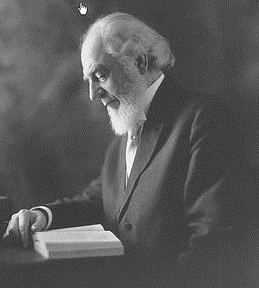
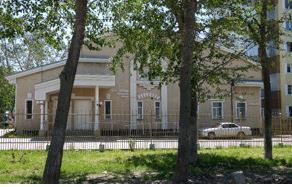
ORGANIZATION/LEADERSHIP

In 1922, the Ahmednagar District Court ordered the formation of the Shri Saibaba Sansthan and Trust, the organizational body that would oversee the tomb’s activities and finances. Shortly after its formation, the all-Hindu board of trustees ousted Abdul as caretaker (Warren 2004:347). Today, the Sansthan and Trust continues to manage the Samadhi Mandir in Shirdi, a town that has undergone tremendous transformation over the last century. It has been estimated that 25,000 devotees visit Shirdi daily and around 80,000 over weekends, with substantially more during major festivals (Shinde and Pinkney 2013:563).

A notable feature of the Sansthan and Trust is that it routinely ranks among India’s wealthiest religious organizations, alongside Hindu sites like the Venkateshwara Mandir in Tirupati and the Vaishno Devi Mandir in Jammu. Large donation amounts to the Sansthan and Trust are sometimes reported in the media, especially around holidays and festivals. While exact figures are hard to discern, a Marathi article by Vijay Chavan and Manohar Sonawane provides some insight into the increase in the Sansthan and Trust’s finances during the last half of the twentieth century. In 1952, when the organization was registered with the Indian government, it reported an annual income of 214,000 Rupees. By 1973, this amount had climbed to 1,800,000 Rupees, and by the end of the 1980s, annual income spiked to upwards of 60,000,000 Rupees. The turning point in the Sansthan and Trust’s finances, according to Chavan and Sonawane, was the release of director Ashok Bhushan’s 1977 Hindi film Shirdi ke Sai Baba, which introduced the saint to the large audience of Hindi filmgoers. The authors further cite a 2004 report from the organization’s management committee that listed its income as approximately 870,000,000 Rupees and deposits valued at more than 2,000,000,000 Rupees (Chavan and Sonawane 2012:37-38).

While the Sansthan and Trust manages the Samadhi Mandir in Shirdi, there are a many other Sai Baba organizations and temples throughout India and around the world. For example, B.V. Narasimhaswami founded the All India Sai Samaj in Madras in 1940 with the purpose of propagating devotion to Sai Baba beyond the movement’s center in Shirdi. This organization ultimately established hundreds of branches and dozens of Shirdi Sai Baba temples in India over the following decades. One such temple in suburban Bengaluru, which presents the saint more as a Hindu deity than a figure with composite heritage, is discussed in Smriti Srinivas’s 2008 In the Presence of Sai Baba: Body, City, and Memory in a Global Religious Movement. Srinivas finds that the temple’s “bourgeois incarnation of Baba” exclusively appeals to middle-class Hindus aspiring to lead successful lives in a thriving metropolis, and that the consequence of this perspective is that the saint’s “Sufi heritage has passed into a zone of cultural amnesia in the suburban landscape of believers” (Srinivas 2008:233, 239).

Another ethnographic study by Karline McLain is a counterbalance to the understanding of Sai Baba’s story as one of simple Hinduization. McLain’s field research at the Shri Shirdi Sai Heritage Foundation Trust in New Delhi highlights Hindu and non-Hindu voices who express little interest or concern with the politics of religious identity in the saint’s legacy. Rather, she finds devotees “drawn to this new movement because they perceive Shirdi Sai Baba’s life and teachings as a syncretistic example of spirituality that defies rigid religious boundaries” (McLain 2012:192). The organization’s founder C.B. Satpathy, who is also a prolific author of Sai Baba hagiographic literature, echoes Narasimhaswami’s earlier vision of the saint as an example of composite spirituality, which crosses divisions and brings people together. McLain’s work also importantly connects the notion of Sai Baba’s compositeness to the practice of seva, or humanitarian service rendered as worship to one’s guru, which can be practiced by anyone of any faith.

ISSUES/CHALLENGES

The initial academic study of Shirdi Sai Baba focused on reconstructing his life through various hagiographic sources and attempting to locate the “real” Sai Baba, whom many have argued was likely a Sufi fakir (Shepherd 1986; Rigopoulos 1993; Warren 2004). More recent scholarship has approached additional topics in the history of the Shirdi Sai Baba hagiographic tradition and prominently highlighted the works of Das Ganu Maharaj, an understudied voice in the early devotional community (Loar 2016; McLain 2016a). Scholars have also adopted new and fruitful perspectives, such as his many shrines in urban public space in Mumbai (Elison 2014), the competing visions of religious pluralism situated between the local and the global (McLain 2016a), the intersection of his healing miracles and the modern Indian nation (Hardiman 2015), and the ways in which individuals and communities find inspiration in his message of peace and unity within religious diversity (McLain 2011; 2012).

Perhaps the most important issue yet to be more fully explored is the nexus of the sainthood embodied by Shirdi Sai Baba in the rural Marathi-speaking region in late colonial India and the region’s broader history of droughts, famines, epidemics, and economic transformation with the advent of new technologies (e.g., railroads) and the shifting of agricultural practices (e.g., sugarcane cultivation). To this effect, Smriti Srinivas has made three very important points: that “congregational worship” in Shirdi “was paralleled by a shift in the economy of the Godavari river region in which Shirdi lies;” that the saint’s “polyvalent personality” enabled him to acquire devotees, especially from among the emerging middle classes from diverse communities; and that his knack for miracles “contravened or interrogated bourgeois rationality that exerted increasing power over these classes” (Srinivas 2008:37-38). Each of these points deserves more scholarly attention to further historicize the popularization of Shirdi Sai Baba in colonial and postcolonial India. While this certainly does not discount the saint’s connections to earlier modes of religious expression (e.g., references in hagiography to Sai Baba as a reincarnation of Kabir), it nonetheless speaks to the sense that Shirdi Sai Baba is both a product of and also a saint for the “modern” and rapidly changing world.

The perennial issue animating much of this recent scholarship is the attempt to explain how this simple fakir from the colonial frontier became so popular, so fast in postcolonial India. Karline McLain, the scholar who has currently written the most extensively on Shirdi Sai Baba, echoes three reasons previously posited by Marianne Warren (2004) to explain the saint’s popularization over the last century: the guarantee of material results obtained through prayer; the proliferation of hagiographic books and films on him; and Sathya Sai Baba’s self-declaration to be his reincarnation. McLain adds a fourth reason: Shirdi Sai Baba’s embodiment of India’s “composite culture.” Adding nuance to the earlier theses about Shirdi Sai Baba’s Hinduization, McLain finds, both textually and ethnographically, that there are multiple understandings of the saint as an incarnation of Dattatreya, a figure who recalls the example of the Prophet, and someone who shows the path to God in ways consistent with Sikh teachings. A particular manifestation of this compositeness is the poster that inspired McLain’s article, “Be United, Be Virtuous,” which features Shirdi Sai Baba wearing the colors of the Indian flag and framed by a mosque, temple, gurdwara, and church (McLain 2011).

My previous work on the Shirdi Sai Baba hagiographic tradition has reframed this “composite culture” as the politics of compositeness, in which there are dominant Hindu and subordinate Muslim aspects to Sai Baba’s legacy. One locus of this process is N.V. Gunaji’s The Wonderful Life and Teachings of Shri Sai Baba, Adapted from the Original Marathi Book Shri Sai Satcharita by Govindrao Raghunath Dabholkar alias ‘Hemadpant’ (1944). As an adaptation and not a full translation, Gunaji’s text warrants close scrutiny. (A dutifully comprehensive translation of the Satcharita is available through Indira Kher’s 1999 publication). There are very detailed accountings of the hagiographic Hinduization evident in Gunaji’s adaptation of the Satcharita and how it omits, suppresses, and glosses over the many connections between Sai Baba and Islam in the original text (Warren 2004; Loar 2016). For example, Gunaji inserts a footnote to his rendering of the Satcharita in reference to Sai Baba’s circumcision; the footnote clarifies that a Hindu devotee closely inspected the saint and confirmed he was actually not circumcised. Another example is Gunaji’s handling of Satcharita 11:62-63, in which Sai Baba describes himself as a Muslim by birth who nonetheless welcomes the worship offered to him by a Brahmin man named Dr. Pandit. In his adaptation, Gunaji simply omits Sai Baba’s self-description of his Muslim-ness, thereby changing the tone of the story: from a teaching on sincere devotion to one’s guru as beyond religious categories to a simple example of the saint accepting worship from a Brahmin (Loar 2016). Following Gunaji’s attempt to create a more Hindu and less Muslim saint, I have followed this politics of compositeness to the next major figure in the saint’s reconfiguration, B.V. Narasimhaswami, author of the English text Life of Sai Baba. Narasimhaswami focuses his attention on the saint’s mysterious origin and draws together other devotees’ testimonies to create the theory of Sai Baba’s hybridized upbringing: Brahmin parentage, Muslim (Sufi) foster care, and Brahmin tutelage under Venkusha. Here, it is more accurate to refine the Hinduization in Sai Baba hagiography as actually a form of Brahminization, an act of assigning caste to a figure previously described as having unknown parentage. But this hybridized upbringing is very important to Narasimhaswami. He writes in the third volume of Life of Sai Baba: “From Hindu parentage… [Baba] passed to Muslim hands and from Muslim care again to a Hindu saint’s care. The fusion of Hindu and Muslim had to be perfected first in his own person before he could affect any fusion of the Hindu-Muslim elements in society” (Narasimhaswami 2004:595). This language of syncretism, which is evident throughout Life of Sai Baba, evidences Narasimhaswami’s rebranding of the saint for a postcolonial audience and a postcolonial discourse, namely, the discourse of national integration in independent India. In doing so, we see Sai Baba’s elevation from a primarily regional to increasingly national figure of religious unity (Loar 2018).

Not everyone, though, is a fan of Shirdi Sai Baba. In particular, there are some voices aiming to challenge the legitimacy of the saint’s notion of Hindu-Muslim unity. My study of anti-Sai Baba rhetoric on several Facebook pages finds that the Muslim elements of the saint’s life have become the subject of harsh critique. Polemical memes proliferate on such pages, suggesting that Shirdi Sai Baba is part of a “bhakti jihad,” an essentially Muslim figure who has tricked Hindus into worshipping him and defiling their religion (Loar 2016). These pages also lend support to a leading a voice of anti-Sai Baba rhetoric: Swami Swaroopananda, the nonagenerarian head of the Dwarka Pitham in Gujarat.  In the summer of 2014, Swami Swaroopananda launched several critiques of Sai Baba worship that were picked up in the Indian news media. On June 23, Maharashtra Times reported the swami’s claim that Shirdi Sai Bab was not a divine figure and therefore unworthy of worship. On June 30, the Deccan Chronicle covered his attempt to provoke Hindus into rejecting their worship of a “Muslim fakir.” In August, he led a gathering of 400 Hindu leaders during a religious conclave, or dharma sansad, which passed a resolution on the incompatibility of Shirdi Sai Baba and Hinduism, or sanatan dharma. The Sansthan and Trust in Shirdi quickly condemned Swami Swaroopananda, while devotees in several states filed court cases against the swami by citing sections of the Indian penal code that criminalize statements that outrage and hurt the religious sentiments of others. In September 2015, Swami Swaroopananda presented an apology for his critical statements before the Madhya Pradesh High Court, although he continued to make occasional inflammatory comments, such as blaming Maharashtra’s drought in 2016 on the continued worship of Sai Baba alongside Hindu deities. While the swami’s public campaign against Sai Baba was ultimately ineffectual, he became another example of the many fundamentalist religious figures in modern India who claim the authority to define what is and is not properly “Hindu” but are not recognized universally by all Hindus as having the power to do so (Loar 2016).

IMAGES

Image #1: Photograph taken around 1916 that shows Shirdi Sai Baba wearing headscarf (topi) and robe (kafni) while leaning against his mosque in Shirdi with several male devotees. Source: Wikipedia commons.
Image #2: Hindi placard from Shirdi: “Shri Sadguru Sai Baba’s 11 Assurances.” Source: Jonathan Loar.
Image #3: Murti at the Shri Shirdi Sai Baba Mandir in Kukas near Jaipur in Rajasthan. Source: Jonathan Loar.

REFERENCES

Chaturvedi B. K. and S. P. Ruhela. 2000. Sai Baba of Shirdi. New Delhi: Diamond Pocket Books.

Chopra, Raj. 2012. Shirdi Sai Baba: The Divine Healer. New Delhi: Sterling Publishers.

Dabholkar, G. R. 2008 [1930]. Shri Sai Satcharita. Shirdi: Shri Sai Baba Sansthan and Trust.

Elison, William. 2014. “Sai Baba of Bombay: A Saint, His Icon, and the Urban Geography of Darshan.” History of Religions 54:151–87.

Ghosal, Samit and Maity, Tamal. 2010. “Development and Sustenance of Shirdi as a Centre for Religious Tourism in India.” Pp. 263-82 in Holy Places and Pilgrimages: Essays on India, edited by Rana P.B. Singh. New Delhi: Shubhi Publications.

Gunaji, N.V. 2007 [1944]. The Wonderful Life and Teachings of Shri Sai Baba, adapted from the original Marathi book Shri Sai Satcharita by Govindrao Raghunath Dabholkar alias ‘Hemadpant.’ Shri Sai Baba Sansthan and Trust: Shirdi.

Hardiman, David. 2015. “Miracle Cures for a Suffering Nation: Sai Baba of Shirdi.” Comparative Studies in Society and History 57:355-80.

Kher, Indira. 1999. Shri Sai Satcharita: The Life and Teachings of Shirdi Sai

Baba by Govind R. Dabholkar (Hemad Pant). Translated from the original Marathi by Indira Kher. New Delhi: Sterling Publishers.

Loar, Jonathan 2018. “From Neither/Nor to Both/And: Reconfiguring the Life and Legacy of Shridi Sai Baba in Hagiography.” International Journal of Hindu Studies 22:475-96.

Loar, Jonathan. 2016. My Bones Shall Speak from beyond the Tomb:” The Life and Legacy of Shirdi Sai Baba in History and Hagiography. Ph.D. dissertation, Emory University.

Loar, Jonathan. 2014. “If You See Shirdi Sai Baba’s Face on This Wall, Don’t Worry… It’s Normal.” Sacred Matters, May 19. Accessed from https://sacredmattersmagazine.com/if-you-see-shirdi-sai-babas-face-on-this-wall-dont-worry-its-normal/ on 26 October 2020.

McLain, Karline. 2016a. The Afterlife of Sai Baba: Competing Visions of a Global Saint. Seattle: University of Washington Press.

McLain, Karline. 2016b. “Shirdi Sai Baba as Guru and God: Narasimhaswami’s Vision of the Samartha Sadguru.” The Journal of Hindu Studies 9:186-204.

McLain, Karline. 2012. “Praying for Peace and Amity: The Shri Shirdi Sai Heritage Foundation Trust.” Pp. 190-209 in Public Hinduisms, edited by John Zavos, Pralay Kanungo, Deepa S. Reddy, Maya Warrier, and Raymond Brady Williams. London: SAGE Publications.

McLain, Karline. 2011. “Be United, Be Virtuous: Composite Culture and the Growth of Shirdi Sai Baba Devotion.” Nova Religio 15:20–49.

Narasimhaswami, B. V. 2008 [1940]. Devotees’ Experiences of Sri Sai Baba. Madras: All India Sai Samaj.

Narasimhaswami, B. V. 2004 [1955–69]. Life of Sai Baba. Madras: All India Sai Samaj.

Narasimhaswami, B. V. 1942 [1939]. Sri Sai Baba’s Charters and Sayings. Madras: All India Sai Samaj.

Rigopoulos, Antonio. 1993. The Life and Teachings of Sai Baba of Shirdi. Albany: State University of New York Press.

Sahasrabuddhe, G. D. (alias Das Ganu Maharaj). 2012 [1918]. Shri Sainatha Stavanamanjari. Shirdi: Shri Sai Baba Sansthan and Trust.

Sahasrabuddhe, G. D. (alias Das Ganu Maharaj). 2010 [1906]. Shri Bhaktililamrita. Gortha: Shri Das Ganu Maharaj Pratishthan.

Sahasrabuddhe, G. D. (alias Das Ganu Maharaj). 2003 [1925]. Shri Bhaktisaramrita. Gortha: Shri Das Ganu Maharaj Pratishthan.

Sahasrabuddhe, G. D. (alias Das Ganu Maharaj). 1999 [1903]. Shri Santakathamrita. Gortha: Shri Das Ganu Maharaj Pratishthan.

Sharma, Bela. 2012. Sai Baba: Ek avatar. New Delhi: Sterling Publishers.

Shinde, Kiran A. and Andrea Marion Pinkney. 2013. “Shirdi in Transition: Guru Devotion, Urbanisation and Regional Pluralism in India.” South Asia: Journal of South Asian Studies 36:554-70.

Shepherd, Kevin R. D. 1986. Gurus Rediscovered: Biographies of Sai Baba of Shirdi and Upasni Maharaj of Sakori. Cambridge: Anthropographia Publications.

Srinivas, Smriti. 2008. In the Presence of Sai Baba: Body, City, and Memory in a Global Religious Movement. Boston: Brill.

Warren, Marianne. 2004 [1999]. Unraveling the Enigma: Shirdi in the Light of Sufism. New Delhi: Sterling Publishers.

White, Charles S. J. 1972. “The Sai Baba Movement: Approaches to the Study of Indian Saints.” The Journal of Asian Studies 31:863–78.

Publication Date:
20 November 2020

Share

Jehovah’s Witnesses (Russia)


JEHOVAH’S WITNESSES IN RUSSIA TIMELINE

1891:  Charles Taze Russell visited Kishinev (now Chișinău).

1911:  Charles Taze Russell visited L’viv.

1928:  George Young, Bible Student missionary, traveled to Soviet Union.

1949:  Operation South secretly deported Witnesses from Soviet Moldavia.

1951:  Operation North secretly deported Witnesses from western borderlands of Soviet Union.

1957:  Jehovah’s Witnesses worldwide signed a petition to the Soviet government asking for end to persecution.

1965:  Jehovah’s Witnesses were released from special exile.

1991:  The Soviet Union granted registration to Jehovah’s Witnesses organization.

1992:  Russia granted registration to Jehovah’s Witnesses organization.

1997:  The Russian government passed the law “On Freedom of Conscience and Religious Associations” that implemented stricter regulation of religious groups.

2002:  The Russian government passed the law “On Combatting Extremist Activity” that implemented broad measures to combat extremism, including by religious groups.

2004:  Moscow Jehovah’s Witnesses were barred from registration within city limits.

2009:  Jehovah’s Witness publications began to be declared extremist and banned.

2017:  The Russian Supreme Court liquidated the Russian organization of Jehovah’s Witnesses.

2019:  The first Jehovah’s Witness in post-Soviet Russia was sentenced to prison for religious reasons.

FOUNDER/GROUP HISTORY

Founder Charles Taze Russell [Image at right] preached in the Russian Empire as part of his broader global missionary outreach in the late nineteenth and early twentieth centuries (Jehovah’s Witnesses: Proclaimers, 1993:406). A few interested Russian subjects requested copies of his publications, and wrote letters to his organization. Still, interest in his message did not lead to a sustained missionary presence in the Russian Empire (Baran 2014:16).

In the interwar period, sporadic attempts at evangelism within Soviet borders continued (Young 1929:356-61). Soviet hostility to religion made it impossible for Witnesses to establish any official or organized presence. Meanwhile, the Witnesses attracted significant converts in Eastern Europe just across the Soviet Union’s western borders. The situation for these communities changed dramatically as a result of World War II. During this period, the Soviet Union annexed territories along its western borders, including the countries of Lithuania, Latvia, and Estonia, and portions of Poland, Romania, and Czechoslovakia. These territories contained thousands of Jehovah’s Witnesses. Soviet annexation made them Soviet citizens overnight (Baran 2014:14-30).

Soviet Witnesses showed remarkable dexterity in adapting to challenging conditions and surviving decades of persecution. Without the ability to establish Kingdom Halls, they met in small groups in private homes, often at odd hours to avoid detection. Baptisms were likewise done in secret, typically in local rivers and lakes (Baran 2014:119-20). Large gatherings were rare, but some communities found ways to discretely hold outdoor events under various guises. While the international organization established a country committee to oversee Soviet operations, it kept this leadership structure confidential to avoid the arrest and imprisonment of members. A small number of Witnesses illegally smuggled in religious literature from abroad, duplicating it either by hand or with private printing equipment. Courier networks then distributed this literature to members (2008 Yearbook 2008:144-52). As such, Bible Studies and meetings typically did not have the same circulation and discussion of a regularly rotating set of magazines and tracts as is typical in other countries. Evangelism took on creative approaches, and depended less on door to door methods. Witnesses tended instead to seek out opportunities to share their faith in less formal settings with neighbors, coworkers, and strangers, even as these actions carried substantial risk (2008 Yearbook 2008:106-07).

Despite such conditions, Witnesses managed to maintain a steady following in the Soviet Union. While it is difficult to calculate the exact membership, tens of thousands of adult Soviet citizens belonged to the Witnesses in the postwar period. Their membership was heavily concentrated in the western borderlands, and also in and around sites of exile and imprisonment throughout the Soviet Union. Most Witnesses lived in rural locations, and most had only a basic education and worked in agriculture or unskilled professions. In large part, this demographic situation reflects the Soviet state’s discriminatory policies against religious believers in the workforce and at universities (Baran 2014:113-14).

After the collapse of the Soviet Union in December 1991, Jehovah’s Witnesses experienced rapid growth and sudden freedom in Russia. Witnesses now enjoyed legal protections to safely evangelize to their neighbors, publish and circulate literature used by Witnesses worldwide, rent and buy property for Kingdom Halls, [Image at right] and hold larger gatherings of Witnesses across the country. As of 2017, the organization counted roughly 175,000 active members. Nearly double that number attended meetings or Bible studies (Baran 2020:2).
DOCTRINES/BELIEFS

The Watch Tower organization teaches that only Jehovah’s Witnesses are faithful to Christianity as taught by Jesus and practiced by the early apostles. They believe that every other interpretation of Christianity but their own is erroneous.

Jehovah’s Witnesses regard the Bible as the ultimate source of authority and justify all of their doctrines and beliefs with reference to scripture. They regard the Bible as inerrant. Witnesses do not interpret the entire Bible literally, regarding parts of it as metaphorical or symbolic. In 1961, a committee of Watch Tower translators completed a version of the Bible that is used by Witnesses worldwide. Witnesses consider the New World Translation of the Holy Scriptures the most accurate translation of the Bible. Unlike other versions of the Bible, it consistently renders the name “God” as “Jehovah” and refers to the Old and New Testaments as the “Hebrew-Aramaic Scriptures” and the “Christian Greek Scriptures.” This Bible is translated into other languages from the English-language version, including a Russian translation in 2007 (2008 Yearbook 2008:237). [Image at right] The English version is regularly updated and the most recent edition appeared in 2013 (Watch Tower Bible and Tract Society 2013).

Witnesses believe that Jesus was the only begotten son of God but, since he was begotten, deny any scriptural basis for the Trinitarian doctrine that the Father, Son, and Holy Spirit together form one Godhead (Watch Tower Bible and Tract Society 2013: 2-3). They believe that the Kingdom of God is a government in heaven (Watch Tower Bible and Tract Society 1953:113-126). This Kingdom will soon replace worldly governments and carry out God’s will upon the earth. Witnesses regard this event as imminent and teach that humanity is living in the “last days,” citing 2 Timothy 3:1-5 and Matthew 24:3-14, hence the urgency of spreading their message (Knox 2018:111-115).

Witnesses teach that Jesus cast Satan out from heaven and that Jesus began ruling the Kingdom of God in 1914. Upon their death, only 144,000 people (known as the “anointed class” or the “little flock”) will dwell in the Kingdom of Heaven, where they rule with God and Jesus Christ. Most of the 144,000 have already taken their places in heaven. Witnesses believe that the rest of the faithful (known as the “the great crowd”) will live through Armageddon and then enjoy paradise on earth during the millennial rule of Christ. If they have already died before Armageddon, they will be resurrected after the battle to live in this millennial kingdom (Knox 2018:33)

Life in the eternal paradise will be open to all who decide to live “in the truth,” as they call it. The dead will be raised during the millennium and judged. Those who do not attain salvation simply pass out of existence forever. Jehovah’s Witnesses do not believe in hell as a place of fiery punishment, but rather consider it the common grave for all mankind. They do not believe in purgatory. When people die, they are in an unconscious state, much like dreamless sleep.

Jehovah’s Witnesses do not venerate the cross or any other Christian symbol or image. The organization teaches that Jesus died on a wooden stake, rendered as “torture stake” in the New World Translation.

Witnesses abide by the laws of governments, except in cases where they believe that state law contradicts Jehovah’s law. Although they aspire to be law abiding, they will continue to meet under ban or refuse to fulfill national military service because Jehovah’s law takes precedence. The belief that the Bible teaches they ought to stand aloof from worldly affairs means they do not engage with ideological or political issues. They do not stand for public office and refuse to fight in wars.

RITUALS/PRACTICES

Baptism is a precondition to attaining everlasting life (Watch Tower Bible and Tract Society 1958:472-478). Only youths and adults can be considered by elders for baptism. They must undertake a period of guided Bible study using Watch Tower literature as study aids, before they are accepted as one of Jehovah’s Witnesses. Baptism is by full water immersion. Witnesses have wedding celebrations and funerals in much the same way as other Christian faiths.

There is only one event on the Witnesses’ religious calendar: the Memorial, also known as the Lord’s Evening Meal (Watch Tower Bible and Tract Society 2003:12-16).  Witnesses gather in their congregations to listen to elders give a Bible talk and to watch them distribute the “emblems,” as the bread and wine representing the body and blood of Christ are known. Only members of the anointed class consume the bread and wine at the Memorial service (usually there are none in a congregation) (Chryssides 2016:217-220).

Jehovah’s Witnesses do not celebrate Christmas or Easter, and regard them as pagan practices. Occasions that venerate the individual rather than Jehovah are banned, hence Witnesses do not celebrate birthdays or Mother’s Day. They do not celebrate patriotic holidays, salute the flag, or sing national anthems since this would be to profess allegiance to a secular government (Knox 2018:61-106).

While weekly meeting schedules have changed over the faith’s history, as of 2020, Witnesses meet at a Kingdom Hall with other members of their congregations twice a week, for around two hours. The program of the meeting is determined by the Governing Body, as is the literature Witnesses must read in preparation for it. Members of the congregation listen to elders speak, participate in Bible study sessions, and train for ministering to the public. Even young children are expected to remain attentive during these meetings. Witnesses undertake Bible study at home at least one evening a week, sometimes with other Witnesses from their congregations as guests. Their discussions are closely guided by publications from the organization, including the Watchtower magazine and a monthly bulletin focusing on ministry, among others, all of which are available on its website.

Every able Witness is expected to minister, most notably through door-to-door evangelism. In the past decade, they have become highly visible by standing with literature carts in busy thoroughfares and on city streets. Those who are too frail are encouraged to witness to the extent that they are able, which might be over the telephone or by writing letters, or through what the organization calls “informal witnessing.” The time Witnesses spend “in the field,” as they call it, is reported to elders, who pass the information up to the central organization. It compiles these statistics into figures for every country, which feed into worldwide statistics, which are publicly available on the Jehovah’s Witnesses website.

ORGANIZATION/LEADERSHIP

Witnesses regard the ultimate authority on interpreting the Bible on all matters, sacred and profane, as the Governing Body. The Governing Body is a group of men based at the worldwide headquarters in upstate New York. The number of members has fluctuated, but has always been between seven and eighteen. The men are appointed, rather than elected. Facilitating its governance are six committees, each led by a chairman serving a one-year term: the Coordinators’ Committee; Personnel Committee; Publishing Committee; Service Committee; Teaching Committee; and Writing Committee.  Between them, these six committees direct all of the organization’s activities around the world.

The Governing Body’s teachings are transmitted to rank-and-file Witnesses through clearly defined levels of regional, national, local, and congregational authority. The leadership roles and organizational hierarchy is detailed in the book Organized to do Jehovah’s Will, designed for use within congregations to define the structure of and to clarify the sources of authority within the organization (Watch Tower Bible and Tract Society of Pennsylvania 2019).

The elders carry the authority within the congregation and are responsible for, among other things, disciplining Witnesses found to have committed serious offences. If a Witness has ignored or flouted the teachings of the Governing Body and, after meeting a judicial committee, is regarded as unrepentant, they may be “disfellowshipped,” meaning they are no longer considered one of Jehovah’s Witnesses. Other Witnesses, including those in their congregation, are required to shun them.  This may include members of their own family. The congregations also have “ministerial servants,” who are primarily concerned with the day-to-day functioning of the community, such as financial matters, literature stocks, and so on. In addition, each congregation has three categories of pioneers who dedicate a different amount of time to ministry: auxiliary pioneers, fregular pioneers, and special pioneers (Knox 2018:41-47).

ISSUES/CHALLENGES

Soviet laws narrowly restricted which religious organizations could register with the state and legally operate on Soviet soil. Without registration, Witnesses had no legal standing. They did not have the right to conduct worship services or Bible studies, evangelize to others, or import and distribute religious literature (Walters 1993:3-30). For nearly all of Soviet history, any organized activities by Jehovah’s Witnesses were considered violations of Soviet law and subject to criminal prosecution.

The most severe persecution of Witnesses occurred under the rule of Joseph Stalin, who oversaw mass arrests of Witnesses in the years immediately following World War II. In 1949 and 1951, the Soviet state exiled nearly all Witnesses from the western borderlands to remote outposts in the Soviet interior. This “special exile” included both the elderly and children, and was done in secret. Families had no warning, lost nearly all of their possessions, and had to adjust to difficult conditions in isolated regions (Neizvestnyi Stranitsy Istorii 1999; Odintsov 2002).

After Stalin, the state eventually released Witness communities from special exile, and most imprisoned Witnesses received sentence reductions and early release. In the decades that followed, most Witnesses did not suffer arrest or imprisonment, but they did face steady harassment and job discrimination. Arrests, though relatively rare, did occur, especially for young men who refused to complete military service. Some Witnesses lost custody of their children (Baran 2014:77-82, 180-86).

Perhaps the biggest and most enduring challenge for Soviet Witnesses was one of state scrutiny and public perception. The Soviet Union’s attitude toward Jehovah’s Witnesses was consistently hostile. Soviet publications repeatedly referred to Witnesses as “sectarians,” framing them as a fringe group far outside the mainstream (Baran 2019:105-27). This led the public to view Witnesses as dangerous, unpatriotic, and anti-social. State hostility was based on several factors. First and foremost, Witnesses did not comply with many of the state’s basic expectations for its citizens. They did not complete mandatory military service, a matter of particular importance given the recent worldwide conflict that had cost the Soviet Union millions of lives, and the ensuing Cold War. They also did not vote in elections, a requirement of all Soviet citizens. In addition, Witnesses kept apart from state-run organizations, including trade unions and youth organizations affiliated with the Communist Party.

Further, the Witnesses’ organizational structure made them vulnerable to accusations of divided loyalties. On a basic level, the Witnesses were (and remain) headquartered in the United States, the Soviet Union’s Cold War rival. State propaganda accused Witnesses of harboring secret loyalties to a foreign power. Moreover, the Witnesses continued to illegally import and distribute religious literature produced in the United States, which frequently contained Cold War rhetoric against the Soviet Union (Knox 2018:257-62).

For the Soviet state, the Witnesses’ actions went beyond the requirements of private religious belief and directly threatened state control over its citizens. As such, the state expended significant resources into attempting to convince or coerce Witnesses into abandoning their faith, or at least into modifying their specific practices to avoid violations of the law. Witnesses were frequently subjected to intense public pressure. Newspapers trumpeted the alleged misdeeds of individual believers. Atheist agitators approached Witness families to share antireligious tracts and convince them to join mainstream society. Teachers pressured Witness children to join extracurricular activities. They also browbeat parents into allowing their children to wear Young Pioneer scarves and attend Pioneer events (Baran 2014:128-31).

Overall, Witnesses were severely marginalized in the postwar Soviet Union, and did not enjoy any freedom to practice their faith without fear of harassment or persecution.

In March 1985, when Mikhail Gorbachev became General Secretary of the Communist Party, and therefore leader of the USSR, Russian Jehovah’s Witnesses operated entirely underground and at great personal risk. Gorbachev introduced far-reaching reforms in the years following his accession, dramatically altering conditions for Russian Witnesses. One element of his reform programme was “glasnost,” usually translated as “openness,” which permitted the acknowledgment, discussion, and debate of previously taboo topics, among them the repression of religion in the USSR and the stranglehold of the one-party state over cultural and spiritual life. As a result of Gorbachev’s commitment to pluralism and tolerance, religious life was, gradually at first and then at swift pace, liberated from state repression and control (Ramet 1993:31-52).

As for many other religious communities, this degree of freedom was unprecedented for Russian Witnesses. Administrative processes and legislative procedures soon caught up, and Jehovah’s Witnesses were able to legally register in the Ukrainian republic on February 28, 1991 and in the Russian republic on March 27, 1991. With this, Russian Witnesses could meet for Bible Study in private homes, hire venues for larger meetings, maintain contact with Witnesses abroad (including the worldwide headquarters) and preach their beliefs openly, all without fear of state reprisal. When the Soviet Union collapsed in December 1991, Witnesses in the Russian Federation, one of the USSR’s successor states, retained their newfound freedoms. New legislation on religious life allowed Witnesses, and other religious groups, both Russian and foreign, a wide range of rights (Knox 2012:244-71).

In the immediate post-Soviet period, the resurgence of faith, in all of its varieties, concerned Russia’s ideologically conservative and nationally-oriented political, cultural, and religious elites. The leadership of the Russian Orthodox Church, Russia’s majority faith, argued that it needed an opportunity to reach Russians confused by the seismic socioeconomic shifts that accompanied the period of transition from communism to capitalism without being in competition with wealthier religious groups more experienced in outreach, charitable work, and missionizing (Bourdeaux and Witte 1999). The Church lobbied for restrictions on religious freedom, resulting in the federal law “On Freedom of Conscience and Religious Associations,” passed in 1997. The law, which has been subject to comprehensive analysis, sought to marginalize non-traditional religious communities and ensure the dominance of Russian Orthodoxy in post-Soviet society (Knox 2005:2-4; Baran 2007:266-68). It cast foreign religious organizations such as the Jehovah’s Witnesses as interlopers. The Putin regime’s increasingly nationalistic and authoritarian tendencies meant that foreign religious groups came to be regarded with suspicion and even contempt by the government, lawmakers, and cultural elites.

The Russian state’s treatment of Witnesses led to multiple cases before the European Court of Human Rights, which upholds rights in the member states of the Council of Europe. The first of these was in 2007, when the Court ruled in favor of Konstantin Kuznetsov and 102 other Witnesses in Kuznetsov and Others v. Russia. The Court found that local authorities had illegally disrupted a meeting of hearing impaired Witnesses in Cheliabinsk. Three years later, the Court again upheld the rights of Russian Witnesses in Jehovah’s Witnesses of Moscow v. Russia after the Moscow City Prosecutor’s Office banned the Watch Tower organization in the capital (Baran 2006). A third relevant ruling against Russia centered on Article 8 of the Convention for the Protection of Human Rights and Fundamental Freedoms (the European Convention on Human Rights), on the right to privacy. The Court ruled that city officials in St. Petersburg committed rights’ violations when they ordered the disclosure of confidential medical information about two Witness patients who refused a blood transfusion (Avilkina and Others v. Russia, 2013). A fourth case, Krupko and Others v. Russia (2014), resulted from a raid on a Memorial celebration in Moscow in 2006, when Witnesses were under ban in the city. Several Witnesses were detained. The Court found in favor of Jehovah’s Witnesses, awarding them money for damages and legal expenses (Knox 2019:141-43).

In 2002, the federal law “On Combatting Extremist Activity,” known simply as the “extremism law,” was introduced in response to terrorist attacks on Russian apartment buildings in 1999. Although ostensibly introduced to eliminate radicalism, Russian authorities used it to restrict the rights of oppositional or radical groups, secular and religious. Human rights activists and international observers widely criticized the law for its broad definition of extremism, which included anti-social views and offensive statements, even those without any violent content (Baran and Knox 2019; Verkhovsky 2009). In 2009, a Witness community in Taganrog was dissolved on the grounds that it was extremist, a decision upheld in the regional court at Rostov. In 2014, congregations in Samara and Abinsk were dissolved under the same pretext. The following year, numerous other regions followed suit, leading to a clear sense that the net was closing in on the national organization.

In 2017, the Russian Supreme Court banned the administrative body of Jehovah’s Witnesses under the extremism law. The federal case against Witnesses centered on statements made in Watch Tower literature rather than on Witness activities in Russia. The prosecution alleged that the organization’s claim that Witnesses are the sole bearers of Biblical truth denigrated the country’s traditional religious faiths. As a result, Watch Tower literature was added to the Federal List of Extremist Materials, a database of banned works maintained by the Ministry of Justice. The Watch Tower organization’s official web site (www.jw.org) is on the list and is blocked by Russian internet providers. Also in 2017, Russian federal prosecutors banned the New World Translation of the Holy Scriptures. It was declared extremist by a court in Vyborg, a ruling later upheld by the regional court.

The 2017 ruling effectively led to the liquidation of this religious community in Russia. It dissolved the Administrative Center of Jehovah’s Witnesses in Russia (the national headquarters) [Image at right] and all of the congregations registered under its auspices. The state confiscated the organization’s property. Authorities seized the national headquarters, a large property on the outskirts of St Petersburg. In addition to these legal moves against the organization, ordinary Witnesses have faced violence and intimidation across the country, from arson attacks on Kingdom Halls to loss of their jobs. Russian Witnesses are no longer able to legally meet, even in small groups in their own homes. Any evangelism is considered extremist activity and a criminal offense. Russian courts have charged some Witnesses with extremist activity for allegedly continuing organized religious activity after the ban went into effect. Some have been found guilty and sentenced to terms in labor camps. Witness activity is also forbidden in China, Egypt, North Korea, Saudi Arabia, Iran, and Iraq and in the former Soviet republics of Uzbekistan, Turkmenistan, and Tajikistan. In this respect, the 2017 ruling aligns Russia with some of the world’s most repressive regimes (Knox 2019).

As of 2020, Witnesses continue to face persecution, imprisonment, and harassment across the country. The Watch Tower organization issues regular press releases on the sentencing of Russian Witnesses for practicing their faith, efforts to overturn the ban in the European Court of Human Rights, and the condemnation of the ruling by legal scholars, religious rights activists, and foreign governments (Watch Tower Bible and Tract Society 2020). Until the ban is lifted, Russian Witnesses will continue to operate underground, as they did in the Soviet period, directed by the worldwide headquarters and aided by an expansive network of resilient communities who have adjusted to these difficult circumstances.

IMAGES

Image #1: Charles Taze Russell.
Image #2: The former Jehovah’s Witness Kingdom Hall, Yuzhno-Sakhalinsk, June 27, 2014.
Image #3: Russian translation of the New World Translation of the Holy Scriptures.
Image #4: The former Russian administrative centre of Jehovah’s Witnesses.

REFERENCES

Baran, Emily B. 2020. “Written Testimony on Religious Freedom in Russia and Central Asia.” U.S. Commission on International Religio.us Freedom.

Baran, Emily B. and Zoe Knox. 2019. “The 2002 Russian Anti-Extremism Law: An Introduction.” The Soviet and Post-Soviet Review 46:97-104.

Baran, Emily B. 2019. “From Sectarians to Extremists: The Language of Marginalization in Soviet and Post-Soviet Society.” The Soviet and Post-Soviet Review 46:105-27.

Baran, Emily B. 2014. Dissent on the Margins: How Soviet Jehovah’s Witnesses Defied Communism and Lived to Preach About It. New York: Oxford University Press.

Baran, Emily B. 2007. “Contested Victims: Jehovah’s Witnesses and the Russian Orthodox Church, 1990-2004.” Religion, State and Society 35:261-78.

Baran, Emily B. 2006. “Negotiating the Limits of Religious Pluralism in Post-Soviet Russia: The Anticult Movement in the Russian Orthodox Church, 1990-2004.” Russian Review 65:637-56.

Chryssides, George D. 2016. Jehovah’s Witnesses: Continuity and Change. London: Routledge.

Jehovah’s Witnesses: Proclaimers of God’s Kingdom. 1993. Brooklyn: Watchtower Bible and Tract Society of New York, Inc. and International Bible Students Association.

Knox, Zoe. 2019. “Jehovah’s Witnesses as Extremists: The Russian State, Religious Pluralism, and Human Rights.” The Soviet and Post-Soviet Review 46:128-57.

Knox, Zoe. 2018. Jehovah’s Witnesses and the Secular World: From the 1870s to the Present. London: Palgrave Macmillan.

Knox, Zoe. 2012. “Preaching the Kingdom Message: The Jehovah’s Witnesses and Soviet Secularization.” Pp. 244-71 in State Secularism and Lived Religion in Soviet Russia and Ukraine, edited by Catherine Wanner. New York: Oxford University Press.

Odintsov, M. I. 2002. Sovet ministrov SSSR postanovliaet: “Vyselit’ navechno!” Moscow: Art-Biznes-Tsentr.

Neizvestnye stranitsy istorii: po materialam konferentsii “Uroki represii.” 1991. Chita.

Ramet, Sabrina Petra. 1993. “Religious Policy in the Era of Gorbachev.” Pp. 31-52 in Religious Policy in the Soviet Union, edited by Sabrina Petra Ramet. Cambridge: Cambridge University Press.

Verkhovsky, Alexander. 2009. “Russian Approaches to Radicalism and ‘Extremism’ as Applied to Nationalism and Religion.” Pp. 26-43 in Russia and Islam: State, Society and Radicalism, edited by R. Dannreuther and L. March. London: Routledge.

Walters, Phillip. 1993. “A Survey of Soviet Religious Policy.” Pp. 3-30 in Religious Policy in the Soviet Union, edited by Sabrina Petra Ramet. Cambridge: Cambridge University Press.

Watch Tower Bible and Tract Society. 2020. “Russian Court Imposes Two-Year Suspended Sentence on Brother Konstantin Bazhenov, His Wife, and a 73-Year-Old Sister.” Official Website of Jehovah’s Witnesses, September 25. Accessed from https://www.jw.org/en/news/jw/region/russia/Russian-Court-Imposes-Two-Year-Suspended-Sentence-on-Brother-Konstantin-Bazhenov-His-Wife-and-a-73-Year-Old-Sister/ on 19 October 2020.

Watch Tower Bible and Tract Society of Pennsylvania. 2019. Organized to do Jehovah’s Will. Walkill, NY: Watch Tower Bible and Tract Society of Pennsylvania.

Watch Tower Bible and Tract Society. 2013. New World Translation of the Holy Scriptures. Brooklyn, NY: Watch Tower Bible and Tract Society.

Watch Tower Bible and Tract Society. 2013. “Should You Believe in the Trinity?” Awake!, August 13, pp. 2-3.

Watch Tower Bible and Tract Society. 2008. 2008 Yearbook of Jehovah’s Witnesses. Brooklyn, NY: Watchtower Bible and Tract Society of New York, Inc.

Watch Tower Bible and Tract Society. 2003. “Why Observe the Lord’s Evening Meal?” The Watchtower, February 15, pp. 12-16.

Watch Tower Bible and Tract Society of Pennsylvania. 1976. 1977 Yearbook of Jehovah’s Witnesses. New York City: Watch Tower Bible and Tract Society of New York, Inc.

Watch Tower Bible and Tract Society. 1958. “Baptism.” The Watchtower, August 1, pp. 472-78.

Watch Tower Bible and Tract Society. 1953. “When Will God’s Kingdom Come?” The Watchtower, February 15, pp.113-26.

Witte Jr, John and Michael Bordeaux, eds. 1999. Proselytism and Orthodoxy in Russia: The New Wars for Souls. Maryknoll, NY: Orbis.

SUPPLEMENTARY RESOURCES

Berezhko, Konstantyn. 2005. Istoriia Svidkiv Egovy na Zhitomyrshchyni. Zhytomyr: Zhytomyrs’kyy Derzhavnyy Universytet im. Ivana Franka.

Chryssides, George D. 2019. Historical Dictionary of Jehovah’s Witnesses. Lanham, MD: Rowman and Littlefield.

Watchtower Bible and Tract Society of New York.  2001. “Faithful under Trials: Jehovah’s Witnesses in the Soviet Union.” Brooklyn, NY: Watchtower Bible and Tract Society of New York.

Gazhos, V.F. 1969. Osobennosti ideologii iegovizma i religioznoe soznanie sektantov. Kishinev: Redaktsionno-izdatel’skii otdel akademii nauk Moldavskoi SSR.

Gol’ko, Oleg. 2007. Sibirskii marshrut. Third Edition. Moscow: Bibleist.

Gordienko, N.S. 2000. Rossiiskie Svideteli Iegovy: Istoriia i sovremennost. Saint Petersburg: Tipografiia pravda.

Iarotskii, P.L. 1981. Evoliutsiia sovremennogo Iegovizma. Kiev: Izdatel’stvo politicheskoi literatury Ukrainy.

Ivanenko, Sergei. 1999. O liudiakh, nikogda ne rasstaiushchikhsia s Bibliei. Moscow: Art-Biznes-Tsentr.

Ivanenko, Sergei. 2002. Svideteli Iegovy: Traditsionnaia dlia Rossii religioznaia organizatsiia Moscow: Art-Biznes-Tsentr.

Knox, Zoe. 2020. “Russian Religious Life in the Soviet Era.” Pp. 60-75 in Oxford Handbook of Russian Religious Thought, edited by Caryl Emerson, George Pattison, and Randall A. Poole. London: Oxford University Press.

Moskalenko, A.T. 1961. Sekta iegovistov i ee reaktsionnaia sushchnost. Moscow: Vyshaia shkola.

Pasat, V.I. 1994. Trudnye stranitsy istorii Moldovy. Moscow: Terra.

Rurak, Pavel. 2008. Tri aresta za istinu. L’viv: Piramida.

Publication Date:
15 November 2020


Share

Ballinspittle


BALLINSPITTLE TIMELINE

1985 (July 22):  A group of five people who stopped to pray at the Ballinspittle grotto claimed to have seen the statue of Our Lady breathing and or moving to and fro.

1985 (July 24):  A police sergeant went to check out possible statue movements and reported that he saw the statue move vigorously.

1985 (July 25):  The Cork Examiner reported that “hundreds” were now praying at the Ballinspittle grotto.

1985 (July 31):  The Bishop of Cork and Ross, issued a statement urging restraint on the part of visitors to the grotto.

1985 (August 1):  Catherine (“Kathy”) O’Mahony and the Ballinspittle apparition were featured on a primetime television news broadcast.

1985 (August 2):  A Cork city newspaper estimated the number of people gathering at the Ballinspittle grotto each evening to be around 10,000.

1985 (August 15):  Police estimated the number of people who gathered at the grotto for the Feast of the Assumption was 15,000.

1985 (September 18):  A national newspaper reported claims that a deaf woman was “cured at statue” in Ballinspittle.

1985 (October 8):  It was estimated in the press that since the time of the first reports of the Ballinspittle apparition the grotto had received 600,000 visitors.

1985 (October 31):  The statue erected at the site was attacked and damaged.

1985 (November 8):  The repaired statue was returned to the grotto

1985:  The number of pilgrims attending the site had begun dwindling toward the end of the summer school holidays and decreased further with the coming of winter.

Post 1985:  The numbers attending in the years after 1985 rarely reached more than 100.

2015:  There was renewed interest in the events at Ballinspittle on the thirtieth anniversary of the 1985 events.

FOUNDER/GROUP HISTORY

There is a long history of divine apparitions in Ireland. In the second half of the twentieth century, for example, local people told of claims of “moving statues” similar to those that would be made later at Ballinspittle. [Image at right] For example, such reports were made by two priests in the early 1970s; by two children in 1981 and 1982; by a cousin of Catherine O’Mahony in 1982; and in 1983 by two of the girls at the centre of the 1985 claims, Helen and Claire O’Mahony (Ryan and Kirakowski 1985:11).

There were numerous apparitions associated with the Marian shrines that were established in many parishes to celebrate the Marian Year of 1954. It has been estimated that there were about thirty such occurrences, many centering around the Virgin Mary, but some that involved other saints as well.

Some observers (Mulholland 2009, 2011) have connected this series of apparitional  events to conditions in Ireland during this time (Quinlan 2019):

The summer of 1985 was an unusually difficult one for Ireland — 329 people were killed in the Air India disaster in July when an airplane was blown up by a bomb crashing into the Atlantic Ocean while in Irish airspace. Meanwhile Ireland was in the midst of a crushing economic recession. High unemployment figures and mass emigration left families and communities struggling, while traditional church teachings were being challenged as the divorce and abortion referendums were contested.

The Marian grotto in Ballinspittle was one of the most prominent apparitional events of this time. In 1985, claims of an apparition at that site attracted so many visitors that it “looked set to become Ireland’s second national Marian shrine” (Allen 2014:227). However, though it also attracted a great deal of national and international media attention, the Ballinspittle apparition was just one in a spate of similar apparition claims from numerous other locations that collectively soon came to be known as the “moving statues.”

The group that claimed to see the Ballinspittle statue move on July 22, 1985, was comprised of Christopher Daly and his wife “Pat” along with their sons John and Michael and their neighbour Catherine (‘Kathy’) O’Mahony and her two daughters, Helen and Claire. [Image at right] Two years before that, in 1983, Helen and Claire had made a similar claim.
The events of July 22, 1985 began when seventeen-year-old Claire was overheard telling John Daly that the statue was moving. When John responded saying that he could see it moving, Catherine O’Mahony and the rest of the group said they could also see it moving. They told some passers-by who also saw it move or change in some way. Word spread, and later that night about thirty other people claimed to see some kind of movement, a transformation or a change in the statue’s appearance (Ryan and Kirakowski 1985:10-13).

On approximately July 24, a police sergeant from the locality visited the site and reported that he too saw the statue move with such vigour that he feared it would topple over. Sergeant Sean Murray is said to have added greatly to the credibility and increased the attention of the public’ (Ryan and Kirakowski 1985:15). The following day The Cork Examiner carried a front-page story reporting that “hundreds” were now praying at the Ballinspittle grotto. [Image at right]
In the first days of August media coverage of the Ballinspittle apparition intensified. Catherine O’Mahony and the Ballinspittle apparition were featured on primetime television news broadcast. A newspaper in Cork estimated daily visitation to the grotto to be around 10,000.

The site gained additional visibility in September when a media report claimed that a “deaf woman” had been healed. In early October, it was estimated in the press that total visitation at the site was around 600,000. The statue at the site was attacked by men armed with an axe and hammer and supported by another man who took photographs and accused the gathering of idolatry. Repairs to the statue were made rapidly, and it was repositioned at the grotto. [Image at right]
The auspicious beginning of the Ballinspittle apparition site did not last, however. Toward the end of the summer school holidays, visitation began to decline. Further declines occurred with the arrival of the winter months. Visitation rates never rebounded and subsequent daily visitation numbers rarely exceeded 100. There was renewed interest in the events at Ballinspittle in 2015 on the thirtieth anniversary of the 1985 events, with prayers and processions taking place for a week (Egan 2015).

DOCTRINES/BELIEFS

All of the moving statue visionaries, their supporters, and the vast majority of those who visited the apparition sites were brought up in the Roman Catholic faith. So, it is reasonable to assume that the great majority of them believed in the core doctrines of the Catholic Church. Belief in the possibility of divine intervention was fundamental to that belief system, and the moving statue visionaries and pilgrims were familiar with the apparition stories from Knock, Lourdes, Fatima and Medjugorje. Some pilgrims also believed in the possibility of miraculous cures, and Catholic Church officials like Bishop Michael Murphy were careful not to disparage such beliefs when advising “extreme caution” regarding the claims of the Ballinspittle and other visionaries (The Cork Examiner, July 31, 1985).

Each Marian shrine has a vernacular theology of its own, which devotees situate into the wider theology of the Catholic Church; that is to say that the theologies of these shrines are hybrids of vernacular and institutional beliefs and doctrines. The devotional poetry and prayers reflect the vernacular theology the shrine’s devotees create (Beesley 2000; Sigal 2005; Morgan 2010; Wojcik 1996). This is exemplified in a prayer recited by the grotto committee after the recitation of the rosary at the grotto. It is simply known as “Evening prayer.” The opening lines immediately capture the beliefs about the moving statue and the Ballinspittle Madonna teased out above:

Night is falling dear Mother, the long day is o’er And before your loved image I’m kneeling once more,To thank you for keeping me safe thro’ the day,To ask you this night to keep evil away (Grotto Committees 2015:59)

There are continuing experiences of a moving statue at Ballinspittle, although they are few in number and no longer draw significant media coverage (Allen 2015: 93).

Some of the visionaries and some of the pilgrims at the Ballinspittle grotto may have received divine messages of a personal nature, but none of them claimed to have received any kind of prophetic message or warning for relaying to the faithful or to the world at large. However, some people interpreted the actual apparitions as being a message in and of themselves. As the grotto committee [Image at right] put it in their 2015 booklet: ‘Many believe that it was a call and invitation to prayer and most especially to pray the Rosary for peace and harmony in the world’ (2015: 52). Hence, in a chapter headed “The Message of Ballinspittle Grotto” the committee explained its own raison d’être as being to “spread devotion to Our blessed lady” (2015: 53). But closer to the time of the 1985 apparitions other meanings were being offered up. For example, as Ryan and Kirakowski noted, on August 23 the Cork Examiner published a letter from a woman who claimed to have seen the Ballinspittle statue moving and who interpreted it as being Our Lady calling ”her children from sin to save their immortal souls” and as a warning against “The rejection of the Blessed Virgin by the atheist mods…”. Then, on August 26, Time Magazine quoted the Ballinspittle post mistress, Marie Collins, as having explained the apparitions as being “a sign to prepare us for the end of the world”  (Ryan and Kirakowski 1985:23, 30). It should be noted, however, that warnings of an impending global catastrophe had been issued by a couple of youthful visionaries at the Mount Melleray grotto over a week before, on August 16, 1985 (Allen 2014:123-24).
ORGANIZATION/LEADERSHIP

The idea of building the grotto that later became the site of moving statues began at a meeting of the Pioneer Total Abstinence Association in February, 1954. A group of parishioners chose a suitable site, and a week later three of them sought permission from the parish priest to go ahead with the work at Sand Cross, Dromdough. The site was chosen for its picturesque setting and because it had a natural rock face reminiscent of the grotto in Lourdes. [Image at right] The site was donated by Denis O’Leary. According to the Grotto Committee book, part of the hilly field across the road from the grotto was “acquired” in 1985 from Michael McCarthy, so as to accommodate the large crowds. A cabin also was erected that was used to house the public address system and served a venue for committee meetings (Grotto Committee book 2015:6-8)

As word of the 1985 apparitions drew ever-increasing crowds to the site, the 1982 committee called elections, and with Brendan Murphy as chairman the new committee took charge of organizing the crowds. They also reorganized the committee, and Fr Tom Kelleher replaced Fr Kieran Twomey CC as their spiritual director. By then the committee had around 100 other volunteers (Ballinspittle Grotto & The Moving Statue 2015:71, 74). Under the committee’s guidance, those volunteers helped organize vigils and had the assistance of the Garda traffic corps and the Red Cross while Denis O’Reilly, who helped to build the grotto back in 1954, used his position as a county councilor to lobby for road and other infrastructural improvements around the site (Ryan and Kirakowski 1985:10, 17, 18).

ISSUES/CHALLENGES

From its inception, Ballinspittle faced several external sources of challenge that impacted its development and sustainability. The most important of these were competition from other Marian sites, opposition from various media sources, and opposition from Roman Catholic officials.

The 1982 committee produced a booklet containing witness testimonies as part of a campaign to have church authorities officially recognise the grotto as a place of pilgrimage (Ryan and Kirakowski 1985:17; Allen 2014:108). However, the Ballinspittle site falls within the organizational jurisdiction of the Bishops of Cork, and it has withheld any affirmation that it is a place where the Virgin Mary appeared. In the absence of official legitimation, the committee has adopted a more traditionalist stance, promoting recitation of the rosary at the grotto and by families in their homes (Allen 2015:108).

The grotto, however, remains a place where cherished practices no longer hailed by the church find a home and are readily promoted by the grotto committee. They are especially desirous to promote the family rosary, placing signs at the grotto to encourage people to recite it in their homes. The issue of agency arises out of this, and that issue has led to disputes between the committee and the local clergy in the past. The priest and the committee differ in opinions regarding the benefits of prayer at the local shrine and the intercession of Mary. For the church the grotto acts as a secondary shrine, but for the committee and pilgrims the apparitions have elevated its significance and, for some, it has become a place where the divine can be experienced without priestly intermediaries. And therein lays the crux of the problem for the clergy. If people can directly see and invoke Mary’s agency at the local grotto, then the priest’s agency becomes a lesser and secondary one at best. Media coverage of those differences ensured that they were widely known. For example, on August 16, 1985, a national newspaper reported that a priest in Ballinspittle parish had insisted that local clergy were not in any way involved in what was happening at the grotto (The Irish Press). There is also another worry for the clergy concerning what is and is not acceptable in Catholic orthodoxy and how this can be threatened and at the times flouted at the grotto, at least from the vantage point of the clergy (Allen 2015:113). These differences notwithstanding, the fact that both the 1985 and the 2015 committees had/have a priest as a “spiritual adviser” demonstrates the committees’ willingness to conform to Catholic orthodoxy.

Along with resistance from local clergy and the Catholic hierarchy, those who strove to promote the Ballinspittle grotto also had to deal with local scepticism, competing claims, and being ridiculed in the media where the economic benefits of large numbers of pilgrims was often mentioned (“The Moving Statue” n.d.). These were the main challenges facing the Ballinspittle grotto committee’s attempts to garner lay and religious support for their goal of turning the shrine into an officially recognized place of pilgrimage.

Incredulity and scepticism regarding the moving statues was evident in press reports about the phenomenon, even from those associated with the site. For example, one of the original Ballinspittle seers, the grotto committee’s assistant secretary Kathy O’Mahony, is said to have “remained puzzled as to why people willingly accepted” the apparition claims (Allen 2014:75). Another woman who had a visionary experience at the Ballinspittle grotto “was very sceptical of the phenomenon and remains so despite what she has seen and experienced” (Allen 2014: 92).

The Ballinspittle claims also affected the way in which other apparition claims were received. For example, a mother of one of the children who claimed an apparition at Rossmore grotto on August 5, 1985, is reported to have said “It was just after Ballinspittle, and we thought they were having a laugh at the locals. No way did we believe it at all” (Allen 2000:349).

Media coverage of claims emanating from some apparition sites may also have sowed doubt and confusion amongst believers. For example, on September 16, 1985, The Irish Press reported that some people had claimed to see images of the devil at a Marian shrine in Mitchelstown, Co Cork. And on August 23, 1986 The Cork Examiner reported that two priests had carried out an exorcism at a grotto near Inchigeela. Such reports undermined the credibility of apparition claims and supported perceptions of them as involving some “hysteria” (see Allen 2014: 3, 222-25, 233-36, 249).

Furthermore, when interviewed by the media and or researchers investigating the apparitions, people attending the various shrines offered alternative interpretive filters. Some offered religious explanations, and others tended towards rational explanations. Those offering rational  explanations sometimes mixed them with sociological theories, such as their being a “sign of the times” or a reaction to moral decline or the secularisation of Irish society.  Some interpreted them as being a reaction to the changes wrought by Vatican II, using them to criticize Vatican II and argue for theological changes. For example, in 1986, The Furrow published a paper in which Fr Joseph O’Leary held that the apparitions were a delayed reaction to the reforms of the Second Vatican Council and suggested that the whole phenomenon revealed “gaps in the theology of the institutional Church” (O’Leary 1986). As a clerical columnist with one of the two national Sunday newspapers explained them, the moving statues and related phenomenon reflected a widespread desire for “genuine spiritual experiences” and “having their emotions charged by a bit of liturgy with life in it” (See, Mulholland 2019:319).

Though the committee’s “spiritual adviser,” Fr Kelleher, was determined to dampen enthusiasm for the apparitions and thought Church officials advised caution or skepticism regarding all apparition claims (Allen 2016:109; Salazar 2008:245), television footage from the time shows that some religious personnel did participate in ritual activities at certain apparition sites. However, with reports of 10,000 people attending the Ballinspittle grotto each evening and with the proliferation of apparition claims being accompanied by increasing levels of ridicule in the media, some of the less sympathetic or indulgent clerics spoke out and took action. For example, on August 9, 1985, The Irish Press reported that some “witnesses” had been told to “shun publicity” and that a priest had told mass-goers in Asdee “that it is only those who have a weak faith that look for signs” (See. Allen 2008:358; Allen 2014:82-84, 109; Salazar 2008:242; Ryan and Kirakowski 1985:79; Vose1986:71).

The reports of a ”Scary Mary” at the Ballinspittle grotto and of devilish intrusions or satanic apparitions at other locations [Image at right] inspired fear and a “deep seated anger and disgust” amongst some erstwhile enthusiasts (Allen 2014:93-94). Reports of priests carrying out “an unapproved exorcism” at the Inchigeela shrine also caused some consternation amongst enthusiasts and drew criticism from Bishop Michael Murphy.

The Grotto Committee was well aware of the reduced but “steady trickle of pilgrims and visitors.” In the 2015 Committee Book, the authors asked: “So is the grotto at Ballinspittle and the events that took place there in 1985, still relevant in our modern, secular and materialistic society?” Their response captures their understanding of the grotto’s historical and contemporary relevance:

In an interview with Leo McMahon of the Southern Star in the year 2010, Sean Murray, then chairperson of the grotto committee said that “the legacy of the grotto continues to be Mary’s call for prayer and living the Gospel. “We do not dwell nor retract nor apologise for what took place”. That statement still holds true on the 30th anniversary of the Moving Statue. Ballinspittle is not embarrassed or ashamed of what happened in 1985. Sean is also convinced that “Our Lady was deeply concerned about what was happening in the Church at that time”. The tsunami of revelations of major scandals within the Church which have come to light in recent years has rocked the institution to its very core. Attendances at Mass and the sacraments have dwindled drastically and our society becomes more and more secular and materialistic. “In a passage from Scripture” he said “ Jesus felt the need to go to a lonely place to pray and reflect and over two millennia later many Christians feel the urge to do the same and places such as Ballinspittle grotto provide peace, healing and comfort”. (2015: 66)

IMAGES

Image #1: The statue in the grotto at Ballinspittle. The halo of 12 stars that was added to the statue in 1956
Image #2: Claire and Helen O’Mahony. Ballinspittle Grotto & The Moving Statue, p. 10. Credit Eddie O’Hare, Evening Echo.
Image #3: Pilgrims gathered at Ballinspittle in 1985.
Image #4:The damaged statue.
Image #5: The 2015 Grotto Committee.
Image #6: The Ballinspittle grotto, 1984. Photo credit, John McCarthy.
Image #7: A press report of images of the devil in Inchigeela in 1986.

REFERENCES

Allen, Michael.  2012. “From Men to Women to Children: Some Changing Paradigms in the Anthropological Understanding of Religion.” AntropoChildren. Accessed from https://popups.uliege.be/2034-8517/index.php?id=1499&file=1&pid=1347 on 10 November 2020.

Allen, Michael. 2000. Ritual, Power and Gender: Explorations in the Ethnography of Vanuata, Nepal and Ireland. New Delhi: Manohar.

Allen, William. 2014. “A nation preferring visions: Moving Statues, Apparitions and Vernacular Religion in Contemporary Ireland.” PhD Thesis, National University of Ireland, Cork.

Ballinspittle Grotto Committee. 2015. Ballinspittle Grotto & The Moving Statue. Waterford, Ireland: DVF Print & Graphic Solutions.

Beesley Arthur. 2000. “Ross finds religious belief a solace in troubled times.” The Irish Times March 4. 2000. p. 19.

Cluskey, Jim. 1985. “Hundreds pray before ‘moving’ statue’.’’ The Cork Examiner, July 25, p. 1

Collins, Dan and Mark Hennessy. 1986. “Priests exorcises shrine of ‘Devil’s Shadow’.’’ The Cork Examiner, August 23.

Egan, Casey. 2015. “Crowds Still Flock to Moving Virgin Mary Statue at Ballinspittle Three Decades On.” Irish Central, July 23. https://www.irishcentral.com/culture/craic/crowds-still-flock-to-moving-virgin-mary-statue-at-ballinspittle-three-decades-on-video Accessed 20 July 2020.

Kirakowski, Jurek and Tim Ryan. 2014. Ballinspittle: Moving Statues and Faith. Cork and Dublin: Mercier Press.

“Moving Statues.” 1985. The Irish Press, September 16, p. 1.

Mulholland, Peter. 2011. “Marian Apparitions, the New Age, and the FÁS Prophet.” Pp. 176-200 in Ireland’s New Religious Movements, edited by Olivia Cosgrove, Laurence Cox, Carmen Kuhling and Peter Mulholland. Newcastle upon Tyne: Scholars Publishing.

Mulholland, Peter. 2009. “Moving Statues and Concrete Thinking.” Accessed from  http://mural.maynoothuniversity.ie/1919/1/PMMoving_Statues.pdf on 10 November 2020.

O’Leary, Joseph. 1986. “Thoughts After Ballinspittle.” The Furrow 37:285-94. Accessed from https://www.jstor.org/stable/i27678262 on 10 November 2020.

Power, Vincent. 1985. “‘Moving’ statue: Bishop urges caution.” The Cork Examiner, July 31, p. 1.

Salazar, Carles. 2008. “Meaning, cognition and intersubjectivity in the experience of a religious event.” Emerging Theories and Practices in Anthropology of Religion. Accessed from  https://dialnet.unirioja.es/servlet/libro?codigo=397206 on 10 November 2020.

Sigal, Pierre André. 2005. “Pilgrimage: Roman Catholic Pilgrimage in Europe.” In The Encyclopaedia of Religion, Second Edition. edited by Lindsay Jones. Detroit; Macmillan Reference.

7148291  Lindsay Jones (ed.) (ed.)2nded. vol. 10

Morgan, David. 2010.  “Introduction.” Religion and Material Culture:: The Matter of Belief. Oxon: Routledge.

Quinlan, Áilin Stranger things: Looking back at the year the statues. 2019. Irish Examiner, April 10. Accessed from https://www.irishexaminer.com/lifestyle/arid-30916794.html on 10 November 2020.

“The moving statue of Ballinspittle grotto (Ireland 1985).” Accessed from https://www.youtube.com/watch?v=kZjM83wZmWw on 15 November 2020.

Vose, John D. 1986. The Statues that Moved a Nation. Cornwall: United Writers.

Wojick, Daniel. 1996. “Polaroids from Heaven: Photography, Folk Religion, and the Miraculous Image Tradition at a Marian Apparition Site.” The Journal of American Folklore 109:129-48.


Share

Jehovah’s Witnesses

JEHOVAH’S WITNESSES TIMELINE

1852:  Founder-leader Charles Taze Russell was born.

1870:  Russell began his Bible study group in Allegheny, Pennsylvania.

1876:  Russell was designated Pastor of the Bible Study Group.

1877:  Russell collaborated with Nelson H. Barbour, publishing Three Worlds and the Harvest of This World.

1879:  The first edition of Zion’s Watch Tower (now The Watchtower) was published.

1881 (February 16):  Zion’s Watch Tower Tract Society began its tract distribution.

1884:  Zion’s Watch Tower Tract Society was legally incorporated in Pennsylvania.

1886:  Divine Plan of the Ages by Charles Taze Russell was published as the first volume of Millennial Dawn (later retitled Studies in the Scriptures).

1909:  The Society’s headquarters relocated to Brooklyn, New York.

1914:  The audio-visual production The Photo-Drama of Creation was screened for the first time.

1916 (October 31):  Charles Taze Russell died.

1917 (January 6):  Joseph Franklin (“Judge”) Rutherford became the Society’s president. The Finished Mystery was published.

1919:  The first issue of The Golden Age was published (now titled Awake!).

1920:  Millions Now Living May Never Die! by J. F. Rutherford was published.

1925:  The ancient patriarchs were expected to return from the dead in that year.

1931:  The name Jehovah’s Witnesses was adopted.

1932:  The system of “elective elders” came to an end.

1933-1945:  Jehovah’s Witnesses were persecuted by the Third Reich and taken to concentration camps.

1935:  Rutherford identified the “great crowd” as part of the “two hopes” doctrine. Saluting the national flag was denounced.

1942:  Joseph Franklin Rutherford died. Nathan H. Knorr became the Society’s third president.

1950:  The first part of The New World Translation of Holy Scriptures was released.

1961:  The New World Translation of Holy Scriptures was published in its entirety.

1971:  The Governing Body was defined, and subsequently reorganized in 1976, with six subordinate committees.

1977:  Nathan H. Knorr died, and was succeeded by Frederick W. Franz.

1992:  Frederick W. Franz died, and was succeeded by Milton G. Henschel.

1997:  The Jehovah’s Witness website was launched (now JW.org).

2000:  Henschel stood down as president, and the Society’s structures were reorganized.

2017:  The new world headquarters at Warwick New York became open to the public. In Russia, the Supreme Court declared Jehovah’s Witnesses to be “extremist,” and liquidated group assets.

2020:  Many Kingdom Halls closed, owing to the Covid-19 pandemic. Congregational meetings, assemblies, and conventions went online.

FOUNDER/GROUP HISTORY

Although the name Jehovah’s Witnesses was not adopted until 1931, the group’s origins can be traced back to Charles Taze Russell (1852-1916), [Image at right] who was born in Allegheny, Pennsylvania, and whose father owned a haberdashery business. Russell came to have doubts about mainstream Christian doctrines, particularly the notion of hell, the Trinity, and the Calvinist doctrine of predestination. He associated with a number of Adventist preachers, and accepted their expectation of Christ’s imminent return. He established a small group of Christian men, who met to study the Bible between 1870 and 1875; they particularly emphasized the doctrine of Christ’s “ransom sacrifice” for sin, and rejected the notion of the soul’s immortality, regarding everlasting life as a divine gift that was only available to those who merited it. Further, they believed that Christ’s return would not be as a physical, but rather an invisible presence. In 1876, Russell began an association with the Adventist Nelson H. Barbour, who edited a journal entitled The Herald of the Morning, and they jointly wrote a volume entitled Three Worlds and the Harvest of This World, which appeared in 1877. Barbour was particularly interested in biblical and end-time chronology, to which he introduced Russell, but the two parted company in 1878 because Barbour denied the “ransom sacrifice” doctrine of atonement. Russell then decided to produce his own journal, initially called Zion’s Watch Tower and the Herald of Christ’s Presence. The magazine was used by a number of congregations (called “ecclesias”) throughout the country, who met to study the Bible, together with Zion’s Watch Tower. An early edition of the magazine claimed that all Christian denominations were apostate, and were “Babylon the Great,” described in the Book of Revelation, and urged their members to leave.

In 1884 Russell set up Zion’s Watch Tower Tract Society, which was legally incorporated in Pennsylvania. Russell also organized some 300 colporteurs, who distributed his literature, initially in the U.S. and Canada, and travelled to other countries worldwide. Russell himself travelled widely, journeying as far afield as Europe, the Middle East, India, and parts of Asia. One important achievement was the Photo-Drama of Creation, a highly advanced audio-visual production that presented the biblical account of human history from Adam and Eve to the coming everlasting paradise. Eight hours in duration, it was screened to the public in four installments, all free of charge.

After Russell died in 1916 on one of his preaching tours, he was succeeded by Joseph Franklin Rutherford (1869-1942), an attorney who had acted as the Society’s legal adviser. [Image at right] Rutherford made major changes to the Society’s structure, and he was responsible for many of its longstanding distinctive features. He ordered the previously autonomous ecclesias into one single unified society. Organized house-to-house evangelism began, and became an expectation, first of the elders, and subsequently of all members, who reported the number of publications distributed, and the number of hours spent on “publishing” (the Society’s term for evangelism).

In 1920, Rutherford published a short book entitled Millions Now Living Will Never Die!, which was an expanded version of a lecture that he had given in various locations. The publication contained numerous chronological calculations, concluding that the “faithful worthies” (ancient Hebrew patriarchs) would return in 1925, heralding the inception of everlasting life on earth. Although this failed to occur, Rutherford remained convinced that the biblical patriarchs would soon return, and a mansion called Beth Sarim (“House of the Princes”) [Image at right] was built in the suburbs of San Diego to accommodate some of them.

After Rutherford’s death in 1942, Nathan H. Knorr (1905-1977) became president. Knorr made significant strides in increasing membership, especially abroad. He emphasized the importance of training, and he set up the Bible School of Gilead to prepare foreign missionaries, and the Theocratic Ministry School (TMS) in all congregations to instruct publishers in public speaking and house-to-house ministry. (In 2016 the TMS was subsumed within the three-part congregational Christian Life and Ministry meeting.) In 1971, the Governing Body was set up as an entity distinct from the governance of the two incorporated Societies, and it continues to define the Society’s doctrines and policies worldwide. Also under Knorr’s leadership, the authorship of all Watch Tower publications became anonymous, in the belief that only Jehovah should be given credit for “spiritual food” (the expression Witnesses typically use for edifying literature and teaching). Knorr was succeeded by Frederick W. Franz (1893-1992), during whose period of office there were few changes to the organization; however, he promoted the Society’s work by travelling worldwide and speaking at conventions. More far-reaching changes (discussed below) came about under the fifth leader, Milton G. Henschel (1920-2003), who took the unprecedented step in 2000 of resigning the presidency: all four previous leaders had held office until they died.

DOCTRINES/BELIEFS

Jehovah’s Witnesses base their beliefs on the Bible, which they regard as inerrant in all matters, including history, science, doctrines, guidance for life, and prophecy. They acknowledge no new prophets or extra-biblical revelation. Their key teaching is that Adam and Eve’s disobedience in the Garden of Eden caused sin to enter the world, and that Jesus Christ offered himself as the ransom sacrifice to restore humanity’s relationship with God. “Jehovah” is regarded as God’s personal name, by which he should be addressed, rather than generic names such as “God” or “the Lord.”

Witnesses hold that Jesus was God’s first created being. He was not “eternally begotten,” as mainstream creeds assert, but rather was created as the Archangel Michael, whose life entered the Virgin Mary’s womb, enabling him to have a human birth. After his death, Jesus rose again as a spirit being, and ascended into heaven with a spiritual body. Jesus Christ cast Satan down to earth in 1914, where he continues to rule the world and multiply evil. The date of 1914 is arrived at through interpreting biblical chronology, being 2,520 years after the Babylonian destruction of Jerusalem, which they believe to have occurred in 607 BCE, in accordance with Daniel’s prophecy (Daniel 4:32; see Chryssides 2010). For Witnesses, the year 1914 marks the “end of the Gentile Times,” and the beginning of Christ’s “invisible presence.” (They do not expect Jesus to return spectacularly on the clouds.). From around 1919, after preparing the kingdom of heaven, Jehovah and Christ began to gather up those who belong to the 144,000 “anointed class.” Rutherford defined the distinction between the anointed class and the “great crowd” in 1935, and Witnesses believe that almost all of the 144,000 are now gathered. When Jesus said, “this generation will by no means pass away until all these things happen” (Mark 13:31), they believe he meant the generation who were alive in 1914. This doctrine has been reappraised in recent times, however.

Witnesses expect a decisive conflict between Christ and Satan at the battle of Armageddon, which they believe to be “just around the corner.” This will be a spiritual battle in which Michael and his angels will defeat Satan, who will be bound and placed in an abyss for 1,000 years. This thousand-year period is known as the millennium, during which the dead will progressively be raised and judged. People who have not had a chance to hear “the truth” (Christian teachings, as interpreted by the Governing Body) will be given a further opportunity to hear “the truth” (as they call their teachings) and decide whether to accept. Those who accept will be allowed to live under Christ’s rule in an everlasting paradise on earth, while God will destroy those who reject the message, and they will experience no further state of consciousness.

RITUALS/PRACTICES

Jehovah’s Witnesses describe themselves as being in the world, but not “of the world” (John 17:16). Since they believe that the world is currently ruled by Satan, Jehovah’s Witnesses strive to keep themselves uncontaminated by worldly values. Hence, apart from those who work full-time for the Society, Witnesses engage in normal occupations, but are careful to avoid “bad associations” (1 Corinthians 15:33), that is, having unduly close relationships with those who might entice them away from “the truth.” Witnesses tend to draw their friends from among their fellow members, and spend much of their time on Society activities, which include attending Kingdom Hall meetings twice a week, undertaking house-to-house “publishing,” and attending assemblies and conventions. Since 2012, publishing now includes staffing the literature carts that are evident in town and city centers; these publishers follow the example of Paul, who preached the Christian message in public places. Publishers maintain the tradition of distributing literature, and the key publications are The Watchtower and Awake! magazine: their frequency has now been reduced to three issues of each per year (monthly in the case of The Watchtower Study Edition, which is aimed at members), but the Society encourages interested individuals to visit the JW.org website, which contains a wide variety of audio-visual resources, including material for children.

In their lifestyle, Jehovah’s Witnesses’ moral values may be viewed as conservative: they disapprove of sexual relationships outside marriage, and deplore modern liberal attitudes that encourage same-sex relationships. Divorce is only permitted on the grounds of adultery. They do not smoke or gamble, although consuming alcohol is acceptable in moderation. They may watch television and go to the cinema or theatre, but are careful to avoid material that involves violence, sexual content, or the occult.

Jehovah’s Witnesses are renowned for not celebrating Christian or national festivals. They have never celebrated Easter, Saints’ days, or Halloween, and came to believe that Christmas was a pagan festival. The last Christmas to be observed at the Brooklyn Bethel was in 1926. The celebration of birthdays was discontinued around 1950. Witnesses note that the Bible only mentions birthdays in two places (Genesis 40:20-22; Matthew 14:6-10), and both had unfavorable outcomes. Festivals of other religions, such as Holi, Diwali, or Ramadan are equally regarded as “pagan,” and celebrations such as Thanksgiving are associated with nationalism. Jehovah’s Witnesses hold that any activity that exalts a person or country above Jehovah should be avoided. However, Jehovah’s Witnesses do not object to giving and receiving presents, and some families organize their own occasional “present days” when they exchange gifts. Witnesses have no objection to sending greetings cards to mark the birth of a child, which they do not regard as a birthday celebration as such; they also mark wedding anniversaries, acknowledging the value of lasting marriages. Marriage ceremonies are conducted in Kingdom Halls, as are funerals.

Witnesses stress that Jesus specifically instructed his followers to perform two rites: baptism and the Memorial (also known as the Lord’s Evening Meal). Baptism [Image at right] is undergone publicly, by total immersion, usually at a convention, and it is administered to those who are judged to be old enough to understand the Society’s teachings and practices. Candidates are expected to undergo a period of instruction, and to satisfy the elders who ask a large number of questions relating to doctrine and lifestyle. Once baptized, they are known as “publishers,” and referred to as “Sister” or “Brother.”

The Memorial commemorates Jesus’ last evening meal with his disciples, at which he said, “Keep doing this in remembrance of me” (Luke 22:19). This event takes place on the fourteenth day of the Jewish month Nisan, after sunset, and consists of singing, prayer, and a Bible talk that explains the rite. At two points in the talk, the speaker pauses to allow the distribution of unleavened bread and red wine. Only the “anointed” consume the emblems (their preferred term). The rest, often the entirety of the congregation, simply handle the vessels and pass them on. Witnesses do not believe that any miracle takes place during the prayers over the emblems, such as transubstantiation. The service is simply a memorial, as its name implies.

ORGANIZATION/LEADERSHIP

For legal reasons, the Watch Tower organization consists principally of two main corporations: the Watch Tower Bible and Tract Society of Pennsylvania, and the Watchtower Bible and Tract Society of New York. The name “Jehovah’s Witnesses” does not designate a legally incorporated organization, although many congregations are registered individually by names that include “Christian Congregation of Jehovah’s Witnesses.” Until recently, it was customary for both Watch Tower societies to have the same president, who presided over the Governing Body. In 1975, six subcommittees were created to further the Society’s work: a Personnel Committee, a Publishing Committee, a Service Committee, a Teaching Committee, a Writing Committee, and a Chairman’s Committee (subsequently renamed Coordinator’s Committee). The last of these deals with urgent matters, such as natural disasters and reports of persecution.

However, a major reorganization took place in 2000 when the fifth president, Milton G. Henschel, stepped down, and the two organizations came to have separate presidents, neither of whom belonged to the 144,000. Legally, the Governing Body is separate from the incorporated organizations, and does not have a president, but a rotating chairman. Additionally, three new corporations came into existence: the Christian Congregation of Jehovah’s Witnesses, which focuses on religious and educational matters; the Religious Order of Jehovah’s Witnesses, which has responsibility for the Society’s full-time workers; and the Kingdom Support Services Inc., which deals with physical resources.

To organize its work, the Society has a number of branch offices (87 in 2019), each of which is responsible for a country or a cluster of countries throughout the world. In 2019, the Society reported 8,683,117 Jehovah’s Witnesses worldwide, with 119,712 congregations in 240 lands, and 20,919,041 attendees at the annual Memorial. Over the past decade membership has grown by 1.56 percent, slightly more than the world’s population growth of 1.1 percent. The greatest growth has occurred in Africa, and to a lesser extent in South America.

Each country is divided into circuits, with a circuit overseer for each. He is responsible for overseeing around twenty congregations, each of which is presided over by elders, who are responsible for the congregation’s spiritual well-being. This responsibility includes exercising discipline. When serious offences are brought to their attention, they may form a judicial committee with the powers to disfellowship (excommunicate) baptized members until such time as they demonstrate repentance. Elders are assisted by ministerial servants, who are responsible for the material and administrative aspects of congregational life, such as the accounts, literature distribution, and the sound system. All office bearers are men; women may not address a congregation directly, although they may take part in “demonstrations,” which are role-plays performed on the platform to demonstrate how publishing work can effectively be carried out. Women may serve in Bethels (national headquarters) and most of the central Committees, and they are included in the 144,000 who will reign in heaven.

ISSUES/CHALLENGES

From its beginning mainstream, Christians have expressed disquiet regarding Jehovah’s Witnesses doctrines. Jehovah’s Witnesses do not accept the Trinity, and regard the holy spirit (always spelt in lowercase) as God’s active force rather than a person. Moreover, Witnesses do not accept the full deity of Christ, regarding him as created and not eternally begotten by God the Father (as the Nicene Creed states), viewing Jesus as entirely human rather than fully human and fully divine. Christ’s sacrifice was therefore the offering of a perfect man rather than the incarnate God, as mainstream Christian theology asserts. Criticism has also been made of the Society’s own translation of the Bible, The New World Translation of the Holy Scriptures, which has been accused of bias. One particular cause of concern has been its reference to Christ at John 1:1, which reads, “the Word was a god,” suggesting that Christ in his pre-existent form was one supernatural being among many.

The Watch Tower Society has frequently been accused of prophetic failure. In particular, the dates of 1914, 1925, and 1975 are cited as points at which the present system of world affairs was expected to end with the commencement of Armageddon. Although there have been failed expectations, Jehovah’s Witnesses’ attitude to prophecy has been misunderstood. Numerous dates that they have cited refer to several different occurrences in a series of end-time events, and some refer to supernatural events, such as Christ taking up his throne in heaven, which are empirically unverifiable. Over a century has now passed since 1914, causing Jehovah’s Witnesses to re-examine what Jesus meant by the generation that would not pass away. They now interpret “generation” as referring to those whose lives have overlapped with the 1914 generation.

One of the most publicized objections to Jehovah’s Witnesses relates to their stance on blood. Since 1944, the Society has maintained that imbibing blood, whether by mouth or by transfusion, is contrary to Jehovah’s law. The organization has championed the use of blood substitutes in medical treatment, and it has set up 1,170 Hospital Liaison Committees in over 110 countries in order to facilitate bloodless treatment. Although diseases such as hepatitis, HIV, and AIDS have been transmitted through blood transfusion, the potential practical consequences of blood transfusion are regarded as less important than obeying Jehovah. The media have frequently portrayed the Society’s blood policy unfavorably, and the subject has featured sporadically in numerous feature films, television documentaries, and soap operas.

Jehovah’s Witnesses have been viewed as unpatriotic due to their refusal to participate in war or to engage in acts of homage to the state. In the United States, they fought a number of legal cases in the 1930s and 1940s, establishing schoolchildren’s right of exemption from pledging allegiance to the national U.S. flag. In this same period in Nazi Germany, Jehovah’s Witnesses were imprisoned and sent to concentration camps, where around 2,000 of their members died. Their political neutrality worldwide has caused them to refuse military service; this has resulted in fines and, more usually, imprisonment, and in some cases torture by civil authorities. They have experienced serious opposition in South Korea, and have been banned in Russia and China, among numerous other countries, although this has not prevented Jehovah’s Witnesses from practicing their faith and continuing to evangelize.

Recently, controversy has surrounded allegations of child sexual abuse. For example, a Royal Commission in Australia in 2015 investigated child sexual abuse across several religious and secular organizations, and the Ministry of Justice and Safety in the Netherlands commissioned a report on Jehovah’s Witnesses and sexual abuse in 2019. Criticisms related to the Society’s policy of requiring two witnesses before commencing their own judicial action, in accordance with ancient biblical practice (Deuteronomy 19:15), and alleged failures to involve the police. Witnesses, however, will not abandon the “two witness” rule in their own judicial matters, but elders have been reminded to comply with state laws regarding reporting accusations. From 1982, numerous articles in The Watchtower and Awake! have condemned child abuse and offered advice on avoidance and victim support, and  there are few opportunities for such practices in Kingdom Halls, [Image at right] where there are no separate activities for children.
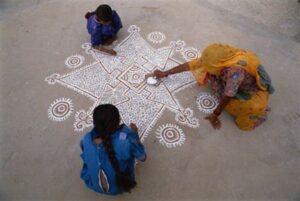
Until recently, the majority of publications about Jehovah’s Witnesses have been written by critics and ex-members, with only a small handful of academic publications. In the past decade, scholarly attention has grown, with the prospect of more balanced treatment of the Watch Tower Society.

IMAGES

Image #1: Charles Taze Russell.
Image #2: Joseph Franklin Rutherford.
Image #3: Beth Sarim (“House of the Princes”)
Image #4: A Jehovah’s Witnesses baptism.
Image #5: The Kingdom Hall in Walsall, England.

REFERENCES**

** Unless otherwise noted, this profile is drawn from George D. Chryssides. 2016. Jehovah’s Witnesses: Continuity and Change London: Routledge.

SUPPLEMENTARY RESOURCES

Baran, Emily. 2014. Dissent on the Margins: How Soviet Jehovah’s Witnesses Defied Communism and Lived to Preach About It. Oxford: Oxford University Press.

Beckford, James A. 1975. The Trumpet of Prophecy. Oxford: Blackwell.

Besier, Gerhard and Stokłosa, eds. 2016, 2018. Jehovah’s Witnesses in Europe: Past and Present. Three Volumes. Newcastle-upon-Tyne, England: Cambridge Scholars Publishing.

Chryssides, George D. 2019. Historical Dictionary of Jehovah’s Witnesses. Lanham Md.: Rowman and Littlefield.

Chryssides, George D. 2010. “How Prophecy Succeeds: The Jehovah’s Witnesses and Prophetic Expectations.” International Journal for the Study of New Religions 1:27-48.

Henderson, Jennifer Jacobs. 2010. Defending the Good News: The Jehovah’s Witnesses’ Plan to Expand the First Amendment. Spokane: Marquette Books.

Hesse, Hans (ed.) 2001. Persecution and Resistance of Jehovah’s Witnesses During the Nazi Regime 1933-1945. Bremen, Germany: Edition Temmen.

Knox, Zoe. 2018. Jehovah’s Witnesses and the Secular World: From the 1870s to the Present. London: Palgrave Macmillan.

New World Bible Translation Committee. 1961 (Revised Editions: 1970, 1971, 1984, 2013). New World Translation of the Holy Scriptures. Brooklyn, N.Y.: Watch Tower Bible and Tract Society of Pennsylvania.

Peters, Shawn Francis. 2000. Judging Jehovah’s Witnesses: Religious Persecution and the Dawn of the Rights Revolution. Lawrence: University Press of Kansas.

Russell, C. T. 1886. The Divine Plan of the Ages. London: International Bible Students Association.

Russell, C. T. and N. H. Barbour 1877. Three Worlds and the Harvest of This World. Rochester NY: N. H. Barbour and C. T. Russell.

Rutherford, J. F. 1920. Millions Now Living Will Never Die. Brooklyn, N.Y.: International Bible Students Association.

Watch Tower. 1917. The Finished Mystery. Brooklyn, NY: International Bible Students Association.

Publication Date:
7 November 2020


Share

Hindu Women’s Vratas (Vows) in South Asia

VRATAS AND EVENTS AFFECTING WOMEN TIMELINE

1500 b.c.e. – ca. 1000 b.c.e.: The time period in which it is estimated by scholars that the Vedas, the oldest Sanskrit Hindu religious books, were composed. The most important of the four Vedic books is the Rigveda, the book of hymns to the gods. It also includes ritual practices such as vratas.

sixth century b.c.e. – ca. second century b.c.e.: The time period in which the major Upanishads, which come at the end of the Vedic corpus, were composed. They are commentaries on the earlier Vedic texts. They deal with meditation, philosophy, and metaphysical knowledge; some parts include mantras, blessings, rituals, and ceremonies such as vratas.

400 b.c.e. – ca. 200 b.c.e.: The time period in which the Mahabharata was composed. The Mahabharata (the Great Epic of the Bharata Dynasty) is a Sanskrit epic poem that is understood by most Hindus to be both historical and religious (giving rules for dharmic action). It is very long, with more than 100,000 couplets, and its authorship is attributed to the sage Vyasa. It includes much mythic and religious data, including stories that later became the basis for vratas, such as the story of Savitri.

third century c.e. – tenth century c.e.: The time period in which the earliest versions of the Puranas were composed. Later Puranas date from the twelfth to the sixteenth centuries (and there are some more modern Puranas). The word purana literally means “ancient” or “old,” and these texts exist in many versions. They are books of medieval Indian literature which include a wide range of topics, particularly myths, legends, and folklore. Many of the Puranas are named after major Hindu gods and goddesses such as Vishnu, Shiva, and Devi. There are eighteen Maha-puranas (Great Puranas) and eighteen Upapuranas (Minor Puranas), with more than 400,000 verses. The Puranas link the practice of vratas to the empowering concept of shakti, the feminine power of creation.

DOCTRINES/BELIEFS THAT SHAPE THE ISSUE 

Derived from the verbal root “vr” (to will, rule, restrain, conduct, choose, select), the word vrata is found over two hundred times in the Rigveda (Monier-Williams 1992/1899) in the Vedas, the oldest scriptures composed in Sanskrit in what came to be known as the Hindu tradition. It is difficult to find the historical origins of the oral traditions of vratas, but we may say that they have come to be a major ritual for women in villages and rural areas. Over time, the public focus of vratas shifted from priestly (brahmanical) ritual to local ritual, with older women teaching vratas to young girls, and fewer priests (brahmins) teaching them to boys. In some areas of South Asia, vratas have become an entirely female tradition. It is an ascetic practice for female householders.

Vrata means “the taking of a vow,” and it involves undergoing certain practices in order to achieve a desired aim. A vrata is a vow or promise, usually to a deity, associated with a ritual practice. It is generally performed in order to gain some goal—a happy family with many children, wealth, a job, or recovery from disease or disaster. While religious elements of austerity and purity often appear, its goal is not to detach the performer from the physical world, but rather to gain blessings and a desired worldly outcome. There are folk vratas handed down by oral tradition and performed in rural areas, and there are more formal vratas, which are based on classical Indian religious literature. While folk vratas are generally performed by girls and women, more brahmanical vratas may be performed by both men and women (Sen Gupta 1976: Appendix, Table 4.3).

Religious Studies scholar Mary McGee surveyed the meanings of the term vrata in Vedic literature and found that the word was used as a command, a religious duty, devotion to a particular deity, proper behavior, and religious commitment; and she notes the debates on the Sanskrit origins of the term (McGee 1987:16). In the Rigveda, thought by scholars to be the earliest Vedic text composed from approximately 1500 b.c.e. onwards, every person’s vocation is called their vrata, as in hymn 9.112.1. Thus, whatever profession one is dedicated to may be called their vrata in the Vedic literature. The performance of sacrifice can also be called a vrata, as in hymn 1.93.8 of the Rigveda. This is the earliest written source for vratas. The major Upanishads coming at the end of the Vedic corpus, composed approximately sixth century b.c.e. to second century b.c.e., describe the vrata as an ethical and behavioral discipline, where compassionate action is important: the needy are helped, the hungry are fed, the stranger is welcomed, and one studies religious knowledge. The vrata encourages moral behavior and brings order and balance to the universe.

The Mahabharata (the great Epic of the Bharata Dynasty), composed in Sanskrit between approximately 400 b.c.e. and 200 b.c.e., contains stories that subsequently became the basis of vratas, especially the story of Savitri, the devoted wife who saved her husband from Yama, the god of death.

The Puranas (“ancient,” “old”) are collections of accounts of gods and goddesses composed in Sanskrit.  The Maha-Puranas (Great Puranas) were composed approximately from the third century c.e. to approximately the tenth century c.e. They state that both men and women can expiate their sins through the performance of vratas, and vratas are the second most discussed method of doing so in the Puranas (after pilgrimage to holy sites). Vratas are usually optional rituals, performed for special blessings from the Hindu deities. The earlier Vedic and dharmashastra texts (books on religious and moral action, clarifying duties and responsibilities) describing vratas had a greater priestly focus, while the later Puranas had less focus on priests and brahmanical ritual. The Puranas link the practice of vratas to the concept of shakti, the feminine power of creation, which promotes a sense of empowerment for women performing vratas since all women are considered to possess and express shakti in Hinduism. McGee calls vratas “the primary vehicle available to women for the recognized pursuit of religious duties and aims” (McGee 1987:16).

South Asian studies scholar Anne Mackenzie Pearson examined the sociology of vratas in Varanasi (formerly called Benares by the British), and noted that vratas are associated with auspiciousness and purity, with goals of improving individual lives, helping with problems, and expressing personal faith (Pearson 1996). They are often categorized as women’s sadhana, or spiritual practice. Vratas are also practiced to overcome suffering and adversity, neutralize the adverse effects of planets or evil forces, remove birth-related problems (doshas) in the natal horoscope, win the approval of an offended deity, overcome infertility, bear children, cleanse the mind and body, express regret as part of a penance, acquire spiritual power, help the ancestors in the heavens, or a family member, or a child who is in distress. Some vratas are expiatory, which are meant to neutralize past sins and transgressions (prayaschitta).

Today, a vrata usually involves fasting, following the moral and ritual lessons of a story (katha), creating artistic diagrams [Image at right] (alpana) on the ground, reciting special verses or mantras, and offering worship (puja) to an image, often an image made by the woman herself from simple materials commonly available in an Indian village home. Alpanas are termed alpona(s) in West Bengal. Designs with color are frequently known as rangoli. They are known as kolams in South India, chowk-poorna (chowkpurana) in Punjab, and by other names.

There are a wide variety of vratas, and today there are many collections of vratas in book form [Image at right] published in India. Vratas may be performed at morning, evening, or night, every day for a month, on particular days of the year, or for several years in succession. Locales may vary widely: on riverbanks, under trees, outside in courtyards, inside one’s house. They tend to be household rather than temple-oriented, though some more urban girls go to Shakta priests at temples for instruction (McDaniel 2003:31, 36).

We can describe two types, the Brahmanical vrata of the Vedas and shastras (Hindu holy books written in Sanskrit) and the folk tradition of popular vratas. There are some significant differences between shastric vratas of mainstream Hinduism, and the non-shastric vratas of folk Hinduism, which do not come from classical literature. In the shastric vratas, the vrata techniques are usually not original—they have already been learned and performed and are simply being retold and passed down to a new audience. For the non-shastric or folk vratas, the vratas are usually new revelations, coming directly from the deity involved, usually to help a person in trouble or to punish a wicked person. Many of these have a goddess appear to teach a lesson to a girl who is proud or ignorant.

A vrata may be learned from a mother or grandmother, a more distant female relative, a neighbor, or occasionally from a priest. [Image at right] Vratas and their associated artistic diagrams have also been occasional subjects of college courses, for instance at Vishvabharati University’s Kalabhavana school in Shantiniketan, West Bengal. The vrata is understood through a story (the vrata katha), which explains the history of the vrata and the reasons for performing it. Whether the ritual associated involves total fasting, avoiding certain foods or activities, or creating symbolic images, the story is the centerpiece of the event. Many of the vrata stories involve goddesses. A frequent theme is the accidental or deliberate offending of the goddess, who then comes down to take her revenge upon the evildoer. The story then shows how she is pacified and returns to a state of harmony with her disciples. As the tension is resolved in the story, so some conflict or problem may also be resolved in the daily lives of the women who perform the vratas.

Vratas are also a form of religious play—some informants said that they saw the performance of vratas as a game when they were young, and only realized their significance when they were older (McDaniel  2003:108). It is religious action that can be either serious or enjoyable, and those vratas with the worship of images (murtis) can be interpreted by young girls as playing with dolls, pretending to have a family, or worshipping powerful deities. The practices can involve play, or love, or faith, or worship, or even anger, depending on the individuals and the context.

The mild forms of asceticism (such as not eating hot food or not taking a bath for a day or sleeping on the floor) associated with some vratas can also be understood as a game rather than as a sacrifice. One female head of an ashram interviewed told of how she learned to enjoy such ascetic practice,  because it showed that she could be strong, and was done in a community of people that she loved (McDaniel 1989:212). Religious behavior can thus be learned in the context of play, which makes young girls more interested in the practices.

In puranic sources, the power of the vrata practice is based on the concept of shakti, or the cosmic feminine power of creativity. Shakti may be understood as impersonal or personal. Impersonal shakti is the power within the universe, latent in all creation, as a part of the goddess who has created the universe. As personal power, shakti may be increased within the person by meditation and ascetic practice. Such shakti is the basis of the power of female ascetics: the yoginis, sannyasinis, sadhvis, matajis, and sadhikas of India. Among female householders, shakti may also be increased by following dharmic rules, or moral rules, such as eating only pure foods, showing reverence and respect towards husband and family, and keeping a clean and orderly household. [Image at right] A perfect dharmic wife is sometimes called a pativrata (vowed to her lord/husband), and she is believed in the folk tradition to have a great deal of shakti. There are many miracle stories of such perfect wives who can make food cook itself, carry water without a pot, or be in two places at the same time. Her power, or shakti, is gained by her devotion to husband and his family. An example of the power of such a perfect wife is shown in the vrata story of Savitri, who brought her husband back from the dead. Brides contemplate Savitri as their ideal role model.
Savitri’s story is told in the Indian epic, the Mahabharata. It is thus a bramanical vrata, as it is based on a Hindu sacred text composed in Sanskrit. Savitri, daughter of King Ashvapati, chooses as her husband Satyavan, the noble son of a blind and exiled king, who lives in a forest hermitage. Though warned by the sage Narada that the prince is fated to live for only one year more, she loves him and marries him anyway. After the wedding she leaves with her husband and goes to his father’s forest retreat. Here she lives happily until she becomes anxious about the approach of the fatal day. When it arrives, she follows her husband on his way to cut wood in the forest. He soon lies down exhausted at the foot of a banyan tree. Yama, the god of death, appears, and taking his soul, departs. [Image at right] Savitri follows him, and Yama grants her various wishes, anything except the life of her husband. However, she finally outwits him by wishing that she be the mother of one hundred sons, and Yama is forced to bring her husband back to life. Satyavan recovers and lives happily for many years with Savitri.
One vrata ritual based on this story is the Vata Savitri Vrata, a practice for married women. [Image at right] It sometimes has various regional practices added, but generally, it is performed on Vata Savitri Purnima (the full moon day) in the Hindu month of Jyestha (May-June). Women pray for long life of their husbands and they pray that they will never be widows. A local banyan tree (vata) is worshipped by the women, representing the tree under which Satyavan died. The women fast for three days, and then they break the fast when the vrata is over. The women (vratinis) wake up early in the morning and bathe and go to worship the banyan tree in different groups, wearing their best dresses and jewelry. Money and other gifts are given in a bamboo basket to brahmin men. Groups of women worship the banyan tree and listen to the story of Savitri. The women pray for good health for their husbands, and water the tree. They sprinkle red powder (kumkum) on it, and cotton threads are wrapped around the tree trunk, and then they walk seven times clockwise around the tree. This is the parikrama or circumambulating the tree. [Image at right]
The ritual ends with the women giving each other gifts. This ritual commemorates the story of Savitri, and women hope to be as fortunate as she was. As it is a brahmanical ritual, brahmin priests (or men generally) get money and other gifts. They are often present for the ritual worship or puja. Rituals for the brahmanical vratas can be found widely in pamphlets across India.

The more rural forms of vrata have smaller groups of older women who act as teachers, and there is no necessity of brahmin priests or offerings to the brahmin men in town. Such vratas are similar to mainstream Hindu worship (puja) but oriented more towards the household than the temple. The oldest and most respected married woman (aye) is the vrata priestess of her household and of the group. Some folk vratas include Hindu deities, and some do not. The following are two short vratas which are performed on the holiday of Akshaya (“never-ending [success]”) Tritiya. They involve the worship of a living woman who is offered gifts and believed to bestow blessings.

The Ada-Holud brata, or the vrata of ginger and turmeric, is a Bengali folk vrata (or brata in Bengali). It is performed from the last day of the month of Chaitra (March-April), to the last day of the month of Baisakh (or Vaisakha, April-May) for a week each spring, and it should be continued for four years. It is the worship of fortunate wives, who are called ayes. Such women may be of any age but are often old. A woman whose husband is alive should be chosen, and she should be offered a handful of unhusked rice, and of coriander, as well as five pieces of ginger and five of fresh turmeric. She should also be offered sweets (sandesh, or small cheesecakes) and a small amount of money. The end of the fourth yearly brata is a time of celebration, and four auspicious wives should be invited. They should be feasted and given gifts. The original woman served should also be given iron bangles twisted with gold, and a fan, a sari, and a comb. The goal of this brata is to guarantee that the woman who performs it will never be a widow (Bhattacarya and Debi n.d.:25). Such reverence guarantees that the bratini will live a fortunate life, like the woman worshipped.

Other folk bratas in Bengal are dedicated to young girls. One is called the Akshaya-Kumari brata or the vrata to the young maiden, and it is to be performed every year for four years, on the Akshaya Tritiya day. On this day, the person performing the brata should invite a young girl to sit on a low wooden stool. The girl’s feet should be washed, and then painted with red alta paint. Then she should be wrapped in a sari with a red border, and her hair should be combed. The woman performing the brata should then paint dots of white sandalwood paste and vermilion powder on her forehead and feed her lavishly. This should be done once a year for four years. For the brata in the fourth year, the young girl and three other girls are to be invited for a good meal. They should be given saris with red borders, hairbrushes, combs, mirrors, and small gifts of money. The girl who was invited for the four consecutive years should receive more gifts. It is said that this vrata gives good fortune to both the girls and the women performing the vrata (Bhattacarya and Debi n.d.:33).

For the folk tradition, vratas tend to be direct revelations, while for mainstream Hinduism, they are only secondary sources, based on Sanskrit originals. This may be in order to emphasize that, for mainstream Hinduism, there are other texts that are more important revelations: the Vedas, the Upanishads, the Epics. However, the folk tradition does not depend on other texts, and vrata revelations are often direct descriptions of experiences, as opposed to texts handed down over time.

An example of a folk vrata from West Bengal that shows direct revelation is the brata of the pipal tree leaf (Asvatthapatar brata). According to the story or brata katha, long ago a wealthy girl named Lajjabati was proud of her status. She refused to sit beneath the local asvattha (pipal) tree because crows and ravens stayed in it. The tree was very hurt by her words, and it sighed silently. Soon the kingdom was invaded by robbers, and one night they stole Lajjabati’s gold jewelry. She wanted her jewelry back and she followed the thieves into the forest. She got lost and found herself before an asvattha tree in the woods. She asked it for shelter inside its trunk, and the tree miraculously opened and gave her shelter. She stayed inside the tree, eating fruits and roots, until the goddess Durga passed by in the form of an old woman. [Image at right] She saw Lajjabati going in and out of the tree and asked her about this. Lajjabati started crying, saying she was lost, and Durga offered to show her the way home. However, Durga said that she would only do this if the girl paid for her pride by performing a special brata. She must perform this brata for four years to the asvattha tree, from the last day of the month of Chaitra to the last day of the month of Baisakh (about 30 days). She had insulted the tree, and she must atone for this. The goddess showed her the way home, and she returned to her parents, who were happy to see her again. Lajjabati performed the brata faithfully, and her family grew wealthy and she was married to a prince. She had many sons and daughters, and she lived happily with her family (Bhattacarya and Debi n.d.:9–11).
In this vrata, the goddess Durga came by, but only to reveal how the girl had hurt the tree’s feelings, and how she must make things right. The goddess revealed the vrata, both the story and the associated ritual, in order to help her and future women who might wish for blessings. Thus Durga gives a direct revelation of the vrata—it is not something that existed before her intervention. We may note that in Bengali Hindu folk religion, Durga is a forest goddess, called Vana Durga or Durga of the Woods.

Women who wish to follow Lajjabati and perform the vrata pick five types of leaves from the asvattha tree (budding, green, ripe, dry, and brittle) and hold them while immersing themselves in a lake or pond or river. The bratinis ask for blessings, and each leaf gives a different type of blessing. The leaves should then be placed in the water to float away, and the women should water the roots of an asvattha tree and pray before it, honoring the tree. The brata is usually performed in a group of girls or women, in the springtime. It is performed for four years in a row.

In another Bengali folk vrata, the Jamaisashti brata, married women worship the local goddess who blesses pregnancy and children. [Image at right] They paint alpana designs on the ground and make an image of Shashthi and her cat out of dough to worship. According to the vrata story, a greedy wife would steal food, and blame it on the household cat. People in the house would beat the cat, so the cat complained to the goddess Shashthi, whose special animal (mount or vahana) was a cat. Following this, each time the woman gave birth to a child, the child disappeared.
After years of the infants disappearing, the woman stayed up at night, and saw Shashthi’s cat taking the baby into the woods. She followed it, and saw the goddess near a banyan tree, surrounded by children. She asked for her children back, and Shashthi said:

First ask forgiveness from the cat. You must accept your fault in order to get your children back. . . . Don’t ever beat my cat again or strike it with a broom or any other object. Don’t steal food and blame it on the cat. In every month of Jyestha [May-June], at this time, take a branch of a banyan tree, and make a model of a black cat out of dough. Then offer it dishes with every available fruit. During pregnancy, offer six pan leaves, six whole betel nuts, six kathali bananas, and six regular bananas. Then perform ritual worship to me. . . .

The woman came back with all of her children, and the household grew happy and wealthy. [Image at right] Other women followed her practice, and many people began to worship the goddess and gain her blessings  (Bhattacarya and Debi N.d.:57–61). In this vrata story, the husbands also learn to worship Shashthi, along with their wives. This is unusual for rural vratas.

These vratas not only show the virtue of honesty and respect, but emphasize the value of nature, and how it is important to the goddess.

ORGANIZATIONAL ROLES PERFORMED BY WOMEN RELEVANT TO THE ISSUE

For folk vratas, it is usually the case that married women act as instructors, teaching girls from the age of five years onwards about the vrata rituals. [Image at right] At that age, the girl is taught to pluck flowers, dig pits for those vratas that require them, draw alpana pictures on the floor or entrance to the house, model small images to be worshipped, and learn mantras. Each vrata has its own alpana image—drawn with new clay whitened with powdered rice dissolved in water. Alpana diagrams give protection and/or fertility, and they may be accompanied by pictures which represent the desired goal or object. Some vratas include history—for instance, the Sejutibrata alpana represents the defeat of the ancient Dom rulers by invaders.

These vratas for girls have continued in traditional style for centuries. They were already an ancient tradition when Shib Chunder Bose wrote his Hindoos As They Are in 1881, in which he described the vrata rituals of the time. He stated that when a girl is five years old, she is initiated by an older woman into the vrata rituals, to get a good husband and happiness. She might begin with Shiva Puja, following the example of the goddess Durga (for Shiva is regarded as a model husband in many vrata stories, more faithful than the flirtatious god Krishna). She makes an earthen image, washes and sprinkles it with water, and prays while visualizing the form of the goddess. She then performs the vrata with flowers and sandal paste, and worships ten images of people and saints, and paints alpana designs on the floor (Bose 1881:35).

In her book, Memoirs of an Indian Woman, Shudha Mazumdar wrote about her childhood practice of vratas in Kolkata, West Bengal. She explained the reasons for it clearly:

Since much would be required of the girl when she attained womanhood, a system of education began to prepare her for her future life from her earliest days. As nearly all things in India hinge on religion, this training was also centered in religious thoughts and practices. It aimed at imparting an elementary knowledge of the basic ideas that were considered by a Bengali family to be good and true; it was accomplished through the medium of little rituals and prayers and fasts. These rituals had some connection with objects that were familiar to the child such as plant and animal life. By this system of training, the child was taught to be disciplined and dutiful and responsible. She who undertakes a lesson of this kind is said to have undertaken a brata. The literal meaning of brata is “vow.” So the child takes a vow to do a certain thing which must be performed (Mazumdar 1989:17).

She recalls some of her early practices, with simple Bengali mantras and without priests:

The tulsi brata teaches the child how to care for the bush of sweet basil that is so dearly cherished in every Hindu home. The cow brata makes her familiar with the four-footed friend whose milk not only sustained her in infancy but is still an important item of her daily food. There is another delightful brata called punyipukur, or the lake of merit, in which the child digs a diminutive lake and, seating herself before it, prays to Mother Earth for the gift of tolerance and for the fortitude to endure all things lightly, as does Mother Earth herself (Mazumdar 1989:17).

Many vratas include a reversal of traditional power relationships: figures who are weak, such as women, become strong and even saviors. People who make mistakes are forgiven, and they learn from their mistakes of pride and selfishness. Some vratas include helpful plants and animals which must be respected. Women are taught to be kind, and they are rewarded for compassion towards both human beings and towards nature.

THE ISSUES/CHALLENGES FOR WOMEN

There are two concerns that we may examine as issues for women. One is the role of men in the practice of vratas: Should brahmin priests (and brahmin men generally) be paid when it is the women who are performing the ritual? Another issue is raised by feminists: Do vratas contribute to female empowerment?

The issue of giving money and gifts to brahmin men on the occasion of women’s vratas has been debated. In the case of vratas in West Bengal, Pradyot Kumar Maity divides bratas into customary or primitive (“non-Aryan in origin”) and shastric (sacred texts written in Sanskrit). He believes that the shastric type of vrata, for which we have earlier literature, is really a later development with political overtones:

The sastric bratas, which are few in number, were created later on by the Brahmins who wanted to benefit out of those, either by participating in the priestly function or by taking an upper hand in society. . . . The origin of a sastric brata, out of the greed of the Brahmins who act as priests, may be illustrated if we see the method of observance of such a brata, for instance, the Harir-charan-brata. By observing this brata a bratini worships the feet of Lord Hari who is the protector of the Universe. A Brahmin priest officiates in this sastric brata and the bratini who observes this brata is to give a pair of gold or silver sandals . . . [and] one set of new clothes and dakshina (fee) in cash to the Brahmin priest (Maity 1988:3).

Maity contrasts this with the customary brata in which women conduct the rituals. There is no involvement of brahmin priests, and no gifts of gold or fees are required. He cites several other scholars who claim a non-Aryan origin to the bratas and argues that these bratas were later absorbed into brahmanical Hinduism. Traditional gifts for brahmin priests include cows (godana), bulls (vrishabha dana), land (bhoomi dana), house (griha dana), food (anna dana), agricultural tools (hala dana), and fruit (phala dana) (V [2020]).

Sudhir Ranjan Das describes the non-brahmanical nature of folk vratas. He emphasizes the importance of the folk or asastriya (non-shastric) vratas, the vratas that do not follow the Hindu religious books. He states of them:

Asastriya-vrata rites have no sanction in the sacred texts. These rites have been current amongst the people from indeterminable times. They are really folk rites preserving the remains of old traditions that go back to pre-historic ages. Asatriya-vrata rites are not merely childish and meaningless practices but they are replete with certain basic faiths and beliefs of primitive folk-life, translated into rituals that are observed for material benefits (Das 1953:12).

The shastric versus folk distinction in types of vrata (or brata in Bengali) has also been described by other authors who have written on the topic of vratas. Chittaranjan Ghosh in his Bangladeser Brata (Bangladeshi Vrata) as a contrast between pauranik (based in the Puranas) and laukika (based on folk tradition) bratas (cited in Maity 1988:6). Sankar Sen Gupta suggests a distinction between bratas as shastric (text-based and involving both genders) versus prachalita (women’s rituals) (Sen Gupta 1970:100). Some brata distinctions are based on participants: Abanindranath Tagore in his Banglar Brata (Bengali Vrata) categorizes three groups of bratas: shastric, nari, and kumari bratas (Sen Gupta 1970:100). The shastric group is performed by both genders. The nari bratas are those primarily performed by married women, and which focus on the health and happiness of husband and children. The kumari bratas are for unmarried girls, and they are intended to bring the girl a husband who is wealthy and wise. In West Bengal in India, most bratas are performed in groups of older and younger women, with the older women guiding the younger ones.

The Indian writer and cultural activist Pupul Jayakar speaks of vratas as a form of cultural resistance to brahmanical domination, named after the vratya ritualists and magicians of the Atharva Veda, one of the early Vedic texts noted for its magic spells. (The vratya ritualists were yogis who fell into trances, later described as wandering sorcerers who wore black robes and amulets). Jayakar describes vratas as mobile rituals independent of temples and specialists, which continued to be practiced during large movements of people, retreating from towns to forests and mountains during wars and famines, and during migrations from village to village. Performing vratas gave a sense of empowerment and an arena for creativity to women and other disenfranchised groups.

For the woman, as the main participant and actor of the ritual, the vratas were the umbilical cord which connected her to the furthermost limits of human memories, when woman as priestess and seer guarded the mysteries, the ways of the numinous female. It was around these vratas, thousands of variations of which existed in the cities, settled villages and forests, that the rural arts found significant expression. Free of the brahmanic canon which demanded discipline and conformity in art and ritual, the vrata tradition freed the participant from the inflexible hold of the great tradition. Unlike the brahmanic worship of mantra and sacrifice, which was available only to the Brahmin, the vrata puja and observances were open to the woman, to the non-Brahmin, to the Sudra and the tribesman. . . . Many urgencies mingled in the vrata rites, providing the channels through which contact with nature and life was maintained and renewed through the worship of the earth, sun, and water and the invoking of the energy of growing things, of trees, plants and animals (Jayakar 1990:15–16).

Some writers, such as Jayakar, Das, and Sudhansu Kumar Ray, see these vrata rituals as the remnants of older Indian religious systems, which were suppressed by the brahmanical orthodoxy. Ray theorizes that vratas were not only women’s religious activity, but in the past belonged to men as well:

Originally, brata was not a secluded domestic religion for women alone, as we see it today, but existed as an interior wing of a “single and complete magico-religious observance” that also had a powerful exterior wing for men. Somehow or other, the link between the two sexes has now been lost or cut off (Ray 1961:12).

He suggests that the men’s branch may survive in such village rituals as the gajan (involving painful ordeals and worship of the god Shiva) and the jhapan rites (religious dances involving snakes). Thus, an originally united religion became segregated by gender. This earlier religion has largely been destroyed—which he understands to be due primarily to the invasion of India by foreign cultures. He also blames brahmanical Hindu religion for shattering the vrata religion. However, the vratas have retained their informal importance for women.

The fundamental religion in which the Bengalis are “born and brought up” is called brata. It is a domestic form of religion and apparently not associated with temple service. Bratas are performed exclusively by womenfolk with a view to fulfilling their aspirations by means of magical rites. It can be performed by a single person, or by the “elders in assembly” of five married women (Ray 1961:10).

As we can see, there are arguments about the origins of vratas, and tensions between different types. But another area of tension can be the question of whether vratas are beneficial for women.

From a feminist perspective, the vrata tradition can be understood as being both helpful and harmful for women. It is good because it encourages female community and mutual respect for women of all ages and stations in life. By worshipping both young girls and old women, vratas demonstrate that both of these often-ignored groups have value and should be appreciated. Because the vrata tradition is a form of folk religion, it creates an alternative non-institutionalized hierarchy of women, ignoring the traditional hierarchy of male brahman priests in favor of informal, often low-caste priestesses, or the auspicious married women who become the teachers and ritual specialists of the tradition. It is primarily the women who pass down the stories and teach the practices in rural areas, not the men.

However, there are some aspects of the vratas that would be seen as negative from a feminist viewpoint. While some vratas tell women to disagree with their husbands and act independently, many stories reinforce traditional values, in which women are submissive, self-sacrificing, and obedient. Such values allow women to accept social situations in which they are often understood as second-class citizens, having less food and medical care than males, and fewer choices in life. Many young women in rural India grew up eating less food than their brothers, or even their leftovers, and they greatly resented this lack of respect for them. The brahmanical vratas reinforce these traditional values, instead of offering new options for respecting and caring for girls and women. The ideal woman as constructed by the brahmanical vratas sacrifices herself for husband and family, and there is little room for individual accomplishment and creativity. The ultimate goal of most of these vratas is for the girl to become a wife, and for the wife to bring good luck to her husband’s household.

WOMEN’S RESPONSES

We can see that vratas have acted to maintain an authoritative role for women within the folk religious tradition of Hindu worship, in a situation where most traditional religious leaders were male. Today, the urban practice of vratas is declining, at least partly due to the influences of both science and westernization. In West Bengal, the great challenge to the practice of vratas has been Communist materialism, which understands religious belief to be both superstitious and a threat to the state. In India as a whole, the rise of Hindu nationalism and political religion has lessened the importance of more local religious practices. However, in the villages, the folk traditions continue as they have for centuries, and the vratas still counter the male focus of political and religious power with their religious practice by groups of women of all ages.

We can also see that vratas have entered popular culture, and there are online instructions for vratas, as well as computer-generated animation for them. [Image at right] This brings an ancient tradition into the modern world.
SIGNIFICANCE TO THE STUDY OF WOMEN IN RELIGIONS

We can note several benefits to girls and women from the performance of vratas that are linked to religious ideas and goals. Vratas encourage community and shared activity between women at different stages of life. There are vratas that include the ritual worship of young girls (kumari puja) as incarnations of the goddesses Durga or Lakshmi, and vratas that involve the ritual worship of older women, appreciating their luck in living happily and having a healthy family. The life stages of youth, motherhood and old age are shown respect through ritual worship and offerings (usually of food, red sindur powder and saris). The different stages of a woman’s life are shown to be valuable to the community, and group and individual friendships are supported. Such support is important, for much work in rural India is shared.

Vratas inspire artistic creativity, especially in the designing and painting of the alpana pictures which accompany vratas. [Image at right] These designs are unique to each artist, and young girls can get a reputation in the villages for the beauty, complexity, and originality of their alpana pictures. Artists can be appreciated without the necessity of expensive supplies and gallery shows, and modern events can be incorporated into the pictures. Such pictures can show the creation of religious worlds in physical form, as well as comment on the social world around the artists.

Vratas promote closeness to nature, as may be seen in stories of people who are rewarded for taking good care of plants and animals. Some vratas involve the creation of and caring for miniature forests, groves and lakes. Those who respect nature, watering tulsi plants and feeding hungry baby birds, get their dreams fulfilled. As in many European folktales, the compassionate hero or heroine who has pity on suffering plants and animals is blessed.

Vratas support showing concern for and caring for others, especially family members. Fasting and prayers are often performed for the sake of others, so that the husband and children may be healthy, or that they will have luck in the future, or gain wealth if they are poor. While some vratas are for the happiness of the woman performing them, most focus on the happiness of those around her, especially the men on whom her welfare depends. The ritual practices express clearly the concern of family members for each other. Performing vratas is a part of stridharma (wifely duty), a woman’s obligations in life.

Vratas foster concentration in girls who are often unschooled, and encourage positive expectations and optimism for the future. The various vratas of the ten wishes emphasize the future identity and situation of the vratini: she will be as strong as the goddess Durga, and patient as the earth. They may also bring encouragement, for the heroines and goddesses of the vrata stories suffer as human beings do, having to work at menial jobs and being despised and misunderstood, yet they are able to overcome their difficulties. Both deities and heroines within the vratas can act as role models for the vratinis.

Vratas articulate underlying power struggles, between husbands and wives, between co-wives, and between relatives of the extended family. Women can see that they are not alone, that their problems are shared by other women, and these problems can be portrayed in the context of the vratas. Vratas can “change one’s luck,” and also change the understanding of problems. For instance, several vratas reveal the hidden virtues of wives and daughters to the men in the family who might otherwise not notice them. Deities can be called down to bless the family, and to help with problems.

The influence of vratas on luck is important, because in traditional Hindu life, the woman is the luck of the house. [Image at right] When a new bride comes into a household, if everybody is healthy and there is extra food and money, the bride is said to be like Lakshmi and to bring good fortune with her. This makes her a valued member of the household. However, if she enters the house, and soon family members get sick, and the husband loses his job, then she is said to bring bad luck to the house and to be like Alakshmi, the goddess of poverty and misery. Her status in the household will then be low, for she will be blamed for the family’s misfortunes. Lakshmi is a major vrata goddess who brings good fortune to all.

It is difficult to guarantee luck, but vratas are believed to help in this area. By pleasing a deity, the woman may be blessed, and thus more likely to bring good fortune with her through life. Even if the vratas do not work, at least she can be seen as making an effort to bring good luck. If good fortune does occur, then the vratas (and the vratini) may be given credit for it.

IMAGES 

Image #1: Woman and girls drawing an alpana in Rajasthan, India.
Image #2: Brihaspativar Vrath Katha booklet written in English published by Manoj Publications, Delhi.
Image #3: Woman drawing kolam.
Image #4: Digital Happy Savitri Vrata greeting in Oriya.
Image #5: Color lithograph from an album illustrating the story of Savitri’s defeat of Yama, the god of death, to save bring her husband back to life. Calcutta Art School, early twentieth century. British Museum. Wikimedia Commons.
Image #6: Vat Savitri Puja performed by married women so their husbands will live long, healthy lives.
Image #7: Vata Savitri Vrath. Women wrap thread around the banyan tree.
Image #8: Vana Durga, Durga of the Woods.
Image #9: Shashthi, ca. 1890. Wikimedia Commons.
Image #10: Digital greeting for Shashthi vrata.
Image #11: Mother and daughter performing a vrata.
Image #12: Lakshmi, goddess of wealth, good fortune, and fertility.
Image #13: Young women drawing a kolam.
Imagr #14: Lakshmi.

REFERENCES

Bhattacarya, Panditprabar Gopalcandra, and Rama Debi, eds. N.d. Meyeder Bratakatha, Baromaser. Calcutta: Nirmal Book Agency.

Bose, Shib Chunder. 1881. Hindoos As They Are. Calcutta: S. Newman and Company.

Chatterji, Tapon Mohan. 1965/1948.  Alpona: Ritual Decoration in Bengal. Calcutta: Orient Longmans Ltd.

Das, Sudhir Ranjan. 1953. Folk Religion of Bengal: A Study of the Vrata Rites, Part 1. Calcutta: S. C. Kar.

Gangooly, Joguth Chunder. 1860. Life and Religion of the Hindoos, with a Sketch of my Life and Experience. London: Edward T. Whitfield.

Jayakar, Pupul. 1990. The Earth Mother: Legends, Ritual Arts, and Goddesses of India. San Francisco: Harper and Row.

Kane, Pandurang Vaman. 1958/1930. History of Dharmasastra: Ancient and Medieval Religious and Civil Law. vol. 5. Poona: Bhandarkar Oriental Research Institute.

Maity, Pradyot Kumar. 1988. Folk Rituals of Eastern India. New Delhi: Abhinav Publishers.

Majumdar, Asutosh. 1991. Meyeder Bratakatha. Calcutta: Deb Sahitya Kutir Ltd.

Mazumdar, Shudha. 1989. Memoirs of an Indian Woman, ed. Geraldine Forbes. London, Me. E. Sharpe.

McGee, Mary. 1987. “Feasting and Fasting: The Vrata Tradition and Its Significance for Hindu Women.” Th.D. diss., Harvard University.

McDaniel, June. 2004. Offering Flowers, Feeding Skulls: Popular Goddess Worship in West Bengal. New York: Oxford University Press.

McDaniel, June.  2003.  Making Virtuous  Daughters and Wives:  An Introduction to Women’s Brata Rituals in Bengali Folk Religion.  Albany:  State University of New York Press.

McDaniel, June. 1989. The Madness of the Saints: Ecstatic Religion in Bengal. Chicago: University of Chicago Press.

Monier Monier-Williams. 1992/1899. “Vrata.” In A Sanskrit-English Dictionary. Oxford: Oxford University Press, 1042.

Pearson, Anne Mackenzie. 1996. “Because it Gives Me Peace of Mind”: Ritual Fasts in the Religious Lives of Hindu Women.  Albany: State University of New York Press.

Ray, Sudhansu Kumar. 1961. The Ritual Art of the Bratas of Bengal. Calcutta: Firma KLM.

Sen Gupta, Sankar. 1976. Folklore of Bengal: A Projected Study. Calcutta: Indian Publications.

Sen Gupta, Sankar. 1970. A Study of the Women of Bengal. Calcutta: Indian Publications.

V, Jayaram. [2020.] “The Meaning and Significance of Vratas in Hinduism.” https://www.hinduwebsite.com/hinduism/concepts/vratas.asp. Accessed September 14.

SUPPLEMENTARY RESOURCES

Dutt, M. N. 2003. Vrata: Sacred Vows and Traditional Fasts. N.p.: Cosmo Publications.

Michaels, Axel. 2016. Homo Ritualis: Hindu Ritual and Its Significance for Ritual Theory. New York: University Press.

Wadley, Susan S. “Hindu Women’s Family and Household Rites in a North Indian Village.” In Unspoken Worlds: Women’s Religious Lives, 3rd ed., Nancy Auer Falk and Rita M. Gross, 103–13. Belmont, CA: Wadsworth/Thomson Learning, 2001.

Publication Date:
25 October 2020


Share

Assemblies of God (Italy)


ASSEMBLIES OF GOD (ITALY) TIMELINE

1891-1901:  The Italian great migration to United States of America took place.

1891-1905:  The future pioneers of Pentecostal revival in Italy arrived in New York in 1891 and Chicago in 1901.

1890-1895:  Births to Evangelical Church members who were Italian immigrants occurred.

1890:  A Waldensian missionary in Chicago, Michele Nardi (1850-1914), founded the Presbyterian Italian Church (IPC) and the Young Men Christian Association (YMCA).

1891:  Luigi Francescon became a member of the YMCA.

1894:  Giacomo Lombardi joined the Italian Presbyterian Church (IPC).

1903:  Within the Italian Presbyterian Church a split took place between two groups of members.

1906:  William H. Durham founded the North Avenue Mission in Chicago.

1907 (September 15):  Francescon joined the North Avenue Community and received the Baptism of the Holy Spirit.

1907:  Francescon with other Italian immigrants founded the Christian Assembly (CA), the first Italian Pentecostal congregation.

1907 (December 15):  Giacomo Lombardi joined the Christian Assembly.

1908:  Francescon and Lombardi went on a mission to St. Louis and later to Los Angeles.

1908:  Giacomo Lombardi leave as missionaries for Italy, where he found the first Pentecostal community in Rome.

1909: Luigi Francescon went as missionary to Philadelphia and Buenos Aires, where he founded a Pentecostal congregation among Italian immigrants.

1910:  Luigi Francescon moved from Buenos Aires to Brazil (Parana State).

1912:  Giacomo Lombardi and Luigi Francescon together with Luigi Terragnoli went to Italy on a mission.

1928:  The first general convention of the Italian Pentecostal communities took place.

1929:  The second general convention chaired by Luigi Francescon took place; the movement took the name of Pentecostal Christian Congregation.

1935-1943:  Persecution by the Fascist regime took place.

1947 (August):  The convention of Pentecostal communities held in Naples assumed the name of Assemblee di Dio in Italia (ADI) and adhered governing principles of the Assemblies of God USA.

1959:  The ADI obtained the legal recognition as charitable organization and therefore was able to exercise private and public worship.

1988:  Agreement (Intesa) was reached between the Italian State and the ADI.

2011:  The right of the ADI to collect annually the tax devoted by the Italians taxpayers in their favor was recognized by the state.

2018:  There were 1,151 congregations spread across the national territory.

FOUNDER/GROUP HISTORY

The Pioneers of the Pentecostal revival in Italy were Pietro Ottolini, Luigi Francescon, [Image at right] Giacomo Lombardi, Giuseppe Beretta, Pietro Menconi, and Giuseppe Petrelli. Among this group, the most dynamic protagonists in missionary activity were Francescon and Lombardi. In some moments each was on their own, in others they worked together.

Luigi Francescon born in Cavasso Nuovo, Friuli Venezia-Giulia (North East of Italy) in 1866. The region of Friuli Venezia Giulia was, together with Veneto and Piedmont, the geographical area that experienced the great migration of Italians between 1876 and 1900. At that time, the area, populated mainly by peasants, was very poor. At twenty-four years-old, Francescon immigrated to the U.S., arriving in Chicago in 1890. He found work as a mosaicist. In Chicago, he met Michele Nardi, the founder of the Waldensian mission Young Men’s Christian Association (YMCA).

Nardi was a former garibaldino, a militant in the insurrectional groups of the Italian Risorgimento, led by Giuseppe Garibaldi. Two Waldensian Italian families invited him to preach in a hall within the Railway station of Northern Chicago, where he alternated his missionary activity with teaching English to recent Italian immigrants. Luigi Francescon was one of the first to attend to Sunday worship and frequent the English course.

Nardi with another Waldensian pastor, Filippo Grill, founded the first Italian Presbyterian Church (IPC). Three deacons composed the first pastoral council. One of these was Francescon. In 1903, he became elder of this church, soon torn by an internal conflict over who should have the right to speak during the worship service. One group argued that anyone wishing to speak during the worship should formally join the church. The other was inclined to give the right to speech to anyone. This second group, known as the Tuscans because they primarily came from Tuscany, left the Church. Francescon among them. He accepted the practice of adult baptism by immersion, and he was baptized in the Michigan Lake in September 1903. In 1907, Francescon met William Howard Durham, [Image at right] who came back to Chicago from a journey as “pilgrim” to Azusa Street Community in Los Angeles and founded the North Avenue Chicago Mission. Durham began preaching the Pentecostal message, particularly among Italian immigrants. After receiving the Baptism of the Holy Spirit, Francescon and other Italian immigrants rented a venue on Chicago’s West Grand Avenue. [Image at right] Together with former members of the IPC, Nicola Moles and Pietro Menconi, Francescon called this new community the Christian Assembly.

In December 1907, Giacomo Lombardi joined the Christian Assembly, and one year later he went on a mission with Francescon to St. Louis and Los Angeles. The success of their mission among the Italians of Los Angeles convinced them that the times were ripe for a new ambitious mission: Italy. The decision to travel to Italy was not easy. We can infer this from what Francescon writes in a note of his diary:

In March 1908, the Lord lets me and my brother G. Lombardi know to leave the material job and to be at His disposal. We were in bad financial situation with six small children each, but not to fear that the Lord would to take care of our families. The revelation was confirmed to us through the gift of the interpretation of the languages [in Italian in the text: probably means glossolalia], so we were aware of surrendering to the will of Our Lord.”

In 1909, Francescon with Lombardi founded the first Italian Pentecostal church in Los Angeles. After visiting Philadelphia in April 1909, he also went once again to Argentina accompanied by Giacomo Lombardi and Lucia Menna, meeting in Buenos Aires with her relatives to evangelize them. In March 1910, they moved to São Paulo, Brazil (Correa 2013:41) and then reached Paraná, leaving a significant number of converts to the Pentecostal experience. They subsequently gave rise to the Congregação Cristã no Brasil (Christian Congregation in Brazil). Francescon visited ten times Brazil until 1947.

In 1911, he returned to Italy visiting the first four Pentecostal communities of Rome, La Spezia, Gissi and Milan. The sinking of the Titanic interrupted his second mission to Italy in 1912. Embarked together with Giacomo Lombardi and Luigi Terragnoli on the ocean liner Carpathia, they participated in the rescue efforts by donating some of their clothing. They were then obliged to come to New York with survivors before they were able to resume their journey to Italy.

Francescon’s last visit to Italy took place in 1929 where he chaired the second national convention of the Pentecostal movement on December 24 and 25 in Rome. On this occasion, he suggested to the congress participants that they change the name of the association. The new name was Pentecostal Christian Congregation. Francescon’s Congregationalist theological approach was decisive. This was his last visit, and he left Italy on April 26, 1930. His Congregationalist conception led him to contest the doctrinal position of Giuseppe Petrelli, who was more favorable to Presbyterian model. In 1925, there was a split within the Chicago Church. Francescon left the Chicago Church and founded the Christian Congregation. On April-May 1, 1927, he organized a meeting in Niagara Falls gathering those who shared the Congregationalist ideas (the manifesto of twelve articles). On this occasion, he edited the first official songbook in Italian, which includes 328 hymns. Between 1947 and 1948, he visited Brazil again with his wife. He died as a senior elder of the Christian Congregation in Chicago on September 7, 1964 at the age of ninety-eight.

 Lombardi [Image at right] was originally from the province of L’Aquila, in Abruzzo (South of Italy). Due to economic difficulties in 1892, at thirty, he emigrated to the United States in search of work and ended his journey in Chicago. In 1894, he became member of the city’s Italian Presbyterian Church. In September 1907, Pentecostal preaching began to spread in Chicago and he soon joined the group, where he met Luigi Francescon. Lombardi fell ill in December of 1907 year and experienced what he regarded as a miraculous healing. He later also experienced baptism in the Holy Spirit. In July 1908, he went with Francescon on a mission to St.Louis, Missouri and then to Los Angeles.

Giacomo Lombardi was actually one of the founders of Italian Pentecostalism. In fact, in the autumn of 1908 he left Chicago for Rome where he tried, in vain, to preach the Pentecostal message in the various evangelical churches. However, a little group formed in Rome. One of the first who converted was the lawyer Mauro Paretti (1844-1926) and his wife. The seat of community was the lawyer’s office in Rome. [Image at right] Lombardi then moved to La Spezia (Liguria, North West of Italy). He finally returned to Chicago in time to leave, with Francescon and Lucia Menna, for Argentina.

Between 1909 and 1910, other missionaries arrived in Italy following Lombardi’s first campaign. The result was the foundation of many other small communities: Gissi (Abruzzo), Casalcermelli (Piedmont), Milano, Luserna San Giovanni (Piedmont), Messina (Sicily), Palagianello (Puglia), Ginosa (Puglia). Matera (Basilicata).

The Pentecostal movement in Italy spread mainly in rural areas, among the poor laborers and peasants. In the small villages where they lived, the conversions immediately appeared to the Catholic clergy as a disturbing sign of apostasy. They stigmatized the converts as “pentecostisti” (an Italian deformation of the English Pentecostal, with a pejorative accent).

Lombardi again traveled to Italy five times between 1912 and 1923 visiting the churches that had already established themselves. On one of his visits to Rome in 1919, he encouraged the group of believers to open the first public place of worship in the city. He returned to Chicago in 1925 carrying out the mission in which he believed deeply, despite the increasingly precarious health conditions. He died on July 24, 1934.

With the Administrative Circular on April 9, 1935 (called Buffarini Guidi after the name of the Under-Secretary of the Minister of Interior Affairs, lawyer, major and leader of the Fascist party in Pisa), the Fascist Regime inaugurated a campaign of persecution against the Pentecostals (Rochat 1990; Spini 2007; Gagliano 2015; Zanini 2017).

Many members of various communities were imprisoned, others sent to confinement; others were sent in 1943-1944 to concentration camps in Germany; others saw their houses seized. However, the resistance of the communities was remarkable; according to official data reported by the ADI (Assemblies of God in Italy) indicates that in 1940 201 congregations were still active.

The Buffarini circular was abolished in 1955 (ten years after the collapse of the Fascist regime and the new Democratic Constitution). Until that time, the negative attitude by the Italian government toward the Pentecostal communities persisted. The main arguments used by the government for not legally recognizing the Pentecostal communities network were that they were not affiliated to any historical Reformation Churches and that they did not have a  unitary representative to be the government’s legitimate counterpart.

After the collapse of the Fascism, with the end of the Second World War, the new democratic governments (led by the party of the Christian Democrats, a Catholic-inspired party) did not immediately cancel the Buffarini circular. The negative attitude by the Catholic politicians towards the Pentecostals remained at least until 1955, and the recognition of the ADI proceeded slowly and prudently. Before this turning point, the Italian Pentecostal congregations decided in the 1947 congress in Naples to assume the name of Assemblee di Dio in Italia (ADI) and to apply for membership in the Assemblies of God of USA. With this decision, the Pentecostal congregations tried to create for themselves an institutional structure that would be recognized internationally. The group believed that the risk of not being recognized by the government authorities as a community of believers and remaining in a dangerous situation of marginalization could be countered in this way. The result was that ADI was no longer persecuted as openly as during Fascism, but it was kept on the margins of the public religious sphere. Not all communities joined in this arrangement, however. Those that broke away founded another network called Pentecostal Christian Congregations (Naso 2013).

DOCTRINES/BELIEFS

The doctrinal articles of faith, approved in the XXVII General Assembly of 1979 with the clarifications ratified by the XXXVIII General Assembly of 1999, essentially reproduce those accepted in the first National Convention, held in Rome in 1928, which was actually the Constituent Assembly of the Assemblies of God in Italy. The Italian churches share the fundamental doctrine of the AoG, with only a few differences.

A fundamental doctrinal principle is the recognition of the centrality of the entire Bible as a Word of God, which means the canonical books (thirty-nine) of the Old Testament and the New Testament books (twenty-seven). They only accepted version of the Bible is the one edited by Giovanni Diodati (1576-1649) a Geneva-born Italian who translated the Bible from Hebrew and Greek after his conversion to Calvinism. They consider other translations of the Bible that use methods other than the literal one dangerous as they very often weaken and therefore misrepresent the meaning of certain terms and entire biblical passages. The Italian church shares with larger tradition a belief in a God who manifested himself as the self-existent, the Creator of heaven and earth, the Redeemer of humanity who has revealed Himself as Father, Son and Holy Spirit. They also believe in the Life of Jesus Christ without sin, in His miracles, resurrection and ascension. Only repentance and faith in the blood of Christ are indispensable for the purification from sin of anyone who accepts Him as a personal savior.

The Italian church believes in the Baptism in the Holy Spirit. It is an experience following that of the new birth, as the initial sign of speaking in other languages ​​and, practically, with a life of progressive sanctification, in obedience to all the truth of the sacred scriptures.

The church affirms that the ministries of the Lord are the authoritative instruments of guidance, teaching, edification and service in the Christian community. Therefore, the church avoids any hierarchical forms.

Church members believe in divine healing as an integral part of the Gospel message. It consists in the liberation from illness, provided through the grace that Christ has created on the cross. Belief in divine healing does not mean opposition to medical science, however. The church simply proclaims that, when a person can no longer do anything, God can still do everything. Members therefore pray for the sick and are willing to believe in healing by faith in the name of Christ Jesus.

The church accepts the three fundamental charisms: those relating to supernatural knowledge (knowledge and discernment of spirits); those relating to supernatural actions (miracles and healing gifts); those relating to the supernatural word (prophecy, languages and interpretation of languages).

RITUALS/PRACTICES

Because of the congregational nature of the Assemblies of God, there is no one typical Sunday service. There is no formal liturgy. However, most Sunday services follow a pattern that includes hymns at the beginning and then intense moment of prayer led by the elder. As with most evangelical churches, the preaching of the Word (the sermon by the elder of each congregation) plays a central role of the ceremony. It lasts at least thirty minutes. After the sermon, the communion follows. There is also a Wednesday evening services devoted to Bible studies.

There are a few differences between the format of ADI and most evangelical churches (Stretti 1998; Pace and Butticci 2010; Naso 2013). One difference is that the Lord’s Supper is celebrated a few times a year, without a fixed program, based on the pastoral purpose of the local community. The church regards transubstantiation (the belief that bread and wine would change substance) in contrast with the whole teaching of Sacred Scripture.

There also are some differences among ADI congregations. Particularly in the South, churches emphasize choral singing. They sing the Hymns of Praise (a collection of international songs with text adapted to the Italian language or hymns of Italian authors) or other collections composed by local communities.

Overall, the Italian ADI have gradually attenuated the more intense emotional forms of worship that characterized their earlier history and transitioned to more contained forms of charismatic effervescence (Poloma and Green 2010). Likewise, the practices of men and women sitting in separate sections during the religious service and women covering their heads with a veil during the service have declined.

ADI churches, in general, do not celebrate Christmas, Easter, or Pentecost, but these times are very often celebrated privately by individual believers or by individual local churches. Since there is no veneration for the Saints (a fundamental feature of the popular Catholicism, particularly in the South), ADI does not celebrate the name days or those related to the cult of the dead. The church does practice the Baptism in water by immersion.

ORGANIZATION/LEADERSHIP

The Assemblies of God in Italy grew out of the convention of Pentecostal communities in 1947, which held its first general convention in 1928, in 1947. There are other Pentecostal communities in Italy as well, most notably the Federation of the Pentecostal Churches (FCP), which was established in 2000. The FCP is a network of more than 400 communities, with a membership exceeding 50,000 (Napolitano and Mauriello 2016).

The Assemblies of God in Italy began operating with a congregational model but moved toward a denominational model in 1944 at the meeting of the elders of Sicilian communities held in Raffadali, Agrigento. The first ADI president, Was Umberto Gorietti, [Image at right] proposed that all communities recognize themselves as a single institution called Pentecostal Evangelical Church in 1945. This was the first step in the 1947 name change to Assemblies of God in Italy in 1947 that created a common title with the U.S. denomination.

The process of creating a single institution with a single name was significantly produced by the persecution of the Italian Pentecostals during the period of fascist, which had already highlighted the weakness of the highly fragmented Pentecostal communities. Faced with the mobilization of a powerful ecclesiastical organization such as the Catholic Church, the individual Pentecostal communities were defenseless, unable to call on alliances with other Protestant Churches. Furthermore, after the fall of the fascist regime, the Italian Pentecostals soon understood that their legal recognition by the state, a necessary condition for guaranteeing the full exercise of freedom of worship, could be best obtained if the various local communities had a single voice and an institutional representation capable of negotiating the agreement with the Italian State. The current three-level organizational structure emerged gradually over time (Womack amd Toppi 1989; Traettino 2002, 2019; Criscenti 2018).

The present organization model works at several levels: local congregation/church council, territorial net of congregations, district committee general assembly, and general council of churches. This system, according to the ADI Statute, has only an organizational function and the positions do not represent ecclesiastical or even hierarchical Offices.

It is the Church Council that is responsible for the spiritual and administrative organization of the local community. The pastor is appointed by the District Committee or by the General Council of Churches on the recommendation of the local community. It is important to note that the Assemblies of God affirm that the biblical terms elder, pastor and bishop in the New Testament do not appear to be titles, but qualifications of the same ministry of responsibility or spiritual guide of the local community. Already in the church of the first century these titles expressed the concepts of caring of souls, preaching and spiritual surveillance of believers, respectively. Therefore, the Assemblies of God assert that the distinction between clergy and laypeople is completely at odds with the biblical concept of the universal priesthood of believers. Therefore, a council of elders manages each local community.

The Church Council, of which the pastor is president, is elected, traditionally by a show of hands every four years.The Church Councils and local pastors report to the District Committee, which is elected by secret ballot every four years by the pastors of that territory. The elections are ratified by the General Assembly. All members of the Ministerial General Role are members of the General Assembly. The General Council of Churches is the administration branch of the ADI. There are 522 ministers formally enrolled and recognized by the Italian State in the Ministerial General Role Register.

The church’s mission of evangelization is carried out by individual believers in the community also through television with the program “Cristiani Oggi,” broadcast by twenty-one broadcasters (including one on satellite), 38 “Radioevangelo” and the Internet, throughout the country. Education and information dissemination is carried out through Sunday school and the monthly “Cristiani Oggi” and “Risveglio Pentecostale.”

ISSUES/CHALLENGES

There have been several challenges to the Assemblies of God in Italy through its history: controversy over its organizational model, the church’s relationship with other Pentecostal and the Reformation churches in Italy, interdenominational and ecumenical dialogue, and Italian “peculiarity.”

Controversy over the church’s organizational model produced a schism in 1948. At the Naples congress in 1947, the majority of the participants made the decision to assume the name of Assemblies of God in Italy and to affiliate with the Assemblies of God in the U.S. A minority of pastors asserted that affiliation would have gradually compromised the original congregationalist model. They then founded the Pentecostal Christian Congregations.

A second schism was initiated by pastor Roberto Bracco (1915-1983). [Image at right] He had held the position of Secretary General of the Assemblies of God in Italy since 1947. He founded and directed the Italian Biblical Institute (IBI) and the journal Risveglio Pentecostale (Pentecostal Revival). He left his executive positions in ADI in 1960, shortly after founding the Christian Evangelical Assembly. He returned to the General Council of the ADI Churches in 1977. In 1982, he published The truth will make you free (Bracco 2012) in which he denounced what he termed the top-down and hierarchical attitude of the ADI organization in Italy. The publication of the book led to his immediate expulsion from the movement (Nicandro 2015).

In his book, Bracco stated that the organization of the Assemblies of God in Italy had assumed an increasingly centralist and top-down role, giving the General Council of Churches and the District Committees a power that they did not have at its origins. According to Bracco, the very origins of Pentecostalism and, even the very constitution of the ADI by modifying its ecclesiology from a congregationalist model had become increasingly a more presbyterian type. A small group of members left the ADI in that schism.

A third schism took place in 2007 that involved some churches and pastors of Puglia (Southern Italy). Originating in Puglia, it expanded into Campania and resulted in the formation of the Evangelical Christian Church Assemblies of God. The goal was a greater openness towards other Pentecostal churches and a more congregationalist ecclesiology by giving back to the local churches the autonomy present in the origins of Pentecostalism. The congregation subsequently changed its name to the Evangelical Christian Church Assemblies of God of Awakening and to the Italian Evangelical Christian Church (CCEI).

Another set of challenges involved the appropriate relationship between the Assemblies of God and other Pentecostal churches, the Reformation churches and the Roman Catholic Church.

In the 1960s and 1970s, the Assemblies of God followed with curiosity the charismatic renewal in non-pentecostal Protestant churches and of the Catholic Church. An internal ADI report published in 1972 outlined “the wind of the Spirit is blowing freely outside the normally recognized Pentecostal organizations:”

The Assemblies of God cannot approve what is evidently unscriptural in doctrine and conduct, but neither do they categorically condemn everything that does not totally conform to our parameters. It is important to find our way on the scriptural path, avoiding the two extremes of an ecumenism that compromises the principles of Scripture and an exclusivism that is not faithful to true Christianity.

In 1976, the ADI signed agreements of understanding and spiritual affiliation with the Christian Church of North America and with the Italian Christian Churches of Northern Europe, thus underlining the non-unique character of the relationship with the American Assemblies of God. In 1983, the Gipsy Evangelical Mission, which has about 700 Sinti and Roma evangelicals, was welcomed into the ADI.

These events suggest a gradual movement toward opening a dialogue and collaboration with other Pentecostal groups. Such a movement would be in harmony with the interdenominational dialogue policies that are already acceptable in the American Assemblies of God. The agreement between the ADI and the “Elim” churches is evidence of this continuing movement.

Finally, the Assemblies of God in Italy have created a particular and unique religious form. ADI history shows deeply the ADI has interacted with Italian culture through its history. The church is not the product of a “foreign” mission but rather the product of a fruitful meeting between Italian immigration and Pentecostal awakening in the U.S. Both the first pioneers and then the first members of the communities in Italy were born “Catholics.” Historically, Italian Catholicism has not only been a religion with a parochial structure and a hierarchical and pyramidal organization. It has also created an organic solidarity system that has operated as monopoly without other religious competition, and that has brought together religion, society and politics. In the long breath of history, the fact that two Italian immigrants planted the seed of Pentecostalism in Italy is a significant fact for at least two reasons. It has created the grafting of a different way of being Christian in a country with Catholic hegemony, it has attempted to experiment with a way of being a church that is a clear alternative to Roman Catholicism (Berzano and Introvigne 1994; Introvigne and Zoccatelli 2013).

IMAGES

Image #1: Luigi Francescon.
Image #2: William Howard Durham.
Image #3: The Assembly of God venue on Chicago’s West Grand Avenue.
Image #4: Giacomo Lombardi.
Image #5: The seat of the Assembly of God community in the lawyer’s office in Rome.
Image #6: The service in a congregation in Rho (Milan).
Image #7: Roberto Bracco.

REFERENCES

Berzano, Luigi and Massimo Introvigne. 1994. La sfida infinita. Caltanisetta-Roma: Sciascia.

Bracco, Roberto. 2012. La verità vi farà liberi. Roma: GK Edizioni.

Butticci, Annalisa. 2016. African Pentecostals in Catholic Europe. Cambridge: Harvard University Press.

Criscenti, Giuseppe, ed. 2018. I Pentecostali nell’eredità della Riforma. Loreggia: Grafiche TP.

Correa, Marina. 2013. Assembleia de Deus: Ministérios, Carisma e Excercicio de Poder. São Paulo: Fonte Editorial.

Gagliano, Stefano. 2015. Cenni storici sulla circolare Buffarini Guidi. Milano: Biblion.

Introvigne, Massimo and PierLuigi Zoccatelli. 2013. L’isola che c’è. Caltanisetta: Edizioni Lussografica.

Napolitano, Carmine and Paolo Mauriello. 2016. Pentecostalism in Italy. Lake Mary: Charisma.

Naso, Paolo. 2013. Cristianesimo: i Pentecostali. Bologna: EMI.Naso, Paolo, 2013. “Protestanti, Evangelici, Testimoni e Santi.`” Pp. 97-139 in Le religioni nell’Italia che cambia, edited by Enzo Pace. Roma: Carocci.

Nicandro, Patrizia. 2015. Origini delle storie del movimento pentecostale italiano: le Assemblee di Dio in Italia. Ph.D. Dissertation, Bergamo University.

Pace, Enzo and Annalisa Butticci 2010. Le religioni pentecostali. Roma: Carocci.

Piccioli, Paolo. “I Testimoni di Geova durante il regime fascista.” Studi Storici 1:191-229.

Poloma, Margaret. and John C. Green. 2010. The Assemblies of God. New York: New York University Press.

Rochat, Giorgio. 1990. Regime fascista e chiese evangeliche. Torino: Claudiana.Spini, Giorgio. 2007. L’Italia di Mussolini e i protestanti. Torino: Claudiana.Stretti, Eugenio. 1998. Il movimento pentecostale. Le ADI in Italia. Torino: Claudiana.

Toppi, Francesco. 1997a. Luigi Francescon. Roma: ADI-Media.Toppi, Francesco. 1997b. Giacomo Lombardi. Roma: ADI-Media.

Traettino, Giovanni. 2002. “Italy: The Pentecostal Movement,” edited by Stanley M. Burgess and Edward M. Van der Maas. Grand Rapids: Zondervan.

Traettino, Giovanni. 2019. Il movimento pentecostale in Italia. Trapani: Il Pozzo di Giacobbe.

Warmack, Davide and Francesco Toppi. 1989. Il movimento pentecostale. Roma: ADI-Media.

Zanini, Paolo, 2017. “Il culmine della collaborazione antiprotestante tra Stato fascista e Chiesa cattolica: genesi e applicazione della circolare Buffarini Guidi.” Società e Stato 155:139-65.

Publication Date:
12 October 2020


Share

Aurora & Bethel


AURORA/BETHEL TIMELINE

1812:  Wilhelm (William) Keil, who would later found the movement, was born in Prussia.

1836:  Keil and his wife Louisa came to the United States, living first in New York and then Pittsburgh.

1844:  With about 200 followers, Keil founded the Bethel colony in Missouri.

1853:  A team of scouts was sent from Bethel westward to seek a new location for the community. They reported that Willapa Bay, in what is now the state of Washington, would be a good choice.

1855:  A significant fraction of the Bethel colony, led by Keil, took the long trek to Willapa Bay and prepared to set up new homes.

1856:  Keil decided that Willapa Bay was not suitable, purchased land in what was to become the state of Oregon, and named the community Aurora.

1862:  Smallpox killed four of Keil’s children at Aurora, including the thirteen-year-old girl after whom the colony had been named.

1877:  William Keil died, leaving Aurora without a leader.

1883:  Dissolution of the Aurora and Bethel colonies was finalized, as the last property became privately owned.

FOUNDER/GROUP HISTORY

Like many of the other religious communities founded in the United States in the nineteenth century, Bethel and its successor Aurora, were created by German immigrants who adapted their traditional religion as a basis for its social and economic structure. The leader, Wilhelm (William) Keil, [Image at right] was born in Prussia in 1812 and came to the United States in 1836 with his wife Louisa. After a brief time in New York, they moved to Pittsburgh. Keil was a self-taught “doctor” of herbalism before modern medicine, and he interacted in complex ways with existing religious movements before founding his own.

Once the Bethel community was founded in Missouri in 1844, its history became rather stable and well-documented, but the decade before that remains open to debate. One reason is that a primary historical source was written by an opponent, Carl G. Koch, who had competed with Keil within the German Evangelical community while Keil was still in the process of developing his distinctive religious movement. Translating the German text, we see many words and phrases that described Keil very harshly, including “driven by Satan,” “self-idolatry,” “charlatan,” and “swindler” (Koch 1871:135-36).  However, Keil’s many followers did not see him this way, and they even included Koch’s brother Friedrich. (named Frederick Cook in the 1850 census of Bethel, and Frederick Koch in the 1860 census; born in Prussia 1815).

When Aurora and Bethel [Image at right] were both well-established, two books influentially defined the scope of American religious communes, History of American Socialisms by John Humphrey Noyes (1870), leader of the Oneida commune, and The Communistic Societies of the United States by Charles Nordhoff (1875), a travelogue writer. Noyes was aware of the existence of Bethel, but wrote nothing about it, merely noting that there were eleven pages about Bethel in the trove of documents he inherited from A. J. Macdonald who had died of cholera before he could write his book about socialist communities. Nordhoff (1875:306-307) visited Aurora, devoted a chapter to it, and reported this about Keil’s early years in America:

He became a mystic, and he seems to have dealt also in magnetism, and used this as a curative agent for diseases. After living for some time in New York, he came to Pittsburgh, where he gave himself out as a physician, and showed, it is said, some knowledge of botany. He professed also to be the owner of a mysterious volume, written with human blood, and containing receipts for medicines which enabled him, as he professed, to cure various diseases. Presently he became a Methodist, and thereupon burned this book with certain awe-inspiring formalities. He seems to have been a fanatic in religious matters, for he soon left the Methodists to form a sect of his own; and it is related that he gathered a number of Germans about him, to whom he gave himself out as a being to be worshiped, and later as one of the two witnesses in the Book of Revelation; and in this capacity he gave public notice that on a certain day, after a fast of forty days, he would be slain in the presence of his followers.

Presumably, the meaning of “magnetism” in this paragraph is some variant of the hypnotism developed by German doctor Franz Mesmer who believed in the existence of a mystical force possessed by all living beings, often called “animal magnetism” (Darnton 1970). Nordhoff then very briefly reports that Keil exploited a schism in the nearby millenarian intentional community called Harmony. Its leader, George Rapp, made the mistake of identifying one of his followers as the possible Lion of Judah, who using the name Count de Leon led a break-away group and then promptly died, leaving a few dozen of his followers in limbo. A few of them later joined Keil when he founded Bethel (Stanton 1963).

Nordhoff reports that Keil’s followers set up mills for wood, wool, and grain, establishing Bethel as a functional town that could serve the needs of farmers in the area. Indeed, in the records of the U.S. census it is very difficult to identify the border between the intentional community and the surrounding population. When one examines the public census records for Oneida and the Shakers during the 1840-1880s, those communes are very clearly marked, but that is not the case for Bethel and Aurora.

DOCTRINES/BELIEFS

The strong religious focus of Bethel and Aurora has been identified as a main reason they survived relatively long in the diversity of communal experiments that were active in the nineteenth century in the United States (Kanter 1972; Latimore 1991). Founded as they were by German immigrants, Bethel and Aurora can be placed within the general German Pietist tradition, which had some communal qualities but was rather diverse and thus difficult to define precisely (Lehmann 1982; Strom 2002). David Nelson Duke (1993:89) has provided a plausible but highly dynamic classification within Pietism, suggesting that Keil was a charismatic leader who strategically changed the belief system whenever that seemed advantageous. The result was three stages in the development of the religion, two of which contained a pair of substages: Stage 1. Revivalism (1838-1842): A. Methodist, B. Independent; Stage 2. Apocalypticism (1842/3-1844); Stage 3. Communalism (1844-1879): A. Bethel, Missouri, B. Aurora, Oregon.

In the Apocalypticism stage, Keil apparently was exploiting the interest in Millerism that anticipated the Second Coming in 1844 and led to the emergence of Adventism (Bainbridge 1997:89-118). Duke states that the expedition westward from Bethel to Aurora was Keil’s response to dissension at Bethel. Thus it had some of the qualities of a schism, or perhaps a “reverse schism” in which the leader departs with many loyal members, rather than a departure of some dissatisfied members.

By the time Bethel had been established, the group’s Pietism stressed emotional constraint, yet Keil’s personal feelings for his own children are suggested by the fact that the Aurora colony [Image at right] was named after his youngest daughter Aurora, who was born in Bethel. During his visit to Aurora, Nordhoff (1875:319) interviewed Keil as they walked around the colony, until they came to a spot

where I saw an uncommon sight, five graves close together, as sometimes children’s are made; but these were evidently the graves of grown persons. “Here,” he said, “lie my children all I had, five; they all died after they were men and women, between the ages of eighteen and twenty-one. One after the other I laid them here. It was hard to bear; but now I can thank God for that too. He gave them, and I thanked him; he took them, and now I can thank him too.” Then, after a minute’s silence, he turned upon me with sombre eyes and said: “To bear all that comes upon us in silence, in quiet, without noise, or outcry, or excitement, or useless repining that is to be a man, and that we can do only with God’s help.”

The gravestones of the children remain visible as they were photographed on the website Find A Grave for Keil Family Cemetery at Aurora. However, we quickly see errors in Nordhoff’s report, because the ages of the children were thirteen to twenty, the youngest being Aurora after whom the colony had been named, and two other children were added only long after Nordhoff’s visit, in 1883 and 1902. The graves Nordhoff saw were actually of four children who had died from smallpox from November 22, 1862 until Aurora’s passing on December 14. The fifth already-deceased child, Keil’s son William, had been buried at Willapa but had died months earlier and far eastward in Bethel, reportedly from malaria. Obsessed with taking to the promised land the son who had inherited his name, Keil had the body placed in a box filled with whisky for preservation, which led the wagon train from Bethel to Willapa.

RITUALS/PRACTICES

Like other religious communes of its period, Bethel and Aurora required the wearing of plain and rather uniform clothing, stressing modesty and minimizing individual styles (Lauer and Lauer 1983). William Hinds (1908:327) had visited Bethel in 1876, and he found it to be “the most prosaic and matter-of-fact of all the larger Communities.” With some effort, Hinds (1908:332) was able to expand this description only slightly:

The Bethelites had few distinctive principles, but they were certainly of the sterling sort. They made little account of formalities and ceremonies, and much account of a practical Christian life. They meant to live, they said, as moral men ought to live, the elder members taking the lead of the younger in good example, as the founder of the Society had taken the lead of all. All strove to manifest their love one toward another; all willingly forgave injuries; all were esteemed according to their real character and not according to appearances; riches and poverty were abolished; the scriptural injunction which requires first of all obedience to God was respected by all. A man can be saved, they held, only by becoming a “new creature” in Christ Jesus; and then if he has lied he will lie no more; if he has stolen he will steal no more, and if possible will make double restitution; and in all things he will seek to do good rather than evil. A man’s whole duty, in short, is to do right and live unselfishly. To my questions about their constitution and by-laws they replied, “The word of God is our constitution and by-laws.”

ORGANIZATION/LEADERSHIP

There are two entangled ways to conceptualize the organizational structure of Aurora and Bethel, either as a family of families, or as people connected through property owned or at least administered by Keil. Philip Dole (1991:382) observed that at least in the abstract Bethel and Aurora followed values apparently derived from Harmony: “(1) all property would be held in common; and (2) everyone would work for the welfare of the community, providing for one another.” But the effective way of holding property “in common” seems to have been for Keil to own it. The original manuscript pages of the U.S. census in 1870 list 307 residents of Aurora with a total “personal estate value” of $68,100, of which $60,000 belonged to Keil. The total real estate value was $94,780, of which he reportedly owned $40,000. Of course, these numbers are uncertain, as is the dollar inflation since then, especially for real estate, and we cannot rely upon the estimate of many online inflation calculators that one dollar in 1870 equals twenty dollars in 2020. Also, the exact boundary between members and neighbors in the census is unclear. But these numbers illustrate that even late in his life, Keil controlled much of the colony’s wealth.

The primary social structure of Bethel and Aurora was relatively conventional for that period of history, extended families. The website for the current Aurora Colony museum says that a total of fifty-four families had been involved in the Oregon half of the community, and it has special pages for seventeen family names that connect to some of their descendants. The 1870 census of Aurora lists 138 females and 169 males, and the gender imbalance may simply result from the fact that Aurora was in the “Wild West” and its initial colonization effort had involved more males. Of these 307 members, 115 were under the age of twenty, and the average age was only twenty-eight. Based partly on his interview with Keil, Charles Nordhoff (1875:309-310) summarizes the family-centric conception of the community:

1st. All government should be parental, to imitate, as they say, the parental government of God. 2d. That therefore societies should be formed upon the model of the family, having all interests and all property absolutely in common ; all the members laboring faithfully for the general welfare and support, and drawing the means of living from the general treasury… 6th. The system of government is as simple as possible. Dr. Keil, the founder, is president of the community, and autocrat. He has for his advisers four of the older members, who are selected by himself. In the management of affairs he consults these, whose opinions, I imagine, usually agree with his. When any vitally important change or experiment is contemplated, the matter is discussed by the whole community, and nothing is done then without a general assent.

In an article about Keil’s influence on marriage between members, the difficult transition as he allowed some members to take property for their families in his latter years, and the structure of resultant families as documented in the 1900 census. Kimberly Swanson (1991:418) described his power at the beginning of Bethel:

At the outset of the undertaking he aborted an attempt by some followers to establish a written agreement specifying requirements for membership in the community. That failed “constitutional” effort indicated a desire on the part of some members to limit Keil’s power. When Keil responded by asserting that the Bible would serve as the colony’s foundation and that the Golden Rule would guide the colonists’ actions, his challengers acquiesced. Whether Keil encouraged or discouraged personal interpretations of the Bible is unknown. He did allow at least two members to act as missionaries and recruit members during the establishment of the Bethel colony, and naturally he transferred some authority to the trustees in Bethel when he moved to Aurora.

 However, it remains unclear if Keil had much influence over Bethel after he went westward to Aurora. The 1860 census indicates that Bethel property valued at $75,000 was held by Samuel Miller, and when Hinds (1908:334) visited in 1876, “Mr. Miller” was Deputy-President and would preach at the religious services held in the community’s church every other week.

Several of the best-known mid-nineteenth century religious communes were economically successful, and their dissolution may often have resulted from the fact that a charismatic, or at least well-established, leader could not find a successor. Father Keil’s son William had been born in 1836, and so had he survived the malaria he would have been mature in 1877 when his father died. [Image at right] Given the community’s social separation from the secular world, he could have been trained to assume his father’s sacred role.

ISSUES/CHALLENGES

The most obvious challenge for Keil’s movement was its constant search for the perfect location, or for spiritual perfection that would manifest itself somewhere. Founded in Pennsylvania, it established its first colony in Missouri, then sought better homes in the states of Washington and Oregon without officially relinquishing the Missouri colony.

A central issue for Keil’s group when it existed, and for scholars today, is that neither detailed official histories nor extensive evangelical statements are available to balance with the observations of visitors such as Charles Nordhoff or William Hinds. Unlike some of the more prominent religious communes of its era, it did not promote its vision through extensive publications.

As Stanton argued in her 1963 thesis, many publications about the group seem inaccurate, perhaps distorted by incorrect reports by opponents of the group or journalists who overdramatized the facts, back when the group was in existence. In his 1933 supposedly factual book Bethel and Aurora, Robert J. Hendricks explicitly added dialog he invented himself, apparently to make history seem alive. More recently, two novelists have used Bethel and Aurora as their settings, potentially distorting history further. However, writing in The Oregon Historical Quarterly, James Kopp (2009) has argued that these fiction authors were sufficiently dedicated to know the history well and made plausible inferences about the reality that was not explicitly documented in any library.

The first example is Second Eden, by Cobie de Lespinasse, published in 1951. She was a local resident in Oregon who knew some of the descendants of the colonists, including Clark Moor Will who gave her access to his extensive document collection. The story focuses on Keil’s possible erotic relationships with young women over the course of years, not making him out to be an extreme exploiter such as John Humphrey Noyes at Oneida seems to have been, but gentle in his domination. Before the novel begins, this text provides the conceptual framework: “There is a teaching that the most perfect government is a kingdom, presupposing an absolutely wise, unselfish, just and good king; and one who could transmit these attributes indefinitely. No such king ever lived or ever will live, and no king, approaching these qualities, can transmit them.” Checking online, we can see that the author found this quote in the local Sunday newspaper, The Statesman from Salem, Oregon, March 28, 1926. The “king” in the novel of course, was Keil. But the novel is carefully written, thoughtful, and expresses some admiration for the people of Aurora. The website of the museum reports that as a token of respect and friendship, in 1951 Aurora descendant Anna Stauffer gave de Lespinasse a poem that begins:

High every head with courage,

Faith was their banner strong,

As their wagons rolled on westward,

They poured out their hearts in song.

When Charles Nordhoff visited both Bethel and Aurora in the early 1870s, he listened to community bands play at both locations, so music was a central feature of the culture. [Image at right] Deborah Olsen (1991:360) has suggested that a musical relic of Bethel, the Schellenbaum or bell tree, while not exactly sacred, was “a symbol of allegiance to the colony leader and to the communal ideal.” In her novel about the community, de Lespinasse dramatized how this device should symbolize that Bethel was a harmony of like-minded people, each represented by one of the bells (de Lespinasse 1951:74):

In reality the schellenbaum was a small mountain of bells of all sizes and it measured a full two feet across and stood over six feet high. There had to be a certain deftness and surety in carrying this tinkling structure at the head of a procession or marching group so that all the bells, large and small, might ring in rhythmic marching cadence at the proper time. The schellenbaum glistened in the sun, it scintillated with every movement, it was musical, rhythmic – no wonder the children tried to march as closely to it as possible to see the shimmering of the tinkling mass of bells!

The second example of historically valid fiction is the trilogy of novels Change and Cherish by Jane Kirkpatrick, originally published in 2006, 2007 and 2008, then combined in 2013 as Emma of Aurora. Published along with extensive documentation of where the author got her information, this is the story of Emma Wagner Giesy, a woman who grew up within the commune but retained a sense of independence. All the named characters appear to have been real people, although the details of their lives are largely lost, so much of the trilogy’s realism comes from its description of physical locations and of the practical details of daily life on the frontier. Mostly told from the first person, the story contains many incidents when men dominate women, but more with insults or lack of sympathy rather than erotic misbehavior. The house Emma lived in at Aurora [Image at right] is well described in the original 1973 document that got Aurora Colony into the National Register of Historic Places:

The early history of the house is not clear. The local tradition is that the house was built for Emma Giesy in the early or mid 1860’s. Although the house has characteristics of early Colony period architecture, it may be of a later date, as Emma Giesy did not come to Aurora until 1874. Emma Wagner Giesy (1833-1916), a daughter of David Wagner, was born in Pennsylvania. She accompanied her husband, Christian Giesy, when he led the party of eight men sent west from Bethel, Missouri in 1853 to find a new location for the Colony. They settled in Willapa, Washington Territory, and there Christian Giesy died in 1857.

In the extensive supportive materials included in the one-volume publication of her trilogy, Kirkpatrick (2013:1137) provides evidence that indeed Emma moved from Willapa to Aurora in 1861 to get away from her abusive second husband, and she apparently moved away some years later, perhaps to live with her parents nearby, before returning around 1874. An interesting point related to her house is that in the novel she does not like the location where Keil had it built for her, and today the house has been moved to a new location. At multiple points in the third novel, Emma comments how symbolically meaningful it is that the house has two front doors, and indeed it does. Given the relative dearth of distinctive scriptures or diaries from Bethel and Aurora, and the intentional austerity of the lifestyle, small practical details can be significant: two front doors on a home could mean that there is more than one way to enter Heaven.

IMAGES

Image #1: George Keil.
Image #2: Bethel Community.
Image #3:Aurora Community.
Image #4: George Keil’s grave marker.
Image #5: Aurora Community band.
Image #6: Emma Wagner Giesy House.

REFERENCES

Bainbridge, William Sims. 1997. The Sociology of Religious Movements. New York: Routledge.

Darnton, Robert. 1970. Mesmerism and the End of the Enlightenment in France. New York: Schocken.

de Lespinasse, Cobie. 1951. Second Eden. Boston: Christopher.

Dole, Philip. 1991. “Aurora Colony Architecture: Building in a Nineteenth-Century Cooperative Society.” Oregon Historical Quarterly 92:377-416.

Duke, David Nelson. 1993. “The Evolution of Religion in Wilhelm Keil’s Community: A New Reading of Old Testimony.” Communal Societies 13:84-98.

Hendricks, Robert J. 1933. Bethel and Aurora. New York: Press of the Pioneers.

Hinds, William Alfred. 1908. Co-Operative Colonies. Chicago: Charles H. Kerr.

Kanter, Rosabeth Moss. 1972. Commitment and Community. Cambridge, Massachusetts: Harvard University Press

Kirkpatrick, Jane. 2013. Emma of Aurora. Colorado Springs, CO: WaterBrook.

Koch, Carl G. 1871. Lebenserfahrungen. Cleveland: Verlagshaus der Evangelischen Gemeinschaft.

Kopp, James J. 2009. “Novel Views of the Aurora Colony.” The Oregon Historical Quarterly 110:166-93.

Latimore, James. 1991. “Natural Limits on the Size and Duration of Utopian Communities,” Communal Societies 11:34-61.

Lauer, Jeanette C., and Robert H. Lauer. 1983. “Sex Roles in Nineteenth-century American Communal Societies.” Communal Societies 3:16-28.

Noyes, John Humphrey. 1870. History of American Socialisms. Philadelphia: Lippincott.

Nordhoff, Charles. 1875. The Communistic Societies of the United States. New York: Harper.

Lehmann, Hartmut. 1982. “Pietism and Nationalism: The Relationship between Protestant Revivalism and National Renewal in Nineteenth-Century Germany.” Church History 51:39-53.

Olsen, Deborah M. 1991. “The Schellenbaum: A Communal Society’s Symbol of Allegiance.” Oregon Historical Quarterly 92:360-76.

Stanton, Coralie Cassell. 1963. The Aurora Colony, Oregon, Oregon State University. Accessed from ir.library.oregonstate.edu/concern/graduate_thesis_or_dissertations/fj236693f on 10 August 2020.

Strom, Jonathan. 2002. “Problems and Promises of Pietism Research.” Church History 71:536-54.

Swanson, Kimberly. 1991. “‘The Young People Became Restless:’ Marriage Patterns before and after Dissolution of the Aurora Colony.” Oregon Historical Quarterly 92:417-31.

SUPPLEMENTARY RESOURCES 

Old Aurora ColonyMuseum website. 2020. Accessed from auroracolony.org on 10 August 2020. Few of the documents in the museum library are available online. Researchers must visit the physical museum, or request copies of documents.

Stanton, Coralie Cassell. 1963. The Aurora Colony, Oregon. Masters Thesis, Oregon State University. Accessed from https://ir.library.oregonstate.edu/concern/parent/fj236693f/file_sets/6t053m739 on 10 August 2020.

An appendix lists followers of Count de Leon, and Stanton was able to identify only eleven of their exact names in Aurora records. Stanton summarized what had been written about Bethel and Aurora, but worried that much of the group’s history was unreliable and even fanciful.

Publication Date:
10 October 2020


Share

Providence (Christian Gospel Mission)


PROVIDENCE TIMELINE

1945 (March 16):  Jung Myung Seok was born in Seokmak-ri, Jinsan-myun, Kumsan-gun, South Chungcheong (Chungnam) Province, South Korea.

1951:  At age six, Jung discovered Christianity.

1965:  Jung served as Sunday school teacher in the local Presbyterian church and became an independent street evangelist.

1966 (February 22):  Jung was enlisted to serve in the Vietnam War as part of South Korean Army’s 9th Division.

1967 (August 26):  Jung concluded his first tour of duty in Vietnam.

1968 (February 18):  Jung returned to Vietnam.

1969 (April 15):  Jung concluded his second tour of duty in Vietnam.

1971 (July 20):  The rebuilt Presbyterian Seokmak Church was inaugurated in Seokmak, as a result of Jung’s efforts to collect money for the building.

1972–1975:  Jung explored several mainline and new religions, including Yongmunsan Kidowŏn and the Unification Church.

1978 (June 1):  Jung moved to Seoul.

1982 (March):  Jung founded the MS Gospel Association (later called Christian Gospel Mission and popularly known as Providence).

1983:  Jung graduated at The Methodist Wesley Theological Seminary.

1987 (January):  Jung opened his first church outside South Korea, in Los Angeles.

1988 (January):  Jung established his first church in Taiwan.

1989 (July):  Jung started the construction of the “natural temple,” Wolmyeongdong, in Seokmak.

1999:  Campaign by anti-cult organizations and hostile media against Providence in South Korea.

1999:  Jung started a world tour, and launched overseas missions and cultural events in different continents.

2007 (May 1):  Following a request by South Korean authorities, Jung was arrested in Anshan, China.

2008 (February):  Jung went back to South Korea.

2008 (August 12):  The Seoul Central District Court sentenced Jung to six years in jail on three counts of rape.

2009 (February 10):  The Seoul High Court overturned the part of the first-degree decision that had recognized Jung not guilty of a fourth count of rape, and sentenced Jung to a total of ten years in jail.

2009 (September 24):  The South Korean Supreme Court upheld the Seoul High Court verdict.

2018 (February 18):  Jung was released from jail, and resumed his duties as leader of Providence.

2022 (October 4):  Jung was arrested again, following accusations of sexual abuse by two non-Korean women and one Korean woman.”

2023 (March 3):  Netflix launched the miniseries In the Name of God: A Holy Betrayal, exposing Jung and other Korean “cult” leaders.

2023 (April 18):  Female Pastor Jung Jo-Eun was arrested and charged as Jung’s accomplice in the sexual abuse case.

2023 (October 20):  Female Pastor Jung Jo-Eun was sentenced to seven years in jail.

2023 (December 22):  The Daejeon District Court sentenced Jung to twenty-three years in jail.

2024 (October 2):  On appeal, the Daejeon High Court reduced Jung’s sentence to seventeen years.

2024 (October 8): The Supreme Court confirmed Female Pastor Jung Jo-Eun sentence to seven years in jail.

FOUNDER/GROUP HISTORY

Jung Myung Seok (also transliterated as Jeong Myeong-seok) was born in Seokmak-ri, Jinsan-myun, Kumsan-gun, South Chungcheong (Chungnam) Province, South Korea on March 16, 1945. He was the third of seven children of a couple of impoverished farmers. [Image at right] His parents were only able to support his education in a primary school, after which he had to help with the family farm (Akimoto 2019; two interviews with Jung conducted in Wolmyeongdong in March 19, 2019 and June 5, 2019).

At age six, he first encountered Christianity through missionaries in Seokmak. He reports that he became interested in the Bible and, despite his poor education, read it in its entirety several times. After several mystical experiences, at age twenty, in 1965, while attending a local Presbyterian Church where he also served as Sunday school teacher. Jung decided to devote his free time to street evangelism. He claims his work was non-denominational, as he urged those he evangelized to join whatever Protestant church might be convenient for them.

Jung’s life changed dramatically on February 22, 1966, when he was drafted to serve in the South Korean 9th Infantry Division in the Vietnam War. He remained in Vietnam until August 26, 1967, and was called again there for a second tour of duty between February 18, 1968, and April 15, 1969. [Image at right]  Critics do not dispute that he served with honor, earning several decorations, including an Order of Military Merit medal. Jung also claims that, during his two Vietnam campaigns, he managed to remain faithful to what he considered the Christian imperative not to kill anybody, not even enemies in war. This claim is supported by testimonies by some of Jung’s comrades in Vietnam (Jeong 2020).

Upon his return from Vietnam, Jung resumed both his farming and evangelistic activities, and decided to devote a substantial part of his savings and time to rebuilding the Presbyterian church in Seokmak, which was in a destitute state. The new church was inaugurated on July 20, 1971. [Image at right] However, for several years he had harbored doubts on the Presbyterian teachings. He began asking friends to draw diagrams representing his understanding of the Bible, which put him at odds with the Presbyterians. For the better part of the decade of the 1970s, he visited several mainline and new religions, not only Christian, as they included Daesoon Jinrihoe and Won Buddhism (Christian Gospel Mission 2017:95). He explored both mainline Christian denominations, such as the Methodists, Baptists, and Roman Catholics, and new religious movements, including the Jehovah’s Witnesses and Yongmunsan Kidowŏn, established by Na Un-mong (1914–2009). Na had a special influence on Jung, who later regarded him as a “major prophet” (Christian Gospel Mission 2017:103–05). Na had been expelled from the Presbyterian Church for heresy in 1966, although after his death his son led his movement to merge with the Methodists (Encyclopedia of Korean Culture 2014).

In 1973 and 1974, Jung attended a Holiness church in Gwangju, which did not prevent him from exploring other religions and movements. He also read the works of independent Christian theologian Han Enoch (Han Jin-Gyo, 1887–1963), whom he also came to regard as a prophet (Christian Gospel Mission 2017:105–06).

In November 1974, Jung encountered the Unification Church. On March 20, 1975, he was registered as a member of the church founded by Reverend Moon Sun Myung (1920–2012). Jung’s church is often presented as a “schism” of the Unification Church. Jung claims that it was quite easy to be registered as a “member” of Moon’s church in the 1975; to inflate their numbers, they registered as members all those who attended their meetings. Jung, however, admits that he occasionally delivered speeches at Unification Church’s events until 1978, and in an interview with me he compared Moon’s relation with himself to John the Baptist’s with Jesus.

Jung also reports that in 1978, he heard a voice from Heaven telling him, “Do not seek Bethel, do not go to Gilgal.” These are locations mentioned in the Bible, and Jung interpreted Bethel to mean the mainline Protestant churches, and Gilgal to mean the Unification Church. On June 1, 1978, Jung moved to Seoul, determined to launch his own independent ministry. He claims he came to the capital with only the equivalent of US $ 300, but he had his diagrams, and trusted they would attract interest. [Image at right] Through street evangelism, he gathered a handful of followers, who grew to a few hundred and then to a few thousand. In 1982, he established the MS Gospel Association, which was later called Christian Gospel Mission and popularly known as Providence.

Jung found some friends among the capital’s Protestant ministers. Despite his limited education, they managed to have him accepted in the Methodist Wesley Theological Seminary, where he obtained a degree in 1983. Jung toured Korean universities, and gathered a sizeable following among college students. Some of them also went to preach abroad, which allowed Providence to establish its first church abroad in January 1987, [Image at right] in Los Angeles, and in January 1988 the first church in Taiwan. There the movement would grow rapidly, again, mostly among college students. Japan, Australia, and New Zealand are other countries where Providence expanded with some success. In 1989, Jung started realizing his dream of a “natural temple,” (i.e. a temple in the nature without walls but with statues and other sacred artifacts) Wolmyeongdong, built in Jung’s hometown of Seokmak. His followers started calling him “President Jung.”

In the 1990s, while Providence expanded in South Korea and throughout the world, reaching some seventy countries with tens of thousands of members, it was targeted by the highly active Protestant Korean anti-cult movement (See, Kim 2007) as “heretic.” The presence of thousands of young women (although there were young men too) also raised suspicions. Rumors of “sexual initiations” of young women by Jung started circulating in the late 1980s, and were regarded as believable by ethnologist Nathalie Luca in her 1994 doctoral dissertation (Luca 1994) and 1997 French book Le Salut par le foot (Salvation Through Football), following participant observation in South Korea (Luca 1997; see also Luca 1998, 1999-2000). Luca reported she had not been personally molested, but she believed she might have been had she remained in the country longer rather than returning to France (Luca 1997:20–21). The few members I interviewed who remember Luca claim that it was not clear to them that she was conducting participant observation, and indeed she was registered as a “member” of the church. Not unexpectedly, they also strongly disagree with the conclusions of her book.

While Luca’s book had almost no impact in South Korea, a 1999 exposé by the TV network Seoul Broadcasting System (SBS) put the sexual abuse allegations in the national spotlight. Jung left South Korea to conduct missionary activities abroad for the next seven years, while the media campaigns continued. He was arrested in China in 2007 and was forced to go back to South Korea in 2008; there he was ultimately sentenced to a term of ten years in jail.  Released in 2018, on October 4, 2022, Jung was arrested again. On December 22, 2023, he was sentenced to twenty-three years in jail.

Remarkably, during the ten years when Jung was in jail, Providence continued to grow, much to the astonishment of its critics. He continued to lead the movement from jail. Ms. Kim Ji-seon, who went under the name Jung Jo-eun, was appointed as the “representative disciple,” and delivered to the church the messages written by President Jung while he was abroad and, later, in jail, until 2023, when she first disassociated herself from Jung and then was arrested herself.” When he was released, on February 18, 2018, President Jung returned to Wolmyeongdong and was able again to preside over an expanding church. [Image at right] I attended functions in Wolmyeongdong, Seoul, and Taipei, and interviewed several members, as well as reporters and critics. All confirmed that the attendance at Providence’s gatherings did not diminish during and after Jung’s first detention, although after the second conviction of 2023 the church should confront the possibility that its founder will spend the rest of his life in jail.”

DOCTRINES/BELIEFS

Critics maintain that Jung’s core teachings (the so-called “Thirty Lessons”) are remarkably similar to the Divine Principle of the Unification Church. The relationship has been constructed as plagiarism, or at least as “a sort of updating of the Unification Church” (Luca 1997:31). Local Korean critics have also accused Jung of “plagiarizing” Na Un-mong or Han Enoch. Jung would say that Moon, Na, and Han all had their own prophetic missions, while announcing his own, although Moon betrayed his mission under the influence of his wife. Although there are similarities among the texts, the general assessment that Jung “plagiarized” Moon or simply “updated” the Divine Principle is questionable. A careful reading of the “Thirty Lessons” shows both similarities and important differences.

The Thirty Lessons are based on the idea that Christianity should conform to reason and science and, when miracles and other events in the Bible appear to violate the laws of nature, they should be interpreted symbolically. Biblical interpretation in Providence is based on four principles: analogy (“the Bible interprets itself”); historical context; double interpretation from the respective points of view of “spirit” and “flesh,” and numerology.

Jung teaches that human beings consist of three components, body, soul, and spirit (a teaching he claims to derive from 1 Thessalonians 5:23), in the image of the Trinity. The mind is not a component of the human being, but is part of the body. There are different soul levels: the physical soul is related to physical body, while the spiritual soul allows connections with spiritual beings and the spiritual world. Animals have a body and a physical soul, but not a spiritual soul nor a spirit, which according to Jung shows that the theory of evolution is false, since spiritual soul and spirit cannot evolve from body. The universe progresses through a law of nature designed by God.

The soul acts as a mediator between body and spirit. When we see ourselves in dreams, we see our “soul body.” There are other spiritual techniques to access the “soul world” outside our dreams, an exercise that is useful, as in the soul world we can discern in a better way our own and other people’s thoughts and, to some extent, predict the future. At death, the body dies but the soul, which includes all the memories, survives, just “as a memory drive [which] is taken out of a computer,” and unites with the spirit (Jeong 2019:I, 21; Personal Interviews 2019).

While we are alive, according to our good or bad deeds, the spirit dwells either in the domain of life or the domain of death; there is also a middle level domain (Jeong 2019:I, 22).

Heaven and Paradise, according to Providence, are not the same. The world is divided in six main levels (although, from a more complex perspective, these levels can in fact be millions): Hell, Abyss, Hades, the Good Spiritual World, Paradise, and Heaven. [Image at right] Heaven in turn is divided in the three levels of servants, children, and brides of God (which also correspond to the Old, New, and Complete Testament). The Good Spiritual World and Hades (also called the Evil Spiritual World) are on earth, all the other levels are destinations for our souls after this life. In almost all cases, where we will go is determined by what we did in life, although in some special circumstances the spirit is able to lift itself up in the spiritual world. Spirits can visit their own and lower levels, but not upper levels. While on earth, we cannot see the spiritual worlds, but we can receive information about them by “becoming spiritual,” understanding the Bible, receiving spiritual dreams, and learning from spirits who come on a mission from Heaven (Jeong 2019:IV:78–83).

God (regarded as male in Providence’s theology) created human beings to be his brides (irrespective of whether they are male or female), and exchange love with him. “God’s purpose of creation is only love” (Jeong 2019:II, 17). Archangel Lucifel (Lucifer) opposed God’s creation of human beings, as he was envious that they would be closer to God than the angels. God could have thrown him into Hell immediately, but instead exiled him to earth, giving Lucifer an opportunity to repent. But he continued to oppose God, and induced Eve to fall. The fruit of the Tree of Good and Evil is the female sexual organ (Jeong 2019:II, 75), and eating it for Eve meant making love with Adam after having been spiritually corrupted by the serpent (Lucifer). Those familiar with the Unification Church would recognize here one of the elements of similarity. The fact that the original sin had a sexual component does not mean that sex is regarded as evil by Providence. What is evil is becoming addicted to sex, or indulging in its practice before having achieved the necessary spiritual maturity.

As a consequence of the Fall, Lucifer became Satan, and Eve, Adam, and their descendants could not become brides of God, only servants. The Trinity could have created human beings as perfect and incapable of sinning. But it did not, because a love for God conquered by overcoming imperfections and temptations is more valuable than a love imposed by God and practiced without effort.

In due time, the Holy Son, through Jesus, opened the path of salvation. We are saved through the mission of the Holy Son, the second person of the Trinity. However, it is a key teaching of Providence that the Holy Son and Jesus “are not the same person” (Jeong 2019:I, 54). [Image at right] The Holy Son is a divine being, with no visible body. He “came upon Jesus” (Jeong 2019:I, 55), a human being, allowing him to become the Messiah. It was the spirit of Jesus, not his body, that resurrected, as the bodies of human beings do not resurrect. After manifesting itself to the disciples, the spirit of Jesus ascended to Heaven, while the Holy Son, having worked through Jesus, sat “on the right hand of God” (1 Peter 3:22). It is thus not Jesus who seats at the right hand of the Father, it is the Holy Son (Jeong 2019:I, 57).

Thanks to Jesus’ mission, humans were able to become children of God rather than servants. But not yet brides of God, a higher position. For humans to become brides of God, the Second Coming was needed. Many Christians believe that Jesus will come back in the Second Coming, but in fact it is not Jesus. The Holy Son works in different times through different human beings, who are persecuted and suffer. Jesus was the “standard of sons.” Now, the “standard of brides” should come (Jeong 2019:III, 20–9). Just as he used Jesus in the First Coming, the Holy Son appears again in the Second Coming by using “a worthy person,” who will assume a key role in the history of salvation, yet remain a human being, “a person of the earth like Jesus of Nazareth” (Jeong 2019:I, 59).

Several Christian denominations also expect the Holy Son physically “coming on the clouds” (Matthew 24:30) at the Second Coming. But in fact, according to Providence the “clouds” are the “cloud of witnesses” of Hebrews 12:1 (i.e. a “cloud” of human beings who will believe in the Second Coming). In a miniaturized version, the “cloud” is the “man-of-mission” himself, in a “magnified” version it represents those who believe in his mission. Providence believes that this man-of-mission is President Jung, and we can know and believe this as certain through numerology and logic. [Image at right]

The Trinity works in history through the key numerological principle of “a time, times, and half a time,” which appears twice in Daniel (Daniel 7:25 and 12:7) and once more in Revelation (12:14). It can mean three and a half days, three and a half years (1260 days), or 1260 years according to the principle “one year for one day” of the Adventist tradition (on the history of which, see Froom 1946–1954). This numerology is part of a “miniaturized” version of the principle (Jeong 2019:I, 77). There is also a large-scale version, where the principle is connected with the number forty of Ezekiel 4:6 and Numbers 14:34, and can refer to periods of 40, 400, or 4,000 years (40 for the individuals, 400 for the nations, 4,000 for the world). The 400 years passed four times (1,600 years) between Adam and Noah. Then, there were 400 years between Noah and Abraham and between Joseph and Moses. The Old Testament globally is a period of 4,000 years preparing for Jesus, who came 400 years after Malachi, the last prophet of the Old Testament. The New Testament lasts for half the years of the Old Testament (i.e. 2,000 years), and the man-of-mission in the Complete Testament should come 400 years after Martin Luther (1483–1546), who is regarded by Providence as the last prophet of the New Testament, and in turn came 1,600 years after Jesus (Jeong 2019:I, 79 and III, 89). Since Luther died in 1546, the man-of-mission used by the Holy Son should be born in 1945, which points to Jung and rules out other candidates. Also, 1945 comes at the end of a forty-year period relevant for Korea, the Japanese occupation from 1905 to 1945.

The 1,260-day (or year) period of Daniel 7:25 and 12:7 is also related to the 1,290 days of Daniel 12:11, and the 1,335 days of Daniel 12:12, making Providence’s numerology even more complicated. Only the man-of-mission was able to break the seal and unveil the mystery of Daniel 12:7, which is “God’s heavenly law” and “the clock of history” (Jeong 2019:III,108), and he did it at an appropriate numerological time.

Jung admits that the principle “a time, two times, and half a time” was already discussed by Han Enoch in the 1940s. He stated that, “Han Enoch unraveled half of the secret about ‘a time, two times, and half a time,” which confirms that he was a true prophet. However, Han only disclosed “half of the secret,” as some of his interpretations were wrong (Christian Gospel Mission 2017:105).

Daniel 12:11 also mentions 1,290 days from the “abomination” in the place of the holy sacrifice. For Providence, the “abomination” is the mosque built in Jerusalem where the Temple once stood, in 688 CE, and 688 plus 1,290 makes 1978, which is when Jung started preaching the Word of the Complete Testament. From 1999 to 2012 there were four three-and-a half-year times, “grave periods” for Providence preceding “resurrections.” Providence believes that 1999 was also prophesied by Nostradamus (1503–1566), who is probably more read and well-known in East Asia than he is in Europe or North America, as “a time of the last days” (Jeong 2019:I, 95). All kinds of signs and expectations of the end happened in the world in 2012. From 2013, Providence became completely independent from the New Testament and entered the era of the Complete Testament (Jeong 2017:III, 89).

Numerology, Providence teaches, also attests the connection between Jung’s mission and world peace. 1945, the year Korea was delivered from the Japanese and Jung was born, is also the year the United Nations were founded. In the year when Jung started its peace activities in Europe (1999), the euro as a common European currency was introduced. When he was visiting Italy, Jung claims he was directed by the Holy Son to go and pray in the Cathedral of Milan on October 31, 1999. He came from a Protestant tradition, and did not understand why he should pray in a Catholic Church. However, he later learned that on that day Catholic and Lutheran representatives had signed in Augsburg the Joint Declaration on the Doctrine of Justification (Lutheran World Federation and Catholic Church 1999), a historical step in the reconciliation between Catholics and Protestants (Jeong 2019:I, 96–97).

Numerology offers one proof that Jung is the man-of-mission for the Complete Testament. His life and ministry, Providence teaches, provide additional evidence. Jung acquired his position gradually by totally reciprocating the Holy Son’s love, becoming the bride of the Holy Son, and preaching to thousands who would also become brides of God (no matter whether they are female or male).

A part of Protestant Christians believes in the Rapture (i.e. in the theory that at some stage in the Last Times faithful believers will be “raptured” to be with Christ in Heaven). According to some interpretation of the Rapture, they will thus be spared the apocalyptic disasters predicted in the Book of Revelation, while others believe the Rapture will happen after these disasters. Providence has a different theory of the Rapture. It teaches it is a spiritual event, not an event of the flesh, and it already happened, on March 16, 2015.

Although in 2015 Jung was in jail, Providence believes that crucial spiritual events happened at that date. Jung turned seventy, and 6,000 years from the beginning of salvation history were completed. March 16 (3/16), besides being Jung’s birthday (or perhaps because of this), has a numerological significance, three representing the Trinity, one Pastor Jung, and six a “miniaturized version” of 6,000 years, but ultimately the date of the Rapture was decided by God. At that date, the Holy Son ascended to his present position in Heaven (Jeong 2019:III, 72–73).

From that date, March 16, 2015, “a time, two times, and half a time,” (i.e. 3-and-a-half years started), where those raptured were able to raise their level). The three-and-a half-years before March 16, 2015 were also important, as Providence members were called to remain loyal to their jailed leader and follow his instructions. Those who failed to do so were not raptured (Jeong 2019:IV, 118), although as long as Jung is alive there are still possibilities to join the Rapture. More precisely, Rapture means entering the Golden City of Heaven. There are four conditions for this: to defeat Satan by obeying God’s word; defeat those who slander Providence; succeed where Adam and Eve failed by loving God unconditionally, and not falling sexually in the body; believe absolutely in the Savior sent by God (i.e. Jung). Like the resurrection of Jesus, the rapture is spiritual. Bodies are not involved. But the spirits become beautiful (Jeong 2019:III, 60).

After March 16, 2015, Satan, who was further enraged by the Rapture, has tried to interfere acting through human bodies and causing suffering to those raptured, to falsely persuade them that “they have not raptured.” Some fall, others manage to defeat Satan.

Providence believes in the Trinity, but teaches it consists of three “separate entities.” While the Holy Son is male, the Holy Spirit is female, and is also known as Mother God. Pastor Kim Ji-seon, who later went under the name Jung Jo-eun, was identified as “the symbolic entity of the Holy Spirit,” who is female (Jeong 2019:IV, 39), and in 2009 assumed the role of “revival preacher for the Holy Spirit.” Pastor Jung Jo-eun, according to Providence, assumed her mission related to the Holy Spirit because of her great efforts aimed at testifying God’s words in the new era, comparable to the Apostles’ efforts after they received the Holy Spirit at Pentecost. Providence also explains that her relationship with Jung is a purely spiritual one. She vowed to live in lifelong chastity, as is the case in general for Providence clergy.

In 2023, Pastor Jung Jo-Eun publicly criticized Jung’s behavior in March and was arrested in April and charged as Jung’s accomplice in the sexual abuse cases. However, Jung instructed his disciples from jail that they should not criticize Pastor Jung Jo-Eun nor comment on her situation and statements (personal interviews, Taipei, July 31, 2023).

RITUALS/PRACTICES

As other observers have noted since the early days of the movement (Luca 1997:28), the worship services of Providence are rich but somewhat informal. College students and others attend Bible studies or clubs, where they read Jung’s messages, study the lessons, and discuss lively between themselves. Services (some of which I attended) featuring President Jung in Wolmyeongdong include a sermon by him him (in person when he was free, replaced by a video of one of his old sermons since he was arrested), speeches by other ministers, and a significant amount of music. The sermons revolve around Providence’s interpretation of the Bible and expositions of its theology, as presented in the Thirty Lessons. [Image at right]

Providence recommends that members intermarry with other members and organizes “networking events” where male and female members, including from different regions or countries, can meet each other and eventually decide to date and marry. Providence reports that the divorce rate in these endogamous marriages is less than one percent.

ORGANIZATION/LEADERSHIP

Providence does not release statistics, but acknowledges its membership is in the tens of thousands, and this is accepted even by critics. Perhaps 100,000 is a reliable figure, if all groups outside South Korea are included.

President Jung is the undisputed leader of the church, and he has continued in his position even during detention. He is assisted by a group of senior pastors

The formal name of the church is Christian Gospel Mission. Like “Mormon” for the Church of Jesus Christ of Latter-day Saints, or “Quakers” for the Society of Friends, “Providence” was initially used mostly by critics, but is now a common designation of the movement. The church is, or was in its earlier years, sometimes also known as “Jesus Morning Star” (JMS). The same letters JMS are the full initials of President Jung (Jung Myung Seok).

Each country where Providence is present in significant numbers has an autonomously incorporated organization, although an international missionary center at the South Korean headquarters coordinates all of them. The two largest foreign organizations, in Japan and Taiwan, enjoy considerable autonomy. [Image at right]

Local churches are led by one or more pastors, who can be male or female. There are seminars preparing pastors in different countries, including South Korea, Taiwan, and Japan.

Some members decide to remain celibate, to be able to devote more time to the church. They are called “stars of faith,” and appear to be at the origin of the media rumors about the so-called “Evergreen,” described as young female members who vow to have sexual relations with President Jung only. According to Providence, the claim is totally fantastic, the nickname “Evergreen” was never officially used for celibate members, and the “stars of faith” are both male and female.

Among the ancillary activities, Providence has a sport department. It does organize soccer events, including the National Peace Tournament in 2017, but it also promotes baseball, softball, volleyball, and basketball. The insistence is on team sports, as they teach team spirit and are seen as a metaphor of Christian cooperative life.

An Arts Group includes departments devoted to the visual arts, music, dance, design, and fashion. President Jung himself is an accomplished painter, and exhibitions of his work took place in various countries, including during his detention. Taiwan’s Peace Symphony Orchestra, established in 2013, has performed in several countries and is regarded as the most professional outcome of the movement’s love for music. [Image at right]

The Christian Gospel Mission Volunteer Group performs public services, such as the ecological cleaning of mountains and beaches, and assists the poor and the elderly (not only if they belong to Providence). Given the number of high school and college students in the movement, the Volunteer Group also offers services of school and career orientation.

ISSUES/CHALLENGES 

Although the main accusations against Providence concern sexual abuse, Providence has also been accused of dissimulation in its proselytization. The sexual abuse cases are examined here is some detail to demonstrate their complexity, the importance of social and cultural factors shaping the way that such cases transpire, and their impact on movement functioning and development.

The first criticism is commonly directed against many if not most Korean Christian new religions. Like other groups, Providence uses a variety of different names. While they may reflect different organizational models in different countries where the movement is active, there is little doubt that the name “Providence” is often avoided because of its media notoriety after the sexual abuse charges. As it happens with other Korean movements, this perpetuates a vicious circle. The more Providence is attacked in the media, the more it tends to use other names when first inviting potential converts to its activities, which in turn results in more media criticism against its dissimulation strategies.

While thousands of college students are familiar with Providence, mostly because of its student clubs and on-campus activities, the public opinion in South Korea and some other countries only knows the movement because of the high-profile trial of President Jung and his sentencing on charges of sexual abuse.

After the media campaigns of 1999, Jung left South Korea for his world tour, but his adversaries pursued him abroad, and he was also investigated in other countries such as Japan, Hong Kong, and Taiwan. An anti-cult organization called Exodus was formed to actively oppose Providence, and organized press conferences in South Korea and abroad, where masked women appeared and told how they had been molested by Jung. On May 1, 2007, following a request by South Korean authorities, Jung was arrested in Anshan, China. He returned to South Korea in February 2008. According to his lawyers, he complied voluntarily with a summons by the South Korean authorities rather than complying with a formal extradition by China.

On August 12, 2008, the Seoul Central District Court sentenced Jung to six years in jail on three counts of rape. He was also sentenced for embezzling money belonging to the movement, although the distinction between the funds of Providence and the private funds of Jung was not easy to establish. On February 10, 2009, the Seoul High Court overturned the part of the first-degree decision that had recognized Jung not guilty of a fourth count of rape, and sentenced Jung to a total of ten years in jail. On September 24, 2009, the South Korean Supreme Court upheld the Seoul High Court verdict and Jung remained in jail, until February 18, 2018, when he ended serving his term. In 2020, after two other (non-Korean) women had complained of sexual abuse in a press conference organized by Providence’s opponents, an investigation was started and on October 4, 2022, Jung was arrested again.

Events that happened in 2023 created new problems for Providence. On March 3, Netflix launched in several countries and languages an anti-cult miniseries called In the Name of God: A Holy Betrayal, exposing Jung and other Korean “cult” leaders (Netflix 2023). Providence’s request for a preliminary injunction stopping the broadcast of the series was rejected (Frater 2023). The series was extremely successful and its indictment of Jung as a sexual predator led to a new raid in Wolmyeongdong by the police and a statement against Jung by South Korea’s Prosecutor General (UCANews 2023), as well as personal problems for Providence devotees who lost their jobs in several countries when the fact that they were members of the church was disclosed by anti-cultists on social media (personal interviews, Taipei, April 11 and July 31, 2023, and Sydney, April 18, 2023).

Much more than the legal cases themselves, the Netflix series led to defections from the church. According to Korean media, tabloids, and anti-cult websites the “representative disciple” Jung Jo-eun tried to distance herself from Jung and there were rumors that she was establishing a splinter group (Koreaboo.com 2023). However, as mentioned earlier, on April 18 she was arrested herself as Jung’s alleged accomplice in the sexual abuse cases (Churchheresy.com 2023).

On October 20, 2023, she was sentenced to seven years in jail for aiding and abetting Jung when he committed his sexual crimes. The sentence was confirmed by the Supreme Court on October 8, 2024.”

Jung himself was sentenced to twenty-three years in jail on December 22, 2023 for having sexually assaulted two non-Korean women (one of whom was prominently featured in the Netflix series) and one Korean woman. His lawyers appealed, and on October 2, 2024, managed to have the sentence reduced to seventeen years by the Daejeon High Court. The prosecutors stated that they might further prosecute Jung for some twenty additional cases of sexual assault, based on women who largely filed charges or testified after the Netflix series was aired. Meanwhile, Netflix announced it was preparing a second season of the series with further testimonies against Jung. Demonstrating the power of the media, the 2023 Netflix series set in motion a series of events that make the future of Providence much more uncertain than it appeared when, before March 2023, the church was showing a remarkable resilience notwithstanding its leader’s imprisonment.


There are three irreconcilable narratives about the charges of sexual abuse. The court’s narrative concerning the first case was that four South Korean women were sexually molested by Jung in countries other than South Korea after 1999. The decision did not take a position on whether or not “sexual initiations” were practiced within Providence, but regarded the women as believable, and the context of a “cult” where members were “psychologically manipulated” by the leader reinforced the judges’ opinion. About the second case, the court dismissed the defense objection that, if they happened, relationships were consensual by using the argument that the victims were “first brainwashed into thinking that Jung was the Messiah,” then sexually abused while they had been put in a psychological situation where refusing a request by their leader was unthinkable.”

It is important to note that the Korean Criminal Act distinguishes between three different crimes, rape (Section 297), sexual assault (Section 298), and “quasi-rape” and “quasi-sexual-assault” (Section 299). The latter section refers to cases where the perpetrator takes advantage of the victim’s “condition of unconsciousness or inability to resist.” In Jung’s first case, all victims (which are designated here with letters to preserve privacy) were Korean women. A and B claimed to have been molested in Hong Kong, C and D in Anshan City, China, and E in Malaysia. In the case of A and B, Jung was found innocent of rape, as the court did not believe there had been violence or intimidation, but guilty of “sexual assault” in the form of unsolicited “indecent touching,” and of “quasi rape” because, although not physically coerced or threatened, A and B psychologically were “in a state of inability to resist.”

C eventually became a main public voice for the anti-cult association Exodus. D eventually withdrew her accusations, saying she had been coached by C to lie. C was a forceful accuser at trial, and the judges believed her claim that she had been physically raped while taking a shower. The defense argued that C was a martial arts champion, and could have easily resisted a sixty-one-year-old man, but her testimony stood.

In the case of E, the judges of the lower court found Jung innocent of all charges, concluding that from E’s own account no violence or threat had emerged. The appeal court, however, reversed that decision and argued that, since E “thought that Jung was Jesus” she was in a status of psychological “inability to resist,” and Jung was found guilty of “quasi-sexual-assault.”

The defense also argued that the accusers had participated in “camps” organized by Exodus, where they had been indoctrinated by the anti-cultists. This was regarded as true but not relevant by the first degree and appellate courts. Indeed, the question whether a woman who believes that her male spiritual leader has a special divine mission is, for this reason, in a condition of “inability to resist” sexual advances by him, has been frequently discussed in “cult” cases. The positive answer involves accusations of brainwashing and mind control, which would allow the conclusion that a “quasi-sexual-abuse” occurred even in a consensual event, where the consensus was allegedly created through mental manipulation. According to the court, this was the case for A, B, and (in the appellate case) E, while C successfully alleged full-blown rape.

In the second case decided in 2023, the victims were two non-Korean women and a Korean woman. Jung was sentenced again for quasi-rape and sexual molestation. This argument was partially accepted by the appeal judges in 2024. The defense appealed, noting that even by considering Jung’s recidivism, a jail penalty of twenty-three years is an unusually harsh punishment for quasi-rape. Jung’s lawyers also lamented a “Netflix effect” that might have influenced the verdict. The appeal will also explore, once again, the notion of “quasi-rape,” which is strictly connected to theories of “brainwashing,” a term explicitly used in the 2023 decision to indicate techniques allegedly used by Jung and Providence to induce women to consent to sexual relationships they only accepted because they believed Jung was the Messiah and his requests, including those of a sexual nature, cannot be denied.

There is a second narrative, common in South Korean and other media, claiming that the cases for which Jung was sentenced were just the tip of the iceberg, and in fact “sexual initiations” for women disciples were common and might have involved thousands of them. Nathalie Luca also regarded these accusations as believable (Luca 1997). Apart from the legal qualification of what allegedly happened in these initiations as consensual or otherwise, in several cases South Korean courts found these accusations excessive, including when Jung was serving his term in jail. Providence won lawsuits against different Korean media, as courts allowed details of the trial to be published but still regarded generalizations and allegations about hundreds or thousands of alleged sexual abuse cases as defamatory. They also found that, in some cases, media had doctored photographs and audio recordings of Jung to make them appear more sinister or incriminating than they in fact were. Some journalists and media had to publish apologies (Christian Gospel Mission 2017 discusses these cases at length).

The third narrative, which is passionately believed by members of Providence, is that a cabal of slanderers and anti-cultists created the whole legend of the “sexual initiations,” and that these never happened. Later, this narrative goes, the anti-cultists found some vindictive ex-members and women whose main purpose was to extract money from Jung, which led to the trial and the convictions. This occurred, they argued, in a South Korean cultural climate where someone branded by the media and the powerful mainline churches as a “cult leader” could not expect to be treated fairly by the judges. Jung himself has always denied all charges. [Image at right]

In addition to the factors discussed above, several others complicate any final resolution One is that several Korean groups actually did practice sexual initiation at some point in their histories. Most, if not all, Korean Christian new religious movements come from a common matrix, the so-called “Jesus Churches,” a cluster of Christian Korean new religious movements including the Holy Lord Church, the “Inside Belly Church” (Bokjunggyo), the Israel Monastery, and the Wilderness Church. These movements became notorious for their practice of p’ikareun, a “blood exchange” between the leader and the followers involving, at least in some cases, sexual intercourse (Choe 1993:140–45; Chryssides 1991:91–103). Both Reverend Moon and Elder Park Tae Son (1917–1990), the founder of the Olive Tree movement, which is at the origin of a whole lineage of Korean Christian new religions, had contacts with the Jesus Churches, and were accused of practicing p’ikareun. What was practiced, or not practiced, in each movement is a matter of controversy, but because of these precedents it became commonplace for Korean anti-cultists and mainline churches to accuse all “heretic” movements of performing “sexual initiations.”

A second is demographics. Providence’s membership consists mostly of college students. There is a majority of female students, although a good forty percent consists of males. The women are indistinguishable in their dressing style from the average college student in their respective countries, a style that is far away from the conservative habits of most mainline South Korean Protestant churches. What would be regarded as normal at a college party may easily appear as scandalous to conservative South Korean Protestants. Further, there is an inclination within the female membership to express physical beauty since Providence doctrine teaches that external beauty is a metaphor and a symbol of internal beauty.

What makes this history of sexual impropriety allegations significant is that Providence in certain respects mirrors the histories of other new movements and examination of this case is helpful in identifying factors that complicate a clear, accurate rendering of events. In this case, there are simultaneous passionate allegations by former members and equally passionate denials by current members, a religious culture history in which the kinds of allegations brought in this case have been documented for other groups with a common historical lineage, specific legal categories that shape the process through which charges can be brought and through which they are adjudicated, court decisions favorable to both sides, and sensationalized media coverage. In what is clearly is a high stakes conflict for parties on both sides of the dispute, the absence of factual clarity leaves enormous latitude on both sides and leaves ample room for instability and volatility. The larger lesson for scholars studying religion is that this is not only the history of Providence, it parallels the histories of numerous other contemporary religious movements and their developmental trajectories.

IMAGES

Image #1: Jung (standing, second from the left), with parents and siblings. Courtesy of Christian Gospel Mission.
Image #2: Jung (second from the left) in Vietnam, March 1968. Courtesy of Christian Gospel Mission.
Image #3: The reconstructed Seokmak church, 1971. Courtesy of Christian Gospel Mission.
Image #4: Jung upon his arrival in Seoul, 1978. Courtesy of Christian Gospel Mission.
Image #5: Jung in the early days of the MS Gospel Association. Courtesy of Christian Gospel Mission.
Image #6: The natural temple of Wolmyeongdong. Photo by Massimo Introvigne.
Image #7: The spiritual world according to Providence. Courtesy of Christian Gospel Mission.
Image #8: Statue of the Holy Son manifested as Jesus, Wolmyeongdong. Photo by Massimo Introvigne.
Image #9: President Jung, the man-of-mission. Courtesy of Christian Gospel Mission.
.Image #10: Worship service in Wolmyeongdong. Photo by Massimo Introvigne.
Image #11: Inside a Providence church in Taipei, Taiwan. Photo by Massimo Introvigne.
Image #12: Peace Symphony Orchestra. Courtesy of Christian Gospel Mission, Taiwan.
Image #13: The author with President Jung while conducting fieldwork, Wolmyeongdong, June 5, 2019. © Massimo Introvigne, 2019.

REFERENCES

Akimoto, Ayano. 2019. 命の道を行く 鄭明析氏の歩んだ道 (Going the Way of Life: The Path of Mr. Jung Myung Seok). Tokyo: Parade.

Choe Yoong-Jun. 1993. “The Korean War and Messianic Groups: Two Cases in Contrast,” Ph.D. Dissertation, Syracuse University.

Christian Gospel Mission. 2017. Handbook for Defence Against Slander. Wolmyeongdong, Seokmak: Christian Gospel Mission.

Chryssides, George. 1991. The Advent of Sun Myung Moon: The Origins, Beliefs and Practices of the Unification Church. New York: St. Martin’s Press.

Encyclopedia of Korean Culture. 2014. “용문산기도원” (Yongmunsan Retreat Center). Accessed from  http://encykorea.aks.ac.kr/Contents/Item/E0076655 on 12 August 2020.

Frater, Patrick. 2023. “Sex Cult Expose: Netflix Defeats Injunction, Airs ‘In the Name of God: A Holy Betrayal’ Documentary on Korean Religious Leaders.” Variety. March 3. Accessed from https://variety.com/2023/tv/news/korea-religious-cult-netflix-in-the-name-of-god-a-holy-betrayal-documentary-1235541909/ on 29 August  2023.

Froom, LeRoy Edwin. 1946–1954. The Prophetic Faith of Our Fathers: The Historical Development of Prophetic Interpretation. Washington DC and Hagerstown, MD: Review and Herald.

Jeong, Myeong-seok [Jung, Myung Seok]. 2020. War Was Cruel: Love and Peace in the Vietnam War, 1966-1969. Artesia, California: Evergreen.

Jeong, Myeong-seok [Jung, Myung Seok]. 2019. Read and Preach. Edited by Jeong [Jung] Jo-eun. Four Volumes. Seoul: Youngil Publishing.

Jung, Myung Seok. 2020b. “Sunday Proverbs for February 2, 2020: Be Careful on Your Own.” English translation, Archives of Christian Gospel Mission, Wolmyeongdong, Seokmak.

Jung, Myung Seok. 2020a. “Sunday Message for January 12, 2020.” English translation, Achives of Christian Gospel Mission, Wolmyeongdong, Seokmak.

Jung, Myung Seok. 2014. “Sunday Message for March 9, 2014.” English translation, Archives of Christian Gospel Mission, Wolmyeongdong, Seokmak.

Kim Chang Han. 2007. “Towards an Understanding of Korean Protestantism: The Formation of Christian-Oriented Sects, Cults, and Anti-Cult Movements in Contemporary Korea.” Ph.D. Dissertation, University of Calgary.

Koreaboo.com. 2023. “Who Is She? JMS Cult’s Second-In-Command Leader May Be Just as Dangerous as Jeong Myeong Seok.” Koreaboo.com, March 15. Accessed from https://www.koreaboo.com/news/jms-cult-second-in-command-leader-may-just-dangerous-jeong-myeong-seok-jeong-jo-eun/ on 29 August 2023.

Luca, Nathalie. 1999–2000. “Jouer au football pour fêter Dieu. Le culte d’une Église messianique coréenne.” Études mongoles et sibériennes 30–31:405–29.

Luca, Nathalie. 1998. “Le salut par le foot ou le football rattrapé par les sectes.” Sociétés & représentations 7:213–25.

Luca, Nathalie. 1997. Le Salut par le foot. Une ethnologue chez un messie coréen. Geneva: Labor et Fides.

Luca, Nathalie. 1994. “L’Église de la providence: un mouvement messianique à visées internationales.” Ph.D. Dissertation, Université Paris X.

Lutheran World Federation and Catholic Church. 1999. “Joint Declaration on the Doctrine of Justification.” Accessed from https://www.vatican.va/roman_curia/pontifical_councils/chrstuni/documents/rc_pc_chrstuni_doc_31101999_cath-luth-joint-declaration_en.html on 17 August 2020.

Netflix. 2023. In the Name of God: A Holy Betrayal. Tv miniseries directed by Jo Seong-Hyeon. 8 episodes.

Personal Interviews. 2019. Interviews were conducted by the author with members of Providence, and Jung himself, in South Korea and Taiwan. In addition, access was provided to material in the church’s archives in Wolmyeongdong, including texts such as Christian Gospel Mission 2017 that are normally reserved for members only.

UCANews. 2023. “Police Raid Korean Christian Cult in Sex Crime Probe.” UCANews, March 24. Accessed from https://www.ucanews.com/news/police-raid-korean-christian-cult-in-sex-crime-probe/100779 on 29 August 2023.

Publication Date:
11 October 2020
Update:
31 August 2023

Share