Association for Research and Enlightenment

ASSOCIATION FOR RESEARCH AND ENLIGHTENMENT TIMELINE

Year founded: 1931

Where founded: Virginia Beach , Virginia

Size of Group: Unknown; however, the organization has regional offices throughout the United States and Canada. In addition, there are Edgar Cayce Centers operating in many international communities.

FOUNDER/GROUP HISTORY

Edgar Cayce (1877-1945). Cayce was born on a farm near Hopkinsville, Kentucky. It is claimed that he showed evidence of his psychic intuition at a very early age, as he mastered his school lessons through “osmosis” by sleeping on his books. Melton describes Cayce as “the last major exponent” of a psychic ability called “travling clairvoyance: the ability to ‘tune in’ to another, even at some distance, and diagnose his condition and prescribe for it” (Melton, 668). This capacity was quite popular in the ninetheen century.

For most of his adult life, Cayce was able to provide intuitive thoughts into almost any question imaginable. He did this by placing himself in a deep, trance-like sleep, during which he would respond accurately to virtually any question asked. His responses came to be called “readings.” Eventually Cayce would give over 14,000 readings on over 10,000 different topics.

In 1930 he founded Atlantic University in Virginia Beach, Virginia, which was designed to allow individuals to gain insight into the creative and intuitive mind so that they may achieve personal growth. The Association for Research and Enlightenement emerged out of this learning center.

The organization was founded to preserve,research, and make available insights from Cayce’s information, dealing mainly with medical problems. During Cayce’s lifetime, it expanded to include such topics as meditation, dreams, reincarnation, and prophecy. Today, this non-profit organization explores an even wider variety of subjects, such as health and healing, ancient civilizations, earth changes, ESP, and life after death. The A.R.E. considers themselves to be a network of people who actively study and apply Cayce’s wisdom and practical suggestions in order to experience a better life. They offer periodic conferences, workshops, lectures, home research projects, and informative mailings to those interested. These are offered in many national and international communities and are designed to allow for open discussions of the of the material contained in Cayce’s readings, as well as providing for contact with some of A.R.E.’s best resource people.

DOCTRINES/BELIEFS

Cayce’s extensive readings are considered the primary “sacred texts.” The A.R.E. Visitor Center in Virginia Beach, VA houses a library that holds Cayce’s 14,000+ readings and a parapsychology collection of nearly 60,000 volumes.
The A.R.E. believes that by following the wisdom and practical suggestions of Cayce’s readings, one can achieve a better and more fulfilling life.

REFERENCES

Bro, Harmon. 1970.Edgar Cayce on Religion and Psychic Experience. New York, Coronet Communications.

Bro, Harmon. 1971.Begin a New Life; The Approach of Edgar Cayce. New York, Harper & Row.

Bro, Harmon. 1989.A Seer Out of Season. New York, NAL Books.

Cayce, Hugh. 1985.Venture Inward. San Francisco, Harper & Row.

Johnson, K. Paul. 1998. Edgar Cayce in Context: The Readings. Albany, NY: State University of New York Press.

Lucus, Phillip. 1995. “The Association for Research and Enlightenment: Saved by the New Age,” in Timothy Miller, Ed., America‘s Alternative Religions. Albany, NY: SUNY Press. 353-361.

Melton, J. Gordon. 1994. “Edgar Cayce and Reincarnation: Past Life Readings as Religious Symbology” Syzygy: Journal of Alternative Religion and Culture. 3 (1-2): Reprinted on-line in Journal of Cayce Studies

Melton, J. Gordon. 1996.The Encyclopedia of American Religions. Fifth Edition. Detroit: Gale Research Inc. pp. 690-691.

Sechrist, Elsie. 1971. Meditation, Gateway to Light: Self Discipline. Virginia Beach, A.R.E. Press.

Stearn, Jess. 1968. Edgar Cayce: The Sleeping Prophet. New York: Bantam Books.

Sugrue, Thomas. 1968. The Story of Edgar Cayce: There is a River. Virginia Beach, VA: A.R.E. Press. 1997. Revised edition. Originally published 1942.

Thurston, Mark. 1997. Edgar Cayce’s Millennium Prophecies: Predictions for the Coming Century from Edgar Cayce. New York: Barnes and Nobel Books.

A.R.E. in the News

Colton , Michael, 1997.” Prophet Center: In Virginia Beach, Edgar Cayce’s Followers Meet to Meditate With One Eye on the Calendar,” Washington Post, December 31.

Audio and Videotape Resources

The Edgar Cayce Legacy, 1994.
Videotape produced by the Edgar Cayce Foundation. A good introduction to the man and the movement he inspired. 30 minutes. Available through A.R.E. Bookstore.

An extensive collection of writings by and about Cayce, audiotapes, and videotapes are available through out the A.R.E. Bookstore A catalogue of A.R.E. publications is available by calling 1-800-723-1112 .

Developed by Hilary S. Ritter
New Religious Movement Student, Fall 1996
Last modified: 04/19/01

ASSOCIATION FOR RESEARCH AND ENLIGHTENMENT VIDEO CONNECTIONS


Share

Ahmadiyya

AHMADIYYA TIMELINE

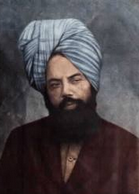
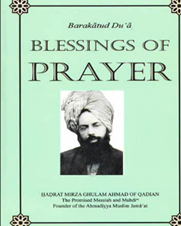
Circa 1835:  Mirza Ghulam Ahmad was born in Qadian, India.

1889:  The Ahmadiyya Muslim community (Jama‘at-i Ahmadiyya) was founded.

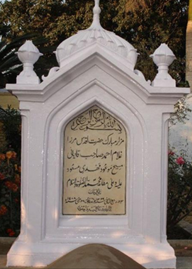
1908:  Mirza Ghulam Ahmad died in Lahore and was brought back to Qadian to be buried.

1914:  A group of Ahmadi dissenters left Qadian for Lahore and subsequently came to be known as Lahoris, following the Lahori-Qadiani split.

1947:  India was partitioned into the independent countries of India and Pakistan, which was later subdivided into Pakistan and Bangladesh.

1953:  The Punjab Disturbances occurred in which widespread rioting in the Punjab region took place as a result of tensions stemming from the Ahmad controversy, which led to the implementation of martial law.

1974:  Pakistan amended its constitution to change the classification of Ahmadis from being Muslim to being part of its non-Muslim minority.

1984:  A religious ordinance was passed in Pakistan making many aspects of Ahmadi religious life in Pakistan illegal.

1984:  Shortly after the passing of the anti-Ahmadi ordinance, the fourth successor and grandson of Mirza Ghulam Ahmad, Mirza Tahir Ahmad, fled Pakistan in exile for London as a refugee.

2003:  The current head of the Ahmadiyya movement, Mirza Masroor Ahmad, was selected by an electoral college following his arrival in London from Pakistan upon receiving news of the death of his predecessor.

2010:  A mass shooting at an Ahmadi mosque in Lahore took place, which resulted in the death of under 100 people and the injury of many more.

2012:  The current Ahmadi khalīfa , Mirza Masroor Ahmad, addressed members of Congress in Washington DC in an attempt to raise awareness about Ahmadi persecution.

FOUNDER/GROUP HISTORY

The Ahmadiyya Muslim community (or Jama‘at-i Ahmadiyya) is a Muslim reform movement that was founded in 1889 by Mirza Ghulam Ahmad (c. 1835–1908). He descended from a prominent Muslim family that had originally helped the Mughal emperor Babar settle part of rural India’s Punjab region in the early sixteenth century. By the mid-nineteenth century, much of the Muslim aristocracy in the Punjab had steadily ceded power to the Sikhs and then ultimately the British, which contributed to an overall sense of Muslim decline (Friedmann 1989). During this period, Christian missionaries had been gaining leverage in the subcontinent under British rule, which added another dimension to religious debates taking place and to ongoing religious rivalries. This led to a number of different responses from Muslim thinkers, including from Mirza Ghulam Ahmad, who began his carrier by writing tracts that argued in favor of Islam’s superiority as a religion (Khan 2015).

As Mirza Ghulam Ahmad continued engaging in religious rivalries with Hindus, Sikhs, and Christians, he dedicated increasing time to his own religious devotions. This led to spiritual experiences that changed the course of his religious career (Lavan 1974). In the early 1880s, Mirza Ghulam Ahmad began describing his experiences with the terminology used in the Islamic tradition to characterize revelation from God, which was considered unusual by mainstream Muslims beyond a tight circle of elite mystics. This drew unusual attention to Mirza Ghulam Ahmad’s mission and provoked a sense of caution from Muslims who might otherwise have appreciated his defense of Islam and his argumentation against non-Muslim rivals.

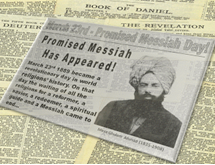
In 1891, two years after Jama‘at-i Ahmadiyya was founded, Mirza Ghulam Ahmad published a trilogy of books, which disclosed his true spiritual station and asserted his divinely appointed status to the world (Khan 2015). Ghulam Ahmad explained that he was a muhaddath , which meant that God was speaking to him. He also declared that he held a joint status as the mahdī (guided one), a figure who was predicted to appear in the latter days, and as the promised messiah (masīh ) in the spirit of Jesus (Khan 2015; Friedmann 1989). This claim of being the promised messiah in particular led to the most controversial aspects Ahmadi theology for Muslims and Christians alike, which will be discussed further in the section on doctrine and beliefs.

In claiming to be the promised messiah, Ghulam Ahmad was claiming to be the second coming of Jesus. By claiming to be Jesus in spirit, Ghulam Ahmad was implying that his spiritual status incorporated a strand of prophethood, which was considered highly dubious to most mainstream Muslims who thought this bordered on heresy. It effectively meant that Ghulam Ahmad was claiming to be another prophet after the Prophet Muhammad, who has generally been regarded as the last prophet in Islam (Friedmann 1989). Mirza Ghulam Ahmad spent the remaining years of his life engaged in a bitter controversy with other Muslims who rejected his claims. Ghulam Ahmad insisted that by following his interpretation of Islam, Muslims would be able to return to their former glory before the impending Day of Judgement. This messianic motif is responsible for providing Jama‘at-i Ahmadiyya with its apocalyptic orientation in the broader Islamic tradition (Friedmann 1989).

Some of Mirza Ghulam Ahmad’s contemporaries declared that his views were blasphemous and deemed his disciples to be beyond the pale of Islam (Khan 2015). The debate about Ahmadis intensified in the decades after Ghulam Ahmad’s death in 1908 and eventually became politicized in the years leading up to India’s independence from Britain following partition in 1947 (Lavan 1974). The outcome of partition eventually resulted in a political divide based on religious orientation, which meant that Muslim majority areas in the East and West would form the country of Pakistan, whereas the majority of the subcontinent would remain as a secular state, resulting in the modern-day nation-state of India. This allowed the Ahmadi controversy, which was centered on the question of determining whether Ahmadis were in fact Muslim, to erupt into a national religious debate, since the grounds for partition had been based on religious affiliation. The fact that religious identity played a role in grounding national identity in Pakistan helped politicize the Ahmadi controversy in the subcontinent, since conversely the notion of being un-Islamic was linked directly to political consequences (Khan 2015). This led to the exacerbation of the Ahmadi controversy after partition in 1947 when questions of religious authenticity plagued the newly formed Islamic state by enabling mainstream political leaders to determine which interpretations were truly representative of Islam (Gualtieri 1989; Gualtieri 2004).

The Ahmadi community came to be associated with Muslim politics, elitism, and exclusivity, which was brought on to some extent by its political involvement in the Kashmir Crisis of the 1930s and the broader independence movement before India’s partition in 1947 (Lavan 1974). In fact, a prominent Ahmadi named Muhammad Zafrulla Khan (1893–1985) served as the first foreign minister of Pakistan before going on to become president of the United Nations General Assembly and president of the International Court of Justice.

Fear of Ahmadi exploitation in Pakistan and general distrust of Ahmadi religious views, led to an overwhelmingly negative perception of the community, which fueled a series of riots, known as the Punjab disturbances of 1953 (Qasmi 2014). The disturbances represented the first time that martial law was declared in Pakistan’s history. This only heightened the level of controversy surrounding Ahmadis in subsequent years. By the 1970s, the Ahmadi controversy had once again garnered national attention when opposition party members of Pakistan’s National Assembly staged a walkout and demanded that the president, Zulfikar Ali Bhutto (1928–1979), revisit the Ahmadi question. As a result, Ahmadis were declared non-Muslim in 1974 by the government of Pakistan whose constitution was amended to reflect the community’s new religious designation (Gualtieri 1989) . This facilitated maltreatment of Ahmadis across the country and led to increased hostility toward the community. In 1984, the military general, Zia-ul-Haq (1924–1988), who had taken over the government by coup, initiated a number of religious ordinances intended to Islamize the legal system. This included an ordinance that famously made most aspects of everyday life for Ahmadis in Pakistan illegal. Since then, Ahmadis have increasingly been known throughout the world as a persecuted Muslim minority in South Asia (Gualtieri 2004) .

Since the mid-1980s, members of the Ahmadi community have increasingly taken root in Western Europe and North America, especially since 1984 when the movement’s organizational headquarters was moved to London. There are now Ahmadi mosques in most urban centers throughout Britain, France, and Germany, as well as in Canada and the United States (Haddad 1993; Khan 2015).

DOCTRINES/BELIEFS

At its heart, the Ahmadiyya Muslim community shares most beliefs and doctrines with mainstream Sunni Islam. The differences between Ahmadis and mainstream Muslims stem from the way in which most Ahmadis have understood Mirza Ghulam Ahmad’s claims of prophethood (Friedmann 1989). The debate surrounding these interpretations led to a schism in the movement in 1914 between most Ahmadis whose organization was based in Qadian and a minority group who chose to relocate to Lahore and hence came to be known as Lahoris. The Lahoris interpreted Ghulam Ahmad’s claims of prophethood in a more metaphorical sense and pointed to aspects of Ghulam Ahmad’s texts where he appeared to limit or qualify notions of his prophetic status, whereas the Qadiani branch understood Mirza Ghulam Ahmad’s prophethood more literally (Lavan 1974).

The belief that Mirza Ghulam Ahmad was a prophet of God is the primary distinguishing feature between Ahmadis and mainstream Muslims, and it is arguably the basis of the Ahmadi controversy today. The reason why this belief is considered to be so problematic by mainstream Muslims is because it appears to be a direct contradiction of the Qur’anic verse declaring Muhammad to be the “seal of the prophets ( khātam al-nabiyyīn )”, which has been understood by mainstream Muslims to indicate Muhammad’s status as the last prophet (Qur’an 33:40). Ahmadis, instead, have suggested that the verse should be understood to mean that Muhammad was the best of all previous prophets and that any subsequent prophet who might follow Muhammad would not establish new laws that contravened Islamic law in a way that would abrogate Islam and lead to the formation of a new religion (Friedmann 1989; Khan 2015). Ahmadis compare prophecy in Islam to the age of prophecy in ancient Judaism when numerous prophets were known to have appeared within the same religious tradition as a means of strengthening and revitalizing the tradition in anticipation of the Day of Judgment (Friedmann 1989).

The subtleties of Mirza Ghulam Ahmad’s claims are difficult to explain, since they involve a number of assumptions about Islam and the prophetic tradition. Mirza Ghulam Ahmad was convinced that Jesus could not possibly return to the world in the flesh, since human beings cannot survive indefinitely for thousands of years (Valentine 2008). Ghulam Ahmad’s prophetic status was thereby connected in part to his claim of being the promised messiah or the second coming of Jesus, since the original Jesus was a bona fide prophet (Khan 2015). In order for Mirza Ghulam Ahmad to advance this claim and demonstrate to mainstream Muslims and Christians that Jesus was not alive in heaven and would not return to the world in the latter days, Ghulam Ahmad proposed an alternative account of the crucifixion story (Ahmad 1994; Fisher 1963). According to Ahmadis, Jesus survived the crucifixion and travelled east to escape further persecution and ultimately set out to unite the lost tribes of Israel, which is based on their readings of the Biblical verses (John 10:16, Matthew 15:24). This enabled Jesus to continue his mission and ultimately die a natural death, which likewise made it impossible for him to be physically alive in heaven waiting to return. Mirza Ghulam Ahmad identified the final resting place of Jesus as a burial tomb in Srinagar, Kashmir that was attributed to an ancient saint (Ahmad 2003). This discovery enabled him to demonstrate that Jesus had died and to claim that he was the second coming of Jesus in spirit and hence the promised messiah.

One interesting outcome of Mirza Ghulam Ahmad’s claim of being the messiah was his interpretation of jihad, considering the apocalyptic expectations of the messiah to defeat evil in the world. Whereas the notion of jihad has always been used in Islam to signify various notions of inner and outer struggles, Ghulam Ahmad insisted that his mission would succeed through non-violent means (Hanson 2007). This concept of jihad, as representing an inner spiritual struggle, is certainly not unique to Jama‘at-i Ahmadiyya, but the way in which it has been emphasized by Ahmadis, especially during the early years of the movement under British colonial rule, has developed into one of the hallmarks of Ahmadi Islam. Aside from the colonial context when Ahmadis refused to take up arms against the British, the notion of non-violent jihad has been particularly useful in marketing Ahmadi Islam to western audiences in a post 9/11 era (Khan 2015).

RITUAL/PRACTICES

In theory, the basic rituals and practices of Ahmadi Muslims are identical to those found in mainstream Islam, but there are subtle distinctions that have gradually developed over time. For example, despite the Ahmadi observance of the five daily prayers in accordance with mainstream Islam, Ahmadis refuse to offer prayers behind non-Ahmadi imams. This has resulted in the creation of separate mosques and prayer facilities around the world and is somewhat unique in the Islamic tradition, where at least historically Muslims have largely avoided forming separate prayer congregations. There are of course some exceptions to this rule, especially in modernist South Asian Islam. Nonetheless, in the case of Jama‘at-i Ahmadiyya, the separation in prayer is undeniable. This practice stems from the generalized assumption of Ahmadi congregants that a non-Ahmadi imam leading the prayer would likely consider Mirza Ghulam Ahmad an infidel, and so Ahmadis choose to perform the same prayer ritual behind an Ahmadi imam. To illustrate the subtlety of this distinction, one might find non-Ahmadi Muslims who reject Mirza Ghulam Ahmad’s claims performing the prayer behind an Ahmadi imam, especially in western countries where Muslim communities are diverse and prayer spaces are limited.

This type of self-imposed separation has also led to marriage restrictions for most Ahmadis. Most Ahmadis are expected to marry other Ahmadis, with officially sanctioned exceptions to this practice that are addressed on a case by case basis. For this reason, Ahmadi marriage practices are somewhat more restrictive than those in mainstream Islam.

The annual pilgrimage to Mecca or hajj has been difficult to carry out for Ahmadis as Ahmadis due to the repercussions of persecution, especially when travelling from countries like Pakistan which stamps passports with one’s religious designation (Gualtieri 2004). Over time, a separate Ahmadi ritual has steadily gained prominence, not necessarily as a replacement for the hajj, but as an important gathering nonetheless. This annual gathering (jalsa sālāna) takes place in most countries with significant Ahmadi populations (Lavan 1974). One of the largest gatherings at the moment takes place outside London, since London is where the current head of the movement resides. Ahmadis travel from all over the world to attend the annual gathering if possible and partake in religious events including, sermonizing, poetry readings, and socializing with others (Khan 2015).

ORGANIZATION/LEADERSHIP

Jama‘at-i Ahmadiyya is an institutionalized religious movement with a clearly defined religious hierarchy. The head of the movement is Mirza Ghulam Ahmad’s successor or the khalīfat al-masīh (lit. successor of the messiah). The caliph (khalīfa ) manages the auxiliary organizations of the movement around the world and represents the centralization of both religious and political authority. He has the power to define or redefine both Ahmadi orthodoxy and Ahmadi orthopraxy (Khan 2015). The institution of Ahmadi khilāfat currently represents a stateless caliphate with branches of the movement in various countries throughout the world that make up the strata of the organizational hierarchy. Each nation with a local Ahmadi community (jama‘at) has a national representative known as an amīr (leader). The national amīr manages local branches, which are headed by a president. There are also subsidiary organizations for men and women that are subdivided by age group that fall within the jurisdiction of the president at the local level, or the amīr at the national level, as part of the hierarchical structure (Khan 2015). Ahmadi missionaries are responsible for spreading Ghulam Ahmad’s mission and will lead the prayer services at the local level while working with the president on local initiatives. Ahmadi missionaries often undergo basic religious training at various Ahmadi seminaries around the world before dedicating their lives to the movement.

The Ahmadi caliphate (khilāfat-i ahmadiyya) is financed by a complex system of member donations known as chanda. Ahmadis must pay certain portions of their income to support the institutional hierarchy and various other causes. This serves as the primary means of remaining within good standing in the community, barring exceptional circumstances where members are unable to contribute financially to the movement for legitimate reasons, which are dealt with on a case by case basis. Any member who remains within good standing in the community is granted voting rights and may be eligible to participate in the various electoral processes at the local level, which usually determine who holds the relevant positions of authority in local Ahmadi communities. Once again, all of this is directed by the khalīfat al-masīh , who remains the sole person with power to intervene in any process atop the institutional hierarchy.

As mentioned above, a dispute broke out in 1914 between two camps of the movement following the election of Mirza Ghulam Ahmad’s second khalīfat al-masīh. This dispute, commonly referred to the Lahori-Qadiani split, arose in part because of a disagreement about the nature of the institutional hierarchy. The Lahori branch rejected the notion of a centralized supreme khalīfa and favored the formation of an administrative board known as the Ahmadiyya Anjuman Isha‘at Islam Lahore (Lahore Ahmadiyya Committee for the Propagation of Islam), which is headed by an amīr (Lavan 1974; Friedmann 1989). The amīr in the Lahori branch does not carry the same authoritative connotations as the khalīfat al-masīh in the larger Qadiani branch, even though he holds considerable authority in terms of guiding the administrative affairs of the branch nonetheless.

ISSUE/CHALLENGES

The primary issue facing the Ahmadiyya movement today revolves around questions of identity. Are Ahmadis really Muslims or do they represent a new religious movement? As the movement has evolved since its formation in 1889, it has become increasingly politicized in a globalized context, which has changed the nature of this debate. Nonetheless, it is certainly conceivable that Ahmadis themselves may one day choose to take a definitive stance against the Islamic tradition and no longer identify as Muslims, but rather as Ahmadis. This could represent a similar path taken by members of the Baha’i Faith, who no longer choose to identify with Islam. Similarly, it is certainly possible for Ahmadis to attempt to reconcile their differences with mainstream Islam and regain acceptance as a legitimate expression of South Asian Islam, especially at a time far removed from the politicization of the Ahmadi controversy. In the meantime, however, Jama‘at-i Ahmadiyya remains immersed in a highly politicized controversy about its status as a Muslim minority movement, where certain key issues have yet to have been formalized into anything beyond a rudimentary precursor of official dogma. Examples of these issues include the role of Mirza Ghulam Ahmad’s spiritual status in comparison to the status of the Prophet Muhammad, the formal relation of Mirza Ghulam Ahmad’s writings and teachings in relation to the foundational textual sources of the mainstream tradition, and the Ahmadi community’s attitude toward mainstream Muslims who refuse to pass judgment on its members or renounce ties to those who endorse continuing to pursue acts of hostility and persecution of Ahmadis. These are serious yet unresolved issues that represent major theological challenges for Jama‘at-i Ahmadiyya.

Another challenge facing the movement is the future of its leadership. Jama‘at-i Ahmadiyya will need to reconcile aspects of the role of the khalīfat al-masīh in contemporary times in order to avoid allowing the position to be reduced to a mere figurehead role. This might mean developing, or at least bolstering, institutions for internal religious and political discourse. It may also mean further elaborating the doctrine of charisma and its relationship to the lineage of the movement’s founder, since four out of five successors of the messiah have thus far been direct descendants of Mirza Ghulam Ahmad. Expounding notions of charisma in relation to heredity, while accommodating other aspects of religious or political leadership and development, will need to be developed over time.

One of the most immediate challenges facing the movement is its persecution and mistreatment in various parts of the world (Nijhawan 2010). The community’s expansion to parts of Western Europe and North America has certainly helped many Ahmadis avoid the dangers that exist in countries like Pakistan or Indonesia where there are legal sanctions against Ahmadi Muslims. However, changing attitudes in the Muslim World may help or hurt the community’s relationship with mainstream Muslims throughout the world, especially as conceptions of Jama‘at-i Ahmadiyya’s own self-identity continue to emerge.

REFERENCES

Ahmad, Mirza Ghulam. 2003. Jesus in India. Tilford, UK: Islam International Publications.

Ahmad, Mirza Tahir. 1994. Christianity: A Journey from Facts to Fiction . Tilford, UK: Islam International Publications.

Fisher, Humphrey. 1963. Ahmadiyyah: A Study in Contemporary Islam on the West African Coast. London: Oxford University Press.

Friedmann, Yohanan. 1989. Prophecy Continuous: Aspects of Ahmadi Religious Thought and Its Medieval Background. Berkeley: University of California Press.

Gualtieri, Antonio. 2004. The Ahmadis: Community, Gender, and Politics in a Muslim Society. London: McGill–Queen’s University Press.

Gualtieri, Antonio. 1989. Conscience and Coercion: Ahmadi Muslims and Orthodoxy in Pakistan. Montreal: Guernica Editions.

Haddad, Yvonne Yazbeck, and Jane Idleman Smith. 1993. Mission to America: Five Islamic Sectarian Communities in North America. Gainesville: University Press of Florida.

Hanson, John H. 2007. “Jihad and the Ahmadiyya Muslim Community: Nonviolent Efforts to Promote Islam in the Contemporary World.” Nova Religio 11:77–93.

Khan, Adil Hussain. 2015. From Sufism to Ahmadiyya: A Muslim Minority Movement in South Asia. Bloomington: Indiana University Press.

Lavan, Spencer. 1974. The Ahmadiyah Movement: A History and Perspective. Delhi: Manohar Book Service.

Nijhawan, Michael. 2010. “‘Today, We Are All Ahmadi’: Configurations of Heretic Otherness between Lahore and Berlin.” British Journal of Middle Eastern Studies 37:429–47.

Qasmi, Ali Usman. 2014. The Ahmadis and the Politics of Religious Exclusion in Pakistan. London: Anthem Press.

Valentine, Simon Ross. 2008. Islam and the Ahmadiyya Jama‘at: History, Belief, Practice. New York: Columbia University Press.

Post Date:
5 May 2015

AHMADIYYA VIDEO CONNECTIONS

Share

Aum Shinrikyō

AUM SHINRIKYŌ TIMELINE

1955:  Matsumoto Chizuo (birth name of Asahara Shōkō) was born with a serious sight disability, in Kumamoto, Japan, the sixth son of poor family.

1977:  Matsumoto moved to Tokyo.

1978:  Matsumoto married Matsumoto Tomoko and started an herbal business.

1981:  Matsumoto joined Agonshū and began practicing yoga and meditation.

1984:  Matsumoto quit Agonshū and established his own yoga and meditation group (initially called Aum Shinsen no Kai) with fifteen followers in Tokyo. The group changed its name to Asahara Shōkō and started performing ritual initiations for devotees.

1985:  Asahara appeared in Twilight Zone (a magazine focused on alternative religious views) claiming he could levitate.

1985:  Asahara claimed spiritual encounters with deities, including the Hindu deity Shiva, who informed him that he was destined to carry out sacred missions of world salvation. Shiva became a figure of veneration in Aum.

1986:  Aum established a publishing company and Asahara published his first book, Chōnōryoku no kaihatsuhō, suggesting a way to develop new supernatural spiritual powers.

1987:  Aum Shinsen no Kai was renamed as Aum Shinrikyō and emphasized world renunciation. The first Aum disciples became renunciates (shukkesha), monastic practitioners who have left their families.

1987:  Asahara began talking of possible end of world due to growing environmental and spiritual crisis and because of bad karma enveloping the world. He prophesied that Aum could avert this catastrophe and bring about world salvation by getting 3,0000 people enlightened.

1988 (August):  Aum opened a commune at Kamikuishiki, Yamanashi prefecture (to be the model for future ideal communities). Asahara expressed an optimistic belief that Aum could save the world.

1988 (c. September):  Asahara became frustrated at lack of progress by some disciples. He began beatings reluctant members (including his wife). He developed the doctrine of poa (the notion that an advanced practitioner/teacher could perform rituals to enable the spirit of a dead person to advance to higher realms in the next life).

1988 (September or October):  Majima Terayuki (or Teruyuki) died suddenly during ascetic practices ordered by Asahara; the death was covered up.

1989 (February?):  Taguchi Shūji (a participant in the cover-up of Majima Terayuki’s death) decided to leave movement and denounce Aum. Asahara ordered Taguchi’s murder; the killing was declared as poa (see below, under Doctrines/Beliefs).

1989:  Metsubō no hi books (prophesying apocalyptic destruction and citing the Book of Revelation) were published, and Aum teachings became focused on apocalypse and the impossibility of universal salvation.

1989:  Aum’s application to gain registration as a legally affiliated religious organization was turned down but later reinstated after an appeal to higher courts.

1989 (October):  Hostile media articles about Aum denounced Asahara and alleged malpractice in Aum. The association of Aum victims (Aum Higaisha no Kai) was established. It engaged the lawyer Sakamoto Tsutsumi to represent them in meetings with Aum. Sakamoto claimed to have found evidence of Aum malpractice.

1989 (early November):  Sakamoto and his family disappeared from their home in Yokohama. Aum denied any involvement. Later, in the summer of 1995, Aum devotees confessed to having killed the family on Asahara’s orders, and the bodies of Sakamoto, his wife and infant son were recovered.

1989 (later months):  Aum formed a political party, the Truth Party (the Shinritō), to raise its profile by taking part in the spring, 1990 parliamentary elections. Aum used the campaign to warn of impending millennial catastrophe unless Japan embraced Aum’s teachings.

1990 (February):  Aum’s election campaign was derided in the mass media, and Aum candidates all failed miserably. Asahara claimed a conspiracy against Aum wrecked the campaign and (March 1990) that there was a world conspiracy working against Aum.

1990 (April):  The Ishigaki Seminar was held on an island in Okinawa. Asahara declared that Aum was now on the Vajrayāna path of Buddhism. It henceforth regarded salvation as selective rather than universal and asserted that mass destruction was needed to purify the world and punish wrongdoers.

1990 (March-April):  Aum established laboratories for making biological weapons. Devotees released botulism in Tokyo to punish electors for rejecting Aum, but the attack failed.

1991:  Asahara’s teachings became increasingly pessimistic, and he talked of the inevitability of Armageddon as necessary to purify the world. His teachings focused increasingly on poa and on severing links with society at large. Increasing conflicts arose between Aum and its neighbours, and with other religions especially in Tokyo, such as Kōfuku no Kagaku.

1991: (onwards):  Aum became increasingly involved in building secret laboratories and trying to get or make biological and chemical weapons, including in October, 1992, a vist by Aum members to Congo seeking to acquire the Ebola virus.

1993:  Aum devotees (Tsuchiya Masami and Endō Seiichi) made sarin secretly; Asahara mentioned sarin in sermons and Aum developed songs valorizing it as a sacred object.

1993 (June):  The accidental death of Ochi Naoki during austerities was covered up by Aum leaders).

1993:  Throughout the year there were further attempts to release botulism spores in Tokyo (all fail) to punish Japanese society for failing to acknowledge Aum’s truth and sacred mission.

1994:  Asahara claimed that Aum was being attacked by conspirators (Japanese and U.S. governments and others) and that sarin has been sprayed on the Kamikuishiki commune. Killings of Aum dissidents and kidnappings of members who tried to flee the movement continued.

1994 (June 27):  Sarin gas was released in Matsumoto, central Japan, killing seven people and injuring over 500. At the same time Aum announces the formation of its own government, with Asahara as its “sacred ruler” (shinsei hōō).

1994-1995:  Japanese newspapers reported that sarin has been released/found at or near Aum’s commune in Kamikuishiki and linked Aum to the Matsumoto attack. Aum issued denials

1995 (February 28):  Aum devotees abducted estate agent Kariya Kiyoshi, whose sister was in Aum, to extract money from him to help Aum finances. Later investigations indicated that Kariya was killed shortly after the abduction.

1995 (March):  The police and media became aware of Aum involvement in the Kariya abduction and Aum involvement with chemical weapons. Police prepared raids on Aum premises.

1995 (March 18):  Asahara became aware of the likely raid and ordered devotees to prepare sarin for an attack on Tokyo (probably to cause chaos and avert a raid).

1995 (March 20):  Aum conducted a sarin attack on Kasumigaseki station/trains at rush hour (striking the area around government ministries including the National Police Agency), killing thirteen people and injuring thousands.

1995 (March 22):  Police raids were conducted on Aum buildings and communes, with hundreds of arrests and confiscation of equipment and materials.

1995 (March-May):  The police discovered evidence of numerous crimes and continued to arrest senior figures, including Asahara, on May 16.

1995 (April 23):  Murai Hideo (one of Aum’s leaders, central to its weapons program) was stabbed to death in public in Tokyo.

1995 (May and after):  Senior Aum figures (notably Hayashi Ikuo, one of the subway attackers) began confessing to participation in Aum crimes. There was a mass exodus of Aum members, between eighty and ninety percent.

1995 (October-December):  Aum’s status as religious organization was revoked and subsequently the revocation was upheld by the Tokyo High Court.

1996 (April 24):  Asahara’s trial began. He claimed that disciples committed the crimes and that he was therefore not responsible.

1996 (and later):  Trials began to be held of various Aum figures who were accused of murders, making illegal weapons, and involvement in various lethal conspiracies. Over 100 devotees were convicted and sentenced. Thirteen (including Asahara) were sentenced to death for murder.

1996 (and later):  There were debates in Japan about proscribing Aum under the Anti-Subversive Activities Law, and about how to deal with those who wished to remain in Aum. There were also debates about the formation of various support groups for ex-members and cases for financial retribution to compensate Aum’s victims. Aum properties were liquidated to this end.

1996 (and later):  Remaining Aum devotees sought to keep the movement going and to draw a line with the past by distancing themselves from Asahara and by renouncing violence and doctrines such as poa.

1997 (January 31):  The government announced that Aum would not be formally proscribed but discussed introducing new laws to monitor the movement.

1999 (September):  Aum announced that it was ceasing all religious activities.

1999 (December):  Aum made an official apology for its crimes in a televised press conference and on its website.

2000 (January-February):  Aum changed name to Aleph and made plans to transfer its remaining properties to a fund to compensate Aum victims.

2000 (and later):  Aleph continued on with a small number of devotees and was heavily monitored by the state and subject to various legal restraints. Aleph members (including members of Asahara’s family) faced continued discrimination in Japanese society.

2004:  Asahara was sentenced to death for murder and conspiracy to murder.

2007:  Aleph split into factions, including Hikari no Wa (see separate entry).

2018 (July):  Thirteen members of Aum, including Asahara, executed for conspiracy to commit murder and for other Aum crimes;  Asaahra and six others on July 6 and the remaining six on July 26.

FOUNDER/GROUP HISTORY

Asahara Shōkō, was born in 1955 as Matsumoto Chizuo to an impoverished family in Kumamoto, southern Japan. The sixth of seven children, he was partially sighted, a disability coupled with family poverty that led to him being sent away to a boarding school for the blind. This caused him to become alienated from his family and to later reject his birth name and take on a new name when he began his religious career. Interested in medicine and healing, he sought entry to universities to study medicine but was turned down (in one case because of his disability). In 1977, he moved to Tokyo, set up a business as a practitioner of acupuncture and vendor of herbal remedies and married Matsumoto Tomoko (who also held a high position in Aum), with whom he had six children. Their third daughter became a highly revered religious practitioner in Aum.

In 1982, Asahara was fined for selling herbal remedies without a license, an incident that caused him great mental distress. He also became a member of the new religion Agonshū, but, dissatisfied with its lack of ascetic practice, he left to set up a yoga and meditation centre in Tokyo, where he gathered disciples attracted by his reputation as an insightful teacher. The group, which began in 1984, included many who were at the center of Aum’s later nefarious activities. It initially called itself “Aum Hermit’s Society” (Aum Shinsen no Kai); the word Aum was drawn from the Hindu and Buddhist term meaning creation, destruction and preservation. Initially, Asahara was seen as a teacher (sensei) but soon came to be referred to as Aum’s “guru” and as an absolute spiritual master and epitome of the truth, to whom disciples owed total obedience. According to disciples, he was highly compassionate and kind, and strove to help them, but they also noted that he was very strict and was harsh on anyone who failed to perform the austerities he deemed necessary for their salvation (Reader 2000:39-44; Takahashi 1996:154-56).

He drew attention to the movement through public talks and various publicity activities, including a claimed ability to levitate, which was
publicized in a 1995 edition of Twilight Zone, a spiritually-oriented Tokyo magazine. In 1986, he visited India, performed ascetic practices there and claimed to have reached enlightenment. He had a succession of religious experiences and claimed that various spirits (including the Indian deity Shiva) had spoken to him and entrusted him with a mission of world salvation and renewal. These reinforced his conviction that he had a special mission to save the world, and that his devotees formed a cadre of sacred warriors who would help him in this task. In 1986, the group followed a common pattern among Japanese new religions by establishing its own publishing firm to allow it to more easily distribute its teachings.

The movement attracted a very small but ardent group of young, well-educated followers, particularly in the Tokyo area. Many were attracted by the promise of attaining enlightenment and personal salvation and by being part of a movement that would bring about world salvation and transformation (Shimazono 1995a, 1995b). Asahara changed the group’s name to Aum Shinrikyō in 1987. Around this time, while continuing to stress the importance of personal spiritual practice and asceticism in the search for enlightenment, he began to express millennial teachings, warning of a crisis engulfing the world that could only be overcome by a rejection of materialism and a turn to spiritual practices. To do this required a growing spiritual army of devotees who would renounce the world and become enlightened (Reader 2000:88-93). This message of world transformation to avert a crisis (caused by factors such as materialism, environmental disasters and the manipulations, according to Asahara, of a conspiratorial group of power-hungry interests including the U.S. government) gradually changed as Aum became beset by difficulties in spreading its message, and as crises gripped the movement.

Asahara was clearly charismatic, and many of those who followed him have testified that it was his charisma, his ability to explain and articulate teachings that presented solutions to their worries, and his compassionate nature that drew them to him and his movement. Devotees sought to align themselves with his charismatic powers by undergoing initiations at his hands, in which he took on their negative karma and thus, according to Aum beliefs, freed them to heighten their spiritual status (Asahara 1992; Reader 2000:12-16).

Asahara was a skilled practitioner of asceticism, and his teachings reflected this. Devotees were expected to fast and perform harsh austerities to purify their bodies and attain higher spiritual states. They renounced the world to live in rural communes, where harsh physical disciplines, including the beating of members to make them engage in more ascetic practices, cultivated a culture of violence within the group. This culture of violence emerged in autumn, 1988 as Asahara became frustrated that his “salvation mission” was running into difficulties because it was not producing enough enlightened beings to bring about the spiritual transformation necessary to avert cosmic catastrophe. As a result, Aum became more hostile towards the world beyond its borders, while Asahara pressed his disciples harder to make them undergo austerities that would bring about their salvation (Reader 2000).

However, the death of a devotee (Majima Terayuki) during such ascetic training in autumn of 1988 caused a fatal blow. Aum’s leaders covered the death up to avoid public scandal and damage to the movement, but this meant breaking the law. One disciple, Taguchi Shūji, lost faith in Asahara as a result and decided to go public on this death, provoking a new crisis. In February, 1989, Taguchi was killed by a group of devotees to stop him bringing the movement into disrepute and to protect “the truth.” Asahara argued that by killing Taguchi, he was saving him from committing the heinous crime of undermining the spiritual truth of Aum (Reader 2000:144-45). In so doing, Asahara began to formulate the doctrine of poa, which became central to Aum teaching and to its escalating violence (see below, under doctrines and teachings).

In this same period, Aum began to become embroiled in disputes with its neighbors where it built its communes, and with the families of devotees who had joined Aum’s communes and severed all familial ties. Hostile stories began to spread in the mass media about Aum, and the Society of Aum Victims (Aum Higaisha no Kai, consisting of ex-members and the families of devotees, was formed. Throughout 1989 Aum thus became enveloped in violence and conflicts, culminating in the murder by devotees of a lawyer, Sakamoto Tsutsumi and his family, in November, 1989. Sakamoto represented the Aum Higaisha no Kai and began investigating the movement, subsequently claiming to have uncovered evidence of fraud (Hardacre 2007:186). As with the killing of Taguchi (above), the reason given for killing Sakamoto was to stop him destroying Aum’s mission, with Asahara using the concept of poa to justify giving the order to kill the lawyer. Evidence of how Aum’s senior devotees agreed with this teaching and with the belief that they had a special mission that should be protected at all costs (even including the killing of others) is shown by the words of Nakagawa Tomomasa, a qualified doctor and Aum devotee. He was asked to carry out the killing and, rather than being shocked at being asked to breach his Hippocratic oath, he said he felt elated to have been chosen for this “salvation mission.” (Pye 1996:265). He felt Asahara had thereby recognized his spiritual prowess and that he had therefore attained a state where he had gone beyond the world of normative morality and acquired a spiritual status that entitled him and other Aum devotees to kill in the service of their guru (Reader 2000:150-51).

Although Aum developed a doctrinal structure that made its senior figures convinced of the righteousness of their violent deeds against “enemies of the truth,” this criminality, combined with external conflicts with hostile family groups and local communities, plus negative media attention, created an aura of paranoia within the movement. This was compounded by Aum’s failure to attract enough practitioners to enable it to achieve the number of spiritually advanced beings Asahara believed were necessary to bring about a peaceful world transformation before the catastrophic events he foresaw at the end twentieth century would otherwise occur. This failure was due in part to Aum’s harsh austerities and requirements that devotees abandon their families and swear absolute devotion to the guru. While this appealed to a small zealous minority it proved unattractive to most young Japanese. The growing controversial reputation of Aum also was a barrier to recruitment (Reader 2000:126-61).

Thus, Aum became beleaguered, and Asahara, shaken by the criminality his mission had produced, became increasingly paranoid, claiming that his salvation mission was being threatened by hostile conspiratorial forces. These views were compounded when, trying to make the Japanese public more aware of Aum’s millennial messages, he established a political party, the Party of Truth (Shinritō) to participate in the February, 1990 elections. The total failure of this party (all Aum candidates including Asahara lost badly) was compounded by public ridicule in the media for Aum’s campaign, and it served to further widen the growing gulf between Aum and Japanese society (Young 1995).

Aum acquired land and built communes in rural Japan, initially at Kamikuishiki in Yamanashi prefecture, not far from Tokyo, and later at Namino in Kyushu. These were perceived as blueprints for its utopian visions of the future (Shimazono 1995). Soon, however, its communes became areas of conflict with local communities and civic authorities as Aum refused to obey local planning laws and faced hostility from rural neighbors suspicious of Aum’s motives (Kumamoto Nichinichi Shinbun 1995; Takeuchi 1995). In late 1990, Aum abandoned the Namino commune (after the local authorities there paid it reparations to get the movement to leave) and made Kamikuishiki its main center. Such conflicts intensified the feelings inside Aum that the movement was being threatened by hostile forces out to stop it from bringing about world transformation. This produced a progressive shift in Aum’s millennialism. Between 1989 and 1991, Asahara turned away from an initial optimism that Aum could save the world, to an increasingly pessimistic view that universal salvation was impossible and that cosmic war, in which the “truth of Aum would confront the evils of the world, was inevitable and necessary. Aum’s growing apocalypticism was reinforced by external teachings encountered by Asahara and his devotees, such as the apocalyptic imagery of the biblical Book of Revelation. Its prophetic messages of a final war between good and evil resonated with Asahara so forcefully that he began to use the term harumageddon (the Japanese phonetic rendition of Armageddon) in his talks and prophecies (Reader 2000:126-95; Shimazono 1997).

In March, 1990, after its electoral humiliation of February 1990, the movement held a seminar on the island of Ishigaki in the Okinawan archipelago. There Asahara announced that a global apocalypse was now inevitable in which only very few (those who followed his teachings) would survive and that humanity had lost any chance of universal salvation. The world had rejected Aum, and Aum was in effect turning its back on the world and saying that in the future it was only interested in saving its own devotees while fighting against anyone who rejected its teachings and who therefore deserved to be punished. Henceforth, Aum had to prepare for a real cosmic confrontation between good and evil when it would fight its enemies, whose purpose was to destroy Aum and subjugate the world. Thus Aum was placed on a war footing, and devoted its energies to acquiring the means to fight. This was a process aided by its activities in Russia, where it briefly established centers and, through contacts there, was able to acquire various forms of weaponry. From the spring of 1990 onwards, a group of Aum devotees who had some scientific training began to make biological and chemical weapons in clandestine laboratories at its Kamikuishiki commune, and a number of unsuccessful attempts were made to use these on the general public. Asahara, from 1993 onwards, began to publicly talk of making sarin in order to protect Aum and fight its enemies (Asahara n.d.:231; Reader 2007:68-69).

Convinced that evil forces were out to destroy his movement, Asahara spoke of the inevitability of a final war, whose date he progressively brought closer to hand. He initially said that it would be in 1999 but later moved the date to 1997 and then to 1995, while emphasizing the spiritual legitimacy of killing anyone who opposed Aum or who refused to acknowledge its supreme spiritual nature (Reader 2000:179-80). The movement thus became increasingly geared towards violence and progressively more hostile to anyone who expressed any dissent towards it. In the years leading up to March, 1995, dissidents within the movement and opponents outside it were attacked (Reader 2000:198-206). The tensions inside the movement led to various defections and to attempts by Aum’s senior figures to recapture those who left. They did this in the belief that the world beyond its borders was consumed by evil and that simply living in that world meant acquiring negative karma that would lead to numerous aeons spent in the Buddhist hells after death. The only way to avoid such post-death horrors was to remain in Aum and perform its austerities under the guidance of Asahara so as to accumulate good karma that would enable one to achieve a better rebirth. As a result, members who tried to leave were often forcibly stopped from so doing or were kidnapped and brought back to Kamikuishiki in order to “save” them (Reader 2000:10-16).

This growing culture of violence was also reflected in Asahara’s apocalyptic visions, which became increasingly stark as the expected date of the end-times came closer. Aum publications became suffused with graphic images of a final war, while members chanted songs in praise of sarin, and the movement moved onto a war footing while devoting increasing resources to its attempts at weapons’ acquisition. In June, 1994, Aum declared its secession from the Japan state and announced the formation of a “sacred government” headed by Asahara as its sacred leader. At the same time, it carried out a sarin gas attack in Matsumoto, central Japan, to strike at a group of judges administering a court case involving Aum (Reader 2000:200, 208-11; Hardacre 2007:191). The attack killed seven people, although Aum’s involvement in the attack was not recognized at the time. However, evidence began to accumulate and be reported in the press connecting Aum with the attack. Other criminal acts by members of the movement, such as the kidnapping of the brother of a devotee (in order, it is believed, to acquire funds to help finance Aum’s costly weapons-making activities), threw further suspicion on the movement. During this period, too, Asahara’s pronouncements were suffused with paranoid images, to the extent that he may well have been undergoing some form of mental collapse. In March, 1995, it became clear that the police were about to take action. On March 20, 1995, Aum devotees, under Asahara’s direction, carried out a sarin attack at Kasumigaseki station, the subway station at the heart of the government district in Tokyo, killing thirteen people and injuring thousands. It was considered to be either the first act in the cosmic war mentioned above or, more likely, an attempt to disrupt the police, whose headquarters were adjacent to the subway station attacked (Reader 2000:211-26).

Two days after the attack, on March 22 1995, the police mounted mass raids on Aum’s main commune at Kamikuishiki and on its centers throughout Japan. Over the months that followed, hundreds of members were arrested, including the movement’s entire hierarchy. On May 16, 1995, Asahara was arrested. By that time, some senior figures, such as Hayashi Ikuo, who had been one of the subway attackers, had made full confessions and had alerted the police to earlier crimes committed by the movement, such as the killing of the lawyer Sakamoto and his family. A succession of trials ensued, in which Asahara (who largely refused to cooperate with the court and with his lawyers, and who appears to have undergone a general mental collapse) and twelve other key figures who had been involved in Aum’s killings and in the manufacture of its sarin were sentenced to death. During July 2018 Asahara and twelve senior figures in Aum, having been convicted of murder and conspiracy to murder, were executed. Over one hundred others received prison sentences, and some remain incarcerated (Ramzy 2018).

After the events of 1995, most of Aum’s members left the movement, and it was later stripped of its legal status as a religious organization. Initially, too, the government discussed whether to proscribe it completely, but this step was not taken due to concerns about the civil liberties of members who, under Japanese constitutional law, are guaranteed freedom of religious worship. A small group of devotees, including members of Asahara’s family and some devotees who were released from prison after serving their sentences, have maintained the faith, while renouncing Aum’s teachings that legitimated violence and distancing themselves from Asahara himself. They changed the
movement’s name to Aleph in 2000 as a way of further breaking from their past, while liquidating all Aum’s remaining assets to provide compensation for its victims. Subsequently Aleph has itself undergone further changes, including secessions. On outcomes of these secessions was the formation of Hikari no Wa in 2007 by Jōyū Fumihiro, perhaps the most senior figure in Aum who had not been directly involved in Aum’s violence (although he was incarcerated for a while on charges of perjury).

DOCTRINES/BELIEFS

The above narrative of Aum’s leader and the group’s history indicates many of the key doctrinal issues surrounding the movement, and they cannot be separated from the visions of its leader or the ways in which the movement developed over its brief period of activity. Aum’s teachings were a product of its leader’s visions, but they drew also on aspects of Buddhist teaching, coupled with millennial thinking, concepts about the existence of hells and of negative karma that could threaten humanity, and beliefs in the importance of performing ascetic practices to purify the body and mind and guard against bad karma. Critically, too, the teachings increasingly focused on the notion that Aum alone was true, that it possessed absolute truth, and that its guru’s position was as a supreme spiritual master, which gave him and his devotees the right to punish those who opposed them.

Over the period between 1984 and 1995, Aum’s teachings were outlined by Asahara in numerous sermons and books, which, taken as a set of historical documents, also serve as an indicator of how experiences in Aum impacted on the movement and influenced its doctrinal development. In particular, the increasing pessimism of its teachings and the turn to violent confrontation with the world at large were underpinned by doctrinal changes that were themselves in part responses to the problems the movement faced. The key document in this context is the Vajrayana kōsu. Kyōgaku shisutemu kyōhon, a photocopied document consisting of fifty-seven lectures given by Asahara between the late 1980s and 1994 (Asahara, n.d.). Never published officially as a single entity, it contained sections from many of his published works over the period and was used as a training manual for senior disciples. The text contains the basis of Asahara’s teachings, including his millennial visions, beliefs in an imminent cosmic war of good against evil, and the belief that Aum could justifiably kill enemies because they stood in the way of truth. The text also outlined Asahara’s interpretations of Vajrayāna Buddhism (the form of Buddhism Aum claimed to adhere to) in which he argued that his teachings took Aum out of the realms of normative morality and into a higher spiritual realm where anything is permitted as a means of advancing the truth and bringing spiritual salvation (Shimazono 1997; Reader 2000). A critical aspect of Aum’s doctrinal structure was that it, and its leader Asahara (who was referred to in Aum as a sacred master sonshi and as guru (with Aum using this Indian term as a Japanese loanword), possessed absolute truth and that all other religions (and, indeed, anyone who rejected Aum’s and Asahara’s teachings) were false.

Aum was millennial in nature and had a polarized view of the world, which was divided into the forces of good and evil, and it saw itself as fighting a spiritual war against evil. It taught that the world was mired in materialism and dominated by corrupt influences (amongst which it included the U.S. and Japanese governments and many groups that are often included in millennialist conspiracy theories, such as the Freemasons, Illuminati and Jews). Aum, like many other Japanese new religions at the time, considered that the world was enveloped in a crisis that might lead to cataclysm and apocalypse by the end of the twentieth century, due to global war, environmental destruction and natural disasters (Reader 2000:47-52). The roots of this destruction were grounded in humanity’s nature; the world had become too materialistic, people had lost sight of their true spiritual nature and the bad karma that had been created was leading to disaster. The materialism of the world was such that it tainted all who lived in it, and only by following a path of truth and righteousness (in essence by becoming an Aum devotee and following the on true guru) and by engaging in strict ascetic practices to purify the body and eradicate bad karma, could one be saved and avoid falling into the lower realms at death. The concept of hells was important, and Asahara’s sermons in the Vajrayāna kōsu. Kyōgaku shisutemu kyōhon make repeated references to their horrors and to the fates of those who fail to perform spiritual austerities. This fear of the hells was a factor in the emphasis Aum placed on austerities, which were seen as necessary to continually purify the body and save it from the negative karma that surrounded everyone living in the everyday world. The material world in which everyone (apart from Aum in its communes) lived, was seen as a “den of evil” (akugō no sōkotsu), and it was only through leaving this world and following the guidance of a true guru that one could achieve enlightenment, purify the body and be saved from such negative karma. Anyone who failed to do this was an enemy of truth, unworthy of salvation and, ultimately, worthy of punishment (Asahara, nd, passim; Reader 2000:10-16).

The most critical doctrine in Aum, in terms of its violent activities, was that of poa. This term, derived initially from a Tibetan term, refers to the notion that the spirits of the deceased can advance towards salvation and better rebirths in the next life with the guidance of advanced spiritual practitioners who will perform rituals for them to this end. This reflects a standard East Asian Buddhist activity in which ritual services are performed by Buddhist priests when someone dies in order to purify the deceased of their bad karma in this world and help them attain a better rebirth. In Aum, Asahara performed poa rituals for members who died, and he did them at the behest of members, for their relatives as well. Taguchi’s planned revelation of Majima’s accidental death, which would have jeopardized the viability of the movement, caused a drastic modification of the concept. If Taguchi had gone public and undermined the “truth” and upset Aum’s mission of world salvation, he would, Asahara believed, acquire terrible negative karma and would thus have to spend aeons in various hells after death. To stop this (and to protect Aum’s mission), Taguchi was killed, thereby “saving” him from acquiring endless bad karma and allowing him a favorable rebirth. The term used to describe the killing was poa  It had become modified from being a ritual performance aimed at improving the karmic merit of someone who had died, to a process of “saving” someone by intervening in their lives (i.e. killing them) to stop them committing grave karmic sins. Being killed, which Aum referred to as carrying out an act of poa on someone (poa suru), was to be blessed with the karmic intervention of a spiritually superior being, who would thus bestow merit on the person killed and enable that person to achieve a better rebirth (Asaahara nd, passim, but especially p. 286). Since Aum regarded all who did not support its message as “enemies of the truth” (shinri no teki) and saw everyone who lived in the material world as being subject to negative karma that would necessarily take them into the hells at death, this interpretation meant that anyone who lived in the material world and did not belong to Aum, was liable to incur grave karmic consequences. Killing them was, in Aum’s eyes, a beneficial act that would bring them merit in the hereafter. This doctrine was one of the foundations on which Aum’s acts, real and attempted, of mass murder was founded, along with its millennial views that a final and real war between good and evil was inevitable and necessary, and that anything was permitted to Aum in its mission of bringing about world transformation (Shimazono 1997; Reader 2000:18-19, 145-46).

ORGANIZATION/LEADERSHIP

Aum was never a major mass movement. At its peak it may have had 10,000 members in Japan, but its core centered on a smaller number of people who renounced the world and lived as monastics in Aum’s communes (shukkesha). There were around 1,100 of these by 1995. Overseas, it only gained some success in Russia, although attempts were made to develop centers in Germany, the U.S. and Sri Lanka as well. The failure to acquire a significant membership was a factor in Aum’s turn against the world and in convincing Asahara that most people were not capable or ready to accept the truth. Yet, while its membership was relatively small by the standards of Japanese new religions, it was highly motivated, articulate and educated, with many of its senior figures graduates of elite universities and/or with professional qualifications. They included qualified doctors, such as Nakagawa Tomomasa and Hayashi Ikuo, the latter of whom was a senior heart surgeon; lawyers, such as Aoyama Yoshinobu; and science graduates, such as Endō Seiichi and Tsuchiya Masami (who were at the heart of its chemical weapons’ program). All were all involved in Aum’s criminal activities.

Aum was centered on Asahara’s charismatic leadership and teachings, and asserted that he was the epitome of truth (Reader 2000:32-33). It was both communal (in that members who renounced the world, lived together in Aum centers and communes) and hierarchical in nature, with different levels of shukkesha. Ascent through the hierarchy was linked to devotion to Asahara and readiness to engage in Aum’s initiation practices and to perform extreme ascetic practices (Reader 2000:84-88). While this emphasis on extreme austerities and devotion proved a barrier to mass recruitment, and thus contributed to Aum’s gradual estrangement from society at large, it facilitated the emergence of a very loyal and zealous core of disciples. They were driven by an absolute dedication to Asahara and a belief in their own spiritual powers and in their special mission to bring about world salvation. They shared a disdain for and an indifference to those who did not follow their path. They readily acquiesced in the hierarchic structures of Aum, which gave them a degree of power and authority and confirmed, in their eyes, their spiritual prowess (Reader 2000:101-25).

Such hierarchic structures also isolated Asahara from the rank and file. A cohort of senior figures, such as Murai Hideo and Hayakawa Yoshihide (both of whom oversaw aspects of Aum’s weapons acquisition programmes), along with Asahara’s wife and others, gathered around the leader and became conduits for his orders. The hierarchic structure that developed also shielded the activities of different parts of the organisation from each other; many people, even in the upper echelons of the movement, appear to have been unaware of the extent of Aum’s secretive weapons’ making program at Kamikuishiki. There was also rivalry between senior disciples, which made them more zealous and ready to commit atrocities or to suggest potential targets for poa activities so as to curry favor with Asahara.

In June, 1994, Aum revised its organizational structures in a way that mimicked the structures of the Japanese government. Aum declared it had established an alternative government so as to prepare for Armageddon. This “government” consisted of twenty-two ministries; each was headed by a senior devotee who thus had major control of different areas of Aum activity, under the ultimate supervision of Asahara, who was declared the “ sacred ruler” (shinsei hōō) (Hardacre 2007:191; Reader 2000:200). The title implied being a theocratic ruler incorporating the (former) spiritual/mystical role of the Japanese Emperor, along with the temporal one of Japan’s former military leaders (shogun). This organizational structure remained in existence until the subway attack and the subsequent police raids on Aum. The leaders in charge of the various “ministries” were prominent among those arrested and charged with Aum’s crimes.

ISSUES/CHALLENGES

Aum’s turn to criminality, outlined above, has had massive repercussions in Japan and beyond. It provides a clear example of a new religious movement that, driven by extreme religious beliefs coupled with a series of internal disasters, became violent externally and internally primarily due to endogenous issues that arose within the movement. While Aum had numerous conflicts with those outside the movement, and had problems with the law in Japan well before March, 1995, these conflicts were greatly spurred by its own intransigence, while its initial violence (the beatings of members, from around 1998, and the unforeseen death of a member as a result of enforced austerities) occurred prior to any serious external pressure (Reader 1999). Aum also provides a salient example of how a millennial movement can become increasingly catastrophic in its orientations, how a charismatic leader can become increasingly paranoid, and how a movement can develop doctrines that it believes are essential for saving people, but that in reality justify killing them. It thus raises major questions about how religious beliefs and practices can lead to, or be associated with, violence and mass murder.

In legal and political terms, too, the “Aum Affair” (Oumu jiken) raises many challenging issues. In Japan, the affair has raised major questions about definitions of “religion” in the public sphere. The Japanese Constitution guarantees freedom of religious association and worship, while other laws grant tax concessions to religious groups, based in the notion that their activities are a force for the public good. Aum’s use of tax-exempt resources to finance its weapons program has led to calls for major reforms to these laws, while there have been continuing debates about whether there should be state-imposed limits on religious freedom. There have been proposals about redefining religion to differentiate between “orthodox” religions (i.e. those that adhere to and are associated with long-established traditions) and “cults” (i.e. new movements that deviate from Japanese norms). While such changes have not occurred legally, this notion of a differentiation between “religions” and “cults” has become quite prevalent in the media and in public perceptions. The laws governing religious organisations in general have, however, been modified in the wake of the affair, and they have made it harder for any religious group to acquire registered religious status and the protections and tax concessions that go with it (Mullins 2001; Baffelli and Reader 2012).

Questions were raised about proscribing Aum completely and about whether that would thereby infringe the constitutionally guaranteed religious freedoms of members who wished, even after March, 1995, to remain faithful to the movement. Eventually it was decided that Aum could not be formally proscribed as such, but its status as a registered religious organization and its tax-exemptions were withdrawn. New laws enabling the authorities to closely monitor it, and the groups that emerged from it, have been instituted. A number of people (estimated to be around 1,000) remain linked to Aum’s offshoots and retain aspects of their faith. They have renounced violence, and two groups have emerged out of the ashes of Aum: Aleph and Hikari no Wa (Baffelli 2012).

There has also been increased public hostility to religious organizations in general in the aftermath of the affair. Surveys indicate that many Japanese now consider “religion” to be dangerous and fear that joining a religious organization will leave them open to manipulation and to becoming involved in illegal activities. There is also considerable public support for increased surveillance of religions and for proscribing public religious proselytization, even as many religious organizations, notably new religions, have experienced declining memberships. There is a general notion that Aum might not have been unique but simply an example of the wider dangers of religion, and for many years the media engaged in searches for the “next Aum,” with numerous groups (none of which exhibited any violent tendencies) being labeled in such ways and subjected to public opprobrium. While in recent years this aspect of Aum’s aftermath has died down, the media continues to affix the label “cult” (karuto), which in Japanese has highly pejorative implications, to various religious groups that appear to not conform with mainstream social views (Reader 2004).

Outside of Japan, too, Aum has had a major impact both strategically and politically. It was the first case of the lethal use of chemical weapons by a non-government agency, and this has led to intensive study of Aum by various civil and law enforcement agencies worldwide, as well as having an influence on the policies of such agencies and governments. In the period prior to September, 2001 in particular, some in law enforcement circles considered that threats from small millennial groups armed with such weapons, would be the future of terrorism, and considerable resources were devoted to the issue and to gathering data on Aum and other groups that were feared to have similar millennial orientations (Feakes 2007; Reader 2012). It was focused on in various reports by intelligence agencies in the run-up to the year 2000, which looked at whether millennial movements might pose threats to public order at that time (Kaplan 2000). A number of public exercises designed to test public service responses to terror attacks on mass transport systems have been carried out on subway systems in cities such as London, invariably based in the assumption that such attacks will use sarin. The Aum case has also been used for political ends by governments in other parts of the world as an example of the “dangers” of religious freedom. The Chinese government has cited the case of Aum in this context when seeking to legitimate its crackdown on Falun Gong, for example. The Russian government has also cited Aum in this context when developing new laws aimed at overseeing religious movements in its country.

REFERENCES

Asahara Shōkō. 1992. Haiesuto danma (Oumu Shuppan).

Asahara Shōkō. (n.d. but probably 1994). Vajrayana kōsu. Kyōgaku shisutemu kyōhon.

Baffelli, Erica. 2012. “Hikari no Wa: A New Religion Recovering from Disaster.” Japanese Journal of Religious Studies 39:29-50.

Baffelli, Erica and Ian Reader. 2012. “ Impact and Ramifications: The Aftermath of the Aum Affair in the Japanese Religious Context.” Japanese Journal of Religious Studies 39:1-28.

Feakes, Duncan. 2007. “The Chemical Weapons Convention and the Biological Weapons Convention: Confronting the Threat of International Terrorism.” Pp. 116-57 in Terrorism and Weapons of Mass Destruction: Responding to the Challenge, edited by Ian Bellany. London: Routledge.

Hardacre, Helen. 2007. “Aum Shinrikyō and the Japanese Media: The Pied Piper Meets the Lamb of God.” History of Religions 47:171-204.

Kaplan, Jeffrey, ed. 2002. Millennial Violence: Past, Present and Future. London: Frank Cass.

Kumamoto Nichinichi Shinbun. 1995. Oumu Shinrikyō to mura no ronri. Fukuoka, Japan: Ashi Shobō.

Mullins, Mark R. 2001. “The Legal and Political Fallout of the “Aum Affair.” Pp. 71-86 in Religion and Social Crisis in Japan Understanding Japanese Society Through the Aum Affair, edited by Robert Kisala and Mark R. Mullins. Basingstoke, U.K.: Palgrave.

Pye, Michael. 1996. “Aum Shinrikyō: Can Religious Studies Cope?” Religion 26:261-70.

Ramzy, Austin. 2018. “Japan Executes Cult Leader Behind 1995 Sarin Gas Subway Attack.” New York Times, July 5. Accessed from https://www.nytimes.com/2018/07/05/world/asia/japan-cult-execute-sarin.html on 5 July 2018.

Reader, Ian. 2012. “Globally Aum: The Aum Affair, Counterterrorism and Religion.” Japanese Journal of Religious Studies 39:177-96.

Reader, Ian. 2007. “Manufacturing the Means of Apocalypse: Aum Shinrikyo and the Acquisition of Weapons of Mass Destruction.” Pp. 53-80 in Terrorism and Weapons of Mass Destruction: Responding to the Challenge, edited by Ian Bellany. New York: Routledge.

Reader, Ian. 2004. “Consensus Shattered: Japanese Paradigm Shifts and Moral Panic in the Post-Aum Era.” Pp. 191-201 in New Religious Movements in the 21st Century: Legal, Political and Social Challenges in Global Perspective, edited by Philip Charles Lucas and Thomas Robbins. New York: Routledge.

Reader, Ian. 2000. Religious Violence in Contemporary Japan: The Case of Aum Shinrikyō. Richmond, U.K.: Curzon Press.

Reader, Ian. 1999. “Imagined Persecution: Aum Shinrikyō, Millennialism and the Legitimation of Violence.” Pp. 138-52 in Millennialism, Persecution and Violence: Historical Cases, edited by Catherine Wessinger. Syracuse, NY: Syracuse University Press.

Shimazono Susumu. 1997. Gendai shūkyō no kanōsei: Oumu Shinrikyō to bōryoku. Tokyo: Iwanami Shoten.

Shimazono Susumu. 1995a. Aum Shinrikyō no kiseki. Tokyo: Iwanami Booklets, No. 379.

Shimazono Susumu. 1995b. “In the Wake of Aum: The Formation and Transformation of a Universe of Belief.” Japanese Journal of Religious Studies 22:343-80.

Takahashi Hidetoshi. 1996. Oumu kara no kikan. Tokyo: Sōshisha.

Takeuchi Seiichi. 1995. Fujisan fumoto no tatakai: Oumu 2000 nichi sensō. Tokyo: KK Besuto Serazu.

Young, Richard Fox. 1995. “Lethal Achievement: Fragments of a Response to the Aum Shinrikyō Affair.” Japanese Religions 20:230-45.

SUPPLEMENTARY RESOURCES

The above references include accounts of Aum’s interactions with local communities, written from the perspective of those communities (Kumamoto Nichinichi Shinbun 1995 and Takeuchi 1995) plus an account by a former believer (Takahashi 1996) of life inside Aum. For further accounts of life inside Aum, the following two books by senior Aum disciples convicted of involvement in murder and other of Aum’s crimes are:

Hayakawa Kiyohide. 2005. Watashi ni totte Oumu to wa nan datta noka Popurasha.

Hayashi Ikuo. 1998. Oumu to watashi. Tokyo, Bungeishunjū.

For Asahara’s teaching, the main source is the above-cited Asahara Shōkō (n.d. but probably 1994) Vajrayana kōsu. Kyōgaku shisutemu kyōhon. An extensive extensive bibliography of Asahara’s and Aum’s publications is provided in Reader 2000:283-86 (cited above). While Aum books have, since the sarin attack, become difficult to find, the following two volumes published just before and around the time of the subway attack, illustrative of Asahara’s increasingly pessimistic apocalyptic visions:

Asahara Shōkō. 1995. Hiizuru kuni wazawaichikashi. Tokyo: Oumu Shuppan.

Asahara Shōkō 1995 Bōkoku Nihon no kanashimi. Tokyo: Oumu Shuppan. The former was published in an English version as
Asahara Shōkō. 1995. Disaster Approaches the Land of the Rising Sun. Tokyo: Aum Publishing.

For further discussions of the Aum Affair and Aum’s activities and teachings, see:

Lifton Robert Jay. 1999. Destroying the World to Save It: Aum Shinrikyo, Apocalyptic Violence, and the New Global Terrorism. (New York: Holt. This book takes a largely psychological approach to the affair.

Reader, Ian. 1996. A Poisonous Cocktail? Aum Shinrikyō’s Path to Violence. Copenhagen: NIAS Books). This is the first academic book on the affair, which is based largely on media reports and analyses.

Reader, Ian 2002. “Spectres and Shadows: Aum Shinrikyo and the Road to Megiddo.” Terrorism and Political Violence 14:147-86. This article examines Aum in the context of various security agency reports on the dangers of millennial movements.

Serizawa Shunsuke. 1997. Oumu genshō no kaidoku. Tokyo: Byakujunsha. This is one of many Japanese volumes produced in the immediate aftermath of the sarin attack, looking at Aum’s history, teachings and activities.

Shimada Hiromi. 2000. Oumu: naze shūkyō ga terorisumu o unda noka 2001. Tokyo: Transview. This book is written by a scholar whose earlier positive writings about Aum caused controversy and led to his dismissal from a Japanese university after the sarin attack (an issue covered in Reader 2004, cited above) and who in this volume sought to answer why a movement he had earlier examined as an idealistic Buddhist organization, turned to terrorism.

On the issues and challenges produced by Aum and its aftermath, the following two volumes are valuable:

Kisala, Robert J. and Mark R. Mullins, eds. 2001 Religion and Social Crisis in Japan: Understanding Japanese Society through the Aum Affair. Basingstoke, U.K.: Palgrave. This book draws on early academic analyses of the affair and looks at its legal, political and security ramifications.

Japanese Journal of Religious Studies, 2012, Vol. 39/2, “Aftermath: Impact and Ramifications of the Aum Affair” is guest edited by Erica Baffelli and Ian Reader, and covers the ways in which the Aum Affair has affected Japan and had impacts beyond its shores. It covers general public and media responses and hostility to religion, the formation of post-Aum offshoots of Aum, the impact on other new religions, politics, nationalist movements and popular culture, and Aum’s impact on global terrorist policies. The articles in it are as follows:

Baffelli, Erica and Ian Reader. “Introduction: Impact and Ramifications: The Aftermath of the Aum Affair in the Japanese Religious Context.” Pp. 1-28.

Baffelli, Erica. “Hikari no Wa: A New Religion Recovering from Disaster.” Pp. 29-50.

McLaughlin, Levi. “Did Aum Change Everything? What Soka Gakkai Before, During, and After the Aum Shinrikyo Affair Tells Us About the Persistent “Otherness” of New Religions in Japan.” Pp. 51-76.

Klein, Axel. “Twice Bitten, Once Shy: Religious Organizations and Politics after the Aum Attack.” Pp. 77-98.

Mullins, Mark R., “The Neo-Nationalist Response to the Aum Crisis: A Return of Civil Religion and Coercion in the Public Sphere?” Pp. 99-126.

Thomas, Jolyon Baraka. “Horrific “Cults” and Comic Religion Manga after Aum.” Pp. 127-52.

Dorman, Benjamin. “Scholarly Reactions to the Aum and Waco Incidents.” Pp. 153-78.

Reader, Ian. “ Globally Aum: The Aum Affair, Counterterrorism, and Religion.” Pp. 179-98.

Post Date:
24 December 2013

AUM SHINRIKYO VIDEO CONNECTIONS

Share

Alcoholics Anonymous

Alcoholics Anonymous

Founders: William Griffith Wilson (Bill W.); Dr. Robert Holbrook Smith (Dr. Bob)

Dates of Life: November 26, 1895 – January 24, 1971; August 8, 1879 – November 16, 1950

Birth Place: East Dorset, Vermont; Johnsbury, Vermont

Year Founded: 1935

Sacred or Revered Texts: In 1939, the fledgling organization published its basic textbook, Alcoholics Anonymous. This volume, known affectionately as The Big Book, continues to be the primary text of the group today.

Size of Group: As of the writing of this page, AA reports 2,000,000 recovered alcoholics worldwide. For updated figures and geographical breakdown see Membership.

FOUNDER/GROUP HISTORY

William Griffith Wilson, later known simply as “Bill W.” to thousands, was born in a small room behind a bar on a chilly Vermont November day in 1895. His parent’s marriage was far from happy, and in 1905, Gilman Wilson deserted his family. Over the early years of his life Wilson attained a secondary school education, lived through the tragic death of his first love, survived a brief stint in France during WWI, and married Lois Burnham.

After the war, Wilson settled down to an uneventful career on Wall Street. After the infamous crash of 1929, he began his own downward spiral. Wilson’s drunkenness intensified with the passage of time. Over the course of 1933-1934 he was hospitalized four times in New York’s Charles B. Towns Hospital (Kurtz: 14). There Wilson was often treated by Dr. William D. Silkworth, who helped Wilson to understand alcoholism as a disease and not just a malady of the mind, a concept that would later figure heavily into AA doctrine. Throughout this period of five years, Lois continued to support him.

Around his birthday in 1934, Wilson was visited by his friend and fellow alcoholic Ebby Thatcher. Thatcher told him about the Oxford Group and the principles of the organization. Wilson accompanied Ebby to a meeting of the Oxford Group led by Reverend Sam Shoemaker (Pittman: 155).

The Oxford Group of the 1920s and 1930s, founded by Dr. Frank N.D. Buchman, was a loosely organized group who recognized no board of officers. The groups operated instead on “God-control” instead of hierarchies of men, and were committed to realizing a world governed by people who were governed by God (Melton: 957).

Despite participation in the fellowship, on December 11, 1934 Wilson was admitted at 2:30 p.m. to Towns Hospital once again (Pittman: 152). On his second or third evening in the facility, Wilson experienced an intensely spiritual realization of God that he would thereafter call his “Hot Flash” (Pittman: 153). After this realization of a higher power, Wilson was able to fully embrace the Oxford Group’s fellowship and attain sobriety.

After drying out Wilson, supported by Lois ever since 1929, began to seek work in 1935. His job search led him to Akron, Ohio in early May (Kurtz: 26). Sitting alone in the hotel lobby on Mother’s Day and panicking at the need to get drunk, Wilson called the local Episcopalian minister, asking to be put in touch with any Akron Oxford Group members. Reverend Tunks gave him the number of Henrietta Seiberling, a long-term Oxford member. Wilson called her and learned of her personal project for the past two years: sobering up her best friend’s husband, Dr. Robert Holbrook Smith (Kurtz: 27). Bill W. and Dr. Bob met for the first time later that day at Seiberling’s house. The two native Vermonters bonded instantly, swapping stories and experiences.

Dr. Smith was born in August 1879 to rigidly religious parents. At age nine he found a jug of alcohol under a bush and took his first drink (Kurtz: 30). Smith left home to attend Dartmouth, and was freed from his parent’s totalitarian control. He resolved never to attend church and began to drink. After deciding that he wanted to be a doctor he transferred to Michigan State’s pre-med program. At Ann Arbor his drinking began to interfere with his life, eventually causing him to drop out of school to dry out (Kurtz: 30). He eventually earned his M.D. from Rush Medical College in Chicago, and found himself in a prestigious internship at the City Hospital in Akron. For the first two years in Akron, Dr. Smith was so busy he stayed dry (Kurtz: 30). Eventually he began drinking again and admitted himself into at least a dozen sanatoria. Even the passage of the Eighteenth Amendment was not able to stop Dr. Smith, as he had access to liquor for medical reasons. For seventeen years, he lived a drunken nightmare dragging his wife Anne and two children along in his wake. Anne’s friend Henrietta suggested she bring Bob to the Oxford Group meetings. Dr. Smith initially agreed, but balked at the group’s spiritual nature. He continued to attend meetings, and also continued to drink (Kurtz: 32). Upon meeting Bill W., Dr. Smith understood the Oxford Group’s principle of fellowship with sudden clarity through Bill W.’s understanding of him. He then began three intensive weeks with the Oxford Group (Kurtz: 32).

Bill W. and Dr. Bob joined forces to understand alcoholism as a disease. They drew on the principles and practices of the Oxford Group, Dr. Silkworth’s influence from New York’s Towns Hospital, as well as the work of Jung to begin their own fellowship and write Alcoholics Anonymous. From Jung they adapted the idea of the necessity of conversion to counteract the hopelessness of alcoholism (Kurtz: 34). The conversion of AA lies in the transition from drunkenness to a sobriety as more than a state of not drinking. The conversion must move the alcoholic into a different life that has no need for alcohol. Bill W. and Dr. Bob went to work in The Akron City Hospital and converted another drunk to sobriety. These three men formed the first fellowship based on the principles which would become AA. Bill W. remained in Akron long enough to finish his business and participate in the expanding group. Upon returning to New York, he founded his own group at home. In 1939, four years after the meeting of Bill W. and Dr. Bob, three groups existed in Akron, Cleveland, and New York. Over the course of those four years, the three groups produced 100 sober alcoholics 1 .

Although living apart, Dr. Bob and Bill W. remained in close contact and began writing Alcoholics Anonymous, the so-called “Big Book.” Bill W. began writing the book, and sent the chapters to Dr. Bob for editing and ideas (Pittman: 180). He also consulted his New York members and sent chapters to the Cleveland organization for contributions. At its April 1939 publication, the Big Book was 400 pages in length, outlining the Twelve Steps of recovery and continuing case histories of recovered members (Pittman: 181). The book and growing groups attracted favorable media attention across the nation, including a particularly influential series of articles by the Cleveland Plain Dealer 1 . In 1941, the Saturday Evening Post also ran an excellent article on AA, evoking an enormous positive response. 1 AA grew increasingly rapidly after nationwide press and the extensive distribution of Alcoholics Anonymous by the new Alcoholic Foundation created by Bill W. and Dr. Bob with the financial assistance of the Friends of John D. Rockefeller. 1 Between 1940 and 1950, AA made a hectic transition from isolated local groups to a nationwide organization. Bill W. focused on developing a successful formula for AA structure and functioning that eventually congealed into the Twelve Traditions, a blueprint for non-coercive management for the growing organization (Ellis 73). Meanwhile Dr. Bob concentrated his efforts on the clinical application of AA treatment. Through their combined efforts, Alcoholics Anonymous began to make the attainment of sobriety into a mass-produced system. By 1950, 100,000 recovered alcoholics affiliated with AA could be found worldwide. 1

In 1950, the movement underwent a transition that resulted in the foundation of the organization we know today. Shortly after speaking emphatically for continued organization to hold the fellowship together and focused at the first AA convention in Cleveland, Dr. Bob died. As a result of his words in 1951, the AA General Service Board of Alcoholics Anonymous was created with delegates from all states and Canadian provinces 1 . The remote branches of AA were thus made accountable and networked into the larger organization, thereby assuring for the future AA’s function as a massive international yet non-hierarchical organization with a single goal: sobriety. In 1951, another landmark development of the organization occurred, the now global AA Grapevine magazine was put into publication, placing AA literature and thought into a periodical media. Since then, AA has become impressively global. AA’s way of life has today transcended most barriers of race, creed and language 1 . A World Service Meeting, started in 1969, has been held biennially since 1972 1 .

The smashing success of Alcoholics Anonymous started a cascade of spin-off groups known collectively as the recovery group movement. One of the first groups sprouting from AA, and an excellent example, is the genesis of Narcotics Anonymous in 1947 3 . The core of the Narcotics Anonymous recovery program is a series of personal activities known as the Twelve Steps, closely adapted from Alcoholics Anonymous 3 . These steps include admitting there is a problem, seeking help, self-appraisal, confidential Self-disclosure, making amends where harm has been done, and working with other drug addicts who want to recover 3 . Central to the program is an emphasis on what is referred to as a “spiritual awakening,” borrowing the Jungian idea of conversion, and its practical value in addiction recovery 3 . Like other spin-off groups, NA also incorporates AA’s Twelve Traditions into its concept of governance on the levels of individual group leadership and interaction with a non-hierarchical international organizing body 3 . Another, less successful schism from AA, the group movement Synanon did not copy AA’s non-hierarchical structure and opted instead for the charismatic leadership of Charles Dederich (Bufe: 102). In the early seventies Synanon declared itself a church and began a series of practices including mass vasectomies, beatings of would-be runaways, and even the attempted murder of critics (Bufe: 102). The adoption of the Twelve Traditions prevents AA or any similar groups from one individual’s abuse of power, as happened in Synanon. In addition to groups closely and successfully modeled on AA such as Workaholics Anonymous founded in 1983, Gamblers Anonymous started in 1957, and Overeaters Anonymous from 1960, other AA inspired organizations are less recovery oriented and instead capitalize on the fellowship and sharing principles of AA. These groups include Parents Anonymous founded in 1970, Humor Anonymous and even Knappers Anonymous since 1996.

Today Alcoholics Anonymous is administered via two operating bodies:

The first organization, A.A. World Services Inc. centered in the General Service Office in New York City, employs 84 workers to keep in touch with local groups, with AA groups in treatment and correctional facilities, with members and groups overseas, and with the thousands of “outsiders” who turn to AA each year for information on the recovery program. AA Conference-approved literature is prepared, published, and distributed through this office 2 .

The second group, The A.A. Grapevine, Inc., publishes the AA Grapevine, the Fellowship’s monthly international journal that has a circulation of about 125,000 in the U.S., Canada, and other countries. The Grapevine also produces a selection of specialty items, principally cassette tapes and anthologies of magazine articles 2 . The two operating corporations are responsible to a board of trustees (General Service Board of AA created in 1951), of whom seven are nonalcoholic friends of the Fellowship, and 14 are AA members 2 .

DOCTRINES/BELIEFS

The famous Twelve Steps are the core of the AA experience. The twelve steps are drawn directly from the Oxford Group that Bill W. and Dr. Bob participated in before branching out to create AA (Bufe: 62). In the Oxford Group these steps were used as a cure for sin; Bill W. and Dr. Bob later adapted them to serve as a cure for alcoholism (Bufe: 62). The power of the AA Twelve Steps has snowballed since their codification in the early forties. Today the past success of the Twelve Steps serves as a powerful motivational factor for an individual starting on the road to sobriety (Bufe: 64). Knowledge of massive success in the past helps the individual believe that he can accomplish a life-transforming move to sobriety as well. The reputation of organization gives hope for the new member setting out on his own road. This highly successful organization in its simplest form operates when a recovered alcoholic passes along the story of his or her own problem drinking, describes the sobriety he or she has found in AA, and invites a newcomer to join the informal Fellowship 4 . In accordance with the Stark and Bainbridge definition of Client Cult, no effort is made to weld the membership into a social movement 6 . In fact the Anonymity aspect of the program prevents AA from ever becoming more organized into a cult movement lifestyle. Many members of AA continue to practice religion in an organized church while interacting with AA for the specific compensator of sobriety. AA’s membership participation in a church or organized religion, and also the specific compensator of leaving drinking behind, are also both aspects of the organization that fit Stark and Bainbridge’s definition of Client Cult 6 . Instead of building and expanding power, the heart of AA is contained in the application of the Twelve Steps describing the experience of the earliest members of the Society 4 :

We admitted we were powerless over alcohol — that our lives had become unmanageable.

Came to believe that a Power greater than ourselves could restore us to sanity.

Made a decision to turn our will and our lives over to the care of God as we understood Him.

Made a searching and fearless moral inventory of ourselves.

Admitted to God, to ourselves and to another human being the exact nature of our wrongs.

Were entirely ready to have God remove all these defects of character.

Humbly asked Him to remove our shortcomings.

Made a list of all persons we had harmed, and became willing to make amends to them all.

Made direct amends to such people wherever possible, except when to do so would injure them or others.

Continued to take personal inventory and when we were wrong promptly admitted it.

Sought through prayer and meditation to improve our conscious contact with God as we understood Him, praying only for knowledge of His will for us and the power to carry that out.

Having had a spiritual awakening as the result of these steps, we tried to carry this message to alcoholics and to practice these principles in all our affairs 4 .

Half of the Twelve Steps explicitly mention “God,” “A power greater than ourselves,” or “Him,” giving the organization a distinctly religious overtone (Bufe: 63). The Twelve Traditions also have a decidedly religious tone, referring to “a loving God,” “He,” and “Himself.” 4 The references to God, the concept of the individual powerless against alcohol in the first step, the confession seen in the fifth step, and the idea of “Continuance” in the tenth and twelfth steps come directly from the Oxford Group, which was an evangelical Christian movement (Bufe: 62). The Oxford Group, a “First Century Fellowship,” attempted to duplicate the fellowship of the Apostles 10 . AA finds its direct roots in evangelical Christianity, and is clearly a religious organization (Bufe: 82). In spite of AA’s straightforwardly religious origins, beliefs, and practices, it presents itself as a non-religious organization and not “allied with any religious organization.” 5 AA further says that in its belief structure

The majority of A.A. members believe that we have found the solution to our drinking problem not through individual willpower, but through a power greater than ourselves. However, everyone defines this power as he or she wishes. Many people call it God, others think it is the A.A. group, still others don’t believe in it at all. There is room in A.A. for people of all shades of belief and nonbelief. 5

AA does not require or force any aspect of the Twelve steps on any of the membership to allow each individual to create his own AA experience. Newcomers are not asked to accept or follow these Twelve Steps in their entirety if they feel unwilling or unable to do so 4 . They will usually be asked to keep an open mind, to attend meetings at which recovered alcoholics describe their personal experiences in achieving sobriety, and to read A.A. literature describing and interpreting the AA program 4 . Senior AA members will also point out all available medical testimony indicating that alcoholism is a progressive illness, that it cannot be cured in the ordinary sense of the term, but that it can be arrested through total abstinence from alcohol in any form 4 .

AA offers explanations on both religious and scientific fronts, resulting from the natures and conversions of the founders Bill W. and Dr. Bob. Bill W. attained sobriety mainly through a religious experience while a scientific explanation of alcoholism as a disease proved more effective for Dr. Bob. Thus AA as a global organization provides a number of belief structures and interpretations that the membership can use to their best advantage, but on the local level, AA can take on a more homogeneous approach.

Part of the strength of AA is the importance of the autonomy of the individual groups laid out in step four of the Twelve Traditions. The autonomy of various groups often results in highly Christian AA groups in some areas and more agnostic groups in other areas, depending on the backgrounds of each group’s membership. The official beliefs of AA as expressed in AA literature and on the official Alcoholics Anonymous web site are non-religious in nature and open to free interpretation of the terms “God” and “Higher power” et cetera, while AA in practice can become highly religious in nature.

ISSUES/CONTROVERSIES
For 40 years since its inception in 1935, AA and the Twelve Steps were the only national self-help organization for alcoholics. The religious aspect of the program was a matter of concern for some agnostic, atheist, and religious minority alcoholics who needed help but didn`t want to betray their spiritual beliefs. In 1975 sociologist Jean Kirkpatrick, after trying AA twice and feeling it was too male-dominated, founded Women For Sobriety, a program designed to address the self-esteem issues in female alcoholics. Kirkpatrick solidified her program into the Thirteen Statements of Acceptance, aimed at creating positive self-esteem rather than re-building it. There is not a trace of religiosity in the statements, proving WFS the first significant dissatisfaction and subsequent departure from AA (Bufe: 124). In 1988, WFS expanded to help men in a separate program, Men For Sobriety.

Another large national secular alternative to AA, Save Our Selves (also known as Secular Organizations for Sobriety), arose in 1985. Founded by Jim Christopher, SOS has no structured recovery program of steps or acceptances and is non- religious in nature. Both organizations meet in homes and non-religious places whenever possible, and have grown into national organizations through books, pamphlets, positive press, and web-sites. WFS, MFS, and SOS are all alternatives to AA, and are made up of non-religious refugees from AA (Bufe: 126).

Until Jack Trimpey founded Rational Recovery Center in 1986, organizations existed as alternatives to AA and, its religious nature, but not in war against it. Trimpey, a licensed clinical social worker and recovered alcoholic, began Rational Recovery, which remained very small until it’s affiliation with the American Humanist Association in 1989 (Bufe: 126). AHA helped Trimpey publish his book Rational Recovery from Alcoholism: The Small Book and publish his newsletter The Journal of Rational Recovery (Bufe: 126). RR strives to enable alcoholics to remain sober independently of any organization, and has launched the cancellation of the recovery group movement. RR insists on professional involvement in an alcoholic’s recovery, and unleashes an assault on AA and other groups that perpetuate membership and thus dependency. Trimpey fuels the anti-AA movement by publishing such articles as Alcoholics Anonymous: The Embodiment of the Beast. Alcoholics Anonymous: The Embodiment of the Beast includes a discussion of the unreliable nature of AA’s “Higher power” as well as Trimpey’s thoughts on Bill W. and Dr. Bob’s relationship to alcohol and each other, suggesting that AA transfers dependence from alcohol to the group and allows the individual to give up responsibility for his disease 7 . Trimpey suggests instead his program of AVRT, best described by Trimpey himself instructing the reader to:

Observe your thoughts and feelings, positive and negative, about drinking or using. Thoughts and feelings which support continued use are called the Addictive Voice (AV); those which support abstinence are you. When you recognize and understand your AV, it becomes not-you, but ‘it’, an easily-defeated enemy that has been causing you to drink. All it wants is pleasure. ‘I want a drink,’ becomes, ‘It wants a drink.’ Think to yourself, ‘I will never drink again,’ and listen for its reaction. Your negative thoughts and feelings are your AV talking back to you. Now, think, ‘I will drink/use whenever I please.’ Your pleasant feelings are also the AV, which is in control. Recovery is not a process; it is an event. The magic word is ‘Never,’ as in, ‘I will never drink/use again.’ Recognition defeats short-term desire and abstinence soon becomes effortless. Complete separation of ‘you’ from ‘it’ leads to complete recovery and hope for a better life. The only time you can drink is now, and the only time you can quit for good is right now. ‘I will never drink/use again,’ becomes, ‘I never drink now.’ It’s not hard; anyone can do it. 8 .

AVRT stands for Addictive Voice Recognition Technique. Trimpey’s copy written program is at the core of RR and the cancellation of the rational recovery movement. RR’s most successful members leave the group quickly, no longer dependent on alcohol or the program 8 . RR has itself spawned another organization. SMART Recovery was founded in 1994 as a non-profit splinter from Jack Trimpey’s for-profit Rational Recovery. SMART stands for Self-Management and Recovery Training, and the program inherited RR’s principles of the individual healing himself and relinquishing dependence even on the recovery organization 9 . Trimpey mainly focuses on providing alternatives to the Recovery Group Movement that he hopes will replace the need for 12 step groups such as AA.

At least one other group wages war on AA in a completely different vein. The founder of the AA Deprogramming site, who himself remains anonymous, takes a more brutal attack on AA using words such as “brainwashing” to describe AA’s program and challenges the reader to “reclaim your brain” 18 . Unlike Trimpey who seeks to provide a different plan for recovery, this unnamed individual has gathered a series of articles attacking AA on the grounds that AA is “your new abusive family” and “the escape plan” without promoting an alternative program 18 .

The religious nature of AA has sparked controversy beyond the caustic prose of Jack Trimpey. AA’s long history of cooperation with law enforcement officials and servicing the court is coming into conflict with the First Amendment’s Establishment Clause (Congress shall make no law respecting an establishment of religion) and Title VII of the Civil Rights Act of 1964 10 . AA members work with officials to bring AA’s message into jails and prisons in order to reach those who are suffering. Offenders who have been found guilty of driving under the influence, and those who accept some form of negotiated plea, are nearly always subject to formally defined programs of rehabilitation 10 . When deemed appropriate, AA is frequently one of the utilized programs.

For example, in New Jersey Superior Court Judge James N. Citta ordered Harlan E. Keown on December 20, 1998, to attend weekly AA meetings for the duration of his probation springing from charges of aggravated assault, possession of a firearm, and possession of a weapon for unlawful purpose 12 . More domestic crimes also result in AA mandated meetings, as seen in Riverside California Superior Court when Judge Sharon Waters ordered Tracy Watson on December 1, 1998, to include AA meetings as part of her probation package necessitated from child endangerment charges 13 . Violation of mandated AA meetings is usually severe, as exemplified in early January 1999 at 48th District Court in Detroit. Judge Kimberly Small sentenced Richard Gnida to 90 days in jail after violating the stipulation of his probation to attend AA 11 .

In recent years, offenders have increasingly protested mandatory attendance at AA meetings on the basis that the references to God and a “Higher Power” offend their religious beliefs and violate their First Amendment rights 10 . While attending an AA meeting the offender would not be required to participate in any ritual or prayer, but would invariably be exposed to prayers and religious forms of expression from other members 10 .

State mandated attendance of AA meetings, therefore, calls into question the relationship between the government and AA as a possible violation of the Establishment Clause in the form of an improper government endorsement of religion. A ruling in the summer of 1997 in the New York Court of Appeals held that in the case of Griffin v. Coughlin mandated AA meetings as part of prison treatment are a violation of the Establishment Clause of The First Amendment 10 . Petitioner David Griffin, an inmate at Shawangunk Correctional Facility in New York and an atheist, was approved for participation in the Family Reunion Program allowing for extended visitation 10 . As a caveat of the program the inmate must participate in the Alcohol and Substance Abuse Treatment (ASAT) program, patterned after AA’s Twelve Steps 10 . Griffin complained of the religious nature of the program, taking his case to the Supreme Court of New York and asking that he be excused from participating in ASAT as part of the Family Reunion Program 10 . On appeal the New York Court of Appeals reversed the Appellate Division and ruled that the Twelve Steps of AA amount to a religious exercise “as a matter of law” and that “adherence to the AA fellowship entails engagement in religious activity and religious proselytization” 14 . These findings were based on the court’s interpretation of Alcoholics Anonymous,Twelve Steps and Twelve Traditions, and other AA literature 10 .

As a result of the ruling, correctional facilities nationwide have begun to see the need for alternative forms of substance abuse therapy. One of the groups utilized is Save Our Selves, a secular approach to addiction therapy 15 .

In a case currently before a federal court in Chicago two commercial airline pilots are suing their employer for being forced to participate in a program for alcohol abuse based on the AA Twelve Step Program 17 . They contend that the airline’s policy discriminates against them on the basis of religion as one pilot is an atheist and the other a secular humanist. The pilots are suing on the grounds that AA’s Twelve Steps refer to a monotheistic god and thus their forced participation is a violation of Title VII of the Civil Rights Act of 1964, which states that employers and unions must not discriminate against employees because of their religious beliefs. Second, they must reasonably accommodate an employee’s religious beliefs, unless the accommodation would create an undue hardship for the employer or the union. 16

AA’s religious nature has spawned alternative secular addiction-recovery groups, as well as groups seeking to destroy the recovery group movement as a whole. The prominent use of “God,” “Him,” and “Higher Power” in AA’s literature has led to conflicts in the courts over court or employer mandated participation in AA or groups patterned after AA. The New York Federal Appeals Court recently ruled that participation in AA forced by the government violates the Establishment Clause of the First Amendment. A Chicago court is currently deciding if membership required by an employer violates Title VII of The Civil Rights Act of 1964. The legal controversy over AA and AA patterned programs has provided a more favorable economy for alternative groups such as Save Our Selves, Rational Recovery, and SMART Recovery.

It is too early to foresee the legal outcome of the controversies regarding the separation of church and state, and related cases claiming discrimination of the grounds of Title VII of the Civil Rights Act, but most certainly the legal wheels are turning. The issue is of such enormous importance that it seems likely that the matter will be before the highest court in the land.

REFERENCES

B, Dick. 1998. The Oxford Group & Alcoholics Anonymous. Paradise Research Publications.

Bufe, Charles. 1991. Alcoholics Anonymous: Cult or Cure? San Francisco: See Sharp Press.

Kurtz, Ernest. 1979. Not-God: A History Of Alcoholics Anonymous. Center City, Minn: Hazelden Educational Services.

Melton, Gordon. 1996. Encyclopedia of American Religions. 5th edition, New York: Gale.

Morreim, Dennis. 1990. The Road to Recovery: Bridges Between the Bible and the Twelve Steps . Minneapolis: Augsburg.

Pittman, Bill. 1988. AA, the Way It Began. Seattle, WA: Glen Abbey Books.

Thomsen, Robert. 1975. Bill W. New York: Harper & Row.

Articles

Conlon , Leon S. 1997. ” Griffin v. Coughlin: Mandated AA Meetings and the Establishment Clause.” Journal of Church and State. 39 n3 p427-454.

Court Report. 1998. Ashbury Park Press. December 20, 1998. sec: AA p2.

Kataoka, Mike. 1998. “Ex-Deputy Gets Probation for Child Endangerment.” The Press-Enterprise ( Riverside CA). December 1, sec: local pB01.

Nichols, Darren A. 1999. “Wings Driver Jailed For 90 Days: Gnida Violated Probation Given for 1997 accident.” The Detroit News. January 6, sec: Metro, pD1.

Skoning, Gerald D. 1999. “10 Wackiest Employment Cases of ’98.” The National Law Journal. March 15, p A23.

Stark, Rodney and Bainbridge, William Sims. 1979. “Of Churches, Sects, and Cults: Preliminary Concepts for a Theory of Religious Movements.” Journal for the Scientific Study of Religion , 8 (2):117-133.

Extended Bibliography

Dick B’s Historical Collections is probably the most extensive bibliographic resource of print materials available on the internet. Available as a PDF file.

Appendix

The Twelve Traditions

Our common welfare should come first; personal recovery depends on AA unity.

For our group purpose there is but one ultimate authority, a loving God as He may express himself in our group conscience. Our leaders are but trusted servants; they do not govern.

The only requirement for AA membership is a desire to stop drinking.

Each group should be autonomous except in matters affecting other groups or AA as a whole.

Each group has but one primary purpose, to carry out its message to the alcoholic who still suffers.

An AA group ought never endorse, finance, or lend the AA name to any related facility or outside enterprise, lest any problems of money, property, and prestige divert us from our primary purpose.

Every AA group ought to be fully self-supporting, declining outside contributions.

Alcoholics Anonymous should remain forever non-professional, but our service centers may employ special workers.

AA, as such, ought never be organized; but we may create service boards or committees directly responsible to those they serve.

AA has no opinion on outside issues; hence the AA name ought never be drawn into public controversy.

Our public relations policy is based on attraction rather than promotion; we need always maintain personal anonymity at the level of press, radio, and films.

Anonymity is the spiritual foundation of all our Traditions, ever reminding us to place principles before personalities.
(Bufe, 74-81)

Footnotes

1 Alcoholics Anonymous Historical Data http://www.alcoholics- anonymous.org/em24dc14.html

2 Alcoholics Anonymous Structure of General Services http://www.alcoholics- anonymous.org/em24doc5.html

3 Narcotics Anonymous http://www.na.org/berlbull.htm

4 AA Twelve Steps http://www.alcoholics- anonymous.org/em24doc6.html

5 Alcoholics Anonymous: A Newcomer Asks http://www.alcoholics- anonymous.org/ep24doc1.html

6 Stark and Bainbridge. Of Churches, Sects, and Cults: Preliminary Concepts for a Theory of Religious Movements

7 Trimpey, Jack Alcoholics Anonymous: The Embodiment of The Beast as cited at http://www.rational.org/reco very/Embodiment.Beast.html

8 Internet Crash Course on AVRT http://www.rational.org/recovery/Crash. html

9 SMART Recovery FAQ http://www.smartrecovery.org/faqsmart.htm

10 Conlon, Leon. Griffin v. Coughlin: Mandated AA Meetings and the Establishment Clause

11 Nichols, Darren. Wings Driver Jailed for 90 Days: Gnida Violated Probation for 1997 accident

12 Court Report

13 Kataoka, Mike. Ex-Deputy gets Probation for Child Endangerment

14 Griffin v. Coughlin, 88 N.Y. 2d 674 at 683

15 Supreme Court Ruling Makes Room for SOS in Prisons http://www.secularhumanism .org/library/shb/sos_13_2.html

16 Title VII of the Civil Rights Act of 1964 http://www.nrtw.org/ro1.htm

17 Skoning, Gerald. 10 Wackiest Employment Cases of ’98

18 AA Deprogramming http://www.aadeprogramming.com

Created by Sara Hull
For Soc 257: New Religious Movements
Spring Term, 1999

Last modified: 07/17/01

ALCOHOLICS ANONYMOUS VIDEO CONNECTIONS


Share

Integral Yoga (Sri Aurobindo)

INTEGRAL YOGA TIMELINE

1872 (August 15):  Aurobindo Ghose was born in Calcutta, India.

1878 (February 21):  Mirra Alfassa was born in Paris.

1879:  Aurobindo was taken to England along with his brothers; he lived in Manchester with an English family for five years.

1884:  Aurobindo was enrolled in St. Paul’s School, London.

1889 (December):  Aurobindo won a Classics scholarship to attend Kings College, Cambridge; in June 1890 he passed the Indian Civil Service (ICS) entrance examination; he attended Cambridge as an ICS probationer until 1892.

1892:  Aurobindo passed his final Classics and ICS examinations but was rejected from the ICS because he failed to attend the riding examination.

1893-1906:  Aurobindo worked in the Indian princely state of Baroda as administrative trainee, professor at Baroda College, secretary to the Maharaja of Baroda, and vice-principal of the college.

1902-1910:  Aurobindo was active in the Indian freedom movement; he was charged twice with sedition and once with waging war against the government, but was acquitted in all three cases.

1903-1905:  Mirra Alfassa (then Mirra Morisset) exhibited paintings at salons in Paris.

1903-1908:  Mirra Alfassa was active in the Mouvement Cosmique, a neo-Kabbalah group based in Tlemcen, Algeria, and Paris; during this period she contributed articles to the Revue Cosmique.

1910 (April):  Aurobindo sailed to Pondicherry (then part of the French Settlements in India), where he remained for the rest of his life; between 1910 and 1926 an informal group of disciples gathered around him.

1912-1913:  Mirra Alfassa (then Mirra Richard) met Sufi leader Hazrat Inayat Khan and Baha’i leader ‘Abdu’l-Baha in Paris.

1914 (March 29):  Mirra Alfassa met Aurobindo in Pondicherry; they, along with Mirra’s then husband Paul Richard, launched a monthly journal, Arya, in August.

1915 (February):  Mirra and Paul Richard returned to France; Aurobindo brought out the Arya singlehandedly between 1915 and 1921, publishing in it all his major prose works.

1916-1920:  Mirra and Paul Richard lived in Japan; in April 1920 they came to Pondicherry; Paul later returned to France.

1916-1950:  Aurobindo worked on Savitri , an epic poem in English based on a legend in the Mahabharata.

1926 (November 24):  After a major spiritual experience, Aurobindo retired to his rooms, leaving the community of disciples in Mirra’s hands. Viewed retrospectively, this is regarded as the founding date of Sri Aurobindo Ashram.

1927-1938:  The ashram grew under the guidance of Mirra (now known as the Mother); Aurobindo (now known as Sri Aurobindo) stayed in touch with his disciples by means of letters.

1938 (November 24):  Sri Aurobindo broke his leg while walking in his room; from this point on a group of disciples looked after him.

1942 (December 2):  The Mother opened a school for children of disciples.

1947 (August 15):  India attained independence on Sri Aurobindo’s seventy-fifth birthday.

1950 (December 5):  Sri Aurobindo died.

1950-1958:  The Mother gave regular talks to children and members of the ashram, which later were published as Entretiens (Conversations).

1952 (January 6):  The Mother inaugurated the Sri Aurobindo University Centre, later renamed Sri Aurobindo International Centre of Education.

1955:  Sri Aurobindo Ashram organized legally as Sri Aurobindo Ashram Trust.

1956 (February 29):  The Mother announced that the “supermind” (see below) had manifested in the “earth atmosphere.”

1957-1973:  The Mother had regular conversations with a disciple concerning her practice of yoga; these talks later were published as L’Agenda de Mère (Mother’s Agenda).

1962 (August 16):  Pondicherry became part of the Republic of India.

1968 (February 28):  The Mother inaugurated Auroville, an international township situated outside Pondicherry.

1973 (November 17):  The Mother died.

1980 (December):  The Indian Parliament passed the Auroville (Emergency Provisions) Act, 1980.

1988 (September):  The Indian Parliament passed the Auroville Foundation Act, 1988.

FOUNDER/GROUP HISTORY

Aurobindo [Image at right] worked in Baroda from 1893 to 1906. During this period he studied classical and modern Indian literature, wrote a great deal of poetic and prose literature in English, and began to organize physical-culture clubs that he hoped would become the basis of an anti-British revolutionary movement. He took no interest in the Indian National Congress, then a powerless advocacy group, until 1905, when there was a wave of agitation against the government’s proposed partition of the province of Bengal. Going to Calcutta in 1906, he became a leader of the extremist faction of the Indian National Congress and the inspiration of a revolutionary group led by his brother Barindrakumar, which took part in some unsuccessful attempts to assassinate British officials. Arrested in 1908 along with Barindrakumar and other members of the revolutionary group, Aurobindo was charged with conspiring to wage war against the government. After a year-long trial he was acquitted for lack of evidence in May 1909.

Aurobindo had begun to practice yoga in 1905, initially to get power to help him in his revolutionary work. Before his arrest and during his imprisonment, he had several transformative spiritual experiences. After a brief return to political action following his release from jail, he withdrew from politics to devote himself fulltime to yoga. Sailing under an assumed name to avoid detainment by the British, he reached Pondicherry, a port in southern India that was then under French control, in April 1910. During the next four years he remained out of sight, absorbed in the practice of yoga, in study, and in writing (Aurobindo 2006; Heehs 2008).

Mirra Alfassa’s parents were non-practicing Sephardic Jews who emigrated to Paris from Alexandria, Egypt, in 1877, a year before Mirra was born. Privately educated, she studied art at the Académie Julian and married a painter, Henri Morisset, in 1897. The couple moved in creative circles, getting to know Auguste Rodin, Anatole France, and other artists and writers. They also frequented groups connected with the French occult revival, particularly the Mouvement Cosmique, which was founded by Max Théon (born apparently Eliezer Mordechai Bimstein in Poland around 1850), and his wife (born Mary Ware in England in 1839) in Tlemcen, Algeria, around 1900 (Huss 2015; Heehs 2011). In contrast with the Theosophical Society and other groups that looked for inspiration to a romanticized East, the Mouvement Cosmique held up “the standard of the occidental Tradition.” The basis of its teachings was Lurianic Kabbalah, augmented by the inspirations and occult experiences of Madame Théon. The Mouvement Cosmique had a branch in Paris, and Mirra took part in its activities between 1903 and 1908. During the same period she twice visited Théon and his wife in Tlemcen. In Paris she hosted her own discussion group, called Idéa. At one of its meetings she met the lawyer and writer Paul Richard, who later became her second husband. In 1910, Paul Richard went to Pondicherry to contest the French Indian seat in the Chamber of Deputies. He lost the election, but before returning to Paris met Aurobindo Ghose, with whom he remained in contact. Between 1910 and 1913 he and Mirra met Eastern spiritual teachers, such as Sufi leader Hazrat Inayat Khan and Baha’i leader ‘Abdu’l-Baha, in Paris (Heehs 2008).

In 1914, Paul Richard went to Pondicherry again, this time accompanied by Mirra. After failing in his second bid to be elected to the Chamber, Paul proposed that he and Aurobindo publish a philosophical journal in English and French. Aurobindo accepted, and the journal, Arya, was launched in August 1914, the month that World War I broke out. Five months later Paul was mobilized, and he and Mirra returned to France. Paul managed to obtain a post in Japan, and he and Mirra [Image at right] spent the war years there. In the meantime, Aurobindo brought out Arya on his own. In April 1920, Paul and Mirra returned to India. Paul left for France soon afterward; Mirra remained in Pondicherry as a disciple of Aurobindo.

There were at this time around a dozen men and women living in Pondicherry as Aurobindo’s disciples. He met them in the evening and spoke with them about various topics, most of them not overtly spiritual. If they showed an interest in spiritual philosophy, he suggested that they read his writings in the Arya. If they said they wanted to practice yoga, he encouraged them to meditate but imposed no fixed routine. Mirra emerged as his foremost disciple, and some of the others began to go to her for guidance. Aurobindo eventually announced that she was his spiritual equal, and when he retired after an important spiritual experience on November 24, 1926, Mirra took over as the active leader of the community, which soon became known as Sri Aurobindo Ashram. (Aurobindo had no love for formal institutions and accepted the name ashram “for want of a better” (Aurobindo 2006)). Around this time Mirra became known as the Mother, while Aurobindo became known as Sri Aurobindo.

Between 1927 and 1938 Sri Aurobindo wrote thousands of letters to his disciples, which eventually filled seven large volumes. Mirra meanwhile was overseeing the development of the ashram into a multifaceted spiritual community. Members were expected to work several hours a day in one of ashram’s services (kitchen, laundry, construction and maintenance, etc.). Apart from this there were no mandatory activities. Most disciples practiced meditation and studied the writings and talks of Sri Aurobindo and the Mother. Many also took part in cultural activities, such as writing, painting, and singing. The gurus encouraged each individual to find his or her own path and to establish a personal relationship with the Divine. Most of the disciples’ devotion was directed toward Sri Aurobindo and the Mother themselves. The two gave darshan or public viewing three (later four) times a year, and the Mother presided over collective meditations and other group activities. The ashram grew from around twenty-five members in 1926 to around 150 in 1933. After 1934, people who applied for membership were encouraged to practice where they lived. Some of them formed communities on the model of the ashram, but Sri Aurobindo and the Mother did not assume responsibility for such groups and they made no effort to expand their activities outside Pondicherry. They viewed the ashram as a “laboratory” for the development of a new sort of humanity and felt that mere quantitative growth would not facilitate this process (Aurobindo 2011).

After the outbreak of World War II, Sri Aurobindo and the Mother allowed a number of outside disciples who felt threatened by the approach of the Japanese army to settle in Pondicherry. Some of them brought their children. The Mother opened a school in 1942 and established an innovative program of mental and physical education. She and Sri Aurobindo had never encouraged their disciples to practice hathayoga (postures and breathing exercises). She felt that modern Indians had more need of active forms of exercise, such as athletics, sports and swimming, and she arranged for the construction of a track, tennis courts, basketball courts, and so forth. Soon adult members, and the Mother as well, were taking part in the ashram’s [Image at right] physical education program.

Sri Aurobindo had long been in the habit of walking in his room, sometimes for hours at a time. In 1938, he tripped and broke his leg and was confined to his bed for several weeks. At this time a group of disciples was chosen to look after him. For a couple of years he had daily conversations with them: this was the first direct contact he had had with any of his followers since 1926. Around this time, he began to revise and republish the works he had written for the Arya between 1914 and 1921. He also gave attention to Savitri , an epic poem in English that he had begun in 1916. It was published in two volumes in 1950 and 1951.

Sri Aurobindo passed away on December 5, 1950 as a result of a kidney infection brought on by enlargement of the prostate. He refused any invasive medical treatment. After his death, the Mother remained in charge of the ashram. In January 1952 she inaugurated the Sri Aurobindo University Centre, later renamed the Sri Aurobindo International Centre of Education, which currently offers classes from kindergarten to college levels. During the 1950s the Mother gave regular talks to students and members of the ashram, sometimes speaking of her own spiritual realizations, which she saw as a continuation of Sri Aurobindo’s efforts to open the way for an evolutionary transformation of life on earth. In the years that followed, she reported progress in her own practice of the yoga of transformation in conversations with a disciple, which later were published as Mother’s Agenda (Mother 1979-1982). In 1968, the Mother inaugurated Auroville, an international community meant to “realize human unity” (Mother 2004).

The Mother died on November 17, 1973, at the age of 95. She appointed no successor. A trust that had been set up in 1955 took over the administration of the ashram, which has continued to grow and expand. As of 2016 it consists of around 1,500 fulltime members. Thousands of “devotees” live in the surrounding community and in other Indian and foreign cities. Many frequently visit the ashram and take part in its activities. Devotees and others have organized independent study circles and other Sri Aurobindo- and Mother-related groups in India and abroad. These have no direct relationship with the ashram, which has no branches or any national or international organization. The community of Auroville, which has no legal or administrative relationship with the ashram, was taken over by the Government of India in 1988 to guarantee proper management. (For details see below under Leadership/Organization). The community has continued to develop under the inspiration of Sri Aurobindo and the Mother. At present it has around 2,500 fulltime members, representing more than forty countries (Census – Auroville Population 2016).

DOCTRINES/BELIEFS

Broadly speaking, the philosophy of Sri Aurobindo is a combination of the ancient Indian philosophical system of Vedanta with certain ideas usually associated with Western modernity, such as evolution, progress and individuality. Classical Vedanta, one of the six orthodox systems of Indian philosophy, is based on the teachings of the Upanishads, the Bhagavad Gita, and other Sanskrit texts. Among the central ideas of Vedanta are (1) that the universe is an expression of a single Reality, called brahman ; (2) that each individual being is fundamentally atman or self; and (3) that atman is identical with brahman, which means that each individual being can achieve a state of union with the ultimate Reality, sometimes conceived of as ishwara or the Lord of the Universe. (The Indian term ishwara is roughly equivalent to the Western “God.” Sri Aurobindo and the Mother often used the term “the Divine” when referring to God or the Lord.)

The Sanskrit word for union is yoga. In philosophy, yoga came to mean a set of teachings and practices found in Patanjali’s Yoga Sutra. More broadly, yoga refers to all practices by which an individual can achieve union with brahman or move in that direction. Conventionally, the methods of yoga are placed in three categories: (1) those that rely on work conceived of as selfless service to the Divine ( karma-yoga or the yoga of action), (2) those that rely on mental exercises such as meditation (jnana-yoga or the yoga of knowledge), (3) those that rely on devotion to ishwara conceived of as a personal god (bhakti-yoga or the yoga of devotion). Some authorities also recognize a fourth category of practices relying on occult forces to bring about personal transformation. In the system known as raja-yoga , this transformation is associated with extraordinary powers or siddhis, as described in the Yoga Sutra. In Sri Aurobindo’s yoga, the transformation comes about through the action of the divine force or shakti, as described in the Tantras.

Sri Aurobindo called his system Integral Yoga because it synthesized or integrated the methods of the four traditional paths of yoga, which he called the yoga of divine works, the yoga of integral knowledge, the yoga of divine love, and the yoga of self-perfection. He first used the term “Integral Yoga” in The Synthesis of Yoga in September 1914. (In 1913 he used the Sanskrit equivalent, purna yoga, in an essay.) (Aurobindo 1999; Aurobindo 1997a). In The Synthesis of Yoga he explained that the fundamental principle of yoga was “the turning of one or of all powers of our human consciousness into a means of reaching divine Being.” In the three traditional paths, “one main power of being or one group of its powers is made the means,” while in a synthetic or integral yoga “all powers will be combined and included in the transmuting instrumentation.” The yoga of works, with its main power of will; the yoga of knowledge, with its main power of intellect; and the yoga of devotion, with its main power of love, will be elevated from “the mental into the full spiritual and supramental nature,” paving the way for a “spiritual and gnostic self-perfection” (Aurobindo 1999).

Supermind and the supramental are terms that Sri Aurobindo introduced to describe levels of consciousness above the ordinary mind. In his cosmology the “lower hemisphere” is made up of matter, life and mind, while the “higher hemisphere” is made up of being, consciousness and bliss (which are known to Vedanta as sat-chit-ananda ). Between the two hemispheres is supermind, referred to in certain Upanishads as vijnana. Supermind is the dynamic link between the spiritual levels of being-consciousness-bliss and the lower levels of matter-life-mind. Sri Aurobindo viewed the manifestation of the cosmos as a dual process of involution and evolution. Life and mind, which are “involved” in matter, evolve out of it through the intermediary of plant, animal and human life. The supermind, also involved but still latent in matter, is destined to evolve through the intermediary of supramental or gnostic beings. The full emergence of supermind will bring about a transformation of matter, life and mind and inaugurate a divine life in which “gnostic individuals” will interact harmoniously with one another “in a gnostic community or communities.” (Aurobindo 2005). In a yoga diary that he kept between 1912 and 1920 and again in 1927 Sri Aurobindo wrote that he was ascending into various intermediary levels of consciousness between ordinary mind and supermind (Aurobindo 2001). Years later he wrote that the highest of these levels, which he called overmind, had descended into his body in 1926. Thereafter he applied himself to ascending into supermind and to bringing it down into matter. After his death in 1950, the Mother continued this supramental yoga. In 1956, she announced that the supermind had descended into the earth’s atmosphere (Mother 2004). Later she told her disciples that the supermind force was at work in her body to transform it.

Sri Aurobindo and the Mother did not encourage their followers to speculate about the descent of the supermind, the physical transformation, and so forth. It was important for them to know that the ultimate goal of yoga was the transformation of individual and collective life and not, as in traditional Vedanta, an escape from samsara , the karma -driven round of birth-and-death. But before individuals could think about rising to the supermind or bringing down its power into their bodies, they had to go through a long and difficult preparation. First comes a preliminary physical and mental purification such as is recommended by virtually all religious and spiritual traditions. There follows the practice of yoga properly speaking, beginning with the triple path of works, knowledge and devotion. In practical terms, the path of works means performing all actions without desire, as described by the Bhagavad Gita. The path of knowledge entails gaining control of the activities of the mind by means of concentration or meditation, while the way of devotion depends on establishing a personal relationship with the Divine or the guru. Many followers of Sri Aurobindo and the Mother look on them as avatars or divine incarnations and direct their devotion to them. While not insisting that they embrace belief in avatarhood, Sri Aurobindo asked his disciples surrender themselves to the Mother and to allow her to guide them from within.

Sri Aurobindo took one important term of his philosophy not from the Indian tradition but from the Western esoteric tradition that the Mother had studied before she came to India. This term was the être psychique or “psychic being,” which corresponds roughly to the “divine spark” of the school of Kabbalah developed by Isaac Luria in sixteenth-century Palestine. (The idea of the divine spark also occurs in other spiritual traditions. It is similar to the caitya purusha of medieval Hinduism.) (Heehs 2011). According to Sri Aurobindo, the psychic being preserves the impressions of each individual’s experiences as it passes from one life to another. The embodied human being comprises inner or subtle and outer or gross components. The psychic being is the inmost being, and it is in direct contact with the Divine. An important constituent of the practice of Sri Aurobindo’s yoga is for the individual to establish contact with the psychic being and respond to its inner promptings.

In his letters to disciples, Sri Aurobindo specified a number of inner states and attitudes that those who wished to follow his yoga should cultivate. These are the foundations of his sadhana or practice of yoga. Most important is inner peace (shanti) along with a state of freedom from disturbance ( samata ) leading to a positive state of inner cheerfulness (sukham). The sadhaka or practitioner must learn to have faith in the Divine. This is not mental belief, but what is called in Sanskrit shraddha, the soul’s “dynamic entire belief and acceptance” of “the Divine’s existence, wisdom, power, love and grace.” Sadhakas must learn to surrender themselves to the will and guidance of the Divine without insisting on their own preferences and ideas. They should aspire for the Divine’s grace and support, rejecting movements that lead away from the path, such as egoism, desire and anger. Finally, they should be patient, not expecting major results in a few days or even a few decades (Aurobindo 2013).

According to Sri Aurobindo and the Mother, the practice of yoga is an individual affair. Each sadhaka ‘s progress is of interest only to him or her, the guru and the Divine. They did not encourage congregational activities, but they did ask sadhakas to work together in harmony, learning how to keep their egos under control. This was the main reason, apart from the maintenance of the ashram’s outward life, that the Mother and assigned work to everyone. On a wider scale, she and Sri Aurobindo looked forward to the establishment of spiritual and, eventually, supramental communities that would be expressions of the Divine in life. They hoped that the ashram would serve as a model for such communities and they viewed the disharmonies of community life as indications of problems that had to be worked out before spiritual and supramental communities could be founded. When the Mother established Auroville in 1968 she intended it to become “a site of material and spiritual researches for a living embodiment of an actual human unity” (Mother 2004).

RITUALS/PRACTICES

Sri Aurobindo and the Mother did not belong to any religion and therefore did not encourage religious rituals, such as the pujas of popular Hinduism. On the other hand, they accepted that many individuals had a need to give outward expression to their religious or spiritual feelings. Most of their disciples were from Hindu backgrounds, and they allowed them to express their devotion in the traditional Hindu way, for example through pranam or prostration and by attending darshans or public viewings. After Sri Aurobindo’s retirement, the three (later four) yearly darshans were the only occasions when his disciples, and a few selected outsiders, could see him. They passed quietly before him and the Mother, taking a few seconds to make pranam before them. For many years the Mother gave darshan [Image at right] every morning; later only on special occasions. The observance of darshan continued even after the passing of Sri Aurobindo and the Mother. On four special days [the Mother’s birthday (February 21), the day of her final return to Pondicherry (April 24), Sri Aurobindo’s birthday (August 15) and the day of the descent of the overmind in 1926 (November 24)] disciples and visitors pass through the rooms of one or both of them. There is a special darshan every four years to mark the descent of the supermind, which took place on February 29, 1956. During the early years of the ashram, the Mother presided over ceremonial activities that were meant to help the disciples consecrate their lives to the Divine. For a while she used to distribute soup over which she had concentrated in a solemn ceremony. She also led group meditations and presided over group pranam ceremonies. Sri Aurobindo distinguished between such homegrown activities, which had “a living value,” from “old forms which persist although they have no longer any value,” such as the Hindu ceremony of sraddh (offerings to the dead). In a similar way, Christians or Muslims who practiced his yoga might find the forms of prayer they grew up with “either falling off or else [becoming] an obstacle to the free development of their sadhana” (Aurobindo 2011).

Sri Aurobindo’s books on yoga, such as The Synthesis of Yoga and Letters on Yoga, are filled with practices that he recommended to followers of his yoga; but he never prescribed a particular technique or set of techniques that everyone must follow. In the Synthesis and in letters he laid down the principles of his path and sketched general lines of practice that each individual could adapt to the circumstances of his or her sadhana under the direction of the outer or inner guru. He accepted, as a basis, the principles of Vedanta (among them brahman, atman, and ishwara) and the practices of the three traditional paths of yoga (karma-yoga, jnana-yoga and bhakti-yoga). To these he added some of the principles and practices of Tantric philosophy and yoga, in particular shakti or the power of the Divine, which is regarded as a creative energy active in the cosmos and the individual. The Integral Yoga, he wrote, “starts from the method of Vedanta to arrive at the aim of the Tantra.” The divine shakti is “the key to the finding of spirit,” and therefore the “initial stress is upon the action of the awakened Shakti in the nervous system of the body and its centres.” This process required a surrender to the Divine and the divine Shakti, whom members of the ashram conceived of in the form of Sri Aurobindo and the Mother. By means of this surrender, “the Divine himself … shall by the light of his presence and guidance perfect the human being in all the forces of the Nature for a divine living.” (1999).

Sri Aurobindo in his letters and the Mother in letters and conversations suggested practices that might be helpful to a particular individual: this one should concentrate more on work, that one should do more meditation, and so forth. But the actual course of each individual’s sadhana was left to the direction of the Divine and the Shakti. Through aspiration to them and by contact with the psychic being, the individual would develop the ability to make the right choices in yoga and in life.

Since the deaths of Sri Aurobindo and the Mother, members of the ashram and outside disciples have continued to practice yoga along the lines that the two established during their lifetimes. There is a general belief that Sri Aurobindo and the Mother are present to those who aspire to them and that their guidance is available to all who open themselves to it. In addition, their books are available for all who care to read them. In recent years many people in the ashram and Auroville have turned to Sri Aurobindo’s poetic epic Savitri as a source of inspiration and guidance (Aurobindo 1997b). A group based in Auroville disseminates the Mother’s Agenda, which they regard as the key to the yoga of physical transformation. Neither in Auroville nor the ashram are there any mandatory practices or ceremonies, but many ashram members and visitors attend twice-weekly meditations in the ashram playground (where the Mother herself used to give readings and talks) as well as meditations in the ashram’s main building on other days. The four yearly darshans attract thousands of visitors. In Auroville the main focus of yoga is the Matrimandir (literally, temple of the Mother), an innovative meditation hall that was designed according to the Mother’s directions. [Image at right] Special days such as Auroville’s foundation day (February 28) are marked by public observances.

ORGANIZATION/LEADERSHIP

During the lifetime of Sri Aurobindo and the Mother, the two of them were accepted by the members of the ashram as spiritual guides and also as directors of the outward life of the community. Asked to write about the legal status of the ashram in 1934, Sri Aurobindo replied that an ashram was simply “the house or houses of a Teacher or Master of spiritual philosophy in which he receives and lodges those who come to him for the teaching and practice.” His ashram could not be considered “a religious association” because its members came “from all religions and some are of no religion.” There was “no creed or set of dogmas, no governing religious body.” The guiding principles were his and the Mother’s teachings, which included “certain psychological practices of concentration and meditation, etc., for the enlarging of the consciousness” (Aurobindo 2006). He regarded the Mother as his spiritual equal and asked members of the ashram to approach him through her. Thus, when disciples wrote letters to Sri Aurobindo they addressed them to the Mother. Unlike Sri Aurobindo, who remained out of sight in his rooms, the Mother interacted with each disciple (particularly when the ashram was relatively small) and oversaw every detail of the ashram’s outward life. She delegated responsibility to heads of departments (gardens, kitchen, construction service, library, printing press, embroidery unit, etc.), who reported directly to her.

Apart from publishing books and journals, Sri Aurobindo and the Mother made no effort to publicize the ashram, did not engage in any sort of proselytism, and turned down the majority of those who wrote asking if they could become members. Neither of them thought that numerical expansion was important. “Nothing depends on the numbers,” Sri Aurobindo wrote in 1934 to a disciple who thought that the numbers attracted to Sri Aurobindo’s yoga would never rival those of the world religions. “The numbers of Buddhism and Christianity were so great because the majority professed it as a creed without its making the least difference to their external life. If the new consciousness were satisfied with that, it could also and much more easily command homage and acceptance by the whole earth. It is because it is a greater consciousness, the Truth-consciousness, that it will insist on a real change” (Aurobindo 2011). They did not establish branch ashrams or assume responsibility over groups that devotees outside the ashram started on their own initiative.

When Sri Aurobindo died in 1950, the spiritual and material leadership of the ashram passed seamlessly to the Mother. She continued to run it on established lines, but she did inaugurate a few new organizations, such as the Sri Aurobindo University Centre (later renamed Sri Aurobindo International Centre of Education). In 1955, she reorganized the ashram as a trust in order to guarantee its legal continuity. The first board of Sri Aurobindo Ashram Trust consisted of her and four disciples of her choice. Since her death, replacement members of the board have been chosen by sitting members. As a public charitable trust, the ashram enjoys tax-exempt status in accordance with the terms of Indian law. Most of its funds come through voluntary donations by devotees. The trust oversees several productive departments (cottage industries, publications section, and so forth) that allocate their profits to the ashram.

When the Mother conceived of the community that would became Auroville, she entrusted its development to the Sri Aurobindo Society (SAS), a fundraising group founded in Calcutta in 1960, while retaining overall control. A few years after her death, the residents of Auroville came into conflict with the management of the SAS. In 1988, after a period of unrest during which the residents asked the Government of India to intervene, the Indian Parliament passed the Auroville Foundation Act, under which the Government of India assumed administrative control over Auroville (Auroville Foundation Act 1988). Four years later the government vested the assets of Auroville in the Auroville Foundation, which consists of an International Advisory Council, a Governing Board and a Resident’s Assembly. A government-appointed secretary oversees the functioning of the community. The residents are represented by a Working Committee (Auroville Foundation n.d.). Foreign friends of Auroville have organized themselves into Auroville International, a worldwide network that helps fund the community’s projects (Auroville International n.d.). These include a vast reforestation program, attempts to solve the region’s water problems, and joint initiatives with neighboring villages.

ISSUES/CHALLENGES

During the early years of the community that became the ashram, it faced financial and other challenges that stemmed from Sri Aurobindo’s coming to French India as a political refugee. Between 1910 and 1936 British police spied upon him and his companions as a result of his former activities as a revolutionary politician. This unfriendly attention made it difficult for them to move around freely or to receive financial support from friends. The French government tolerated their presence but put limits on the number of houses they could acquire. Pondicherry became part of the Republic of India in 1962. This did not immediately ease the ashram’s financial problems, but by the 1990s it had acquired sufficient resources to provide adequate housing for all its members. Auroville experienced a lean period from 1975 to 1988, when the community was engaged in conflict with the SAS. Since then it has been able to support its members and fund its projects thanks to donations from friends and limited financial assistance from the Government of India.

Despite a widespread belief among members of the ashram and Auroville that they and the communities benefit from the spiritual guidance of Sri Aurobindo and the Mother, the lack of explicit directions from embodied gurus has left both communities open to various sorts of disturbance. After the Mother’s death in 1973 the life of the ashram continued in accordance with her and Sri Aurobindo’s teachings and the established customs of the community. Individuals looked within themselves for guidance. Senior sadhakas provided inspiration and advice. Department heads reported to the trustees, who also were obliged to adjudicate conflicts between individuals and to deal with cases of indiscipline. They did their best to make their decisions according to the teachings and the example of Sri Aurobindo and the Mother but did not claim to be acting under their direct guidance. From the mid-1990s, disgruntled ashram members who refused to accept the trustee’s decisions began to form pressure groups and to institute legal cases against the trustees and other members. Many of the cases had to do with practical matters, such as allocation of resources, disciplinary matters, and so forth. Others had to do with questions of belief or sentiment. One cause of dissension was a new edition of Sri Aurobindo’s poem Savitri . Based on a thorough examination of the manuscripts, the new edition (1997) eliminated errors that had crept into the text during the long process of writing, transcription and publication. Some sadhakas were concerned that these corrections constituted changes of an inviolable text, and began to agitate against the editors and the trustees and eventually to institute legal proceedings against them. The case ultimately went before the Supreme Court of India, which decided in favor of the trustees. Another case involved a biography of Sri Aurobindo written by a member of the ashram and published by an American university press. This book was deemed sacrilegious by certain people inside and outside the ashram, who lodged several cases against the book, its author, and the trustees, who were accused of harboring an “unbeliever.” The case against the trustees was dismissed by the Supreme Court in 2016 after five and a half years of hearings. During this period, dissident members formed informal groups to advance their interests, while individuals loyal to the trustees founded groups to support them. The situation led to an unprecedented polarization of the ashram’s community life (Heehs 2015). Though higher courts have always ruled in favor of the ashram, the leaders of dissident groups found that it was relatively easy to institute legal cases, thus undercutting the authority of the trust.

Auroville also had to pass through the crucible of legal disputes. In 1975, a group of Auroville residents, troubled by apparent mismanagement by the SAS, registered a new body called the Auroville Residents Association. The SAS filed for a permanent injunction against this group. After several years of inconclusive legal maneuvering, the Government of India intervened. In December 1980 the Indian Parliament passed the Auroville (Emergency Provisions) Act, which authorized a temporary takeover of Auroville by the government. The SAS challenged the act in the courts, saying that Auroville was a religious body and therefore the government had no right to interfere. Two years later the Supreme Court ruled on the matter, saying that Sri Aurobindo and the Mother explicitly denied that their work was religious, and therefore the Auroville Act could stand (Minor 1999; Heehs 2013). Since the passage of the Auroville Foundation Act of 1988, the government has been in direct control of Auroville. This has prevented the sort of legal challenges that have troubled the ashram after 1997, but has led to fears that the government might treat Auroville as an ordinary government project rather than a spiritual experiment. In fact, government officials have shown a remarkable willingness to let the community develop in its own way.

Despite its success in surviving its first forty-eight years relatively unscathed and launching many projects that have enriched the community and the surrounding villages and ecosystem, Auroville has come nowhere near the projected population of 50,000 that the Mother spoke of during the 1960s. It proved impossible for the community to acquire all the land the Mother envisaged as forming the city area and surrounding greenbelt, and speculators have driven land prices up to dizzy levels. The villages around the township have become glitzy tourist traps that stand in sharp contrast to the well-designed, ecologically sound Auroville settlements [Image at right]. Nevertheless both Auroville and the ashram remain dynamic communities that attract visitors from around the world.

IMAGES

Image #1: Photograph of Aurobindo Ghose (sitting center) with his parents and siblings in London, 1879.
Image #2: Photograph of Aurobindo Ghose as editor of Bande Mataram, a influential nationalist newspaper published in English from Calcutta, 1907.
Image #3: Photograph of the Mother in Japan, circa 1916.
Image #4: Current photograph of the main building of Sri Aurobindo Ashram.
Image #5: Photograph of Sri Aurobindo and the Mother giving darshan, April 1950.
Image #6: Photograph of the Matrimandir, a meditation hall that the Mother called “the soul of Auroville.”
Image #7: Photograph of a house in Auroville.

REFERENCES

Aurobindo, Sri. 2013. Letters on Yoga II. Pondicherry, India: Sri Aurobindo Ashram Publication Department. Auroville Foundation Act. 1988. Accessed from http://www.auroville.org/contents/540 on 20 May 2015

Aurobindo, Sri. 2011. Letters on Himself and the Ashram. Pondicherry, India: Sri Aurobindo Ashram Publication Department.

Aurobindo, Sri. 2006. Autobiographical Notes and Other Writings of Historical Interest. Pondicherry, India: Sri Aurobindo Ashram Publication Department.

Aurobindo, Sri. 2005. The Life Divine. Pondicherry, India: Sri Aurobindo Ashram Publication Department.

Aurobindo, Sri. 2001. Record of Yoga . Pondicherry, India: Sri Aurobindo Ashram Publication Department.

Aurobindo, Sri. 1999. The Synthesis of Yoga. Pondicherry, India: Sri Aurobindo Ashram Publication Department.

Aurobindo, Sri. 1997a. Essays Divine and Human: Writings from Manuscripts 1910-1950. Pondicherry, India: Sri Aurobindo Ashram Publication Department.

Aurobindo, Sri. 1997. Savitri: A Legend and a Symbol. Pondicherry, India: Sri Aurobindo Ashram Publication Department.

Auroville Foundation n.d. Accessed from http://www.auroville.org/contents/572 on 20 May 2016.

Auroville International n.d. Accessed from http://www.auroville-international.org/ on 20 May 2016.

Census – Auroville Population, January 2016. Accessed from http://www.auroville.org/contents/3329 on 20 May 2016.

Heehs, Peter. 2015. The Sri Aurobindo Ashram 1910-2010: An Unfinished History. Nova Religio 19:65-86.

Heehs, Peter. 2013. “Not a Question of Theology”? Religions, Religious Institutions and the Courts in India. Comparative Legal History 1:243-61.

Heehs, Peter. 2011. “The Kabbalah, the Philosophie Cosmique, and the Integral Yoga: A Study in Cross-Cultural Influence.” Aries 11:219-47.

Heehs, Peter. 2008. The Lives of Sri Aurobindo. New York: Columbia University Press.

Huss, Boaz. 2015. “Madame Théon, Alta Una, Mother Superior: The Life and Personas of Mary Ware (1839-1908).” Aries 15:210-46.

Minor, Robert N. 1999. The Religious, the Spiritual and the Secular: Auroville and Secular India. Albany, NY: SUNY Press.

Mother, the (Mirra Alfassa). 2004. Words of the Mother – I. Pondicherry, India: Sri Aurobindo Ashram Publication Department.

Mother, the (Mirra Alfassa). 1979-1982. Mother’s Agenda. Thirteen volumes. New York: Institute for Evolutionary Research.

SUPPLEMENTARY RESOURCES

Johnson, W.J, trans. 1994. The Bhagavad Gita, Oxford, UK: Oxford University Press.

Miller, Barbara Stoller, trans. 1998. Yoga: Discipline of Freedom: The Yoga Sutra Attributed to Patanjali. New York: Bantam Books.

Roebuck, Valerie J., trans. 2003. The Upanishads. London: Penguin Books.

Post Date:
25 May 2016


Share

Alma White

ALMA WHITE TIMELINE

1862 (June 16):  Mollie Alma Bridwell was born in Lewis County, Kentucky.

1878:  Mollie Alma Bridwell experienced conversion at a Methodist revival service conducted by William B. Godbey.

1887 (December 21):  Mollie Alma Bridwell married Kent White in Denver.

1893 (March 6):  Alma White experienced sanctification after a prolonged quest.

1896 (July 7):  Alma White established her first independent mission in Denver.

1901:  Alma White traveled to Chicago to attend the General Holiness Assembly as well as a meeting sponsored by the Metropolitan Church Association.

1901 (December 29):  Alma White founded the Pentecostal Union, later known as the Pillar of Fire, in Denver.

1902 (March 16):  Alma White was ordained along with another woman and three men as clergy in the Pentecostal Union.

1904 (December 1):  Alma White began a revival in London, England which lasted three months.

1908:  Alma White transferred church headquarters from Denver to Zarephath, New Jersey.

1909 (August 11):  Kent separated from Alma, and they were never reconciled.

1918 (September 1):  Alma White was consecrated by the Pentecostal Union as the first woman bishop in the United States and the Pentecostal Union adopted its church discipline.

1919:  The Pentecostal Union officially became the Pillar of Fire.

1927:  Pillar of Fire purchased KPOF radio station in Denver.

1931:  Pillar of Fire purchased WAWZ radio station in New Jersey.

1937 (October 31):  Alma Temple in Denver was dedicated.

1946 (June 26):  Alma White died at Zarephath, New Jersey.

FOUNDER/GROUP HISTORY

Mollie Alma Bridwell was one of eleven children born to William and Mary Ann Bridwell on June 16, 1862. She reported an unhappy childhood because she believed her parents had hoped for another boy. She also was compared unfavorably to her sisters who were said to be prettier and smarter.

After earning her teaching certificate and teaching locally for a short time, Mollie Alma Bridwell moved to Montana to teach in 1882 at the invitation of an aunt. After securing an advanced teaching certificate back in Kentucky, she taught in Utah and again inMontana before moving to Denver. On December 21, 1887 she married Kent White, an aspiring Methodist minister whom she had met in Montana in 1883. After completing his studies at University of Denver, he was ordained in 1889.

Mollie Alma White had experienced conversion as a teenager in Kentucky under the preaching of the well-known evangelist William B. Godbey (1833–1920). Later, she understood that sanctification or holiness was a subsequent religious experience that was to be sought following conversion. Holiness was a Methodist doctrine that became the hallmark of the Wesleyan/Holiness movement, which consisted of organizations and denominations that emerged during the nineteenth and twentieth centuries. Despite her prolonged quest, White initially felt that sanctification eluded her. It was not until she followed the teaching of Phoebe Palmer (1807–1874), completely consecrating her life to Christ and claiming the experience by faith, that she was able to claim sanctification on March 18, 1893.

Mollie Alma White believed that sanctification resulted not only in purity of heart by removing inbred sin but that it conferred power for ministry. She called it “the great event of my life, fitting me for the preaching of the gospel” (Alma White 1939:62). The birth of two sons did not deter her from fulfilling her calling to preach. She began preaching later in 1893, first on Kent’s Methodist circuit, and soon branched out by conducting independent revival meetings initially in Colorado and then throughout the West. The doctrine of sanctification became a prominent sermon topic for her.

Dropping her first name, Alma White established her first independent mission in Denver on July 7, 1896. Within two years, she was supervising four other missions in Colorado and Wyoming. On February 1, 1899 she started a religious training school inDenver for her followers. Alma White purchased the property and supervised construction of the building, which seated 1,000 and had thirty-four bedrooms. Adopting the pattern of other Wesleyan/Holiness groups, she founded her own church, the Pentecostal Union on December 29, 1901 with fifty charter members. In 1902 Alma White participated in services in New England with the Burning Bush, the popular name of the Metropolitan Church Association, whose leaders she had met in Chicago the prior year. They cooperated in other services in Illinois, Iowa, California, Texas and London until they parted ways in a dispute over land in 1905. Alma White persevered, securing property in New Jersey. There, she established Zarephath, which replaced Denver as church headquarters in 1908.

Alma White had been ordained in 1902 in the Pentecostal Union. The possibility of ordination had been one reason for leaving Methodism. This represented a major milestone because the Methodist Episcopal Church did not ordain women at the time and refused to grant women full ordination rights until 1956. The Pentecostal Union recognized her leadership by consecrating her as bishop on September 1, 1918, making her the first woman bishop in the United States. At this time, the church adopted its book of discipline, which regulated church life. While the name Pillar of Fire was used as early as 1904 with the publication of Pillar of Fire magazine, the church did not officially change its name to Pillar of Fire until 1919.

Alma White continued to purchase properties for branches throughout the country. She also bought a 100-room estate inLondon. Arthur White (1889-1981), Alma’s son, stated in 1948, “some 50 branches of the society were organized” (Arthur White 1939:391). An unpublished list itemized 82 properties including buildings and lots purchased between 1902 and 1946. There were approximately 5,000 members at the church’s height. By 1940 the church sponsored eighteen private Christian schools throughout the United States. The outreach of Pillar of Fire extended to the acquisition of radio stations in Denver and New Jersey. Publications were also an important aspect of the church’s outreach. White wrote more than thirty-five books and edited six magazines. She played an active role in the leadership of the church, preaching until shortly before her death on June 26, 1946. Her son Arthur led the church until 1978 when his daughter, Arlene White Lawrence (1916–1990), took over, serving as president and general superintendent until 1984.

TEACHINGS/DOCTRINES

While Alma White rejected the Methodist Episcopal Church, she maintained allegiance to the doctrines she identified as old-fashioned Methodism. Prominent among these was the belief in sanctification or holiness, also known as the second work of grace. John Wesley (1703–1791), the founder of Methodism, had promoted the experience as occurring after conversion, the first work of grace, which was when seekers confessed their sins and accepted Christ’s forgiveness. Wesley taught that holiness resulted in death to sin and a life of love modeled after Christ. Phoebe Palmer popularized the doctrine in the United States through her writings and preaching. Alma White adopted Palmer’s understanding of the means of achieving holiness even though she did not acknowledge this indebtedness. This theology places the Pillar of Fire in the Wesleyan/Holiness tradition.

Alma White rejected modernist theology as did fundamentalists. However, she did not share the fundamentalist doctrines of predestination, inerrancy or biblical prophecy with respect to end times. Another difference from the fundamentalists, illustrated by her view of conversion and sanctification, was that experience took priority over reason as a source of theology.

Alma White espoused an anti-worldly posture toward the surrounding society. Despite her emphasis on separation from the world, she contributed a vitriolic voice to the anti-Catholic movement, understanding her nativism as an expression of patriotism. She formed an unholy alliance with the Ku Klux Klan, primarily to further her agenda of promoting “100% Americanism.” One of her magazines, Good Citizen, was dedicated to “exposing political Romanism [Catholicism] in its efforts to gain the ascendancy in the United States” (White 1935-1943 3:293).

Alma White also departed from her commitment to separation from the world by promoting feminism, not only in the church butalso in the public arena. She promoted a standard definition of feminism: “In every sphere of life, whether social, political, or religious, there must be equality between the sexes” (“A Woman Bishop” 1922). Like other Christian feminists, she maintained that Jesus was “the great emancipator of the female sex.” Believing women’s equality was God’s will, she listed the religious and political equality of the sexes as a part of the Pillar of Fire creed (White 1935-1943 5:229). She documented a biblical precedent for her views, quoting from the story of Pentecost (Acts 2), Paul’s statement of equality in Galatians 3:28, and offering a litany of women in the Bible who operated outside the patriarchal women’s sphere. She supported suffrage for women. Pillar of Fire became the first religious group and one of the first organizations to endorse the Equal Rights Amendment when it was introduced by the National Woman’s Party in 1923. Alma White established the magazine Woman’s Chains in 1924 as a forum for her feminist message.

RITUALS/PRACTICES

Alma White’s anti-worldly position manifested itself most notably in Zarephath, which became a self-sustaining community. Pillar of Fire branches also provided housing for its workers. They operated on “the faith line” by relying on unsolicited donations to support their work rather than seeking money to pay their bills. Separation extended to requiring followers to give up secular employment and work solely for the church. Pillar of Fire presses published their own books and magazines, which members sold door to door.

Worship was not confined to church buildings. Alma White and her followers conducted tent meetings and open-air street meetings. They engaged in parades to attract a crowd, which they would then lead to the branch where they would conduct a church service.

In its early years, the Pentecostal Union received attention for its exuberant worship. Newspaper reporters documented the jumping that took place during worship services, soon giving the group the nickname “Jumpers.” Alma White initially embraced the designation but, when the Pentecostal movement emerged in 1906, she soon abandoned the term to avoid identification with Pentecostalism, which had become known for its lively worship style and speaking in tongues. The name “Pentecostal Union” continues to cause confusion with people assuming that Alma White and her group spoke in tongues. However, she chose the name prior to the emergence of the Pentecostal movement and never advocated speaking in tongues.

LEADERSHIP

When a reporter asked Alma White about her leadership style, she responded, “my word is final.” The reporter accurately concluded that she was “a dominating personality with no nonsense about her, she rules her people with a beneficent hand” (“A Jersey Bishop” 1926). Alma White closely supervised her branches. From the first land purchase in Denver, she personally handled the myriad details associated with property acquisitions, never relinquishing power of attorney to someone else. She closely oversaw building construction of branches.

Alma White frequently visited her church’s branches to monitor their activities. Her comprehensive supervision of her followers extended far beyond ministerial placement. For instance, one member noted that Alma White had admonished members to spend thirty minutes outdoors daily (Huffman 1908). Most members did not seem to mind her far-reaching control over their lives.

ISSUES/CHALLENGES

In her early years of preaching, Alma White faced opposition from Methodist clergy who questioned her right to preach because she was a woman. She was well aware of the sexism that motivated their attempts to restrain her within their notion of woman’s sphere. She remembered, “the pastors said it was a woman’s place to stay home and look after husband and children” (White 1935-1943 2:30). Likewise, they were upset by her renown as an evangelist and her preaching of holiness. She founded Pillar of Fire to escape limitations on her preaching and provide the chance for women as well as men to become ministers. Her ordination symbolized White’s final break from Methodist control.

Kent White’s support of his wife’s ministry was inconsistent. Initially, he opposed the founding of the Pentecostal Union.However, he relinquished his Methodist ministerial credentials and aligned with the group on March 14, 1902, two months after its founding. At times, he championed her preaching, no doubt because it reflected well on his own ministry. On other occasions, he sided with Methodist clergy who opposed his wife. He particularly challenged her preaching on the doctrine of holiness. Sexism more than likely also fueled his opposition. He had expected his wife to play a supportive role in his ministry but she had rejected this status. Instead, she assumed the primary leadership position. He resented being labeled “Mrs. Alma White’s husband” (White 1935-1943 3:144). In 1909, he made good on prior threats to leave, primarily over the issue of speaking in tongues. Alma White refused to embrace this practice despite her husband’s urging. Notwithstanding several attempts, the two were never reconciled. In 1920, Kent White intended to sue Alma White, claiming he was co-founder of the Pillar of Fire and therefore entitled to one-half of the church’s assets. Alma White believed this action was motivated by the Apostolic Faith Church, which Kent had joined in England. She sued him for desertion to make the case that he had no role in the church. While the judge dismissed her case, the information revealed in the trial allowed her to maintain control of her church. Kent’s ongoing efforts to squelch her autonomy in doctrinal issues and church leadership repeatedly failed.

REFERENCES

“A Jersey Bishop on Her Travels.” 1926. Newark News (New Jersey), April 9. 2:73-74 in Alma White’s Evangelism: Press Reports . 2 vols., edited by C. R. Paige and C. K. Ingler, Zarephath, NJ: Pillar of Fire, 1939-1940.

“A Woman Bishop.” 1922. Woman’s Outlook. January. 1:222 in Alma White’s Evangelism: Press Reports. 2 vols., edited by C. R. Paige and C. K. Ingler,. Zarephath, NJ: Pillar of Fire, 1939-1940.

Huffman, Della. 1908. Diary, January 29. Copy in the author’s possession.

Stanley, Susie Cunningham. 1993. Feminist Pillar of Fire: The Life of Alma White. Cleveland, OH: The Pilgrim Press.

White, Alma. 1935-1943. The Story of My Life and the Pillar of Fire. 5 vols. Zarephath, NJ: Pillar of Fire.

White, Alma. 1939. Modern Miracles and Answers to Prayer. Zarephath, NJ: Pillar of Fire.

White, Arthur K. 1939. Some White Family History. Denver: Pillar of Fire.

Woman’s Chains. 1924-1970. Zarephath, NJ: Pillar of Fire.

Post Date:
16 November 2015


Share

Baha’i Faith (1844-2025)

BAHA’I FAITH TIMELINE

1844 (May 22-23):  The Bab’s declaration of mission to Mull a Husayn was made.

1850 (July 8/9):  The Bab was executed.

1852 (August 15):  The Babi remnant split into factions, one of which made an attempt on the life of Nasiri’d Din Shah.

1856-1863:  Baha’u’llah gradually revivified the Babi community.

1863:  Baha’u’llah was moved to Istanbul and then Edirne.

1866:  Baha’u’llah made a formal announcement to be the promised one foretold by the Bab and referred for the first time to his followers as Baha’is. Most of the Babis became his followers.

1892 (May 29):  Baha’u’llah died. He designated his eldest son ‘Abdu’l-Bah a as head of the Faith.

1894:  Ibrahim Kheiralla began Baha’i teaching activity in Chicago. The first Americans converted to Baha’i.

1911-1913:  ‘Abdu’l-Baha undertook two tours of Europe and one of North America.

1921 (November 28):  `Abdu’l-Bah a died.

1922 (January):  Shoghi Effendi was publicly named as Guardian and began the process of consolidating the system of Baha’i administration.

1934-1941:  A campaign of official persecution against the Baha’is in Iran took place.

1937-1944:  The first American Seven Year Plan marked the beginning of systematic Baha’i teaching campaigns. The Baha’i Faith was banned in Nazi Germany.

1938:  There were mass arrests and exile of Baha’is in Soviet Asia.

1953-1963:  The Ten Year ‘Global Crusade’ marked the beginning of a series of international teaching plans.

1953-1964:  Baha’i Houses of Worship were completed in the U.S. (dedicated 1953), Uganda (1961), Australia (1961), and West Germany (1964).

1957 (November 4):  Shoghi Effendi died in London. The Hands of the Cause assumed leadership of the Baha’i world.

1963 (April 21-22):  The Universal House of Justice was established in Haifa.

1963 (April 28-May 2):  The first Baha’i world congress was held in London.

1967:  A permanent office was established to represent the Baha’i Faith at the United Nations in New York.

1970:  All Baha’i institutions and activities were banned in Iraq. The Baha’i International Community gained consultative status with the United Nations’ Economic and Social Council (ECOSOC).

1972:  The Universal House of Justice adopted its Constitution.

1972-1986:  New Baha’i Houses of Worship were constructed in Panama (dedicated in 1972), Samoa (1984), and India (1986).

1977:  The first of several Baha’i radio stations in Latin America was established in Ecuador.

1979:  The Islamic revolution in Iran took place. Major persecution of Baha’is began. The House of the B a b was destroyed.

1983:  The Baha’i Office of Social and Economic Development was established. The Baha’i Faith was officially banned in Iran.

1985: The Universal House of Justice issued its global peace statement.

1987-2001:  There was a massive series of projects to expand and develop the Baha’i buildings and gardens on Mount Carmel in Haifa.

1989: The Baha’i Office of the Environment was established.

1992: The second Baha’i world congress was held in New York City. The Office for the Advancement of Women was established.

2005:  The Baha’i Internet Agency was established. The system of local training institutes was regularized.

2010-: New Baha’i Houses of Worship were constructed in Chile (dedicated in 2016), Cambodia (2017), Columbia (2018), Kenya (2021), Vanuatu (2019), DR Congo (2023), and Papua New Guinea (2024). More are planned.

2021:  The voting age in Baha’i elections was lowered to eighteen.

FOUNDER/GROUP HISTORY

The Baha’i Faith developed out of the earlier Babi movement (Amanat 1989; MacEoin 2009; Smith 1987:5-56; Smith 2007:3-15). This movement centered on a young Iranian merchant, Sayyid ‘Al i-Muhammad Shirazi (1819-1850). He was initially widely regarded as claiming to be the Bab (Gate) to the messianic Hidden Imam of Shi’i Islam (May 1844), his followers thus coming to be called Babis. Later the Bab made explicit claim to be the Mahdi, the return of the Imam himself. However, even the claim to be the Bab was revolutionary in a Shi’i context, as in the presence of the Imam all other authorities (religious and secular) could only retain legitimacy by obedience to him.

From the beginning, Babi missionaries were opposed by high-ranking Shi’i clerics, and several violent incidents occurred. Meanwhile, the Bab sought to gain the support of the Persian king, Muhammad Shah, but was instead imprisoned by the powerful chief minister in a remote fortresses. In the confusion following the death of the Shah in September, 1848, an armed conflict broke out in one of the northern provinces between a large band of Babis and their religious opponents. The Babis fought what they saw as a defensive and sacrificial struggle against the forces of unbelief in an apocalyptic battle heralding the day of judgement. State intervention led to the extirpation of the Babi band, but two further conflicts between the Babis and their enemies convinced the vizier of the new shah to have the Bab executed in July, 1850 as a means of destroying the movement’s primary inspiration.

The surviving Babis continued their activities in secret and broke into several factions following various secondary leaders. One of these factions decided to assassinate the new shah as an act of revenge in August 1852. The attempt was badly bungled, and many Babis were rounded up and imprisoned or killed, including several prominent leaders who were not involved in the assassination plot. The Babi Movement seemed to have been destroyed.

That the movement survived was primarily the achievement of Mirza Husayn-‘Ali Nuri (1817-1892), eventually generally known by his title “Bahá’u’lláh” (The “Glory of God”) (Momen 2007 ; Smith 1987:57-66; Smith 2007:16-23). Although uninvolved in the plot against the Shah, he was thrown into prison and later exiled to what was then Ottoman Iraq. From there he began to correspond extensively with the scattered Babis in Iran. His writings conveyed his own sense of the divine presence and gave reassurance to the demoralized Babis. Less esoteric than the writings of the Bab, they often emphasized the importance of practical morality as well as the mystic path. Increasingly, the movement centered on him. This distressed his young half-brother, Mīrzā Yaḥyā
(1831/2-1912), “Subh-i Azal” (the “Morn of Eternity”), who explicitly claimed leadership of the Babis but led a secret existence separate from them.

The revival of the Babis attracted the attention of the Ottoman authorities, who moved Baha’u’llah and his immediate followers away from close proximity to the Iranian border to the city of Edirne in the Balkans (1863). Here, Baha’u’llah made explicit claim in 1866 to be the promised redeemer prophesied by the Bab. His followers soon came to include most of the remaining Babis in Iran, coming to call themselves Baha’is, while a small minority followed Subh-i Azal and became known as Azali Babis.

Further exile in 1868 saw Baha’u’llah transferred to the prison-city of Akka (Acre) in what was then Ottoman Syria. He remained in or near Akka for the rest of his life, during which period the Baha’i Faith took shape as an organized religion. Baha’u’llah continued to write extensively, revealing his own code of divine law, outlining his vision for a united and just world, and sending a series of letters to some of the major world leaders proclaiming his mission. Meanwhile, Baha’i migrants and teachers established Baha’i groups in various parts of the Ottoman Empire, as well as in Egypt, Russian Turkestan, and British India and Burma. Effective organization ensured that the now multinational Baha’i groups remained in close contact with Baha’u’llah and that copies of his writings were widely distributed. There was also some printing of Baha’i literature in India (Cole 1998; Momen 2007; Smith 1987:66-99; Smith 2007:23-41).

Baha’u’llah appointed his eldest son, “Abbas” (1844-192), ‘Abdu’l-Baha (the “Servant of Baha”) to lead the Baha’is after his death (Balyuzi; Smith 2007:43-54). ‘Abdu’l-Bah a was then almost fifty, well known to the Baha’is, and greatly respected as his father’s chief assistant. As a result, the appointment was readily accepted, despite opposition from his own half-brother, Muhammad-‘Ali (1853/4-1937), and a small band of supporters.

The almost thirty years of ‘Abdu’l-Baha’s leadership was a crucial period of change for the Baha’i Faith, most dramatically with the growth of small Baha’i communities in North America and Europe. Although only a few thousand in number, the new Western Baha’is vividly demonstrated the international nature of the Faith and became an extremely active element in Baha’i publishing and teaching activities (Smith 1987:100-14; Smith 2004). ‘Abdu’l-Baha himself was able to visit the Western Baha’is in two lengthy tours in 1911-1913. Meanwhile, in Iran, despite worsening persecution, the Baha’is were able to impress an increasing number of “progressive” Iranians with the relevance of their ideas of social reform, as well as successfully establishing a number of Baha’i schools and furthering the emancipation of women within the community.

With no living sons of his own, ‘Abdu’l-Bah a was in turn succeeded by his eldest grandson, Shoghi Effendi Rabbani (1897-1957), who he appointed as the first in a projected line of “Guardians” of the Faith. Shoghi Effendi’s Guardianship lasted from January, 1922 until his death (Smith 1987:115-28; Smith 2007: 55-69). During his Guardianship, he consolidated a system of elected local and national Baha’i councils (“spiritual assemblies”) to administer the affairs of Baha’ism ; produced a number of significant English-language translations of the writings of Baha’u’llah and ‘Abdu’l-Baha; defined matters of Baha’i doctrine; and oversaw the extension of the buildings and gardens of the “Baha’i World Centre” in the Haifa-Akka area. He also directed a series of increasingly ambitious expansion plans to spread the Faith throughout the world.

Shoghi Effendi died suddenly in 1957. He had no children, and a body of twenty-seven senior Baha’is who he had recently
appointed as “Hands of the Cause” assumed temporary leadership of the Faith pending the election of the Universal House of Justice (an international council referred to in the Baha’i scriptures) in 1963. With successive changes in its elected membership, the Universal House of Justice has remained in charge of the Baha’i community since 1963 (Smith 1987:128-35; Smith 2007:68-77).

The most obvious characteristic of the modern Baha’i Faith is perhaps its internationalization, particular[p09p88888ly since the 1950s. Baha’i communities have been established in virtually every country in the world; converts have come from a diverse array of cultural and religious backgrounds; the global following has been estimated to be around five million. Although the Iranian Baha’is, who themselves have been severely persecuted since the establishment of the Islamic Republic in 1979, remain an important part of the global Baha’i community, the Baha’is can now rightfully claim to be a worldwide religion. There are particularly large memberships in India and parts of Africa and Latin America. Linked to this development is an increasing range of Baha’i literature addressing a great variety of religious and secular issues (Smith 1987:146-54, 157-95; 2007:78-96). The global following has been estimated to be over five million (estimates vary).

A second characteristic is the maintenance of the religion’s unity despite challenges to each of the leaders since Baha’u’llah from small and relatively transient, dissident groups. This is seen by Baha’is as evidence of the importance of their doctrine of a Covenant of succession.

A third characteristic, evident in Iran since the late nineteenth century and elsewhere since the 1960s, has been the increasing importance of educational and other socio-economic development projects within the Baha’i faith:advancing the role of women, literacy, etc.

A fourth characteristic has been the development of increasing Baha’i links with international organizations, mostly via the UN. These links have given the Baha’is opportunities to present their religious and social teachings to a wider audience, and have  probably had a positive effect by making the continuing Baha’i persecutions in Iran far more visible to the wider world, leading to a number of international calls of support for the Baha’is (e.g. A recent report by the United Nations Secretary-General, António Guterres, which identified the persecution of the Baha’is in Iran to be among the world’s gravest human rights concerns [BWNS 2025]).

Recent internal developments have been the increasing emphasis given to the development of training institutes; the expansion of the Baha’i structures and gardens in Haifa (now a major tourist attraction); and the building of an increasing number of houses of worship with one projected for Canada, but otherwise all in the Global South.

DOCTRINES/BELIEFS

Authoritative Baha’i teachings are derived from the original writings of the successive leaders of the Baha’i religion, and in the caseof ‘Abdu’l-Baha , approved transcripts of his public talks. There is no Baha’i sacred or liturgical language. Arabic, Persian and English have a special status as the languages of the original writings of the Baha’i leaders, but access to and understanding of the texts is what is regarded as of primary importance. The result is that extensive translation programs of Baha’i scriptures and other literature have long been an important part of Baha’i endeavour (Smith 2007: 99-105).

The Baha’i Faith is strictly monotheistic. However, because God in essence is unknowable, all human conceptions of God are mere imaginations, which some individuals mistake for reality. Therefore, knowledge of God is primarily to be achieved by way of his messengers: the “Manifestations of God.”

According to the Baha’i view, these Manifestations of God represent the divine presence to humankind. They include Adam, Abraham, Moses, Jesus, Muhammad, Zoroaster, Krishna and the Buddha, and for the present age, the Bab, and Baha’u’llah. Each has his own specific mission, but they all also share an “essential unity” that transcends the diversity of the world’s various religions. Each is authoritative and infallible. For Baha’is, the development of the Baha’i Faith forms part of a single overarching history of religion on this planet, a process of ” progressive revelation” that encompasses all of the major world religions. Each of the Manifestations of God has brought divine teachings appropriate to the needs of the people of their own particular time and place (Smith 2007:106-11, 124-32).

Of Baha’i descriptions of the nature of reality, the most striking perhaps is the view that evil has no objective reality other than in the evil deeds of human beings. There is no devil or satan, nor evil spirits nor demonic possession. Rather God’s creation is good. It is human rebellion against God that generates evil.

For Baha’is, human beings possess both a physical body and a non-material, rational soul. The soul is the essential inner reality of each human being. It comes into existence at the time of conception, and enters a new existence after death. All human beings can realize their inherent spiritual potential if they turn to God and seek to acquire spiritual qualities.

Individuals achieve different levels of spiritual development as a consequence of their choices. These levels are symbolically described in terms of “heaven” and “hell,” which in reality are states of soul rather than physical places. Thus, those who are close to God are in “heaven,” while those who are distant from him are in “hell,” a distinction that applies in both this life and the afterlife (Smith 2007:117-23).

For Baha’is, Baha’u’llah came to unite all the peoples of the world; bring together the followers of the world’s religions; and establish the future millennial age, which has been prophesied in all religions (Smith 2007:133-47). This ideal ultimately requires a spiritual transformation of humankind, but the Baha’is point to various pragmatical and proximate means to work towards this vision. These include:

1. The achievement of world peace in a united world, which includes such mechanisms as armament reductions, much of the work of the United Nations, and the promotion of tolerance and freedom from all religious and racial prejudices.

2. The establishment of social order and justice, which includes the promotion of good governance, the rule of law, and the protection of the poor and downtrodden at national and international levels.

3. The advancement of women. For Baha’is, men and women are equal in the sight of God, and the human race as a whole can only progress if both sexes have full opportunity to realize their potentials. The oppression of woman, wherever it occurs, prevents that progress.

4. Education. Both religious-moral and “secular” education are required for the individual and for society as a whole to advance. Universal access to education is seen as a fundamental right, with the education of girls, as potential mothers and hence their own children’s first educators, being of particular importance.

5. The role of religion. Solutions to the world’s problems depend on a combination of “spiritual” and “material” principles. Materialism and secularism are destructive social forces in the modern world, but religion itself should be shorn of fanaticism, bigotry and superstition.

RITUALS/PRACTICES

For Baha’is, spirituality and morality are linked together in the concept of the spiritual “path,” whereby the individual believer strives to develop spiritual-moral qualities (Smith 2007:151-56). Rather than provide a rigid code of behavior, the Baha’i teachings mostly state general principles, with the premise that individual Baha’is should use their own consciences and understanding to apply these principles in the particular contexts of their own lives.

Central to this path is that Baha’is should turn to God and find the divine light present in all human beings within themselves. Prayer and contemplation of the Baha’i scriptures are means to this end. Baha’is should also review their own actions, bringing themselves to account each day.

Relationships with other people are a crucial part of the spiritual path. Baha’is should strive to be loving to all human beings of whatever religion, race, or community; they should exercise such qualities as loyalty, compassion and selflessness, truthfulness and trustworthiness. They should completely avoid envy, malice, backbiting and all forms of dishonesty. Baha’is should be tolerant of others, particularly in matters of religion. Fanaticism and “unreasoning religious zeal” are condemned.

Being a Baha’i also involves following Baha’i law (Smith 2007:158-74). The main elements are:

1. Personal obligations towards God. These obligations include daily prayer and reading of Baha’i scripture; an annual nineteen day fast from sunrise to sunset for those who are fit and well; and payment of Huququ’llah (the “Right of God”), a form of voluntary tithe on increases in net assets for those who are sufficiently wealthy.

2. The sanctity of marriage and family life. A Baha’i marriage requires the consent of both the couple and their parents, with this latter permission being required so as to strengthen ties between family members. Baha’i marriage is monogamous. Child marriage is not allowed. Divorce is permitted, but strongly discouraged. Parents must ensure the education of their children. All forms of injustice and violence within the family are condemned.

3. Aspects of individual life. The sexual impulse can only be legitimately expressed in marriage. All forms of pre- and extra-marital sexual relationships are thus forbidden, as is the practice of homosexuality. Alcohol, opiates and other psychoactive drugs are also forbidden, unless prescribed by a physician. Tobacco smoking is discouraged but not forbidden. There is no required use of Baha’i symbols of identity.

4. Relationship to civil society and the state. Baha’is are required to follow the law of the countries in which they reside unless these laws require them to deny their faith or violate fundamental Baha’i principles. They must strictly avoid sedition and avoid any party-political involvement.

5. Sanctions. In general, observance of most Baha’i laws is regarded as a matter of individual conscience, and only extreme and public breaches of the law are normally sanctioned. Normally sanctions take the form of depriving the individual of the right to participate in Baha’i elections and contribute to the Baha’i funds. Only national spiritual assemblies can deprive an individual of his or her voting rights, and normally this is only a last resort.

One focus for Baha’i identity are the variety of activities organized by local Baha’i communities, including regular “Nineteen Day Feasts” during which members of the local Baha’i community come together to pray and consult on matters of concern. Another is the celebration of the Baha’i holy days commemorating events in the lives of the Bab, Baha’u’llah and `Abdu’l-Baha. Baha’is have their own calendar, consisting of nineteen months each of nineteen days (361 days), with four or five “intercalary days” to make a solar year. The new year is the ancient Iranian new year of Naw-Ruz, normally March 21 at the spring equinox. The first year of the calendar is 1844, the year of the Bab’s declaration; therefore, the Baha’i year 170, for example, began at Naw-Ruz 2013.

Various sites associated with the Bab, Baha’u’llah and ‘Abdu’l-Baha are considered holy by Baha’is, the most important being the various holy places at the Baha’i World Center in the Haifa-Akka area. Many Baha’is endeavour to make a pilgrimage to these sites at least once in their lifetimes. Some of these places are also open to the general public, the “Baha’i Gardens” in Haifa having become a major tourist destination. The Shrine of Baha’u’llah at Bahj’i is the Baha’i “qiblah” (the “point of adoration”) to which Baha’is throughout the world turn when the say their daily obligatory prayers. Important Baha’i sites in Iran are either inaccessible or have been destroyed by the authorities since the establishment of the Islamic Republic (Smith 2007:157-58, 187-97).

All Baha’is are encouraged to ” promote the Faith” and gain new adherents through the teaching and proclamation of the Baha’i teachings, but this should be non-disputatious and avoid heavy-handed proselytizing. Some Baha’is spend considerable periods of time as “travel teachers,” travelling from one place to another to teach their faith, while others “pioneer” to commence or support Baha’i activities in new locations. There are no full-time professional Baha’i promoters of the Faith.

There is a lot of Baha’i activity in support of its vision of social reconstruction. This includes the promotion of religious tolerance; the advancement of women; the development of education (there are a number of Baha’i schools and at least one college worldwide open to people of all religions); literacy training; and socio-economic development, with particular emphasis on sparking change at the grassroots level (Smith 2007:198-210).

ORGANIZATION/LEADERSHIP

The various local and national Baha’i communities are structured around the Baha’i Administrative Order under the overall guidance and direction of the Universal House of Justice (Smith 2007:175-86). There are two branches: a system of annually elected nine-member local and national spiritual assemblies, which organize and administer the collective lives of the Baha’is in their respective communities, and the various “institutions of the learned” (an International Teaching Centre in Haifa, and appointed individuals at continental and local levels), who are concerned with enthusing and advising the Baha’is.

The Baha’i writings frequently emphasize the need for the Baha’i administration to embody a specific “spirit of humility” and free consultation. This ideally involves all community members and is regarded as an essential means whereby individual voices can be heard and a variety of views examined dispassionately. There are also appeals procedures for those Baha’is who wish to question the decisions of their local and national spiritual assemblies.

Funding for Baha’i activities comes from both the Huququ’llah system (above) and the voluntary contribution of the Baha’is to various funds at local, national, continental and international levels. All contributions are a strictly personal matter, determined purely by the dictates of conscience. Only Baha’is are allowed to contribute to funds supporting the direct work of the Faith.

ISSUES/CHALLENGES

The Baha’i Faith is now a worldwide movement and the challenges which face Baha’i communities in one part of the world may be quite different from those in another. For the Baha’is in the Middle East the key issue is religious freedom. In Iran, the Baha’is have faced an ongoing campaign of persecution ever since the Islamic Revolution of 1979. Despite being the largest religious minority in the country, they have faced waves of arrests of their leaders and particularly active members (around 200 of whom have been murdered or executed); the banning of all their activities; and the attempt to totally exclude them from all aspects of civic life (including education and the burial of their dead). Considerable difficulties have also been encountered by the Egyptian Baha’is, who have also been denied many civil rights.

By contrast, while the Baha’is in the West have often been able to gain considerable public attention and sympathy, their numbers have generally remained small, leading to anxieties in some circles about the failure to achieve a greater impact. A small number of Western Baha’is have also expressed discontent over Baha’i practices that they deem illiberal, notably the restriction of membership of the Universal House of Justice to men and the prohibition on homosexual activity, including homosexual marriage. Intellectual tensions have also surfaced about “academic” interpretations of the Faith.

It is very difficult to make any generalizations about the very diverse Baha’i communities of the Third World. In a number there are certainly practical challenges in consolidating a national Baha’i community with limited resources and in dealing with harsh social realities, including the displacement of refugees, poverty and crime.

REFERENCES

Amanat, Abbas. 1989. Resurrection and Renewal: The Making of the Babi Movement in Iran, 1844-1850. Ithica, NY: Cornell University Press.

Balyuzi, H. M. 1971.`Abdu’l-Baha: The Centre of the Covenant of Baha’u’llah. London: George Ronald.

BWNS [Baha’i World News Service]. 2025. “UN Secretary-General’s report highlights persecution of Baha’is in Iran.” Accessed from https://news.bahai.org/story/1820/un-secretary-general-report-highlights-persecution-bahais-iran on 26 September 2025.

Cole, Juan R. I. 1998. Modernity and the Millennium: The Genesis of the Baha’i Faith in the Nineteenth-Century Middle East. New York: Columbia University Press.

MacEoin, Denis. 2009. The Messiah of Shiraz: Studies in Early and Middle Babism. Leiden: Brill.

Momen, Moojan. 2007. Baha’u’llah: A Short Biography. Oxford: Oneworld.

Smith, Peter. 2007. An Introduction to the Baha’i Faith, Its History and Teachings. Cambridge: Cambridge University Press.

Smith, Peter. 2004. “The Baha’i Faith in the West: A Survey.” Pp. 3-60 in Baha’is in the West: Studies in the Babi and Baha’i Religions, vol 14, edited by Peter Smith. Los Angeles: Kalimat Press.

Smith, Peter. 1987. The Babi and Baha’i Religions: From Messianic Shi‘ism to a World Religion. Cambridge: Cambridge University Press.

ADDITIONAL RESOURCES

Brookshaw, Dominic Parviz and Fazel, Seena B., eds. 2008. The Baha’is of Iran: Socio-Historical Studies. London: Routledge.

Momen, Moojan. 1996. The Baha’i Faith: A Short Introduction. Oxford: Oneworld.

Momen, Wendi and Moojan Momen. 2005. Understanding the Baha’i Faith. Edinburgh: Dunedin Academic Press.

Smith, Peter. 2000. A Concise Encyclopedia of the Baha’i. Oxford: Oneworld.

Warburg, Margit. 2006. Citizens of the World: A History and Sociology of the Baha’is in Globalization Perspective. Leiden: Brill.

Publication Date:
6 May 2013
Update:
26 September 2025

Share

Community of True Inspiration / Amana Society

COMMUNITY OF TRUE INSPIRATION/AMANA SOCIETY TIMELINE

1714:  Radical Pietists Eberhard Ludwig Gruber and Johann Friedrich Rock established the Community of True Inspiration in Hessen, Germany. Rock became divinely inspired; Gruber could discern true from false inspiration.

1714-1716:  Seven other inspired instruments appeared which the group accepted, though only Rock remained inspired for more than two years.

1728:  Eberhard Ludwig Gruber died.

1749:  Johann Friedrich Rock died, and leadership passed to lay Elders.

1817-1819:  A “Reawakening” of the group began with three new instruments: Michael Krausert, Barbara Heinemann, and Christian Metz.

1819:  Krausert lost his inspiration and left the group.

1823:  Against the advice of the elders, Heinemann married and spontaneously lost her inspiration, leaving Metz the only instrument.

1830s:  In response to persecution of the group, Metz began to gather some of the dispersed members onto rented estates in Germany, where they initiated more collectivistic living.

1843:  Metz led 700 members to the United States, where they established the communal Ebenezer Society in upstate New York, its economy based on agriculture and light manufacturing.

1849:  Barbara Heinemann Landmann regained her inspiration.

1854-1861:  The Community relocated all members to Iowa, establishing the Amana Society and continuing communal life based on agriculture and manufacturing.

1860-1884:  Additional members joined from Germany and Switzerland, and Amana’s population peaked at around 1,800 members in the early 1880s.

1867:  Christian Metz died at Amana.

1883:  Barbara Landmann died at Amana, and leadership passed to the Elders.

1923:  A disastrous fire in the woolen mill and flour mill economically weakened the Society.

1932:  Members of the community voted to abandon communalism and reorganize the Society as a joint-stock corporation. The Amana Church Society separated from the community’s business functions.

1960:  The Amana Church Society began offering church services in English as well as German. The process of translating religious texts into English began.

1960-1980:  Tourism became a significant factor in Amana’s economy.

1980-2000:  All religious services switched to mainly English.

2014:  Amana celebrated the 300 th anniversary of the founding of the Community of True Inspiration.

FOUNDER/GROUP HISTORY

The name “Amana Society” has two referents: (1) a religiously-based and not-for-profit communal society that existed from 1855 to 1932 in east-central Iowa, which will be referred to here as Amana Society (I), and (2) a successor organization, in the same location, structured as a for-profit joint-stock corporation without religious dimensions that has existed from 1932 to the present, which will be referred to here as Amana Society (II). In 1932, the religious functions of Amana Society (I) were separated from the business functions and incorporated under a new name, Amana Church Society. Further confusing the history, the Amana Society (I) was essentially a new name for a new location of the Ebenezer Society that existed near Buffalo, New York, from 1843 to 1862, whose members began relocating to Amana in 1855. The roots of the Ebenezer Society, in turn, can be traced back to 1714 in Hessen, Germany, where a group that eventually took the name Die Gemeinde der wahren Inspirations (The Community of True Inspiration) broke away from the state-sponsored Evangeliche Kirche (the Lutheran Church) under the influence of Radical Pietism. This 300 year history, seen by modern residents of Amana as continuous, even though punctuated, does not drop neatly into a single group label, complicating the effort to designate the group’s founder, doctrines, rituals, and organization, which differ at different periods in the group’s history.

The Community of True Inspiration was one of many small sects which appeared early in the eighteenth century under the influence of Pietist criticisms of the state church in Germany. Its founders, a former Lutheran minister (Eberhard Ludwig Gruber), and a saddle maker (Johann Friedrich Rock), came originally from Wuerttemberg, but in 1707 they moved to Himbach, in Hessen, where they could enjoy a greater degree of religious freedom due to the liberal inclinations of the Count of Ysenburg. Gruber and Rock were Separatists who favored simple and direct Christian worship without the accoutrements of ritual, clergy, or church. All one needed, they believed, was to humble oneself before God, pray earnestly, and study the Bible, alone or with other pious people.

Gruber and Rock belonged to a nascent prayer-assembly in Himbach of the sort known in Separatist circles as a “conventicle.” Its members gathered to pray together in one another’s homes, activated by no creed except for what was taught in the Bible. Though heartfelt, the association was a fragile one, periodically disrupted by differences of opinion and personal animosity that more than once caused Gruber and the others to despair about the possibility of sustained and meaningful spiritual fellowship.

Into this setting, in mid-November 1714, came a small group of followers of the doctrine of inspirationism. A belief in inspiration (that is, in the possibility that human beings can receive divine communications through the agency of the Holy Spirit) surfaced in slightly different forms from time to time in European history. The variant which reached Gruber and his neighbors appears to have originated late in the seventeenth century in the Cevennes region of France, where the Camisards or French Prophets, believers in inspiration, waged an unsuccessful war for religious freedom against the French crown following the revocation of the Edict of Nantes in 1685. Following their defeat, a handful of their inspired leaders fled to England, where they influenced Quakerism, and then to the Continent. They traveled widely, preaching in inspiration about the impending millenium and promising redemption for those who practiced a simple form of Christian piety. Among those touched by their message were three brothers from Saxony, who in June 1714 took up the life of wandering prophets and delivered inspired warnings to whoever would hear them. In mid-October, the brothers reached the Ysenburg area, creating a sensation among the Separatists and dissidents who had settled there.

Gruber and Rock at first were dubious, but when they finally met the prophets they were won over to a belief in inspiration. The following day, November 16, 1714, Gruber hosted the prayer-assembly which founded the Community of True Inspiration. Within several months, eight individuals had acquired the gift of inspiration, including Rock, three women, and four other men, among them Gruber’s son, Johann Adam Gruber. Proclaimed as Werkzeuge (instruments) of God, they, too, took up the call to proselytize. The instruments travelled throughout Germany and into Switzerland, Bohemia, and Silesia. Wherever they went they were accompanied by scribes who recorded their inspired words for dissemination to others. Their testimonies (Bezeugungen) contained homiletic and exhortatory messages to “awaken” people from their spiritual slumber. Audiences were urged to cast aside their sinful ways, dedicate themselves to doing God’s will, and prepare for the heavenly kingdom by obeying the teachings of Scripture. They were told they could dispense with the organized church, the rote performance of rituals, and unrighteous ministers. Those who felt the call of the instruments most strongly joined the Community of True Inspiration.

Although the instruments traveled widely, the Ysenburg area and the nearby Principality of Wittgenstein remained the center of Inspirationist life. Most of the congregations and most of the members were there. Even in these more tolerant areas, however, the Inspirationists were occasionally harassed by the authorities, and elsewhere the instruments faced imprisonment, floggings, and fines for their activities and, along with entire congregations, were banished from some towns and districts. The persecutions proved too much for some members, whose initial enthusiasm was suffocated by the realities of the abuse they suffered at the hands of jealous clergy and apprehensive town councils. Those who remained faithful explained the apostates’ “fall from grace” as a failure of will or a succumbing to the temptations of Satan. Even the instruments experienced self-doubt or found the leadership demands placed on them too great to bear. In the end, all of them apostatized save Rock.

Eberhard Ludwig Gruber and Johann Friedrich Rock remained steadfast, and it was they, more than anyone else, who sustained the Community through its difficult early years to a time of relative stability by 1720. Kept by old age from extensive travel, Gruber remained the spiritual heartbeat of the Community until his death in 1728, whereupon to Rock fell the task of stoking the fires of religious enthusiasm that he and the other instruments had kindled. During this period the Community grew more slowly than in the early years of the awakening, for there was much to do simply to meet the needs of the existing congregations. Rock travelled among them, exhorting the members to lead pure and humble lives, overseeing where possible their annual spiritual examination, and proselytizing where he could. In these efforts he was assisted by many gifted and capable lay Elders, and following his death in 1749 they carried on in the absence of any inspired instruments for the next fifty years. By 1800, however, the Community was clearly on the wane. A few vigorous congregations remained, but most had shrunken away to only a few families, and a few had disappeared altogether.

Providentially, the history says, in 1817 a young spiritual seeker by the name of Michael Krausert sought out one of the remaining Inspirationist congregations in search of an explanation for the curious spiritual stirrings he felt. Two of the congregation’s Elders questioned him closely and came to the conclusion that Krausert was experiencing manifestations of divine inspiration, about which they had only read in the writings of Gruber. They acknowledged Krausert as an instrument, a mantle that he accepted, and thereby initiated the period in Inspirationist history known as the Reawakening.

Krausert’s inspiration cleaved the remaining Inspirationist congregations in two. Neither the sceptics nor those ready to accept him had ever witnessed inspiration. Their respective attitudes depended more on hope versus doubt, or on their level of confidence in the two elders, than on Krausert’s own qualities, but that his inspired pronouncements animated many members is certain. In general, these were the younger members. They had not yet had time to grow over-accustomed to old patterns, had not yet had time to settle serenely into an undemanding religious life. Where it became necessary, they separated from the sceptics, and even from their parents, to establish new congregations.

The enthusiasm which Krausert sparked, like that generated by the three brothers from Saxony a century earlier, soon produced other instruments. Barbara Heinemann was an illiterate Alsatian chamber maid who, like Krausert, was directed by acquaintances to an Inspirationist congregation after experiencing unaccountable visions. She came in 1818 and met Krausert, who prophesied that she would soon come fully under the influence of the spirit and speak out in inspiration, which shortly came to pass. Next was a young carpenter by the name of Christian Metz, who experienced a spiritual reawakening and was invited to travel with Krausert and Heinemann to help rekindle enthusiasm in the congregations. Heinemann prophesied Metz’s inspiration, and it came, but at first only as a brief flicker before being suffocated by dissention within the new Community.

In the summer of 1819 Krausert publicly began to question Heinemann’s inspiration, and she his. Metz chose not to take sides but to entreat God in prayer for a resolution. A potentially disastrous outcome was averted when Krausert acknowledged that he had grown uncertain of his inspiration, whereupon he lost the power and withdrew from the community. Then, in 1822, Heinemann fell in love with and wanted to marry another member by the name of Georg Landmann. The elders opposed the match; it was not appropriate for an instrument of God to marry. Heinemann acquiesced for a time, but in the spring of 1823 her willpower faltered. She ceased being moved by the inspirational spirit and married Landmann; banished by the elders, she nevertheless remained faithful to the Community and, with her husband, was soon readmitted. Fortunately for the Community, Metz’s power of inspiration returned shortly after this, and he emerged as the central figure of the Reawakening. Like Rock in the previous century, he never married.

Metz continued the process of contacting the old congregations in Germany, Switzerland, and Alsace, and the members ready to accept his leadership formed new congregations. (Almost without exception, the congregations which did not accept the new leaders soon dissolved.) The heightened activity of the congregations, and especially Metz’s preaching and proselytizing, once again aroused the unfavorable attention of church and civil authorities, and persecution began anew. In 1826, the Inspirationists were expelled from Schwarzenau, in the province of Wittgenstein, one of the group’s original centers. Under the pressure of this incident, Metz conceived a plan to gather persecuted members to several estates in the religiously tolerant Grand Duchy of Hessen-Darmstadt. The Inspirationists who settled on these estates were segregated from the wider society to a greater degree than before, and they were also economically more interdependent. Many of them worked in factories established by merchants in the Community under the guidance of Metz and the Elders. The leaders arranged work opportunities for them, and in general the level of sharing in their lives increased.

In 1843, Metz and three companions sailed to New York City and began to search for a suitable location, ultimately buying 5,000 acres of the former Seneca Indian Reservation near Buffalo, New York. Nearly 700 members from the estates and various congregations relocated during the first year, with others following as their circumstances allowed. The Inspirationists called their new home Ebenezer, named for a stone erected by the biblical Samuel to mark the terminus of his people’s wanderings. The Community incorporated as a religious association under the laws of the State of New York as “the Ebenezer Society” and established four villages. A few years later, through the accession of new members, the Community acquired land in Canada, and two small villages were added there.

For several years, the Inspirationists wrestled with the question of how the economic life of the Community should be organized. Was it better to implement a version of the system used on the estates in Germany, whereby each family was financially independent within an economic context of cooperatively-owned or even privately-owned businesses? Or would it be preferable to link the members even more closely by eliminating wages and private property in exchange for guaranteed work and cradle-to-grave security? Each alternative had attractive features, and each had its advocates. Some members voiced strong opposition to collectivization, but Metz made clear in several inspired testimonies that it was God’s will to adopt a system whereby all the property except small personal possessions would be owned and worked in common.

The Inspirationists developed a diverse and productive economic base in Ebenezer. By 1847, they had cleared 3,000-4,000 acres ofland, planted 25,000 fruit trees, laid miles of fence, planted wheat, oats, corn, and barley, and raised cattle, horses, sheep, and swine. By this time they had also erected a woolen mill (a logical choice, since several members had operated a mill in Germany), [Image at right] four saw mills, a flour mill, an oil mill, a calico print works, and a tannery, all of which were sources of revenue. In several small shops craftsmen produced brooms, baskets, tinware, ironware, barrels, wagons, furniture, shoes, clothing, and ceramics mostly for Community use. Each village had a butcher shop and bakery. The Community also raised grapes from which an ample quantity of wine was made, some for religious use but most for daily consumption, especially by men. The women’s roles were less diverse, but no less important. Women planted and tended the Community’s large gardens of beans, peas, potatoes, cabbage, cucumbers, and lettuce. They knitted and sewed certain items of clothing. Most significantly, they were in charge of preparing and serving the food, which they did in several communal kitchens and dining halls in each village.

In 1849, Metz prophesied that Barbara Heinemann Landmann would again receive the gift of inspiration. In light of Landmann’s married status this was a surprising pronouncement, not triggered by any obvious need or change. It shortly came to pass, and for the next twenty years Landmann and Metz together imparted God’s messages to the Community, though she appears to have deferred to his “higher gift.” After Metz’s death, Landmann experienced resistance from some of the Elders, but never outright rebellion.

The economic success of Ebenezer was due in part to the proximity of Buffalo and its markets, but the city’s growth threatened to engulf the Community in a sea of worldliness. Further, as Ebenezer’s population increased to over 1,000, mostly due to theaddition of more members from Europe, the Inspirationists needed more land. High land prices and boisterous neighbors finally convinced Metz and the Elders that another move was needed to a less densely settled region. In 1854, an exploratory expedition discovered a nearly ideal spot. The new location, along the Iowa River twenty miles west of Iowa City, had excellent agricultural land, good water resources, ample timber, clay for brickmaking, and outcroppings of sandstone that could be used in building. The Community arranged to purchase nearly 18,000 contiguous acres of land from the government and from private owners, and early the following year sent out the first party of settlers. They cleared land, planted crops, and laid out the first village in July [Image at right] about three-quarters of a mile north of the river. They incorporated as the Amana Society, after a name in the Song of Solomon 4:8, essentially replicating the not-for-profit economic system they had created in New York.
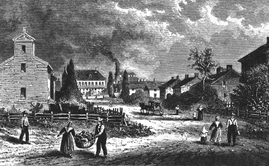
During the next seven years, as more members arrived from Ebenezer and Germany, the Inspirationists built six more villages ontheir land: South Amana (1855) and Homestead (1861) on the south side of the Iowa River; and on the north side West Amana (1856), High Amana (1857), East Amana (1857), and Middle Amana (1862). [Image at right] The seven villages comprise the Amana Colonies, which until 1932 was co-terminus with the Amana Society. The religious enthusiasm which had characterized Ebenezer carried over to the Inspirationists’ early years in Iowa. They faced challenges, overcame hardships, and began to build a durable community.
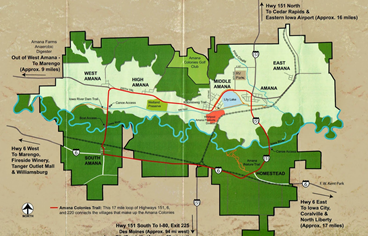
Christian Metz died in 1867 at the age of 72. Exhausted by his countless trips in Europe and between Ebenezer and Amana, never free from worry about the “inner and outer condition” of the Community, he at least lived to see his followers comfortably settled in a secure spot where they could work out their collective destiny with a minimum of outside interference. Much esteemed for his leadership and beloved for his patience and kindness, his death was a blow to the Inspirationists. Several hundred members attended his funeral in Amana, and when he was buried in thesimple Amana cemetery [Image at right] he was accorded a singular distinction: his grave was allocated two of the customary burial plots. Under Landmann’s spiritual leadership, the Society concluded its basic building program, its land acquisition (to 26,000 acres, roughly the present tract), and its recruitment of new members from Europe. The Society attained its greatest population size and developed a vigorous economy.

Landmann’s death in 1883 proved to be the “seal of inspiration” in the Community of True Inspiration. Only a handful of Elders remained from the time of the Reawakening, and in a few years they too were gone. The governance of Amana then fell completely to younger men who had never known the Community without Werkzeuge. They were a remarkably capable group in every sense. Many of them had reached maturity in Ebenezer and showed a deep and abiding dedication to Inspirationism. They were also experienced and competent businessmen, and under their leadership the Society was debt-free and economically sound.

In 1883, the Amana Society was still relatively isolated from the rest of the world. Most of the outsiders who came to the Colonies were businessmen, with whom ordinary members had little contact, or neighboring farmers, whose material way of life differed little from that of the Inspirationists, and indeed probably was inferior to theirs. The Community subscribed to several periodicals, but for the most part these were “wholesome” German-language publications “for the family” or technical journals. Members were not allowed to leave the Colonies without permission, a rule relatively easy to enforce because the members had no cash and the Society’s conveyances were under close supervision. The Elders busied themselves with problems of job assignments, marketing the Society’s products, leading the members in worship, and routinely inveighing against “worldly amusements.”

As the century waned, however, the outside world made more and more inroads into the Colonies. Mail-order catalogs appeared from some of the companies with which the Society did business. Tourists arrived, at first by one’s and two’s and later on rail excursions organized from neighboring cities. It is a measure of Amana’s conservatism that as early as 1890 it was impressing outsiders as quaint. It has been estimated that 1,200 tourists a year visited Main Amana alone in the early 1900s (Shambaugh 1932:91). The automobile made its appearance, not only bringing more tourists but giving Amanans a novel lesson in personal mobility. Then came the radio, baseball, and bobbed hair. The Elders found it increasingly difficult to resist the flood of modernity.

At the same time that outside influences were being felt in the Colonies, some members of the Community began to venture into “the world” with more frequency. They were mostly the young, the third generation after the leaders of the Reawakening. They were curious about the outside, curious to learn what money could buy beyond their narrow and well-protected sphere. Some were content with surreptitious daytrips to Cedar Rapids. Others wanted an education, more freedom, or remunerative work, and either knew or sensed that their options in the Community were limited. Many young people left Amana, and it was difficult for the Elders to stop them. They returned for visits with their own automobiles and with presents for their Colony relatives, adding to the world’s penetration of the Community’s boundaries. Their departure also created a shortage of labor and of young talent in particular.

Then came World War I. The war brought increased prosperity to the Colonies. High agricultural prices and a government contract for woolens more than made up for the closing of the calico mill due to the unavailability of dyestuffs. The Amana Society had its three most profitable years ever in 1918, 1919, and 1920. In small but noticeable ways, ordinary members benefitted from this wealth. In return, the war effort demanded many of the Community’s young men. During the Civil War, the Society had been able to purchase “substitutes” for its draftees, but the laws had changed. Furthermore, this was a war against Germans, and the Colonists’ patriotism was in question. Twenty-seven Amana men went into the army. Most entered as conscientious objectors and served in the quartermaster corps. Two died of influenza at Camp Pike; the rest saw something of the world and returned home with a growing conviction that Colony life had become outmoded.

Already undermined by the increasing contact between the Community and the outside, the Inspirationist system was dealt some jarring economic blows in the 1920s. The wartime economic boom gave way to a post-war downturn as recession hit the farmeconomy and the bottom dropped out of the woolens market. Although dyestuffs again became available, the calico print works never reopened, the victim of changing clothing fashions. The Society went from a $7,000 net profit in 1922 to a $73,000 deficit in 1923, and recorded losses in every one of the next nine years. In 1923, a disastrous fire swept through the woolen mill [Image at right]. The lack of insurance (“God’s will be done”) put an enormous strain on the Society’s resources to rebuild it. The labor shortage and rising costs associated with hired labor contributed further to the Society’s insolvency. To make matters worse, selfishness and resentment began to show itself in some members, and malingering and dishonesty became more common.

A sentiment for change began to grow in the Community. Although opposed by some of the remaining, and now elderly, second-generation Elders, the idea took hold that the communal system was no longer workable and would have to be abandoned if the Amana Society was to avoid bankruptcy. In 1931, a committee was elected to study the possible alternatives. It recommended reorienting the Society’s businesses along profit-seeking lines and creating a joint-stock corporation, with members of the old Amana Society becoming stockholders and wage-earning employees of the new
Amana Society. The new corporation would continue to pay the medical and dental expenses of members, but the community kitchens and other aspects of the communal economy would be discontinued. After months of meetings and deliberations, the members voted [Image at right] in favor of the committee’s proposal, and on June 1, 1932, Amana’s “Great Change” took effect, and the mana Society (I) became the Amana Society (II).

There are at least three ways to view Amana’s Reorganization of 1932. One can see the original Community of True Inspiration as a purely religious association to which, in 1843, a socio-economic system was joined and from which that socio-economic system was disconnected in 1932, returning the Community to its original sectarian character. Alternatively, one can see the changes of 1843 (moving to America and adopting communalism) as necessary to sustain the religious association in the face of persecution and life in a strange new land, and the Reorganization of 1932 as signaling the demise of that association, the end of a community defined primarily by religion. Or one can see the changes of both 1843 and 1932 as helping to sustain a community of people who wanted to remain together, even if it meant significant changes in both their church and their economy.

In fact, there is no need to choose among these three alternatives. Each is true or, rather, each has elements of truth in it. Amana’s theocratic system did fail in 1932, but the Inspirationists’ religious faith survives within the Amana Church Society. The communal system also failed in 1932, but Amana’s economy continues in a different organizational form, and is still based on agriculture and manufacturing (with tourism as a significant addition in more recent years).

Since 1932, most of the energy and creativity in the Amana Colonies has gone into business. In the wake of the Reorganization, the Amana Society (II) redesigned its accounting system, closed several old and unprofitable businesses (which had been maintained for the convenience of members), merged the two woolen mills, and released most of the hired hands. The profit motive provided the Society inducement to concentrate on lucrative enterprises and to develop new ones with growth-potential. The farms remained profitable by following the main trends of Iowa agriculture, producing mostly corn, soybeans, beef cattle, and (until recently) hogs. Two of the Amana Society (I)’s meat shops continued to operate, selling initially to members but increasingly to tourists. The woolen mill’s retail outlet was expanded to take advantage of the growing tourist trade, and the cabinet shops, which once supplied furniture for members of the Amana Society (I), were amalgamated into a single retail furniture-making business. The most important innovation was the development of a modern factory for the manufacture of freezers and refrigerators. So successful was this enterprise (one reason was a government contract during World War II) that the Amana Society (II) feared it would come to dominate other corporation businesses and sold it to outside private investors. Amana Refrigeration, Inc., which over time has had a series of corporate owners, most recently Whirlpool, continues to operate today in Middle Amana and employ a large workforce.

Following Reorganization, numerous private businesses appeared in Amana, virtually all of them catering to tourists. The first were restaurants and wineries, trading on the old Colonies’ reputation for good and ample food and wine. Tourism increased substantially beginning in the mid-1960s due to the completion of nearby Interstate Highway 80 and the designation of the Amana Colonies as a National Historic Landmark, spawning a wide variety of shops selling arts and crafts, antiques, clothing, and specialty foods, as well as numerous B&Bs and hotels. Although tourism, like other sectors, has ebbed and flowed, today over seventy businesses operate in the Amana Colonies, only a handful owned by the Amana Society (II).

The prosperity of both the Amana Society (II) and the Colony’s private sector has meant a rapid and rather dramatic increase in the standard of living of virtually all of the residents. There is no poverty or unemployment to speak of in Amana. The Amana Colonies supports a fine K-12 school with excellent facilities (consolidated twenty years ago with the school in a nearby town) as well as a first-class retirement community and nursing home. In terms of amenities and material comforts, Amana is as modern as any small town in America. An unfortunate similarity in name, however, still draws some tourists expecting to find Amish horse-and-buggies.

Inevitably, Amana’s modernization has come at a price. Many communal-era buildings have been torn down or extensively remodeled, and much of the new residential construction looks typically mid-American. Many of Amana’s young people have gone to college, married outsiders, and moved away. Others have settled in the Colonies with new ideas and outside spouses, diluting the hold of tradition. The emergence of an economic sector geared toward tourism entailed other changes, most notably a dramatic shift away from social and cultural introversion to the idea that “Amana Welcomes the World,” as one tourist sign proclaimed a few years ago. And the world has come. Tourists overrun the villages, especially during the summer (several years ago, the Amana Tourism Council boasted as many as one million visitors a year), dispelling any vestige of the bucolic air which once characterized the Colonies. Local production could not keep pace with these numbers, and much of what is for sale in Amana today is produced outside the Colonies.

As early as the 1960s, these trends were being noticed by more and more Amanans, who began to voice concerns about the erosion of the Community’s heritage. Fortunately, Amana’s prosperity allowed them to put their words into action. By the mid-1970s, a concerted effort was underway to preserve what remained of Amana’s past and to reclaim some of the traditions which had begun to disappear. The Amana Heritage Museum, opened in 1968, is a repository for (especially) communal-era material culture and an archive for records, photographs, and taped oral reminiscences of the Community’s past. The Amana Preservation Foundation was formed in 1979, dedicated to the preservation and restoration of communal-era buildings. The Amana Artists’ Guild sponsors programs of instruction in crafts of the past, including basket-making and tinsmithing, as well as in contemporary arts. Many Amana residents and outsiders have taken advantage of these programs, and a revival of handcrafting is occurring. In 1982, Colony residents approved the creation of an Amana Colonies Land Use District. Its board of directors has the power to make and enforce policies governing patterns of land use and styles of architecture with the aim of preserving the villages’ historic character.

Most of these trends begun in the 1960s have continued till the present, but Amana has also witnessed the further inevitable erosion of living memory of the communal era as those who had reached adulthood before the 1932 Reorganization have now passed from the scene. In fact, the Amana Society (II) has now been in existence longer than the communal Amana Society (I).

In its 300-year history, the Community today called Amana has undergone several major transformations. It has been a religious movement, a sect, a cooperative association, a communal society, and a joint-stock corporation. Twice it has been on the verge of collapse, and both times it has been revitalized. It has faced persecution and escaped it; it has, more recently, faced the prospect of complete acculturation and resisted it. It was America’s fourth-longest surviving communal society when it reorganized in 1932, and descendants still cherish the memory of those times. Amana’s religion has survived, but strictly speaking the Community of True Inspiration has not. The growth of Amana’s economy, and especially of tourism, has granted the Community a prosperity that simultaneously threatens the past and sponsors efforts to preserve it.

DOCTRINES/BELIEFS

An especially important inspired message to the Community of True Inspiration, spoken by Johann Adam Gruber in 1716, came to be called the “Twenty-four Rules for True Godliness.” It contained guidelines concerning the members’ interactions with one another, with the “world’s people,” and with prospective members. It also addressed the role of families in the community and of the lay Elders appointed in inspiration to lead each Versammlung (congregation). It warned against the ritualization of worship, stressing that faith could only live in heartfelt communion with God and the other members of the community and not through the performance of ritual. Finally, it announced itself as the basis of the covenant among the members and between the Community and God, calling for the members to pledge the set rules with a verbal affirmation and a handshake. For 300 years the Community has honored this statement of faith, and church members still renew the covenant through a pledge.

Eberhard Ludwig Gruber, Johann Adam’s father, never became inspired, but with his theological training and long involvement with Separatism he became the Inspirationists’ spokesman. He wrote several tracts about the phenomenon of inspiration, reports about the group’s early years, and pamphlets describing other items of the group’s faith. In 1715, he wrote down “Twenty-one Rules for the Examination of Our Daily Lives,” a practical guide for Inspirationists about how to comport themselves in the world. He also served as “Overseer of the Werkzeuge, ” endowed with a special ability to distinguish true inspiration (from God) from false inspiration (from Satan). The Inspirationists made a point of emphasizing this difference, since they came into contact with several putative Werkzeuge whom they believed to be falsely-inspired. An important test of “true” inspiration is that it contradicts nothing in the Bible.

Although considering themselves devout Christians with a faith rooted firmly in Scripture, the Inspirationists embraced several articles of doctrine which distinguished them from the majority of German Protestants at the time of their founding. Paramount among these, of course, was the belief in inspiration. Other distinctions involved their rejection of common beliefs and practices. For instance, they did not practice infant baptism or baptism by water at any time of life, citing especially 1 Cor. 1:17; Rom. 2:28-29; John 3:5 and Titus 3:5 as justification. They refused to swear oaths, considering it a form of blasphemy. They refused military service on religious grounds. They refused to support the state Church or to send their children to state-run schools. They had no ordained clergy, but rather lay Elders. On this point it is noteworthy that although only men could serve as Elders, Werkzeuge, who were “chosen by God,” were often women, another distinguishing feature at that time.

In addition, they believed the millennium was imminent and paid special attention to the biblical book of Revelation. In anticipation of that event, they apparently accepted the principle of gender separation, though evidence for its practice is most clear only after they moved to America and set up full-featured communities, where men and women were separated in church, at work, and at communal meals. They encouraged (but did not require) celibacy, taking their lead in this from Paul’s letter to the Corinthians, although it is possible to trace an influence back to the German mystic Jakob Boehme’s notion of an original androgynous Adam and the idea that sexuality is a manifestation of separation from God. The cohort of members born in Ebenezer, New York, in the 1840s and 1850s, a period of intense religious enthusiasm in the Community, had a lifetime celibacy rate of forty percent, one of the highest rates of voluntary celibacy ever documented (Andelson 1985).

Other religious beliefs were manifested in the physical character of Amana churches and cemeteries. (Unfortunately, little is known of their worship or burial spaces in Europe.) Both the exteriors and interiors of church buildings were simple, without iconography or symbolism of any kind. For worship services the members sat on plain pine benches, men in one half of the church and women in the other, the youngest members seated closest to the front of the room (where the elders sat facing the congregation), the oldest at the rear of the room. This de-emphasis of the family unit carried over to the cemeteries, where members were buried in the order of death rather than in family plots, beneath uniform headstones bearing only their name and dates of birth and death (or date of death and age) (Andelson forthcoming). These sacred spaces clearly proclaimed the virtues of simplicity and equality before God. Supporting this, central messages of the Werkzeuges’ testimonies dealt with the importance of humility, self-denial, and piety.

The strength or prominence of these various beliefs and articles of faith has varied through time. As noted earlier, gender separation probably was more emphasized once the Inspirationists established a communal order in America. It ended after the 1932 Reorganization in the communal kitchens (which were disbanded) and in workplaces, although it persisted in the church until recently. In another departure from tradition, the church has accepted female Elders since the 1990s. Millennialism was much more pronounced among the Inspirationists in the eighteenth century than in the nineteenth, and it virtually disappeared from the Community’s religious discourse in the twentieth. Several other beliefs have also weakened through time. Celibacy became uncommon after the move to Iowa. The refusal to swear oaths gave way after 1932 and Amana’s growing involvement with external authority. Pacifism, still important during World War I, receded by the time of World War II, when many Amanans served in combat. The rejection of state-sponsored education lessened after the Inspirationists came to America, although the community operated its own schools, albeit with state-certified teachers, until the merger with a neighboring district in the 1990s.

On the other hand, several items of traditional doctrine and practice remain. The Amana Church still does not practice infant baptism or water baptism at any age. The Church has no ordained clergy. Church buildings and cemeteries remain as they have been since 1855, proclaiming the virtues of simplicity and equality before God. It is difficult to say how the Amana Church members today feel about inspiration. The testimonies are still revered as the Word of God and are read in church services, though probably few members feel that inspiration could come again to the Community, even though the reason most often given (“we have become too worldly”) could also have been claimed prior to the Reawakening of 1817. Amana history records the case of a young man in the nineteenth century who sometimes manifested the motions associated with inspiration, and the Elders hoped he might become inspired, but it never happened. In the 1980s a man from Denmark visited Amana claiming to be the leader of a congregation of Danish Inspirationists that traced its ancestry back to Gruber and Rock. Those Amanans who heard about his visit (surprisingly, many did not) mostly displayed polite curiosity but not more, and nothing ever came of the contact. Inspiration has not been a living presence in Amana since Barbara Landmann’s death in 1883, but its place in the identity of members of the Amana Church seems secure.

RITUALS/PRACTICES

Rather little is known about the religious rituals and practices of the Inspirationists in the eighteenth and first part of the nineteenth centuries. While we have a good record of the inspired testimonies (which for that period number over a thousand, including the occasion on which each was delivered and to whom, and a full transcript of the content), these do not describe the nature of ordinary prayer meetings or the rituals which the Inspirationists routinely performed. Therefore, the information that follows is drawn mostly from the Community’s time in Amana, first from the communal period and then from the post-communal period.

In communal Amana (1855-1932), the Church held eleven regular worship services each week: Sunday morning and afternoon, Wednesday morning, Saturday morning, and short prayer services every evening. Special services were held on major Christian holidays: Good Friday, the days of Holy Week, Easter, Ascension Day, Pentecost, and Christmas. Easter, Pentecost, and Christmas were celebrated as two-day holidays. New Year’s Day was religiously observed. Funerals occasioned a church service for family and close friends of the deceased. Each meal taken in the communal kitchens was a religious act, eaten in silence and beginning and ending with a prayer. All together, these add up to over 1,000 routine ritual occasions a year in the lives of the Inspirationists during the communal period.

In addition, the Inspirationists practiced four special religious services. The most sacred of these were Liebesmahl (Love Feast, or Holy Communion) and Bundesschliessung (Renewal of the Covenant), closed to non-members and suffused with important sacred symbols. We know from Church records that the Inspirationists held Holy Communion services in the first three years of the Community’s history, but then, inexplicably, not again for 120 years until 1837, then regularly after that for ninety years, followed by another interruption, and then a resumption. The Renewal of the Covenant, initiated by Johann Adam Gruber in 1716, likewise was not regularized until the nineteenth century. The Unterredung (Yearly Spiritual Examination), like the other two, began in the eighteenth century, but may also have been regularized only in Ebenezer; it was a less sacred but nevertheless important ritual in which the Elders in each village examined the obedience and spiritual standing of individual members. The Yearly Spiritual Examination not only expressed the theocratic nature of the Community but helped to regulate behavior. Finally, the Kinderlehre (Youth Instruction) was a special annual service designed to enhance the piety and spirituality of young members.

For many of these worship services, the members in each village came together as a single group. For others, however, they were divided into grades or ranks according to the principles of age and spiritual condition. The senior and more spiritually advanced members were in the Erste Versammlung (First Congregation), the more mature young people “with a good Christian upbringing” were in the Kinderversammlung (Youth Congregation), while the children belonged to the Kinderlehre (Catechism School) (Scheuner 1977 [1884]:53). In later years, a Zweite Versammlung (Second Congregation) was added between the Erste Versammlung and Kinderversammlung , but it is not clear when this change was made. Normally, a member would advance with age and spiritual maturity from the Youth to the Second to the First Congregation, reaching the last around the age of forty. An Elder would instruct them when to move. However, if a married couple became pregnant, both husband and wife were demoted to the Youth Congregation for a year as a mark of giving in to “temptations of the flesh.” At the end of the year, they would begin moving up in the ranks again.

A few other details about the Inspirationists’ worship services can be noted. The village Elders sat on benches at the front of the chamber facing the congregation, the presiding Elder at a small table in the center. Men and women entered the church through separate doors and sat in separate halves of the room. Women wore a black cap, black scarf, and black apron over their dark-colored dresses, a tradition dating back to the eighteenth century; men wore dark suits. Members carried two volumes with them to services, the Bible (with Apocrypha) and the Inspirationists’ own hymnal. All singing was a capella, led by male and female song leaders. Musical instruments were not part of church services. Regular services included at least an opening hymn, a prayer, a reading from Scripture, a reading from one of the inspired testimonies, a sermon by the presiding Elder, recitation of the Lord’s Prayer, a closing prayer, and a closing hymn.

Although the Inspirationists’ core religious beliefs remained unaltered in their essence after the 1932 Reorganization, some of the rituals and practices changed at that time. The Amana Church Society discontinued the Yearly Spiritual Examination and the system of ranks, perhaps the clearest sign that the theocratic system of the Amana Society (I) had ended. The Youth Instruction service also eventually ceased. The number of regular church services each week gradually declined from eleven to only one, for an hour or so on Sunday morning. In the 1960s, the Church began to offer English language services in response to increasing numbers of young people not learning German and some non-German speakers marrying into Amana and wanting to attend the Church. Gradually English began to find its way into the German language services as well, and today all services are in English. Despite this, the number of church members has gradually declined, the result of some members moving away, others leaving the church following marriage to an outsider and attending church elsewhere, and a growing proportion of Amana’s population moving in from the outside with no connection to the church. As the number of church members has declined, so has the number of villages in which services are held, until today services are held only in the church in Middle Amana, the most centrally located of the seven. The decline in number of services and number of members has also led to a decline in the number of Elders. At Amana’s population peak during the communal era, as many as eighty or ninety Elders were active at the same time. In 2015, the number of Elders was fewer than ten, although the Church hopes to recruit more.

Despite these changes and the numerical decline, the Amana Church Society remains a vibrant, relevant, and spiritually rich institution, and an important part of the Amana Colonies.

LEADERSHIP/ORGANIZATION

Much has already been said about the nature of leadership in Amana Society (I). It remains to add the details of the governance system. The affairs of the Society as a whole were in the hands of the Trustees, or Great Council of Elders (Grosser Bruderrath), whose members (one from each village and six at-large) were elected by popular vote every two years. In advance of the vote, the Trustees put forward a slate of candidates, and every voting member of the Society (men over twenty-one and unmarried women over thirty-five) could vote “yes” or “no” for each. The slate generally consisted of the incumbent Trustees, except when death, infirmity, gross incompetence, or a moral failing necessitated a new candidate. No opposition candidates were presented, so incumbents were almost always returned to office. Serving on the Great Council normally required at least a degree of business acumen, since the Trustees made all major economic decisions as well as decisions about the general welfare of the Society. It was not uncommon for a younger Elder with demonstrated business ability to be selected over older, and possibly more pious, Elders who lacked it. The Great Council elected from its own membership a president, vice-president, secretary, and treasurer, all of whom played a special role in representing the Amana Society in dealings with the outside. The Trustees appointed managers of the Society’s major businesses: the farms, the mills, and the general stores.

The Trustees also named Elders in each of the villages to a local, or village, Council (Bruderrath). Here it was common for piety to be weighed more heavily in the selection, since the village Councils oversaw the spiritual condition of members in their village, in addition to making decisions about housing assignments, kitchen assignments, and job assignments. While Elders served on the local Council at the pleasure of the Trustees, normally they, too, remained in their positions indefinitely. The size of the local Council varied according to the population of the village. Being on the local Council was not perceived as a step on the path toward becoming a Trustee, though the longest-serving Elder in each village was usually designated the “head Elder.”

While a Werkeug lived, Elders were named through inspiration; after Landmann’s death the Great Council assumed the task of appointing them. The main responsibilities of Elders who were not on either the local or Great Council was to lead worship services, perform funeral services, officiate at weddings, and in general keep an eye out for rule-breakers and breeches of morality, which would normally be reported to the local Council. Piety and a good speaking voice were viewed as important qualities in an Elder.

Following the 1932 Reorganization, the local Councils were discontinued since most of their responsibilities ended under the new more individualistic and corporate system. The Great Council morphed into the Board of Directors of the Amana Society (II), which has continued to function in ways that are generally similar to the old Great Council, though with a narrower focus on the Society’s business operations and property (most of the original 26,000 acres). In the communal era, everyone living in the Amana villages except for the hired hands was considered a member of the Amana Society (I). Since the Reorganization, Amana Society (II) is beholden only to its shareholders, not all of whom live in the Colonies. For the Amana Church Society a new Board of Trustees was created which oversees church business and church property (the church buildings and the cemeteries). Membership in the Amana Church Society overlaps with but does not coincide with membership in the Amana Society (II). Furthermore, a considerable number of the residents of Amana today, perhaps half, are neither church members nor shareholders in the Amana Society (II). Thus, Amana’s governance system since Reorganization is more diffuse, and the possible identities of people in Amana (resident, member of the Society, and member of the Church) are separate and distinct.

ISSUES/CHALLENGES

The Amana Colonies cannot fail to impress today’s visitor. The land is fertile, well-managed, and productive, the economy diverse and prosperous (and unemployment very low), the people energetic, creative, and content. These are enviable achievements for a small, rural community now in its 161 st year. The Amana Society (II) is in its eighty-fourth year of solvent operation; add to this its Amana and Ebenezer corporate antecedents and we have a set of integrated businesses that date back 173 years. The Amana Church Society in 2014 celebrated its 300 th anniversary. Insofar as longevity is a measure of success, Amana has been successful. Through time it has demonstrated flexibility, resiliency, and a knack for innovation.

This judgment on Amana’s past seems secure. What is the prognosis for its future? Perhaps the question needs to be addressed separately for each of Amana’s three identities mentioned above. The Amana Colonies, the seven villages with their modern mix of residents, depend for their continued prosperity on tourism. Tourism depends on many factors, internal and external. Over the external ones Amana has no control. Heretofore, the internal factors have depended on Amanans’ ability to market the past as a combination of ethnic (German) heritage, a distinctive built environment, and a tradition of handcrafted quality. (Amana’s communal era is highlighted in the museums, but it has not been a crucial part of the tourist draw in a strict sense.) The first of these seems likely to continue to fade as Amana’s German character gets diluted by time. The distinctive built environment has unquestionably been reduced as older structures decay and are torn down and new ones are erected in their places. However, many old buildings remain and are being cared for by the Society and private owners; the distinctive village layout also will persist. The tradition of handcrafted quality is fairly robust in Amana and is benefitting from a partial turn toward it in the country generally.

The future of the Amana Society (II) likewise depends on many factors beyond local control. However, the leadership seems capable, is committed to historic preservation, and has just gone through a period of re-branding for twenty-first century marketing that looks promising. An important question concerns the number of stockholders, which has been slowly but steadily declining for fifty years. Some innovations have partly addressed this problem in the past, but new solutions will soon be needed.

And what of the Church, the foundation of everything in Amana? Here, too, declining numbers will need to be addressed. Whether addressing this will compromise yet more of the legacy of the Community of True Inspiration, as has happened in numerous ways since the Reorganization, remains to be seen. Given Amana’s remarkable record of adaptation, the current members are hopeful.

REFERENCES

Andelson, Jonathan G. 1985. “The Gift to be Single”: Celibacy and Religious Enthusiasm in the Community of True Inspiration. Communal Societies 5:1-32.

Andelson, Jonathan G. forthcoming. “Amana Cemeteries as Embodiments of Religious and Social Beliefs.” Plains Anthropologist.

Scheuner, Gottlieb. 1977 [ originally published in German 1884]. Inspirations-Historie, Volume I: 1714-1728, translated by Janet W. Zuber. Amana, Iowa: Amana Church Society.

ADDITIONAL REFERENCES

Andelson, Jonathan G. 1997. “The Community of True Inspiration from Germany to the Amana Colonies. Pp. 181-203 in America’s Communal Utopia , edited by Donald E. Pitzer. Chapel Hill: University of North Carolina Press.

Foerstner, Abigail 2000 Picturing Utopia: Bertha Shambaugh and the Amana Photographers. Iowa City: University of Iowa Press.

Shambaugh, Bertha M.H. 1932. Amana That Was and Amana That Is. Iowa City: State Historical Society of Iowa.

Webber, Philip E. 1993 Kolonie-Deutsch: Life and Language in Amana. Ames: Iowa State University Press.


IMAGES

Image #1: Sketch of the woolen mill at Ebenezer.

Image #2: Sketch of Amana Village in Iowa.

Image #3: Map of Amaa villages.

Image #4: Christian Metz cemetery headstone.

Image #5: Remains of the Amana woolen mill after the 1923 fire.

Image #6: The ballot proposing the “great change” of Amana organization. The ballot is written in German.
Author:
Jonathan Andelson

Post Date:
27 April 2016

Share

BAPS Shri Swaminarayan Mandir (Atlanta)

BAPS SHRI SWAMINARAYAN MANDIR TIMELINE

1980s:  A small number of BAPS devotees in the Atlanta area met weekly for worship in one another’s homes.

1988:  BAPS devotees purchased a skating rink in Clarkson, Georgia and refurbished it as a mandir.

1980s:  The number of Indian immigrants in the U.S. grew dramatically.

2000 (February):  A twenty-nine acre plot of land was purchased just outside of Atlanta in Lilburn, Georgia to serve as the site for the planned mandir.

2000 (February):  Pramukh Swami Maharaj performed a religious ritual (puja) to sanctify the land for the mandir construction.

2004:  Pramukh Swami Maharaj arrived in Atlanta for a visit.

2005 (September):  Ground was broken for the mandir construction.

2007 (August):  The mandir was formally inaugurated.

HISTORY

A major wave of Asian immigration into the United States occurred during the 1980s, and Indian immigrants were a significant component of that immigration (Barringer 1990). In 1960, there were about 12,000 Indian immigrants in the U.S.; that number increased to 51,000 in 1970, 206,000 in 1980, and 450,000 in 1990 (Terrazas and Batog 2010). In 2010, the Indian population in Atlanta surpassed 100,000 by 2010 (Li 2013). Many of these immigrants were at least nominally Hindu.

Originating in India in 1907, one of the most visible Hindu immigrant groups in the U.S. has been the Swaminarayan tradition. As Melton (2011:8) summarizes Swaminarayan tradition’s domestic and international growth: “It has emerged out of Gujarat to become a national movement, initially following the twentieth century dispersion of Gujaratis throughout India while also attracting many non-Gujaratis to its relatively modern, reformist, and communally active outlook. One of the most visible sectarian representations of the Swaminarayan tradition in the U.S. is Bochasanwasi Shri Akshar Purushottam Swaminarayan Sanstha (most commonly, BAPS).

Currently, BAPS is estimated to include worldwide over 1,000,000 devotees, nearly 1,000 sadhus, over 3,000 mandirs and BAPS congregations, thousands of weekly assemblies, and very active humanitarian and charitable activity. BAPS is represented in over forty nations around the world. Fenton (1988) estimates there were a few dozen Swaminarayan families in the Atlanta area by the mid-1980s. By the early 2000s the number of worshipers approached 1,000 with much larger gatherings on feast days. BAPS devotees were included in that set of families.

The BAPS determination to build a mandir began during the 1980s when devotees purchased a skating rink in Clarkson, Georgiaand refurbished it as a mandir in 1988. Until the 1990s, sadhus were not allowed outside of India, but two regional sadhus took up residence adjacent to the new mandir in the early 1990s. As the number of BAPS devotees and their financial resources grew, devotees began to aspire to constructing a new mandir in the Atlanta area. For BAPS devotees, mandirs represent an important form of devotional expression and a means of promoting the survival of Swaminarayan Hinduism. With the support of their spiritual leader, Pramukh Swami Maharaj, the BAPS community began to plan for the construction of a carved stone mandir (shikharbaddh) (Kim 2010:367). As Kim observes, BAPS satsangis and leaders are continuously striving to improve their youth groups, publications, and methods of teaching Swaminarayan upasana for its transnational communities. Also, BAPS constantly seeks to improve the appeal and accessibility of its numerous programs and materials for both its followers and broader publics. The new temples have become a focal point for these developments” (Kim 2011:369). One expression of devotion and sacrifice by BAPS devotees is the rapid construction of new mandirs, which often takes place in two years or less and involves extensive volunteer labor.

In the case of the Shri Swaminarayan Mandir just outside of Atlanta, land for the mandir was purchased in 2000, and that samemonth Pramukh Swami Maharaj performed a religious ritual (puja) to sanctify the land for the mandir construction. Pramukh Swami Maharaj returned to Atlanta in 2004 for a week’s visit, and the following year construction began. The temple was completed in less than two years, and in August 2007 the mandir was formally inaugurated.

DOCTRINES/RITUALS

The BAPS Swaminarayan Sanstha self identifies as both a civic and religious organization that promotes harmony at the individual, family, and community levels, preserves its cultural heritage and offers humanitarian services. These include (“BAPS Shri Swaminarayan Mandir Atlanta” n.d.):

Caring for their spiritual, cultural, social, physical, emotional, and educational needs.

Inspiring all towards a pure and peaceful way of life; filled with character, love, tolerance and harmony.

Sustaining the universal values of Hindu culture.

Fostering faith and devotion in God.

In addition to the festivals and celebrations that are held throughout the year, worship rituals (bhakti), such as a morning bath followed by a puja, Ãrti, darshan, and satsang are offered daily.

ORGANIZATION/LEADERSHIP

The Shri Swaminarayan Mandir in Atlanta is an impressive 32,000 square-foot temple. It is constructed out of over 4,500 tons of Italian Carrara marble, 4,300 tons of Turkish limestone, and 3,500 tons of Indian pink sandstone. The stone was quarried in the three respective nations and then shipped to India where carved craftsmen sculpted it into 35,000 separate pieces that were then shipped to Atlanta. The stone pieces from which the mandir is constructed interlock and therefore require no screws, nails or other fasteners. Nearly 1,000 volunteers joined over 1,000 craftsmen, investing over 1,000,000 hours of labor, in assembling the mandir, a process that was completed in less than two years (Grundhauser n.d.). A two-ton keystone was placed in the ceiling of the mandir’s central dome. Once completed the mandir now contains six tall pinnacles, 86 decorative ceilings, 116 archways, and 340 columns (Grundhauser n.d.).
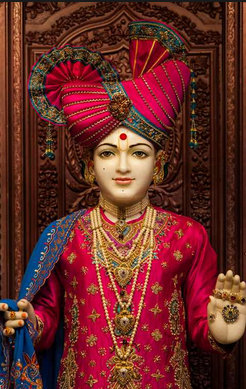
The Shri Swaminarayan Mandir in Atlanta contains the following murtis:

Bhagwan Swaminarayan and Aksharbrahman Gunatitanand Swami
Shri Ghanshyam Maharaj
Shri Radha-Krishna Dev
Shri Harikrishna Maharaj
Brahmaswarup Bhagatji Maharaj
Brahmaswarup Shastriji Maharaj
Brahmaswarup Yogiji Maharaj
Pragat Brahmaswarup Pramukh Swami Maharaj
Shri Sita-Ram Dev and Shri Hanumanji
Shri Shiva-Parvati Dev and Shri Ganeshji

The Atlanta BAPS shikharabaddha mandir contains a variety of facilities beyond the structures containing the murtis. Kim (2011:371) writes that all shikharabaddha mandirs include:

a large meeting hall, kitchen, residence for sadhu s, classrooms, and sometimes a gymnasium. In the mandir s located in the West, there is also a component known as the “Exhibition.”…In the shikharabaddha mandir s constructed outside of India, the Exhibition is a consciously created space, designed like a museum, with appropriate lighting and labels, and topical sections. The sections introduce visitors to Hinduism and its world contributions, outline the histories of the original Swaminarayan sampradaya and BAPS Swaminarayan bhakti , and provide suggestions on living a life of “moral excellence.”

At the time it was constructed, the Shri Swaminarayan Mandir in Atlanta was the third shikharabaddha in the U.S. (preceded by mandirs in Houston and Chicago). It was also the largest Hindu temple outside of India. Since the Atlanta mandir’s construction an even larger BAPS shikharabaddha has been constructed in Los Angeles.

The spiritual leader of the Shri Swaminarayan Mandir in Atlanta is Pramukh Swami Maharaj, who is regarded as the fifth spiritual successor of Swaminarayan. Pramukh Swami Maharaj is understood to have achieved the ultimate level of spiritual development (brahmanized) and in constant communication with God. He is the key spiritual link between BAPS devotees and God.

ISSUES/CHALLENGES

There has been some controversy over the construction of houses of worship in Lilburn, primarily mosques but also a mandir proposed by the Swaminarayan Satsang Mandir of Atlanta (Esterl 2011; “Gwinnett says no to Hindu Temple” 2006). By contrast, the Shri Swaminarayan Mandir has largely been welcomed. The mayor commented that “Lilburn has become a very diverse community, very international. As community leaders, we’ve embraced that diversity, and so we welcome it and see it as a very positive sign…” (Lohr 2007). The response from visitors has been one of awe: “Once inside the Mandir for the prayer service, we couldn’t help feeling possessed by the karmic field emanating from statued deities, impassioned revelers, glassy stone surfaces, theatrical up-lighting, and soporific music. Standing outside after the ceremony, we couldn’t help but marvel at the building’s unlikely surroundings that render it incongruent and otherworldly” (Sauser and LeFrancoi 2010).

The larger challenges for the Shri Swaminarayan Mandir in Atlanta are very much like those of other Asian Indian temples in the West, preserving its Indian heritage and fitting into its contemporary diasporic environment. BAPS recognizes the future of its movement depends upon transmitting the tradition, its cultural, linguistic and religious heritage, to future generations (Rudert 2004:2, 9). Rudert (2004:10) cites literature produced by the mandir that explicitly prioritizes this goal:

To nurture and train the children so they grow up to be peaceful and thoughtful citizens . . . The children are exposed to the glories of Indian Culture and Hindu traditions through audio video presentations.
and

To keep the young from falling victims to the dangerous diseases like aggression, disobedience and intoxication, that destroy character and life, and to preserve the value of Indian Culture for our future generations, our Youth Center plays a vital role.

With respect to accommodation, Kim (2011: 379) states that it is “accommodation without compromise to its central tenets that has allowed BAPS mandir s to be constructed wherever satsangis have settled.” The dual objectives are that The BAPS Swaminarayan Sanstha hopes to make Hinduism an approachable and appealing religion for all visitors and yet it also seeks to sharpen awareness of its own devotional tradition (Kim 2011:379).

REFERENCES

Abney, Kate. 2015. “Explore Georgia’s Unexpected Attractions.” Atlanta Magazine , May 4. Accessed from
http://www.atlantamagazine.com/georgiatravel/explore-georgias-unexpected-attractions/ on 9 June 2015.

“BAPS Shri Swaminarayan Mandir Atlanta.” n.d. All Hindu Temples. Accessed from
http://allhindutemples.com/city/georgia/hindu_temple/baps-shri-swaminarayan-mandir-atlanta/ on 9 June 2015.

Barringer, Felicity. 1990. “Asian Population in U.S. Grew by 70% in the 80’s.” New York Times, March 2. Accessed from http://www.nytimes.com/1990/03/02/us/asian-population-in-us-grew-by-70-in-the-80-s.html on 9 June 2015.

Esterl, Mike. 2011. “ Mosque Zoning Row Draws Scrutiny: Georgia City’s Opposition to Muslim Center Probed as Justice Department Steps Up Focus on Religious Property Disputes.” Wall Street Journal, August 13. Accessed fromhttp://www.wsj.com/articles/SB10001424053111904823804576504220337373868 on 20 June 2015.

Grundhauser, Eric. n.d. “ BAPS Shri Swaminarayan Mandir Atlanta.” Atlas Obscura. Accessed from http://www.atlasobscura.com/places/baps-shri-swaminarayan-mandir-atlanta-2 on 9 June 2015 .

“Gwinnett S ays N o to Hindu Temple.” 2006. The Atlanta Constitution, June 27. Accessed from http://www.freerepublic.com/focus/news/1658489/posts on 20 June 2015.

Kim, Hanna. 2010. “Public Engagement and Personal Desires: BAPS Swaminarayan Temples and their Contribution to the Discourses on Religion.” International Journal of Hindu Studies 13:357–90.

Li, Ivy. 2013. “The Indian State of Georgia: Hindu Temples in the South Offer Open Places of Worship.” Hyphen Magazine , Spring. Accessed from http://www.hyphenmagazine.com/magazine/issue-26-south-spring-2013/indian-state-georgia on 20 June 2015 .

Lohr, Kathy. 2007. “Gleaming Hindu Temple to Open in Atlanta Suburb.” NPR, August 15. Accessed from http://www.npr.org/templates/story/story.php?storyId=12753002 on 20 June 2015.

Melton, J. Gordon. 2011. “ New New Religions in North America: The Swaminarayan Family of Religions.” P aper presented at the annual meeting of the Center for Studies of New Religions (CESNUR), Aletheia University, Danshui, Taiwan, June 21-23.

Rudert, Angela. 2004. Inherent Faith and Negotiated Power: Swaminarayan Women in the United States. MA Thesis. Ithaca, NY: Cornell University.

Sauser, Jeff and Josh LeFrancoi. 2010. “ BAPS Mandir: Politics, Peace, and Harmony in Atlanta’s Suburbs.” BURNAWAY, March 13. Accessed from http://burnaway.org/feature/baps-mandir-politics-peace-and-harmony-in-atlantas-suburbs/ on 20 June 2015.

Terrazas, Aaron and Cristina Batog. 2010. “Indian Immigrants in the United States.” Migration Policy Institute, June 9. Accessed from http://www.migrationpolicy.org/article/indian-immigrants-united-states-1 on 9 June 2015.

Authors:
David G. Bromley
Suchi Shah

Post Date:
24 June 2015

BAPS SHRI SWAMINARAYAN MANDIR VIDEO CONNECTIONS

Share

Amanda Berry Smith


AMANDA BERRY SMITH TIMELINE

1837 (January 23):  Amanda Berry was born to slave parents, Samuel Berry and Mariam Matthews Berry, in Long Green, Maryland.

1854 (September):  Amanda Berry married Calvin Devine who subsequently fought and died in the Civil War.

1856 (March 17):  Amanda Berry Devine was converted to Christianity.

1865:  Amanda Berry Devine married James Smith and moved to New York City.

1868 (September):  Amanda Berry Smith experienced sanctification at Green Street Methodist Church in New York City.

1869:  James Smith died.

1870 (October):  Amanda Berry Smith began preaching full-time.

1875:  Amanda Berry Smith joined the Woman’s Christian Temperance Union.

1878–1890:  Amanda Berry Smith traveled abroad, preaching and advocating temperance.

1893:  Amanda Berry Smith moved to Chicago.

1899 (June 28):  The Amanda Smith Orphan Home and Industrial School opened in Harvey, Illinois.

1915 (February 25):  Amanda Berry Smith died in Florida and was buried in Illinois.

BIOGRAPHY

Amanda Berry [Image at right] was born a slave in Long Green, Maryland on January 23, 1837. Her father, Samuel Berry, subsequently bought his freedom and later the freedom of his wife, Mariam Matthews Berry and five children. Amanda’s father was active in the Underground Railroad and their home served as a prominent station. She grew up in Maryland and central Pennsylvania, often working as a servant in other people’s homes. Her formal education consisted of three-months’ schooling. Her parents taught her to read and write. Amanda Berry married Calvin Devine in September 1854. They had one child, Mazie, who was her only child to live to adulthood. Calvin Devine died while serving in the Civil War. Amanda Berry Devine moved to Philadelphia where she continued to do housework and cooking for others. There she met James Smith whom she married in 1865. They moved to New York City where she took in people’s washing and cleaned houses. James Smith died in November 1869, and Amanda Berry Smith never remarried.
Amanda Berry Smith was converted to Christ on March 17, 1856 in the home of her employer. In September 1868 she was sanctified at Green Street Methodist Episcopal Church in New York City with Rev. John Inskip (1816–1884) as pastor. He preached that sanctification occurred instantaneously and was “the blessing of purity like pardon [which] is received by faith” (Smith 1893:77). Pardon referred to conversion while purity was a synonym for sanctification. Inskip’s understanding of sanctification mirrored that of Phoebe Palmer (1807–1874), who also maintained that sanctification resulted from faith.

Amanda Berry Smith attended Phoebe Palmer’s Tuesday Meeting for the Promotion of Holiness in New York City and testified there. She began her public ministry by sharing her experience of sanctification in local churches that were primarily African American. She responded to what she believed was God’s call to “go, and I will go with you” (Smith 1893:132) and commenced full-time evangelistic work in October 1870. She consistently preached holiness, which was the doctrine promoted by the Wesleyan/Holiness Movement.

Smith became a popular preacher on the camp meeting circuit. She was also known for her singing and her testimonies. Her involvement at Palmer’s Tuesday Meeting enhanced her reputation since prominent leaders in the Wesleyan/Holiness Movement heard her there. She began preaching more to white congregations, including the two churches in Brooklyn of Rev. Henry Ward Beecher (1813-1887) where she held week-long services.

Amanda Berry Smith traveled to England in 1878 to begin twelve years of ministry abroad. Her preaching engagements in England included the Keswick camp meeting. During her time in England, she traveled to Scotland and held services in a Presbyterian church there. She journeyed to India in the fall of 1879 and preached in Methodist Episcopal churches. She returned to England and soon traveled to Ireland where she preached in several denominations. Her next destination was Liberia where she arrived in January 1882.

In Liberia, as in England, she promoted temperance along with her evangelistic campaigns. [Image at right] She had joined the Woman’s Christian Temperance Union (WCTU) in 1875, shortly after it was organized. She played an active role in its meetings, both in the United States and later in England. In Liberia, she urged her listeners to sign a pledge to forego drinking alcohol and organized temperance societies. After eight years, she left Africa, visiting England, Scotland, and Ireland for several months before returning to the United States in September 1890. She maintained her dual emphases on temperance and evangelism, preaching at camp meetings and churches. She traveled to California and Canada before traveling to Great Britain and Ireland in 1893.
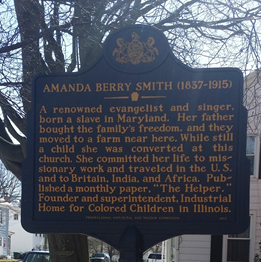
Amanda Berry Smith relied on unsolicited contributions to cover her ministerial and living expenses. In 1894, she began to play an active role in raising money for a home she envisioned for black orphans in Chicago. She did so while maintaining her busy preaching schedule. The Amanda Smith Orphanage and Industrial Home for Abandoned and Destitute Colored Children opened in 1899. She continued to solicit funds for the orphanage while preaching at revivals, camp meetings and temperance gatherings.

Amanda Berry Smith moved to Florida in 1912 to live in a home provided by a supporter. She died there on February 25, 1915. [Image at right].

TEACHINGS/DOCTRINES

Amanda Berry Smith’s theological emphasis was sanctification or holiness. Other than conversion, she did not address the other doctrines of Methodism that she had affirmed as a member of the African Methodist Episcopal Church. Her experience of achieving holiness paralleled Phoebe Palmer’s description of the means of holiness. This involved consecration and faith followed by the conviction that since the Bible promised holiness, all a Christian must do is claim the biblical promise to have the experience.

In her preaching, Smith focused on the results of holiness more than the means of holiness. She testified to the fact that holiness helped her overcome a “man-fearing spirit” (Smith 1893:111) and enabled her to tell others about her sanctification even when she faced opposition. Power was a manifestation of holiness. Like Palmer, Smith relied on the Holy Spirit’s power in her ministry and preached for the power of Pentecost to be manifested in the present.

While some adherents appeared to believe that experiencing holiness indicated the completion of the spiritual journey, Amanda Berry Smith contended that holiness entailed growth: “There is much of the human nature for us to battle with, even after we are wholly sanctified”(Smith 1893:119–20). She spoke of multiple baptisms of the Holy Ghost rather than one all-encompassing experience.

Amanda Berry Smith was one of the few to examine the relationship between prejudice and holiness. “If they are wholly sanctified to God . . . all their prejudices are completely killed out” (Smith 1893:423). She believed that purity imparted by holiness removed prejudice from the heart of the believer. A clean heart that resulted from sanctification was devoid of prejudice, which Smith clearly believed was a sin. However, she did concede that sometimes there was the need for growth when a sanctified individual still harbored prejudicial attitudes.

ISSUES/CHALLENGES

Amanda Berry Smith disclosed numerous instances of racism she encountered in her ministry. Traveling to engagements required negotiating segregated facilities. She could never be sure if there would be a place en route where she could get a meal or find a place to stay overnight. Once she was taking an omnibus to her destination. Since she was not allowed to ride inside, she sat outside on the top. The vehicle discharged all the white passengers before blacks could get off, even when this meant backtracking (Smith 1893:153).

Adrienne Israel, Smith’s biographer, maintained that the holiness movement contributed to Smith’s success as an evangelist. She credits “the egalitarian thrust of the holiness revival that temporarily crossed boundaries of race, gender, and class, bringing together society’s disparate groups in camp meetings and other kinds of protracted revival meetings” (Israel 1998:154). Holiness worship services were among the few places that provided opportunities for blacks and whites to meet together. Even this supportive climate was not immune to the prejudice prevalent in society, however. Sometimes, the congregational seating was segregated by race. At one camp meeting, Smith wondered if she would be allowed in the dining tent. Her concern turned out to be unfounded but it does indicate that there were probably other instances where this had been the case (Smith 1893:173–74).

Amanda Berry Smith did not shy away from the issue of prejudice. When someone who was apparently white insisted that no one would treat her unkindly, she responded: “But if you want to know and understand properly what Amanda Smith has to contend with, just turn black and go about as I do, and you will come to a different conclusion” (Smith 1893:116). She likewise refused to succumb to the inferior status that others sought to impose on her. She referred to herself as one of “the Royal Black” (Smith 1893:118). She was a charter member of the Illinois NAACP (Israel 1998:154), which was founded in 1909. She deserves to be listed among the forerunners of the civil rights movement.

Amanda Smith also encountered sexism as a woman preacher. Adversaries quoted the scriptural admonition to “Let your women keep silent in the churches” (1 Cor. 14:34) in their attempts to inhibit her ministry. She sought to avoid arguments with opponents of women ministers and relied on divine ordination to validate her ministry: “[God] had indeed chosen, and ordained and sent me” (Smith 1893:159). Her denomination, the African Methodist Episcopal Church, did not grant women full ordination privileges until 1948. While lacking denominational credentials, Smith benefited from the support of male clergy and other church leaders. The Wesleyan/Holiness Movement’s affirmation of women preachers also provided a positive climate for her ministry. A historical roadside marker in Shrewsbury, Pennsylvania where she lived growing up attests to her prominence as an evangelist. However, it mistakenly identifies the location of her conversion experience.

IMAGES
Image #1: Photograph of Amanda Berry Smith. Taken from the Illinois State Historical Library collection.
Image #2: Sketch of Amanda Berry Smith on mission in Liberia with Methodist Episcopal Bishop William Taylor.
Image #3: Photograph of a historical marker honoring Amanda Berry Smith. The content on the marker, however, is incorrect.

REFERENCES

Israel, Adrienne M. 1998. Amanda Berry Smith: From Washerwoman to Evangelist. Lanham, MD: Scarecrow Press.

Smith, Amanda. 1893. An Autobiography: Amanda Smith. Chicago: Meyer.

Post Date:
8 April 2016


Share