Hikari No Wa (ひかりの 輪)
HIKARI NO WA TIMELINE
1962 (December 17): Jōyū Fumihiro born in Kurume, Fukuoka prefecture, Japan.
1978: Jōyū Fumihiro entered Waseda University.
1987: Jōyū Fumihiro left his job at the National Space Development Agency and joined Aum Shinrikyō.
1993: Jōyū sent to Russia as co-representative of Aum Shinrikyō’s Russian branch.
1995 (March 20): A sarin attack in a Tokyo subway killed thirteen people and injured thousands.
1995 (March 22 onwards): Police investigations of Aum were conducted, and leaders, including Asahara, were arrested.
1995 (October): Aum’s status as religious organization was revoked.
1995 (October): Jōyū Fumihiro was arrested on charges of perjury and forgery; he was sentenced to three years in prison.
1996 (April 24): Asahara’s trial started.
1999 (December): Jōyū Fumihiro was released from prison and returned to Aum Shinriky ō.
1999: Two new laws, the Victims Compensation Law (Higaisha kyūsaihō) and the Organizational Control Law (dantai kiseihō) were introduced to place Aum Shinriky ō under strict surveillance.
2000 (February): Aum Shinrikyō changed its name to Aleph.
2002 (January): Jōyū Fumihiro became Aleph’s representative.
2004: Asahara was sentenced to death for murder and conspiracy to murder.
2004: A minority group led by Jōyū Fumihiro started to form inside Aleph.
2007 (March): Jōyū Fumihiro left Aleph.
2007 (May): Jōyū Fumihiro and his supporters founded Hikari no Wa.
2010: Hikari no Wa started the offline meetings (off kai).
2011: (November): The Supreme Court rejected Endō Seiichi’s appeal against his death sentence bringing to an end the numerous Aum-related trials that had been going on since 1995. 189 people were tried and thirteen were sentenced to death.
2011 (December 17): The Hikari no Wa Outsider Audit Committee (Hikari no Wa gaibu kansa iinkai) was established.
2011 (December 31): Aum member Hirata Makoto surrendered after being on the run for sixteen years.
2012 (June 3): Naoko Kikuchi was arrested after seventeen years on the run.
2012 (June 15): Police arrested the last Aum fugitive, Katsuya Takahashi.
2014 (January 16): Hirata Makoto’s trial opened.
FOUNDER/GROUP HISTORY
Jōyū Fumihiro was born on December 17, 1962 in the city of Kurume in Fukuoka Prefecture on the southern island of Kyushu. His father was a bank employee and his mother a former teacher. His family later moved to Tokyo, and, after his parents separated, 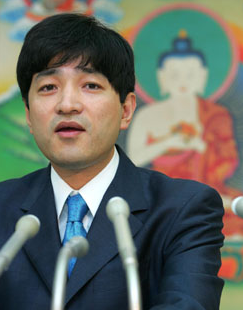 he stayed with his mother. Jōyū attended the private Waseda High School and then the prestigious Waseda University in Tokyo, where he graduated from its Faculty of Science and Technology. In 1987, he received a Masters degree from the Waseda University Graduate School of Science and Engineering. In April, 1987, he started working for the National Space Development Agency as a scientist.
Jōyū first joined the group Aum Shinsen no Kai (later Aum Shinrikyō) during the summer of 1986 at the age of twenty-three (Reader 2000). According to his autobiographical account (Jōyū 2012) he was attracted to the group because of his interest in paranormal phenomena, supernatural powers, and yoga practice. He was an avid reader of magazines on “supernatural phenomena” that gained some popularity in Japan from the 1970s onwards, and he became interested in yoga and Zen Buddhism during high school.
According to his account, he read an article on Aum’s founder, Asahara Shōkō, in a magazine devoted to topics related to the “spiritual world” (seishin sekai). He decided to visit his training centre in Shibuya (Tokyo) and, subsequently, to start practicing yoga. Aum’s doctrine at the time focused on the acquisition of supernatural powers, such as the ability to levitate or acquire clairvoyance, through yoga and breath and mind concentration exercises.
Shortly after joining the group, he was encouraged to attend a seminar. At Aum training centres two types of seminars were offered, one focusing on the teaching of “liberation” (gedatsu) and the other on supernatural powers. Despite his interest in the latter, he decided, following other members’ recommendation, to join the seminar on “liberation”. A guest teacher from India attended the seminar and Jōyū was asked to act as an interpreter, because of his ability to speak English. This, he believes, meant that he received special treatment from Asahara from the very beginning (Jōyū 2012:35). Later, Jōyū started practicing yoga and attending intensive seminars and moved to Setagaya ward in Tokyo to be closer to the training centre.
In May, 1987, he decided to became a renunciant (shukkesha) and live a communal life with other Aum members and, as a result, he quit his job at the National Space Development Agency. In July, 1987, he engaged in very strict ascetic training practices for three months during which, according to his own account, he underwent several mystical experiences (Jōyū 2012:38-39). After the training, he received the sacred name of Maitreya and became one of Asahara’s most prominent disciples. Aum Shinrikyō was based in a rigid hierarchical structure, including ten ranks for shukkesha and, below them, ordinary lay members (Reader 2000:86). At the top of the hierarchy was Asahara himself who was referred to as the “ultimately liberated one” (saishū gedatsusha) (Reader 2000:10), as “ guru” and “honourable teacher” (sonshi). The second rank included only five members with the title of “sacred grand teacher: (seitaishi): Ishii Hisako, Tomoko (Asahara’s wife), Achari (Asahara’s third daughter), Murai Hideo and Jōyū.
In the fall of 1987 Jōyū was sent to the United States to open a new branch of Aum in New York, and then, i n the fall of 1993, Asahara sent Jōyū to Russia as Aum’s representative there. Jōyū did not return to Japan until after the sarin gas attack in March, 1995, when he became Aum’s spokesperson. In October, 1995, Jōyū was arrested on charge of perjury and forgery in relation to a controversial land deal in 1990 at Namino in the southern Japanese island of Kyushu. He was released from prison in December, 1999. On January 18, 2000, Jōyū Fumihiro and Muraoka Tatsuko announced that an organisation called “Aleph” would replace Aum and would be represented by Jōyū and Muraoka. They also announced changes in the doctrine and asserted that they were to retain practices of yoga and meditation but would discontinue teachings considered “dangerous” (Jōyū n.d.).
In 2004, a minority group led by Jōyū started developing inside Aleph. The group was called “daihyōha” (literally, group of the representative, daihyō , representative/delegate, the name used by members to refer to Jōyū). The other faction called itself “seitōha” (legitimate group, Jōyū 2012: 209). For a while the two factions shared the same facilities but organised different seminars and other activities. In March, 2007, Jōyū and around 200 members left Aleph and set up a new religious organisation called Hikari no Wa (literally, “Circle of Light,” officially “The Circle of Rainbow Light”).
The name Hikari no Wa was chosen, according to the group’s website, for a variety of reasons:

• In the group’s narratives, the decision to finally leave Aleph and to found a new group is linked to the interpretation of a series of “signs” (mostly connected to vision of rainbows) experienced by members in sacred and natural places around Japan. In particular, Jōyū is reported to have seen a circle of rainbow light around the sun (a sun halo) after having had a revelatory experience about the new group;
• The wheel symbolized the idea of equality between all beings (which is one of the main teachings of Hikari no Wa);
• ‘Wa’ also stands for “Japanese spirit,” expressing Hikari no Wa’s new interest in Japanese cultural and religious traditions;
• The wheel as sacred symbol is common to many religions around the world, indicating that Hikari no Wa sees itself as equal, rather than superior, to other traditions.
• The light doesn’t simply mean physical light, but also the light of wisdom, spiritual light (“Message” n.d.).
The symbol represents a rainbow around the sun, and the Dharma wheel symbolizes Buddha and his teachings. The background represents the blue sky with radiating light from the middle of the Dharma Wheel.
DOCTRINES/BELIEFS
Hikari no Wa’s website and printed material present the group not as a religion, but as “a place of learning for a new spiritual wisdom” (atarashii seishintekina chie no manabi no ba de aru), a “centre for learning religion,” and a “spirituality academy.” According to a textbook distributed to participants at Hikari no Wa’s summer seminar in August, 2010 (Hikari no Wa 2010), religion in the twentieth century has been characterized by several problems, including blind beliefs, fanaticism, and conflict with society and among religious groups. Hikari no Wa proposes a “reformation of religion for the 21st century” (21seki no tame no shūkyō no kakushin) that will be accomplished through a threefold path: rejection of blind beliefs (mōshin wo koeru) (Hikari no Wa 2010:37); overcoming of dualism and the struggle between good and evil (zenaku nigenron to tōsō wo koeru) (Hikari no Wa 2010:39); and, finally, the overcoming the barrier between the religious community and society (kyōdan to shakai no kabe wo koeru) (Hikari no Wa 2010:41; Baffelli 2012:37). More recently, the group has started presenting itself as a “religious philosophy” ( shūkyō tetsugaku , Hikari no Wa 2013). Hikari no Wa claims that their doctrine introduces a new idea of faith and god and that it is not necessary to believe in any particular faith or god in order to be saved.
Members, it is claimed, do not believe in a transcendental being or in an absolute leader. Instead, the focus is on cultivating the “sacred consciousness” (shinseina ishiki) in each individual and in particular the “love of a million people and things,” compassion and benevolence. God itself is seen as a symbol of the individual “sacred consciousness.” Special people, such as Buddha, Jesus and Mohammed, are external symbols of the deity. Symbols may differ, but the sacred consciousness is unique and remains constant . The idea of a “guru” or absolute leader, therefore, is rejected and peace and equality among religions is advocated. By cultivating the “sacred” in every individual the group stresses the idea that all beings are equal and that members are not considered spiritually superior to non-members (“Basic Principles” n.d.).
According to the 2010 textbook, the group will henceforth incorporate several “sacred symbols” and practices from different religious traditions. Although the new organisation will have, at least at the beginning, a stronger “Buddhist flavour,” it aims to include teaching and practices from other Japanese religious traditions, including Shintō. In particular, the group emphasises that their references to Buddhism will not be limited to the historical Buddha Shakyamuni, but will include more aspects related to the Japanese Buddhist tradition and its connection to Shinto and a vaguely defined “natural religion.” During the last seven years, Hikari no Wa’s teachings have progressively changed towards including more elements from Japanese Buddhism (in particular references to Shōtoku Taishi, the sixth/seventh century semi-legendary regent who is portrayed as having played a major role in promoting Buddhism in Japan) and reducing references to Tibetan Buddhism. Ichnographically, the images of Buddhas and Bodhisattvas (mainly relating to the esoteric tradition) have been gradually replaced with images of natural landscapes and Japanese sacred sites (both Buddhist temples and Shinto shrines). At the same time, Hikari no Wa has rejected some of the central tenets of Aum’s doctrines and practices, such as extreme asceticism, the idea that one can acquire supernatural powers through yoga practice, beliefs in the end of the world and prophecies, and beliefs that were influential in Aum’s use of violence.(On Aum Shinriky ō’s teachings and doctrinal justifications of violence see Reader 2000 and Reader 2013).
RITUALS/PRACTICES
Hikari no Wa has also been introducing new practices in an attempt to distance itself from Aum Shinrikyō, while retaining aspects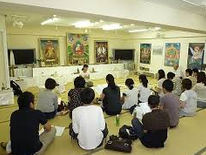 of Aum’s teaching and practices that still appeal to members. Hikari no Wa’s activities and practices can be divided into three groups. First of all, there are training activities performed at the dōjō. Different training methods are used, such as yoga, qigong, healing techniques, Buddhist meditation, and Esoteric Buddhism practices. A variety of objects and techniques are used during meditation (such as music and sounds, incense, Buddhist images, Buddhist statues, ritual paraphernalia, “holy” water from sacred places (gojinzui, seizui), astrology). Members are free to choose any of these practices, but they are discouraged from engaging in extreme asceticism. Counseling sections with Jōyū and other representatives are also offered at the centres.
Furthermore, Jōyū’s preaching lectures (seppōkai) are held approximately every month, and intensive seminars are held three times a year (in May, August and at the end of the year). In 2012, a well-known Japanese therapeutic practice of self-reflection called introspection (naikan) has been introduced. Some members took part in the rigorous version of naikan which is practised over a week. However, in Hikari no Wa it is usually performed as a one-day practice during which members are isolated in a small room that is divided into enclosed sections, and they are guided (by a non-member expert) through different stages of their life. Members are invited to reflect on what they have received from others, what they have given, and what troubles they have caused to their family and others. The aim is to learn how to deal with the painful past and reinterpret it as a learning process through which negative experiences can be turned into positive ones for the future.
Initially the chanting of sutras during rituals and ceremonies was based on the same Sanskrit sutras used by Aum. They have gradually been replaced by a new original sutra in Japanese, the sanbutsu shingyō , written by Jōyū, who use d the popular Heart Sutra as a model. The sutra is now considered the main text for Hikari no Wa’s practices and it reads as follows:
Banbutsu onkei, banbutsu kansha 万物恩恵、万物感謝
Banbutsu hotoke, banbutsu sonchō 万物仏、万物尊重
Banbutsu ittai, Banbutsu aisu 万物一体、万物愛す
That, following the explanation given in Hikari no Wa’s text and website, could be translated as:
See all things as blessed, be thankful to all things.
See all things as Buddha, be thankful to all things.
See all things as one, love all things (“Texts and Lectures” n.d.).
CDs, DVDs, self-published texts, Buddhist ritual paraphernalia and healings goods are also available for sale at the centres and online.
Other activities are organized outside the group facilities and include Jōyū’s talk shows and meeting at public centres (some of those meetings are organized via Internet and called off kai, offline meetings). The group also organizes regular pilgrimages to sacred places around Japan.
Generally, the image the group is trying to construct is centred on its desire to separate itself from Aum. Hikari no Wa promotes itself as being very open, it does not require formal membership, and all activities and ceremonies are explained in detail on the website and on social networking services. Furthermore a counselling service has been set up to actively encourage Aleph’s members to leave that group (and potentially, but not necessarily, join Hikari no Wa).
New practices are introduced regularly, while previous practices are discontinued or modified. In the process of distancing itself from Aum, several practices needed to be reconsidered or abandoned, but, at the same time, Hikari no Wa is attempting to find a new and original identity.
ORGANIZATION/LEADERSHIP
In 2012, Hikari no Wa declared that the group had twenty seven “staff” members permanently living in the group’s facilities (Jōyū
 2012:250). The number has now decreased. As of January, 2014, the group is claiming that only eight people are in charge of the centres, and so Hikari no Wa only has about ten full time staff. The use of the word renunciant (shukke) to indicate members living communal lives (and which was previously also used by Aum) has been discontinued in favour of the more neutral term full-time staff (senjū sutaffu). The group has also established a public relations department (jōhōbu) that deals with issues related to requests from media, relationships with local communities and contacts with scholars. Finally, full-time staff are also in charge of the consultation service aimed at persuading Aleph’s members to leave the group.
The estimated number of members too has been decreased from 180 (Jōyū 2012:250) to 150 members (“For Beginners” n.d.). There is a formal membership system, but most of activities and meetings are open to non-members. Usually a significant number of those participating in pilgrimages and other activities (especially Jōyū’s talks at the centres) are non-members. Participants to off-kai, that is offline meetings organized at public halls in order to allow people interested in Jōyū who contacted him via the Internet to meet him and ask him and other Hikari no Wa’s members questions, are predominantly non-members.
Hikari no Wa’s headquarters is located in Tokyo and currently seven centres called classrooms (kyōshitsu) have been established around the country (Nagoya, Osaka, Fukuoka, Nagano, Chiba, Yokohama and Sendai). In addition, study sessions are regularly held in Sapporo and Okayama. Most of the centres are very small, just consisting of a few rooms in rented apartments. Usually one or two full-staff members are in charge of the centres and their activities. In each dōjō, preaching meetings (seppōkai) are held regularly (more or less monthly) by Jōyū, in addition to study sessions about Mahayana Buddhism, yoga, qigong practices, and counselling services. Each branch offers a “free trial” to visitors. One can meet local representatives (members in charge of the branches) and try out various Hikari no Wa practices, including yoga and qigong . There is also an online classroom, called Net Dojō (Netto Dōjō) to allow online learning and it includes videos of lectures and other learning material (“Net-Dojo” n.d.). A Net shop has been opened that sells CDs and DVDs produced by the group and items for Buddhist rituals (“Hikari no Wa Net Shop” n.d.).
Jōyū Fumihiro is indicated as the representative (daihyō) of the group, and the website clearly states that although he is a guide and a teacher for the members, he is not considered an absolute leader and that he is seen as an imperfect human being (Overview n.d.). This idea of a leadership as based on experience and guidance and not necessarily on charisma has been stressed by Jōyū from the very beginning of the new group. The main aim is to assert that the new leader should not be seen as the new Asahara and that the leader-members relationship that was highly problematic in Aum is not going to be replicated in Hikari no Wa. Despite this intent, however, Jōyū’s leadership had to be legitimized by his previous role in Aum. It was his high status of seitaishi achieved in Aum that allowed him to become the guide for the new group. Furthermore, Jōyū acquired a form of celebrity status after the sarin gas attack in Tokyo, when he became Aum’s spokesperson and the Japanese mass media started reporting about his ability to reply sharply and promptly when questioned about Aum’s crimes. This raised his public profile, and his status has been recently replicated online, where his accounts on social networking sites (especially Mixi and Twitter) received the attention of several users who were intrigued by his personality. The found a way where they could approach him (anonymously) via the Internet and ask him disparate questions about his personal life and Aum’s activities (on Hikari no Wa’s use of Internet and social networking see Baffelli 2010, 2012). As a consequence, although Jōyū may not be seen anymore as an absolute leader by Hikari no Wa’s members and sympathizers, it is thanks to his previous status that Hikari no Wa is receiving some attention from the public and the media. At the moment, it would be difficult for the group to survive without his leadership.
ISSUES/CHALLENGES
Despite Hikari no Wa’s efforts to detach itself from Asahara and Aum, the Public Security Intelligence Agency (Kōan Chōsachō, thereafter PSIA) decided that group will remain under strict surveillance and that the new laws introduced in 1999 to control Aleph, namely the Victims Compensation Law (Higaisha kyūsaihō) and the Organizational Control Law (dantai kiseihō), will be apply to Hikari no Wa as well. The surveillance was extended for another three years in 2012, and the last report of the PSIA (2014) still shows a mistrust of Hikari no Wa, claiming that the members are still devoted to Asahara. In response to the suspicions expressed by the PSIA and the Anti-Aum movements and victims’ organizations, Hikari no Wa has created a section on its website stating its differences with Aleph and outlining the problems related to Aleph’s leadership and teachings(“Aleph” n.d.). Furthermore, in late 2011 Hikari no Wa established a committee of “external observers” (gaibu kansa iinkai) that includes, among others, one individual who has previously been involved in anti-Aum movements and victims’ organizations. The aim of the committee is to observe and report on Hikari no Wa’s activities in a neutral and objective way (PSIA reports are considered by Hikari no Wa biased and false).
Recently the group has been attracting some media attention and interviews with Jōyū have been published in various magazines, allowing the group to achieve some more visibility in the printed media. However, Hikari no Wa and its leader are still regarded suspiciously by the PSIA and the society at large, and their biggest challenge still remains that of persuading the public that they are no longer dangerous and that they have cut their ties with Aum’s violent past.
REFERENCES
“Aleph.” n.d. Accessed from http://alephmondaitaisaku.blog.fc2.com/ on 7 March 2014.
Baffelli, Erica. 2012. “Hikari no Wa: A New Religion Recovering from Disaster.” Japanese Journal of Religious Studies 39:29–49.
Baffelli, Erica. 2010. “Charismatic Blogger? Authority and New Religions on the Web 2.0.” Pp. 118-35 in Japanese Religions on the Internet: Innovation, Representation, and Authority, edited by Erica Baffelli, Ian Reader and Birgit Staemmler. New York: Routledge.
Baffelli, Erica and Ian Reader. 2012. “Impact and Ramifications: The Aftermath of the Aum Affair in the Japanese Religious Context.” Japanese Journal of Religious Studies 39:1–28.
Baffelli, Erica and Birgit Staemmler. 2011. “Aum Shinrikyō, Aleph, Hikari no Wa.” Pp. 276-93 in Establishing the Revolutionary: An Introduction to New Religious in Japan, edited by Ulrich Dehn and Birgit Staemmler. Münster-Hamburg-Berlin-Wien-London-Zürich: LIT.
“Basic principles.” n.d. Accessed from http://www.joyus.jp/hikarinowa/overview/05/0006.html on 7 March 2014.
“Hikari no Wa Net Shop.” n.d. Accessed from http://hikarinowa.shop-pro.jp/ on 7 March 2014.
Jōyū, Fumihiro . n .d. “Hikari no wa” no kihontekina seikaku. Accessed from
http:// ww.joyus.jp/hikarinowa/overview/05/0006.html on 15 November 2012.
Jōyū, Fumihiro. 2012. Aum jiken 17nenme no kokuhaku. Tokyo: Fusosha.
Jōyū Fumihiro. n.d. “Outlook on the Aum-related Incidents.” Published on the English version of Aleph’s public relations’ website. Accessed from http://english.aleph.to/pr/01.html on 7 March 2014.
Jōyū, Fumihiro, and Ōta Toshihiro. 2012. “Aum Shinrikyō o chōkoku: sono miryoku to kansei o megutte.” At purasu 13:4-34.
Maekawa, Michiko. 2001. “When Prophecy Fails: The Response of Aum Members to the Crisis.” Pp. 179-210 in Religion and Social Crisis in Japan: Understanding Japanese Society through the Aum Affair, edited by Robert J. Kisala and Mark R. Mullins. New York: Palgrave.
“Message.” n.d. Accessed from http://www.joyu.jp/message/ on 7 March 2014.
Munakata Makiko, 2010. Nijūsai kara nijūnenkan: “Aum no seishun” to iu makyō wo koete. Tokyo: Sangokan.
“Net-Dojo.” n.d. Accessed from http://net-dojo.hikarinowa.net/home.html on 7 March 2014.
“For Beginners.” n.d. Accessed from http://www.joyu.jp/hikarinowa/overview/00_1/0030.html on 7 March 2014.
“Overview.” n.d. Accessed from http://www.joyu.jp/hikarinowa/overview/ on 7 March 2014.
Public Security Intelligence Agency. 2014. Annual Report 2013. Accessed from http://www.moj.go.jp/content/000117998.pdf on 2 October 2013.
Public Security Intelligence Agency. 2012. Annual Report 2011. Accessed from http://www.moj.go.jp/content/000096470.pdf on 8 October 2013.
Public Security Intelligence Agency. 2011. Annual Report 2010 . Accessed from http://www.moj.go.jp/content/000072886.pdf on 15 November 2012.
Reader, Ian. 2013. “ Aum Shinrikyō. Accessed from http://www.has.vcu.edu/wrs/profiles/AumShinrikyo.htm on 10 March 2014.
Reader, Ian. 2000. Religious Violence in Contemporary Japan: The Case of Aum Shinrikyō . Richmond and Honolulu: Curzon Press and University of Hawai‘i Press.
“Texts and Lectures.” n.d. Accessed from http://www.joyu.jp/lecturetext/012010/0041_1.html on 7 March 2014.
ADDITIONAL RESOURCES: Hikari no Wa texts
(Booklets produced by the group and distributed during intensive seminars in December/January, May, August or during pilgrimages):
2008, Bukkyō kōgi , satori no d ōtei.
2009a Gendaijin no tameno ichigen no hōsoku. (End of the Year Seminar).
2009b Naikan, yuishiki, engi no essensu. (Golden Week Seminar).
2009c Daijōbukkyō, rokubutsu no oshie. (February Pilgrimage Seminar).
2010a Chūdo no oshie , hikutsu to ikari no ch ōestsu , Nijūisseki no atarashii shinkō no arikata. (End of the Year Seminar).
2010b Sanbutsu no ichigenhōsoku, bodaishin to rokuharamitsu: Nijūisseki no shūkyō no kakushin . (Summer Seminar).
2010c Ichigen no hōsoku to sono satori no d ōtei , kong ō bōsatsu no naisei sh ugyō.
2011a Sanbutsushingyō no oshie, kansha to sonchō to ai no jiseen. (End of the Year Seminar).
2011b Wa no shisō to tadashii shūkyō no shinkō no arikata . (Summer Seminar).
2011c Hikari no Wa to Nihon to “wa no shisō (Golden Week Seminar).
2012a Hōsoku no taitoku, shisaku no sh ugyō. Sanbutsu no hōsoku no shisaku to meisō. (End of the Year Seminar)
2012b Sanbutsu shingyō no oshie to gendai no shomondai . (Summer Seminar).
2012c Sanbutsu shingyō no shūchū no sh ugyō. Dokyō meisō no shōsetsu (Golden Week Seminar)
2013a Wa no hō to mezame no oshie. Butsumo no meisō, nikyoku no chōwa. (End of the Year Seminar).
2013b Gendai wo ikiru chie, wa no shisō to saishinkagaku. (Summer Seminar).
2013c Gense kōfuku to satori no hō. Satori no shūchū sh ugyō. (Golden Week Seminar).

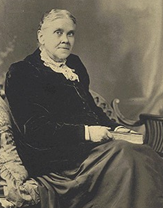 scrap of paper “containing an account of a man in England who was preaching that the Earth would be consumed in about thirty years” (White 1915:21). She would later recount that she was so “seized with terror” after reading the paper that she “could scarcely sleep for several nights, and prayed continually to be ready when Jesus came” (White 1915:22). In December of the same year, she was hit in the face by a stone thrown by a schoolmate “angry at some trifle” and was so badly injured that she “lay in a stupor for three weeks” (White 1915:17, 18). She was a shy, intense, and spiritual child, and these two events focused her attention on the destiny of her soul, especially as her injuries forced the formerly strong student to withdraw from school and spend her days in bed shaping crowns for her father’s hat-making business.
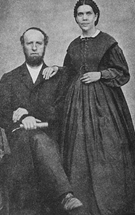 would prove most instrumental in forming Seventh-day Adventism. After marrying, Ellen and James had four sons, who they often left in others’ care for weeks at a time as they traveled around the Northeast during the 1850s to provide leadership and guidance to dispersed bands of adventists. In the late 1840s, Ellen and James became acquainted with Joseph Bates (1792-1872), a former British navy captain, revivalist minister, abolitionist, and advocate of temperance and health reform. Each of the three contributed to the beliefs that would define Seventh-day Adventism, especially belief in the sanctuary doctrine, the Great Controversy between Christ and Satan, the impending advent, vegetarianism, and the seventh-day Sabbath. Before formal organization, Ellen’s visions settled debates among male adventist leaders regarding theology, belief, and practice, so that by 1863, when Seventh-day Adventism was officially organized, Ellen’s visions had confirmed core Adventist beliefs and practices.
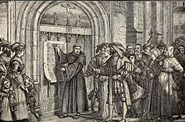 Adventist theology. Her articulation of the Great Controversy posits a battle between good and evil that began in heaven, and frames all of life on Earth. The controversy began when Satan, a created being, used his freedom to rebel against God, and some angels followed him. After God created the Earth in six days, Satan introduced sin to Earth, leading Adam and Eve astray. God’s perfection in humans and creation was damaged, culminating eventually in the destruction of creation in a universal flood. Christ was God incarnate, and God provides angels, the Holy Spirit, prophets, the Bible, and the Spirit of Prophecy to guide people toward salvation, and the ultimate victory of good.
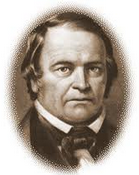 diligent study he had been unable to unravel the mysteries of the biblical book of Revelation and, hence, of the time of the end of the world and the second coming of Jesus. From 1831 to 1843 he estimated that he had brought his message to a half million persons. By Miller’s calculation, the return of Jesus would happen between March 21, 1843 and March 21, 1844. When latter date passed without anything significant happening, Miller, like many others who have prophesied the end, did not lose faith in his prediction. Instead, he adjusted his calculations and reset the date for October 22, 1844. Expectations heightened as summer turned into fall, but the date again came and went without incident. Those who had believed Miller’s prophecy experienced what came to be called the “Great Disappointment , ” and his prophetic career came to an end. But even that second experience of disconfirmation was not sufficient to quell completely an interest in the imminent dawn of the millennium (Rowe 2008: 192-225).
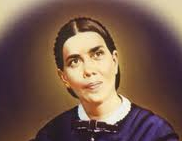 guided by revelation from God in their own time. Ellen G. White, who became the group’s prophet, came to call that contemporary revelation “present truth” or “new light.” The twin foci of observing the Lord’s Day on Saturday and maintaining the expectation of Jesus’ imminent return to initiate the final judgment would remain central characteristics of Seventh-day Adventism from the time of its origins in the small band of New Hampshire Millerites through its entire history. The openness to receiving prophetic “present truth” introduced a principle of dynamism into the broad Adventist tradition that played an especially important role in the origins of both the Davidians and the Branch Davidians (see Gallagher 2013) .
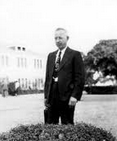 immigrant to the United States who joined the Seventh-day Adventist (SDA) Church in 1919 in Illinois . As Houteff studied the Bible, he developed two distinctive ideas that were out of conformity with established SDA doctrine. First, expressing a vivid sectarian indictment of the SDA Church, he disagreed with Ellen G. White that the 144,000 mentioned in Revelation 7 as being worthy of entering the new Jerusalem referred to the Adventists themselves. Instead, he argued that the Church had become complacent and pervaded by “worldly” influences. He saw his own mission as purifying the church from within and gathering a truly faithful 144,000 in anticipation of the Lord’s return. Second, he argued that it was his task to lead the purified 144,000 to the ancient land of Israel , where they would meet Christ at his return. Both the Davidian and Branch Davidian traditions developed an elitist self-conception according to which they would be the first to be redeemed upon the return of Jesus. Borrowing a concept from the agricultural festivals of the ancient Israelites, Ben Roden , one of the leaders who followed Houteff, described the Branch Davidians as “the first of the first fruits – wave-sheaf, vanguard NOT wave-loaves – 144,000, army” of the final harvest of salvation (Ben Roden 1959: 4).
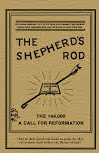 known by that name ( Victor Houteff 1930) . The first volume was quickly followed by a second and throughout the 1930s, 1940s and early 1950s Houteff produced multiple religious tracts and collections of his sermons that were distributed by the Davidian publishing operation to a growing list of SDA Church members. In February, 1943 he published The Leviticus of the Davidian Seventh-day Adventists , which details the constitution, by-laws, system of government, and form of education for the Davidian community (Victor Houteff 1943) . Much of the one hundred page document is devoted to citing the authorizing precedents from both the Bible and the writings of Ellen G. White.
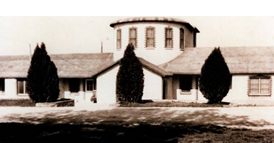 generation religious group. Kenneth Newport suggests that at least some of the 100 or so members of the Mount Carmel community probably left after Houteff’s death, but those who remained faced the task of developing new leadership (Newport 2006: 66). Into that breach entered Houteff’s wife, Florence, along with several other contenders. Soon after Victor’s death, Florence began to make predictions about the future of the community, apparently including the idea that Victor himself would be resurrected. Claiming that on his deathbed Victor had urged her to take over his position, Florence quickly and persistently made her case to the Executive Council of the Davidian Association and eventually garnered their recognition.
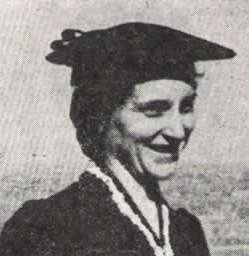 Code, of which nine volumes had been published during her husband’s life (Florence Houteff 1955-1958). To this day there remains controversy about whether Florence ‘s “new Codes” contain the genuine teaching of her husband. But by far the most dramatic and controversial move that Florence made was to set the date of the beginning of the end times. Echoing William Miller’s decision that produced the Great Disappointment, Florence proclaimed that at the end of the Passover season, on April 22, 1959, the events of the end would begin to take place (Newport 2006:101). She urged the Davidians to assemble at the Mount Carmel Center, and some 1,000 did.
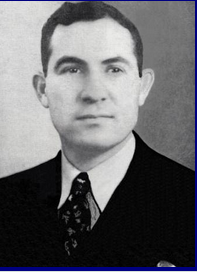 person of Benjamin Roden (1902-1978). After joining the SDA church in 1940 Roden and his wife Lois (1905-1986) had first encountered Victor Houteff’s Shepherd’s Rod message sometime in the mid-1940s. It appears that the Rodens had first visited Mount Carmel no later than 1945. They returned several times over the next decade, and when Victor Houteff died in 1955, Ben Roden was confident enough of himself that he made an unsuccessful bid for the leadership of the community.
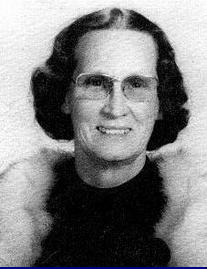 Last Judgment was again delayed. But Roden’s death did not threaten the community with disintegration because his wife Lois was already poised to assume the responsibility of leadership, although the Roden’s son George did dispute her right of succession and would remain a serious irritant to the Mount Carmel community for some time. Like her husband, Lois based her claims on charismatic grounds. She had begun to receive revelations in 1977, and they were the driving force for her innovative theological program, particularly the idea that the Holy Spirit was feminine (Lois Roden 1980). George resorted to more traditional grounds for his claims, asserting that his father had appointed him to a central role in the movement, since Ben Roden believed that his sons would live to see the rebuilding of the temple in Jerusalem .
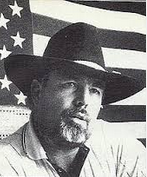 behalf, directing his vitriol first against his mother and then against her and David Koresh, who, as Vernon Howell, joined the Mount Carmel community in 1981. George eventually succeeded in winning a leadership election in 1984, after which he assertively changed the name of Mount Carmel to “Rodenville” and vigorously argued for his primacy. It took a complex series of events, including multiple hearings in court, George’s conviction on contempt of court charges, and his 1989 arrest for murder and eventual confinement in a mental institution, before Koresh could enjoy uncontested leadership of the Branch Davidians.
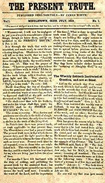 offshoots from that tradition. In the early days of the SDA Church, James White, a founder of the SDAs along with his wife Ellen, published a periodical entitled The Present Truth. On the first page of its first issue in 1849, he cited the promise of the author of II Peter 1:12 to the early Christian church, “I will not be negligent to put you always in remembrance of these things, though ye know them, and be established in the present truth.” White argued that such present truth could not be limited to the apostolic age but must at least potentially be continually available. He wrote that “Present truth must be oft repeated, even to those who are established in it. This was needful in the apostles (sic) day, and it certainly is no less important for us, who are living just before the close of time.” (James White 1849:1). Similarly, with regard to the observance of the Sabbath on Saturday, Ellen G. White wrote in her second volume of Testimonies for the Church (1885) that “The present truth, which is a test to the people of this generation, was not a test to the people of generations far back. If the light which now shines upon us in regard to the Sabbath of the fourth commandment had been given to the generations in the past, God would have held them accountable for that light.” (Ellen White 1885: 693).
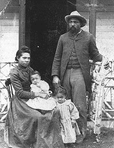 Alberta Province from the U.S in 1882, and American open-range cattle ranching soon was a favored style in the industry (Breen 1901-1910). Calgary became the hub of the Canadian cattle industry. However, just as in the U.S., it was not long before fenced ranches replaced open range and the role of the cowboy diminished. As in the U.S. cowboy culture continued through rodeo culture. By the middle of the nineteenth century rodeos became popular as cowboys roped cows and broke in wild horses in order to win cash prizes, engage in sport, and provide entertainment for growing rodeo audiences (Fleck 2003). In 1886, the forerunner of The Calgary Exhibition and Stampede, The Calgary and District Agricultural Society, took place. The first Calgary Exhibition and Stampede was held in 1923. The term “rodeo” only gradually came into use, and it was only in the 1940s that events were referred to as rodeos by participants. The Canadian Cowboys’ Association was created in 1963. It covered three provinces at that time: Alberta, Manitoba and Saskatchewan; Ontario was included in 2005 ( Leduc Black Gold Pro Rodeo & Exhibition 2014) .
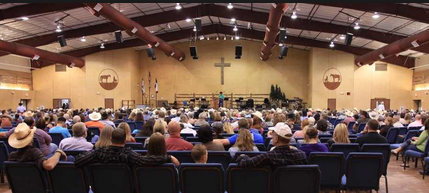 and Australia. The cowboy church movement is non-denominational, though many churches are affiliated with particular traditional denominations. There are over 800 cowboy churches in the U.S. Cowboy Church of Ellis County in Waxahachie, Texas, which was established in 2005, is reputed to be the world’s largest cowboy church. Its membership has grown to nearly 2,000, with over 1,700 in regular attendance. There is a Monday evening service to accommodate those who attend rodeos and competitions on weekends (Bromley and Phillips 2013).
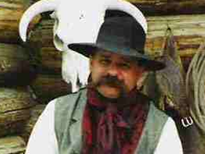 Clearwater Cowboy Church in Caroline. Probably the best known Canadian cowboy church in Canada is the Cowboy Trail Church in Cochrane, which was founded by Bryn Thiessen in 2005. Thiessen and his four sisters were brought up in a Mennonite family in Gamble Flats. He and his wife have three children and own the 2,500 Helmer Creek Ranch near Sundre where he raises horses and cattle and she raises Border Collies (Toneguzzi 2014). Thiessen is also a noted cowboy poet.
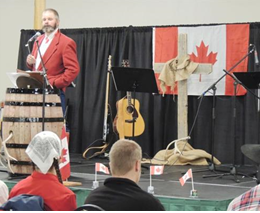 want to know a wishy-washy gospel. They want the truth, worded in a way they can understand it. My job is to put the Gospel in a palatable form” (Stephen 2007 ). For that reason Thiessen tries to keep his preaching simple. As he states it, “Mine’s non-negotiable,” he said. “Tell the truth and serve good coffee. Offer opportunities for fellowship. It’s simple, there’s no need to water down the gospel” (Junkin 2011).
 at the Cochrane Ranche House, a onetime cattle ranch turned convention center. The overall congregation numbers around 300, with about 100 on average attending the weekly services. In addition to its regular services, the church also performs marriages, baptisms and funerals, all in with a western flavor. The church is supported through donations by the congregation. However, the church does not pass a collection plate. Rather, those attending services are invited to drop donations in two cowboy boots that are placed at the church door.
 some way, they are sometimes criticized for their western orientation. The critique is that the style of the church becomes more important than the substance of the doctrine (wayoflife.org 2012). This appears to be less an issue in Canada than it is in the U.S. The more significant challenge to cowboy churches, like Cowboy way, is maintaining the kind of commitment from second generation members that energizes the founding generation. If commitment erodes or novelty wears off, cowboy churches may lose the luster they currently enjoy.
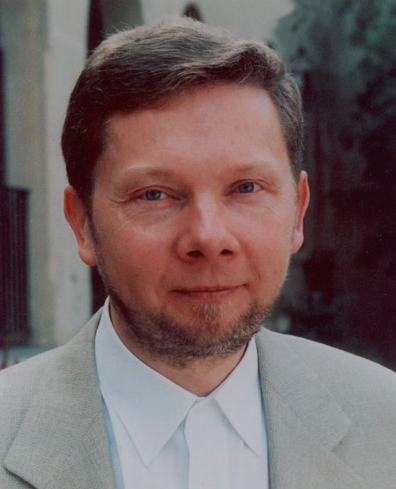 refused to attend school, his mother sent him to live with his father in Spain. Tolle did not attend school between the ages of thirteen and twenty-two as his father allowed him to study philosophy, language and literature on his own (Walker 2008). He subsequently did complete a degree in history and languages at the University of London and then enrolled in a doctoral program at Cambridge University.
 attended one of his retreats. Eng has stated that prior to meeting Tolle she was married and a practicing Christian, but was unhappy with both her marriage and her religion. She ultimately left both and began a spiritual search. It was after attending one of Tolle’s retreats that she had was she describes as a transformational spiritual experience. Eng then began seven years of spiritual training with Tolle, ultimately becoming his partner and associate in disseminating his teachings. She also has developed her own career as a counselor and public speaker, and is particularly noted for her “Presence through Movement” workshops.
 operation of the mind. Individuals come to equate themselves with their thoughts, which are the product of their minds, and therefore live in separation from Being. As he has put it, “our true selves are the formless Consciousness, which is Being, which is God. We are all One, and thus we are all God” (Walker 2008). For Tolle, therefore, the concept of a transcendent God that created the universe is not helpful. Rather, Tolle understands there to be an intelligence that is present in every life form and form of life and that constantly creates and recreates the universe. It is the being that knows and experiences life directly; the mind, by contrast operates on the basis of facts, judgments, images, labels rather than direct experience. Operating on this basis the mind lives in a combination of past (memories) and future (projections) rather than in the moment, which Tolle refers to as the Now. Since the mind operates on the basis of constructs rather than realities directly, the mind blocks connectedness with other people and with Being. The mind also finds itself in direct conflict with reality since everyday reality does not coincide with the images and judgments about the way things ought to be based on memories of past and aspirations for the future. It is this resistance to what is and the loss of connection to Being that leads to individual pain and suffering. The greater the individuals’ identification with their minds, the greater the resistance to what is; and the greater the resistance to what is the greater the level of pain and suffering. A “pain-body,” the accumulated pain from past hurtful experiences is the product of this resistance (McKinley 2008).
 selected A New Earth for her book club; she and Tolle then collaborated on a ten-week series of web seminars to discuss chapters of the book and lead meditations. These “webinars” attracted millions of viewers. Tolle’s books have now been translated into thirty-three languages, and many millions have been sold around the globe (MacQueen 2009).
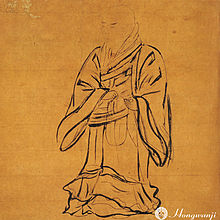 became so displeased with his son for claiming knowledge of secret teachings, that in a letter believed to have been written in 1256, he disowned him saying, “I no longer consider you my son.” Shinran, to assure his disciples in a distant province that he had not given his son a secret teaching, wrote the following in a letter:
 the most prominent figure in Shin history after Shinran, repeatedly criticized those who claimed knowledge of secret teachings. In one of his pastoral letters in 1474 he wrote “The secret teachings (hiji bōmon) that are widespread in Echizen province are certainly not the Buddha-dharma; they are deplorable, outer (non-Buddhist) teachings. Relying on them is futile; it creates karma through which one sinks for a long time into the hell of incessant pain” (Ofumi 2.14; translated in Rogers and Rogers 1991).
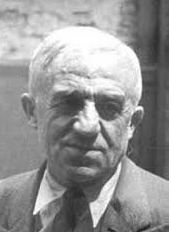 the elder. He was born with the name Aristide Pierre Maurin in Oultet, France in 1877, the son of French peasant farmers and one of 24 children. Born into a Catholic family, as a young man he considered religious life, joining the Christian Brothers. A creative yet quiet person inspired by French personalist philosophy, especially the work of Emmanuel Mounier, Maurin sought to live a simple and dignified life of manual labor. In 1909, he migrated to Canada and later to the U.S., working in a variety of jobs as a manual laborer, which eventually brought him to New York City.
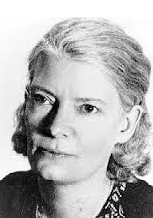 in Staten Island, New York. When she voiced her desire to convert to Catholicism and to have their baby baptized, Forster, an atheist who wanted little to do with religion, urged her not to go through with it. The two ended up separating, an experience that Day later described as one of the most painful decisions of her life: choosing the Church over her love for Forster.
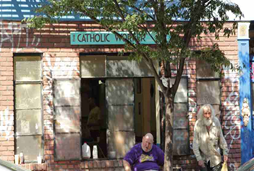 personal sacrifice. Over time, their efforts grew into a group of volunteers who lived in a Lower East Side building (eventually called “St. Joseph House”) with people seeking shelter from the streets, running a daily soup line that often stretched down the block and publishing pieces in The Catholic Worker newspaper critiquing the social, spiritual, and personal crises underlying problems, such as poverty and racism. Over time, the newspaper (and the Catholic Worker community) became focused on issues of violence and militarism as well, with the group’s pacifist stance and nonviolent civil disobedience becoming more central to its existence during the Spanish Civil War, World War II, the Vietnam War, and into present time.
 newspapers describing their work, began to spring up around the United States. By 1940, over thirty Catholic Worker communities were formed by local groups around the country interested in the kind of work that Day and Maurin described in their newspaper. The movement’s growth was, and has continued to be, decentralized and unorganized. No one’s permission is needed to start a Catholic Worker community, nor do incarnations of Catholic Worker vision and practice need to follow a particular set of rules or models. Indeed, Day’s anarchist past nurtured her commitment to a movement that was informed by those directly involved, which left room for spontaneity and creativity rather than authority and leadership dictating the boundaries for communities. While the de facto leaders of different communities were sometimes familiar with each other, connections between different Catholic Worker communities rarely extended beyond informal friendships.
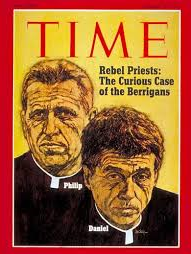 and behavior in the gospels as being nonviolent (e.g., turn the other cheek) while also disrupting the status quo (e.g., when Jesus overturned the tables of the temple money lenders). During the Vietnam War, Catholic priests Philip and Daniel Berrigan (friends of the Catholic Worker) staged draft card burnings inspired by their Catholic faith. The Worker’s support of the Berrigans and similar anti-war activists solidified its reputation as a major force of nonviolent activism, opposition to war, and Catholic peace activism during a period when many young people had become disillusioned by war and violence. Increasingly, Catholic Worker communities around the country began to attract war resisters looking for communities where their views would be supported, especially if they were Catholics, since the Catholic Church’s official teachings were much more open to war and violence in certain circumstances.
 appointments, while someone else makes dinner for the community, which always begins at 5 PM. Someone from Maryhouse, the other New York City house of hospitality located two blocks away, comes with a grocery cart to pick up their portion of the dinner. After everyone is finished eating, the dishes must be done, tables cleaned, and floors mopped. On Tuesday nights, these rituals are followed by a Catholic mass: a priest comes to the house each week just for the occasion. On Friday nights, they are followed by open-to-the-public “Friday night meetings” on topics varying from the spirituality of St. Teresa of Avila to the prison at Guantanamo Bay.
 each community’s rituals differ as well. Some do not hold regular masses at their houses of hospitality. Some are not regularly involved in civil disobedience. However, most have some form of a meal shared with the homeless and other impoverished populations: if there is any ritual common to most communities, it would be this type of activity. The rituals of shared meals, shared time in jail, shared celebration of mass, and others not only enable Catholic Workers to live out their beliefs but also serve to bind them together, creating close-knit communities.
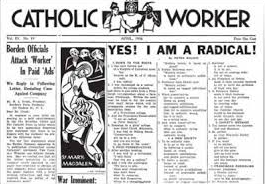 people at any one time) includes regular volunteers as well as people who attend Friday Night Meetings, house masses, or other community activities. In terms of wider interest and support, the community’s newspaper, The Catholic Worker, has over 20,000 subscribers around the country. The community is financed entirely through private donations from individual supporters, who might loosely be considered part of the movement due to their support of its ongoing work.
 donors happy. There is a history of this refusal to compromise within the movement. As mentioned earlier, during World War II, Dorothy Day wrote in The Catholic Worker newspaper about her unwillingness to compromise her pacifist stance on the war. Her views were very unpopular, and the paper lost thousands of subscribers (and donors) as a result. Still, Day was convinced that she was right and that God would provide for the community in other ways, and the community survived that period and other rough periods in its history.
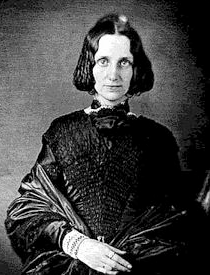 Congregational Church her family was attending when she came of age, but only after informing the pastor that she did not subscribe to the doctrines of either the fall or predestination (Eddy 1892).
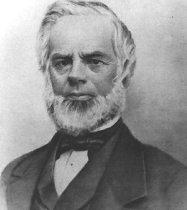 the alternative medicine treatments popular at the time, including hydropathy (water cure) and Sylvester Graham’s nutritional system. In 1862, she heard of healer Phineas Parkhurst Quimby and traveled to his practice in Maine. Quimby had studied mesmerism and developed his own system for healing, sometimes called, Mind Cure. The cure rested on the idea that since illness arose in the mind, freeing the mind of diseased thought would lead to healing.
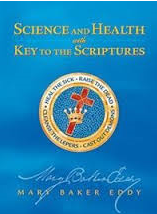 Version of the Bible , constitutes the core of Christian Science theology and practice. Over the years, Eddy produced over four hundred editions of what she called the Christian Science textbook.
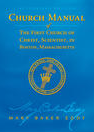 women pastors of the branch churches with this text and the Bible. She continued developing the church organization and produced the first edition of the Manual of the Mother Church in 1895. A comprehensive text, it contains rules determining all functions of the organization from the order of worship in services to the election of the Board of Directors. The material in the 1908 Manual (the last version) cannot be changed without the permission of Mary Baker Eddy.
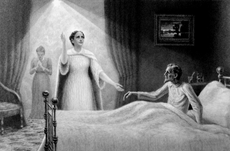 not subject to sickness, sin, or death since these are not part of God’s creation and hence are not real. To realize that the creation is spiritual, not material, is to exist in the reflection of God and to be well. To be sure, people can feel ill, but this is an error of the material sense.
 trained through a twelve session course, The Primary Class, that was designed by Mary Baker Eddy and is offered by church approved teachers. According to one of the church’s websites, Healing Unlimited, authorized practitioners are considered professionals by the church and charge for their services, which focus on the prayerful resolution of problems that include “the whole spectrum of human fears, griefs, wants, sins, and ills. Practitioners are called upon to give Christian Science treatment not only in cases of physical disease and emotional disturbance, but in family and financial difficulties, business problems, questions of employment, schooling, professional advancement, theological confusion, and so forth” (Healing Unlimited 2012). Practitioners work with individuals seeking Christian Science healing by praying with and for them and guiding them to appropriate passages in Science and Health and the Bible.
 music; other music includes a performance by a paid soloist and hymns from the Christian Science Hymnal. There are no clergy in Christian Science; instead the service is led by a First and Second Reader who are elected for a three year term. The First Reader, always a female, opens the service with a brief statement and reads from Science and Health. The Second reader, a male, reads from the King James Version of the Bible. The passages are prescribed by an anonymous committee in Boston. The Bible Lesson, used in all churches, is read by the First and Second Readers. Through the Christian Science Quarterly, congregants have access to the weekly Bible and Science and Health passages along with the Bible Lesson in advance and can study them prior to attending the Sunday service.
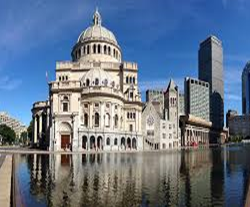 which states that “ The Church officers shall consist of the Pastor Emeritus, a Board of Directors, a President, a Clerk, a Treasurer, and two Readers” (Eddy 1910). Mary Baker Eddy is the Pastor Emeritus; she abolished the role of pastor completely in 1894 so there are no Christian Science clergy. Baker Eddy included several committees in her institutionalization of the church. These include the Board of Education and the Board of Lectureship. The Committee on Publication was tasked by Eddy with directly addressing any misinformation appearing about Christian Science. Branch churches are administered by their local members who must abide by the Manual. No emendations to the Manual (or the by-laws) can occur without the written permission of Mary Baker Eddy.
 Rooms where material approved by the Board of Directors would be available to the public to read free of charge. Staffed by Christian Scientist volunteers, the Reading Rooms also distribute copies of Christian Science materials.
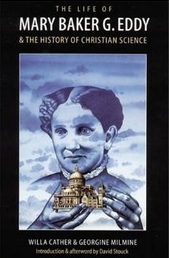 featured poorly researched articles about Eddy. A scathing fourteen-installment series by Willa Cather and Georgine Milmine appeared in McClure’s Magazine between 1906 and 1908. In response to what she believed were unfair press reports, Eddy founded the Christian Science Monitor in 1908 in order to print the news fairly and thoroughly. Ironically, the Monitor has gone on to win several Pulitzer Prizes.
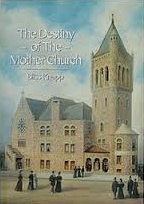 of Bliss Knapp emerged. Knapp had been a devoted follower of Eddy and had written a book in 1947, The Destiny of the Mother Church , which proclaimed Eddy to be the Second Coming of Christ (Knapp 1991). In light of the large amount of funding this would bring to the recently diminished church coffers, the Board of Directors agreed to publish the book. Many Christian Scientists took issue with this decision and several protesting groups coalesced. This was not the first time the issue of who exactly Eddy was had presented itself, and Eddy herself had prohibited what she called “deification of personality” when she felt some followers where aligning her too closely with Jesus (Eddy 1894). The protestors saw Eddy’s prohibition of “deification” as clearly precluding publication of the Knapp text. The Board excommunicated several vocal protesters, a move that was rare but not unprecedented. Several key staff resigned, and the Board found themselves in a very contentious Annual Meeting in 1993. Ultimately, the Board left the decision of whether or not to carry and/or sell the Knapp book up to the local Christian Science Reading Rooms, and published a wide range of other biographies of Eddy. By the time the Mary Baker Eddy Library and archives opened in 2002, the protests were subsiding.
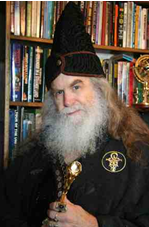 Missouri. As a child, Zell read the Greek myths and fairy tales, which instilled in him an affinity for myth and magic. He also had paranormal experiences, such as experiencing visions from his grandfather’s life. Zell enrolled in Westminster College in Fulton, Missouri in 1961 and was married for the first time in 1963. Timothy and Martha (McCance) Zell had a son that same year. Zell went on to receive his undergraduate degree in psychology from Westminster in 1965, enrolled as a graduate student at Washington University in St. Louis for a short time, and then enrolled in Life Science College in Rolling Meadows, Illinois. Two years later was awarded a Doctor of Divinity degree.
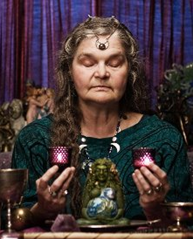 organizations. He separated from and divorced his first wife, and had brief relationships with other women before marrying Diana Moore (Morning Glory Ravenheart) at a public Pagan handfasting. Moore, who was born in 1948 in Long Beach, had attended Methodist and Pentecostal churches during her childhood, but broke with Christianity as a teen. She began practicing witchcraft at seventeen and changed her name to Morning Glory at twenty. She was married for a short time before meeting and soon marrying Zell in 1973. The couple sustained a lifelong, but sexually open (polyamorous), marital relationship. Among these relationships were the formation of a triad with Diane Darling, who became editor of Green Egg in 1988, and a triad with Wolf Dean Stiles, which led to the adoption of Ravenheart as a family name for all three partners.
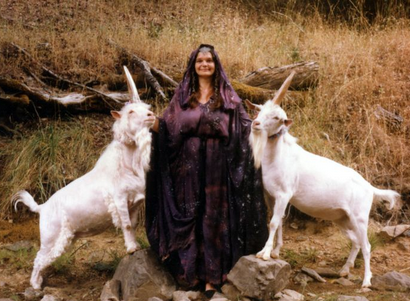 Ecosophical Research Association, Universal Federation of Pagans, Grey School of Wizardry). The Ecosophical Research Association offered a source of income for a time as the Zells produced unicorns by breeding and surgically altering white goats, four of which were sold to Ringling Bros. Barnum & Bailey Circus in 1984. The following year the organization, which aims to “explore the territory of the archetype, the basis of legends and the boundaries between the sacred and the secular” and specializes in crypozoology, undertook a search for mermaids in the South Seas (Adler 1975:317). The Grey School of Wizardry, founded in 2004, is a magickal education system that is organized online.
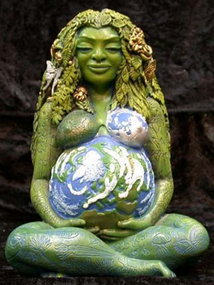 of the Goddess,” which was later developed into “The Gaea Thesis.” It posits that “the entire Biosphere of the Earth comprises a single living organism” and is composed of all living life-forms (Cusack 2010:65; Adler 1975:298). Zell (2010) traces the evolution of the Biosphere of the Earth back to a single living cell:
 credited with inventing the concept of polyamory in “A Bouquet of Lovers.” As she describes polyamorous relationships, “The goal of a responsible Open Relationship is to cultivate ongoing, long-term, complex relationships which are rooted in deep mutual friendships.” Polyamory is thus one of the expressions of human interconnectedness and protests against divisive exclusivity. Open relationships are sustained by honesty, transparency, mutual agreement. A further provision is that unprotected sexual relationships may by practiced only within the group, which is the “Condom Compact” (Morning Glory Zell n.d.).
 heritage, decries the absence of meaningful ritual in American culture:
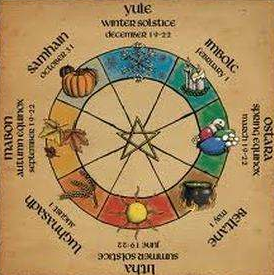 commonly referred to as the “Wheel of the Year.” These include days of the solstices and equinoxes and the cross quarter days. Many members ritually observe the Full and/or New Moon monthly. Waterkin typically believe that the ritual observation of the “Wheel of the Year” and cycles of the Moon can bring about a communion with Divinity through attunement of one’s life with the waxing and waning of Nature. The changing seasons, the waxing and waning of darkness and light, are understood as an expression of the life cycle of Divinity that includes birth, love, death and rebirth. CAW also holds initiation, handfastings, vision quests, retreats and workshops of various kinds.
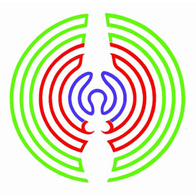 each of which contains three concentric Circles. The Rings are described as “ an initiatory path leading ever inward , towards the consciousness of the Goddess/God Within, with a threefold purpose of a) self actualization, b) connection / tribal involvement and c) service” (Maureen n.d.; “The Church of All Worlds n.d.).
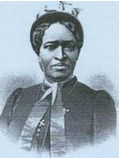 freedom and later the freedom of his wife, Mariam Matthews Berry and five children. Amanda’s father was active in the Underground Railroad and their home served as a prominent station. She grew up in Maryland and central Pennsylvania, often working as a servant in other people’s homes. Her formal education consisted of three-months’ schooling. Her parents taught her to read and write. Amanda Berry married Calvin Devine in September 1854. They had one child, Mazie, who was her only child to live to adulthood. Calvin Devine died while serving in the Civil War. Amanda Berry Devine moved to Philadelphia where she continued to do housework and cooking for others. There she met James Smith whom she married in 1865. They moved to New York City where she took in people’s washing and cleaned houses. James Smith died in November 1869, and Amanda Berry Smith never remarried.
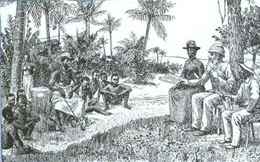 Woman’s Christian Temperance Union (WCTU) in 1875, shortly after it was organized. She played an active role in its meetings, both in the United States and later in England. In Liberia, she urged her listeners to sign a pledge to forego drinking alcohol and organized temperance societies. After eight years, she left Africa, visiting England, Scotland, and Ireland for several months before returning to the United States in September 1890. She maintained her dual emphases on temperance and evangelism, preaching at camp meetings and churches. She traveled to California and Canada before traveling to Great Britain and Ireland in 1893.