LOUISA MATILDA JACOBS TIMELINE
1833 (October 19): Louisa Matilda Jacobs was born into slavery in Edenton, North Carolina to Harriet Jacobs and Samuel Tredwell Sawyer.
1833: Jacobs was baptized at St. Paul’s Episcopal Church, Edenton, NC.
1835: Jacobs’ mother, Harriet Jacobs, went into hiding to escape her lecherous master. Harriet Jacobs’ grandmother, Molly Horniblow, raised Louisa and her brother after Samuel Tredwell Sawyer secretly purchased them from James Norcom.
1840: Six-year-old Louisa Jacobs was taken North by her father, living first in Washington, D.C., then taken to Brooklyn, New York to live with Sawyer cousins.
1842: Jacobs was reunited with her mother in Brooklyn, New York.
1844: Jacobs moved to Boston, Massachusetts with her mother.
1849–1850: Jacobs attended the integrated Kellogg Young Ladies’ Domestic Seminary, Clinton, New York.
1850: The U.S. Congress passed the Fugitive Slave Act, which required seizure and return of runaway slaves who had escaped from slave-owning states; Congress repealed it in 1864.
1854 (August 1): Jacobs attended the Massachusetts Anti-Slavery Society celebration at Abington, Massachusetts.
1856 (May 8): Jacobs and her mother attended the American Anti-Slavery Society meeting held at Shiloh Presbyterian Church, Manhattan, New York.
1856 (July) – 1858 (April): Jacobs lived with newspaper columnist Fanny Fern (Sara Payson Willis Parton) as governess and companion to her daughters.
1857 (March 6): According to the U.S. Supreme Court decision in Dred Scott v. Sandford, African Americans were not and never could be U.S. citizens.
1860: Abraham Lincoln elected president of the United States.
1860: Jacobs worked as a clerk in Dr. Samuel T. Birmingham’s Indian Botanical Drug shop.
1860 (January 20): Jacobs attended the Twenty-sixth National Anti-Slavery Anniversary meeting, Boston, Massachusetts.
1861 (January): Jacobs’ mother, Harriet Jacobs published Incidents in the Life of a Slave Girl.
1861 (April 12): The American Civil War began.
1863 (November) – 1865: Jacobs joined her mother in Alexandria, Virginia.
1864 (January 11): The Jacobs Free School opened with Jacobs as a teacher.
1865 (January): The Ladies Sanitary Committee of the African Episcopal Church of St. Thomas in Philadelphia, Pennsylvania sent the proceeds from a fundraising fair to Louisa Jacobs in Alexandria, Virginia.
1865 (May 9): The American Civil War ended.
1865 (July 20): Jacobs and her mother left Alexandria, Virginia.
1865 (November 20): Jacobs founded Lincoln Freedom School (also known as the Hospital School) in Savannah, Georgia and boarded with Dr. Alexander T. Augusta and his wife, Mary.
1865 (November 29): Jacobs’ father, Samuel Tredwell Sawyer, died in Bloomfield, New Jersey.
1866 (July): Jacobs and her mother left Savannah, Georgia.
1867 (February–April): Jacobs lectured with the American Equal Rights Association across upstate New York.
1867–1868: Jacobs and her mother traveled to England to raise funds for orphans and the elderly in Savannah, Georgia.
1868–1869: Jacobs taught at the Thaddeus Stevens School in Washington, D.C.
1869 (March 10): Jacobs brought a lawsuit against the Atlantic Navigation Company for discrimination in Savannah, Georgia.
1869–1877: Jacobs and her mother ran boarding houses in Cambridge, Massachusetts.
1873 (December 19): Jacobs’ uncle, John S. Jacobs died in Cambridge, Massachusetts.
1879–1881: Jacobs and her mother established a boarding house for white politicians in Washington, D.C.
1882 (Summer): Jacobs worked in a jam and jelly business in Willowbrook, near Auburn, New York.
1883: Jacobs started a jam, jelly, and catering business in Washington, D.C.
1884–1886: Jacobs taught at the Girls Industrial School of Howard University, Washington, D.C.
1885: Jacobs and her mother established a new boarding house for African American patrons in Washington, D.C.
1888: Their boarding house closed and Jacobs and her mother took domestic jobs.
1891 (April 9): Jacobs hired by the Federal Census Bureau for three months.
1891 (Fall): Jacobs hired by the U.S. Treasury Department for three months.
1897 (March 7): Harriet Jacobs, Louisa’s mother, died in Washington, D.C.
1898–1903: Jacobs worked as matron at the National Home for the Relief of Destitute Colored Women and Children in Washington, D.C.
1903–1908: Jacobs worked as a matron/preceptress at Miner Hall, Howard University, Washington, D.C.
1914: Jacobs moved to the home of Edith Willis Grinnell in Brookline, Massachusetts.
1917 (April 5): Louisa Matilda Jacobs died in Brookline, Massachusetts.
BIOGRAPHY
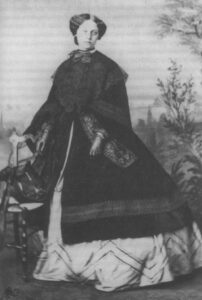
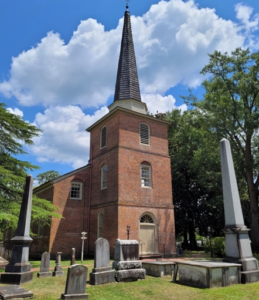
Louisa Jacobs, [Image at right] the daughter of Harriet Jacobs, author of Incidents in the Life of a Slave Girl (1861), and Samuel Tredwell Sawyer, a wealthy white politician, was born into slavery in Edenton, North Carolina. Sawyer had shown interest in Harriet, who responded to his interest partly because she thought that it might keep her lecherous master, Dr. James Norcom, from continuing his sexual pursuit of her. With Sawyer, Harriet had a son, Joseph, born about 1830, and then, three years later, she gave birth to a daughter (Yellin 2008:27–28). One Sunday when Norcom had left town to see a patient, Harriet and her grandmother took the children to St. Paul’s Episcopal Church to be baptized [Image at right below]. The daughter of Harriet’s father’s master offered to be godmother and to give her own name to the infant,
Louisa Matilda (Yellin 2004:40).
Because Norcom continued his relentless harassment, Harriet finally made the decision to go into hiding. To flush Harriet out, Norcom put two-year-old Louisa, five-year-old Joseph, their uncle and Harriet’s brother, John S. Jacobs, and Harriet’s Aunt Betty, into the local jail. At about the same time, Louisa contracted measles. Vulnerable because of the lack of a nutritious diet, the measles affected her eyes, and Norcom attempted to treat her. She sobbed and begged for her family at the jail; Norcom gave up trying to treat her and sent her back. The disease “left her eyes affected” for the rest of her life (Jacobs 1861:154–56; Yellin 2004:46).
To remove her family from Norcom’s authority, Harriet Jacobs arranged with Sawyer to purchase her children and her brother secretly through a slave trader. After finalizing the sale, Sawyer allowed Harriet Jacobs’ maternal grandmother, Molly Horniblow, to raise Louisa and Joseph. Harriet described her grandmother, who attended St. Paul’s Episcopal Church, as faithful and devout. A dominant influence in Harriet’s life, Horniblow “most earnestly [strove] to make us feel that [slavery] was the will of God: that He had seen fit to place us under such circumstances; and though it seemed hard, we ought to pray for contentment” (Jacobs 1861:28). When Louisa and Joseph arrived at her home, “the happy grandmother cuddled the little ones to her bosom,” Harriet Jacobs wrote. “They hugged her, and kissed her, and clapped their hands, and shouted. She knelt down and poured forth one of her heartfelt prayers of thanksgiving to God” (Jacobs 1861:163; Yellin 2004:46–47). Harriet, by that time hiding in the crawl space over her grandmother’s woodshed where she would live for almost seven years, drilled tiny holes in the wall so she could watch her children play and grow. John, Harriet’s brother, worked as Sawyer’s valet until he escaped during a trip to the North, first to New Bedford, then to Boston.
In 1840, in Louisa’s sixth year, Sawyer, who had married Lavinia Peyton, a white woman, decided he would take the child away from Edenton to be a nursemaid to his newborn daughter (Jacobs 1861:209; Yellin 2004:57–59). Harriet begged her grandmother to allow Louisa to stay with her the night before she left. The child had not seen her mother in four years, although Joseph frequently spoke of their mother and often drew his sister to play near their mother’s hiding place. In one of the most poignant scenes in Incidents, Harriet Jacobs describes their night together and extracts a promise from Louisa never to tell anyone that she saw her mother (Jacobs 1861:211–13; Yellin 2004:60). Louisa did not speak of that night until long after her mother’s death (Boit Diary, vol. 11, August 31, 1905:197).
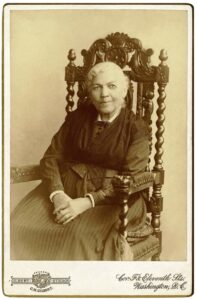
About six months after Sawyer first took Louisa to Washington, D.C. to care for his infant daughter, he sent her to Brooklyn, New York, to his cousin, James Iredell Tredwell. The Tredwells promised to care for and educate the child, then claimed that Sawyer had “given” Louisa to a daughter as a “waiting maid” (Jacobs 1861:209, 215–16; Yellin 2004:60). Meanwhile, it took Harriet Jacobs nearly two years to escape from Edenton and to make her way to her daughter. [Image at right] When she visited the Tredwell house, she discovered that Mary Tredwell had neglected Louisa’s physical care and education (Jacobs 1861:250–51; Yellin 2004:68–69). Harriet had to find a way to earn the money to support herself and her daughter before she could get her out of the Tredwell house. She found employment with the family of Nathaniel Parker (N. P.) Willis, a prominent editor and author, and began saving money to enable her to make a home for herself and her children (Jacobs 1861:254; Yellin 2004:70).
In October 1843, Louisa found torn scraps of a copy of a letter (which she had to have someone read to her), written to the Norcom family and giving instructions for how to find Harriet Jacobs (Yellin 2004:74). Harriet hurriedly made plans to join her brother in Boston before Norcom could travel to New York to force her back to Edenton. She convinced Mary Tredwell that she wanted her daughter with her for a couple of weeks, remade one of her own garments to fit the poorly clothed child, and relocated with Louisa to Boston. Moving in with friends, at first Harriet homeschooled eleven-year-old Louisa Jacobs, who suffered the shame of her lack of education (Jacobs 1861:274; Yellin 2004:77). Within ten months, N. P. Willis, whose wife had recently died in childbirth, asked Harriet to travel with him to England and take care of his daughter, Imogen. Harriet left Louisa in the care of a friend for the ten months she spent abroad. By then, Louisa had enrolled in intermediate school, the equivalent of today’s junior high school. Slavery and the Norcom family haunted the Jacobs family until 1852 when Cornelia Grinnell Willis, N. P. Willis’ second wife, paid $300 for Harriet’s freedom (Jacobs 1861:300–01; Yellin 2004:115–16). Cornelia Willis and her children would remain generous friends to Harriet and Louisa Jacobs the rest of their lives.
Meanwhile, John Jacobs encouraged the then-sixteen-year-old Louisa to attend the Young Ladies’ Domestic Seminary in Clinton, New York. Founded by Presbyterian minister Hiram H. Kellogg in 1833, it holds the distinction of being “the first racially integrated female seminary in New York, if not in the entire North” (Baumgartner 2019: 47, italics in original). Kellogg had been educated at the Auburn Theological Seminary in Auburn, New York, noted for its support for anti-slavery, women’s rights (it would become one of the first theological schools in the country to educate women), temperance, and reforms that benefited the poor. “By involving [an] ideology of Christian domesticity,” historian Kabria Baumgartner points out, “Kellogg politicized the home, and, along with it, the cause of women’s education” (Baumgartner 2019: 52). When Kellogg left the school to become the president of Knox College from 1841 to 1845, a group of Free Will Baptists took over. Kellogg administered the school upon his return to Clinton in 1847, so he would have known Jacobs during her time there between 1849 and 1850.
Her deeply religious great-grandmother and mother had influenced Louisa Jacobs, but the open-mindedness of the Kellogg school administrators and faculty may have strengthened Jacobs’ independence of thought and confidence in her faith. In an 1881 letter she wrote, “Each must be governed in religion by his own needs and convictions looking into God for the right power of action,” and many of her letters exhibit a profound faith in the love of Jesus Christ (quoted in Maillard 2017:78, 79). Any further evidence of Jacobs’ education is vague. An acquaintance of Jacobs claimed that she told him that her father funded her later education at one of the “Mass Normal Schools,” although this school has not yet been identified (Boit Diary, vol. 11, August 31, 1905:199: Yellin 2008:859–61).
Influenced by her education and the evangelical religion of the 1850s, Louisa Jacobs took to heart the mandate to engage in activism for the betterment of others. Sometimes accompanied by her mother and sometimes accompanied by friends, she attended several anti-slavery meetings. In 1854, she attended the Massachusetts Anti-Slavery Society meeting in Abington, and she and her mother attended the American Anti-Slavery Society meeting in Manhattan, New York two years later. Jacobs also attended the Twenty-sixth National Anti-Slavery Anniversary meeting held in Boston in 1860. It is probable that she attended more meetings, but the evidence is, so far, scant. Jacobs and her mother lived together off and on for most of their lives and engaged in social justice activism, especially the anti-slavery cause and women’s advancement. When not living with her mother, Jacobs lived with both African American families and white families.
By 1856, Louisa Jacobs lived in New York City with the white Fanny Fern (Sara Payson Willis Parton), sister to N. P. Willis and the highest paid newspaper columnist in the nineteenth-century United States. She acted as governess to Fern’s younger daughter, and as a companion to her elder daughter, but Fern may not have paid Louisa a salary. This left her free to travel frequently to New York City, Philadelphia, or to Idlewild on the Hudson River, the home of the N. P. Willis family. There Louisa took over some of the domestic duties so that her mother could write her pseudonymous autobiography, Incidents in the Life of a Slave Girl, which she would publish in January 1861. Although it remains unclear what caused the rift, by April 1858, Fern forced Louisa Jacobs to leave (Yellin 2004: 132–33). Upon her dismissal from Fern’s home, Louisa relocated to Boston and boarded with the John Jay Smith family; she found a position as a shop clerk for Dr. Samuel T. Birmingham, a native botanic physician.
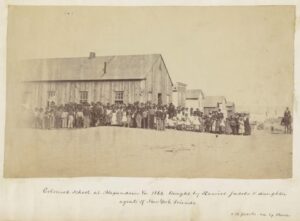
Despite the coming of the Civil War in 1861, Jacobs may have continued working at the shop almost until November 1863, when she joined her mother in Alexandria, Virginia, to teach so-called “contrabands” at the Jacobs Free School. [Image at right] (Contrabands was a term used to describe people who had escaped enslavement in the Confederate states; considered enemy property, they did not need to be returned.) In addition to her duties at the Jacobs Free School, Louisa taught Sunday school and helped her mother distribute clothing and other necessities to the needy in the city. Additionally, she visited several hospitals and the sick in their homes. The Ladies’ Sanitary Committee of the African Episcopal Church of St. Thomas in Philadelphia, Pennsylvania sent the proceeds of a fundraising fair to Louisa Jacobs in January 1865. Members of the committee had long known the Jacobses and felt assured that Louisa would distribute its contributions to the neediest people and soldiers in Alexandria (Goodier 2024:45, 47).
Exhausted by the time the war ended in April 1865, Louisa Jacobs’ doctor advised her to rest. Instead, she chose to travel again, viewing Lincoln’s body as it lay in state in Washington, D.C. (Yellin 2004:187), then helping her mother and a group of white women distribute clothing to the poorest people of color in Richmond, Virginia. By November, she and her mother moved to Savannah, Georgia.
In Savannah, Jacobs taught at a school she founded and named the Lincoln Freedom School, eventually located on the premises of the new freedmen’s hospital. The Jacobses boarded with Dr. Alexander T. Augusta and his wife, Mary. They had met Dr. Augusta, the first African American doctor to hold a commission with the rank of Major in the Union army, in Alexandria (Yellin 2004:194, 199). It is not clear when Louisa Jacobs learned that her father, Samuel Tredwell Sawyer, had died November 29, 1865 in New Jersey. Louisa and Harriet remained in Savannah until July 1866.
Then, from February to April 1867, Louisa Jacobs became a lecturer and toured with the American Equal Rights Association to promote universal suffrage across upstate New York. A friend, Charles Lenox Rémond (1810–1873) may have convinced her to join the tour that included Susan B. Anthony (1829–1906), the Reverend Olympia Brown (1835–1926), and several other well-known activists (Goodier 2021:198, 203). They spoke in at least twenty-eight cities and towns along the Hudson River and the Erie Canal (Yellin 2008:682–85). Again, the venture into public speaking, like those into teaching, lasted only a short time. By December of that year, Louisa and her mother were on their way to England to raise money for a home for orphans and old folks in Savannah. They met with little success. The following fall, Jacobs taught a semester at the Thaddeus Stevens School in Washington, D.C., named after the staunch abolitionist and architect of Reconstructionist programs to help newly freed people. It is not clear why she left the position. Perhaps her mother again asked for her help.
Louisa spent the next two and a half decades assisting Harriet Jacobs run boarding houses, first in Cambridge from 1873 to 1877, where they catered to Harvard professors and tutors. In 1873, her beloved uncle, John S. Jacobs died, and Louisa convinced prominent abolitionist William Lloyd Garrison (1831–1865) to officiate at his funeral. Louisa and Harriet relocated to Washington, D.C. in 1877, and ran a boarding house which accommodated white politicians they knew from Massachusetts, including William Crapo (1830–1926) and William Claflin (1818–1905). Running boarding houses required such arduous physical work that Louisa Jacobs often tried other ways to contribute to her and her mother’s support. She spent the summer of 1882 running a jam and preserves business at Willowbrook, a farm located on Lake Owasco, near Auburn, in upstate New York (Maillard 2017:75). For several summers in Washington, she ran her own preserves and pickle business. For two years, beginning in January 1884, Louisa taught for the Industrial School at Howard University, but the school failed, and therefore the university did not rehire her in the fall of 1886. In the early 1890s, she worked two temporary jobs for the U.S. government, once for the Census Bureau and once for the Treasury Department. Periodically, both she and her mother returned to live-in domestic work when they could not find boarders, or could not rent a house, or all other ways of making money eluded them.
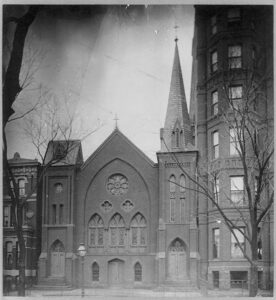
During their time in Washington, D.C., Louisa often visited Francis Grimké (1850–1937), pastor of the Fifteenth Street Presbyterian Church, [Image at right] deepening her relationship with her third cousin, his wife, Charlotte (1837–1914). Francis Grimké also visited Louisa and her mother in their home and presided over at least one of the dinners they prepared for elderly women. When Harriet Jacobs died on March 7, 1897, Grimké, probably at Louisa Jacobs’ request, offered the eulogy at her funeral (Yellin 2008:762, 767, 827–30). Jacobs took her mother’s body to be buried in the family plot at Mount Auburn Cemetery in Cambridge, Massachusetts.
Although she often traveled to visit friends in New England, Louisa Jacobs resided in Washington, D.C., finding ways to support herself. From 1898 until 1903, she worked first as an assistant matron, then as matron at the National Association for the Relief of Destitute Colored Women and Children. Despite a diagnosis of angina pectoris, she returned to Howard University, working as a matron/preceptress from 1903 to 1908 for a salary that included room and board (Yellin 2004:264).

It is not clear how she supported herself or if she shared a home with someone in the years after her retirement at about the age of seventy-five, although at least one of the Willis children, Grinnell (also known as Nelt), a textile merchant and philanthropist in Morristown, New Jersey, sent her a monthly stipend. Jacobs traveled frequently, visiting friends, especially in the Boston area. By 1914, she moved permanently into the Brookline home of Edith Willis Grinnell (1853–1938). [Image at right] It is not yet clear how involved in the Episcopal Church of Our Saviour, less than a block from her home, Louisa became, but when she died on April 5, 1917, the church hosted her funeral, and its pastor, Reginald Heber Howe, officiated. Her friends buried her next to her mother and near her Uncle John in the family plot she had purchased at Mount Auburn Cemetery.
TEACHINGS/DOCTRINES
Despite being born into slavery and enduring a lifelong struggle to make a home for herself, Louisa Jacobs must be understood as a member of the elite. Like other African Americans of her time, she was “literate, ambitious, and ‘race conscious’ . . . and exercised some control over her destiny and environment” (Lapsansky 1984:4, 7). Her frequent moves and varied careers may be interpreted as representing her autonomy. One acquaintance described her as “a woman of rare beauty, refinement, and intelligence, and in character high toned, religious and true” (Boit Diary vol. 11, August 31, 1905:199). Known also for her grace and compassion, she moved elegantly through both African American and white communities. Several observers claimed that she could pass as white, but she apparently did not do so intentionally, and she proudly identified as Black. Her religious commitment facilitated her entry into both Black and white communities, for consistent church attendance and an unwavering faith in a benevolent God affirmed her as worthy of elite status.
Any nineteenth-century single woman like Louisa Jacobs found steady church attendance to be a way to clearly announce her respectability. That respectability would have been critical for making a good impression on others. As a single woman of color who relocated and/or traveled along the Eastern Seaboard throughout her life, frequently living in the homes of others, her presence in a church brought Jacobs friendship, community, and the comfort of her Christian faith. It also provided the bona fides of respectability and trustworthiness. However, her independence of mind allowed her to take a day off from church services without apology or regret, and she expressed her religious views and her relationship with God with “confidence and certainty.” As she wrote to her friend, Genie Webb, “God understands the situation and will judge accordingly” (quoted in Maillard 2017: 16, 90).
Very few nineteenth-century African American women left personal records of their thoughts, or their religious doctrine or convictions, so it is remarkable that fifty-eight letters Louisa Jacobs wrote between 1879 and 1911 are extant. References to God, church, and her religious perspectives saturate the letters and provide us with a sense of the importance of a religious life to Jacobs and to other women of her class and race. Still, Jacobs “was devout enough,” yet not “obsessed” by religious doctrine or teachings as some of her friends and many other women of the time were (Maillard 2017:14). She went to various churches in the communities where she lived. In Boston from 1859 to 1863, she probably attended the African Meeting House (variously known as the African Baptist Church of Boston, the First Independent Baptist Church, or the Belknap Street Church), which connected her with Reverend J. Sella Martin (1832–1876), an abolitionist. She attended the Bethel African Methodist Episcopal Church during her time in Civil War Alexandria. During various periods, she attended services at Episcopal, Presbyterian, and Unitarian Churches (Maillard 2017: 79), and, very likely, the Baptist church or the Anglican church when staying with friends in upstate New York or New Jersey. When Genie Webb questioned her about attending the Unitarian Church, she responded,
I am too well founded in my faith and love of Jesus Christ to fear a Unitarian doctrine. It is not a fear that I will be influence[d] by the doctrine but a matter of principle that I should go to a church where the divinity of the Son of God is denied. It is sad, unfortunate that a body so large and generous in humanitarian feeling and doing should put from them so precious a truth. Never fear for me[,] child. I have not been since, but may go again for the music is heavenly and does me good (quoted in Maillard 2017:79).
Secure in her faith, she could listen to views that challenged her own.
Louisa Jacobs appreciated the music, the ceremony, and the formality of various church services. Neither gullible nor complacent, she listened critically as ministers preached their sermons and then made up her own mind about what she accepted as truth. She had extremely high expectations when it came to the sermons, however. For example, when Alexander Crummell (1819–1898), the founding minister of St. Luke’s Episcopal Church in Washington, D.C., preached a sermon on the greatness of Christ on Thanksgiving Day 1879, two months after the church opened its doors, Jacobs remarked that listeners “feel the truth and wisdom of his words but not the soft tenderness that melts and bows the heart” (quoted in Maillard 2017: 57, 177n11). In Jacobs’ opinion, Crummell’s sermon did not inspire his listeners to follow the example of Jesus Christ to commit themselves to help those who suffered.
The evangelistic spirit of the nineteenth century, linked so closely with an energetic activist mindset, dominated Jacobs’ life. From as early as the 1840s, she moved through anti-slavery circles, surely influenced by her uncle, John S. Jacobs (1815/17–1873), who spoke on the lecture circuit until he went to sea in 1855. In the 1850s, she attended anti-slavery conventions, donating money when she could, although she did not hold office. She helped freed people during the Civil War, and she lectured for universal suffrage after the war. Even as she struggled for a home and livelihood, she helped organize holiday meals for poor, elderly women. Her commitment to helping others may have extended to her choice of a position with the National Home for Destitute Colored Women and Children. As many of her letters written in the 1870s and 1880s show, living her faith through moral action remained intrinsic to her life and wellbeing. All evidence from those who knew her and the letters she wrote point to the sincerity of her convictions.
With the Civil War (1861–1865), the United States “embarked on a new relationship with death,” with the loss of hundreds of thousands of soldiers (and perhaps as many civilians) because of war, disease, and starvation. For those who lived through the war, the “texture of the experience, its warp and woof, was the presence of death” (Faust 2008:xi–xiii). Long before and long after the Civil War, Jacobs nursed sick and dying friends, and during the war she helped her mother nurse those in need in Alexandria. When in 1868 Elizabeth Stuart Phelps (1844–1911) published The Gates Ajar, a timely and “enormously popular” book about heaven and an afterlife (it sold 80,000 copies in the United States and more than 100,000 copies in England, and was then translated into at least four other languages), Phelps sought to make sense of the “spiritual disquiet created by the advance of science and the erosion of traditional Christianity” (Sootin Smith 1964:vi). Phelps’ book stressed Liberal Christianity, along with the “immanence of God, the humanity of Christ, and the perfectibility of man,” which other authorities had done, but it also added the “concrete promise of personal immortality” (Sootin Smith 1964:xxiv–xxv). For many Americans, the book helped make sense of the deaths of so many of the people they had once known. People could find solace in the knowledge that they would be reunited with the fathers, sons, brothers, lovers, or husbands they had lost in the war. A perfect heaven awaited them after their own deaths.
Many of the letters Jacobs wrote in the late 1870s and 1880s highlight the struggle she faced as she sought to reconcile herself to the loss of those she loved most deeply. When her dear friend, Delie Sanders Chew, died of consumption (tuberculosis) on November 5, 1879, she described to Genie Webb how she felt:
It was a rare friendship, such as comes but once-in-a-lifetime. God has seen fit to break the link, and I bow to his behest, looking beyond sorrow and self to that hereafter, where my heart is, there to be united to the lost and loved through the endless ages of eternity (quoted in Maillard 2017:55).
Yet, she still suffered the agony of the loss of her friend: “This thought is a help to me and yet it does not comfort me now as it ought. . . . Oh! If our hearts were not so clinging in their selfishness we would not mourn a day. And yet I believe God does not chide us for that since it is not rebellious grief” (quoted in Maillard 2017:55).
Although there is no evidence that Jacobs read Phelps, she did take comfort in her reading of the poet Adelaide Proctor (1825–1864) and the late nineteenth-century ideology of Mizpah, a “belief that an all-understanding God watched over separated friends and preserved their bond.” Mizpah applied to both temporary absences, offering “a nearness and strengthening in friendship when friends mention one another in their prayers,” as well as those wrought by death. In another letter to Webb, she quoted Proctor’s inspirational poem, “One by One,” thereby helping each other look “beyond sorrow” and to remind them of “faith, humanity, and hope” (Maillard 2017:15–16, 55–56, 176n8). Especially comforting are Proctor’s lines regarding sorrow: “Do not look at life’s long sorrow; See how small each moment’s pain; God will help thee for to-morrow, so each day begin again” (Proctor 1873:9). Rather than focusing on death and the possibility of heaven, one must live fully in the moment, attending to the tasks of one’s own life.
Jacobs relied on her faith to comfort herself and those she loved, yet she could not accept the idea that those friends who had died watched over those they left behind. As she wrote to Webb in 1883:
I used to believe there was recognition with the spirits of the other world of what befell those whom they had loved here, but somehow the belief has left me. How could it be if Heaven is a place of perfect happiness? No, the discordance and trials of life would distract and disturb happy souls” (quoted in Maillard 2017:111).
Louisa Jacobs exhibited leadership primarily in her frequent role as a Sunday, or Sabbath, school teacher. The record is incomplete, but we know Jacobs taught Sunday school during the time she lived in Alexandria, Virginia, from 1863 to 1865, and again during the 1880s at St. Luke’s Episcopal Church in Washington, D.C. (Maillard 2017:14, 90). It is likely she taught Sunday school wherever she lived long enough to establish herself. She may have taught Sunday school in Boston and Savannah; many day schoolteachers also taught Sunday school. Sunday school teachers used any opportunity they had to reinforce the spiritual mission of the congregation they represented.
Sunday schools run by African American congregations played a critical role in furthering the spiritual mission of the church at the same time they reinforced the education of the children (Boylan 1988: 9). Both the American Sunday School Union, and after 1882, the African Methodist Episcopal Church Sunday School Union, published sources for teaching materials. Sunday schools throughout the United States “complemented each other” in terms of education, but they may have provided the only schooling some African American children received (Boylan 1988:4, 22, 29–30). Sunday school could help children learn to read and write, as well as to “develop character, learn good manners, and gain a grounding in Scripture” (McMillen 2001:44). Jacobs did not leave records of her lesson plans, but we can imagine that she taught hymns, prayers, the Ten Commandments, and shared a sense of her own faith and devotion with the children.
ISSUES/CHALLENGES
The most obvious challenge Louisa Jacobs faced, like virtually all people of color in the United States, was racism, with that racism most particularly apparent when traveling. In 1866, when Jacobs and her mother tried to leave Savannah, they faced racism at least twice. Despite Louisa having purchased first class tickets to travel aboard the steamship Leo, the captain forced them off the ship because they refused to travel in steerage, and they had to sail on a different ship. They eventually arrived in New York, but Jacobs sought restitution through the courts (Yellin 2008:669–71). According to the Daily Phoenix (a Columbia, South Carolina newspaper) issue of March 18, 1869, Louisa Jacobs took the parent company of the Leo, the Atlantic Navigation Company, to court. She lost the case when members of the jury were unable to agree on a verdict. That Jacobs did not bring other lawsuits may indicate the futility of doing so, or it may be that she did not have as much trouble traveling when she did so alone.
Another challenge Louisa Jacobs faced would have been Christian churches’ reluctance to take a public stance against the institution of slavery prior to the Civil War. As early as 1839, Maria Weston Chapman quoted the Reverend J. T. Woodbury, who referred to the selling of the enslaved: “Though the auctioneer is a church member, the seller, and the buyer, and the poor slave, all members of the same Church, yet the Church does not censure the deed. It is all right” (Chapman 1839:17, italics in the original). Because members of the congregations of most churches benefited in some way from slavery, and the issue remained controversial even into the time of the Civil War, many ministers, both Black and white, avoided the topic in their sermons. But slavery could not be ignored, and in the 1840s, several churches split over the issue: the Baptist church in 1843, the Episcopal church in 1844, the Methodist church in 1845, and the Presbyterian church in 1847 (Yellin 2008:liv). Even some of the Black churches recoiled from announcing anti-slavery views publicly, perhaps reluctant to draw too much attention to their institutions. For example, as late as 1848, the African Episcopal Church of St. Thomas in Philadelphia would not let Frederick Douglass, Martin R. Delany, or Charles Lenox Rémond use its building for anti-slavery speeches, despite many of its parishioners being involved with the Underground Railroad (Douglass 1848:16; Quarles 1969:83).
When the Fugitive Slave Law, requiring federal marshals to return any people who had escaped slavery to their former owners, passed in 1850, it prompted a more public response from ministers. Reverend Thomas H. Skinner (1791–1871), educated at Edenton Academy and a lawyer in the town for several years, and who surely knew Harriet Jacobs, gave a Thanksgiving Day sermon in New York in response to the new law. He preached compliance with the law, stating that Christianity did not teach adherents to “resist directly the civil power, except where that power forbids the exercise of true religion; and that authorizing slavery simply does not amount to this.” While he affirmed “the intrinsic and enormous evil of Slavery,” the law must be obeyed. Furthermore, “If the destruction of the government would be for the advantage of the slaves, would this compensate the evil in which it would involve the interests of the nation and of mankind?” (Skinner 1850:24, 25, 26, 28). Obedience to the law remained the only course of action, although Skinner insisted that those who disagreed with the law could petition the government to change that law.
Skinner’s friend Albert Barnes (1798–1870), a Presbyterian minister, argued that slavery “periled the existence of the American Union” (Barnes 1857:8). Furthermore, Barnes argued, because the “influence of the church on all moral questions is so great,” the subject “must be agitated and discussed in the churches” (Barnes 1857:153). Certainly, he and Skinner were not the only preachers who abhorred the institution of slavery. We have no evidence of how Jacobs felt about the lack of a clear anti-slavery stance on the part of the church, or on its role in helping those in need. It is possible she essentially overlooked that lack, since her own faith in God never faltered. She did not need the church or a minister to tell her the difference between right and wrong.
After the Civil War, during a period of debates about the status of no longer enslaved women and men, controversy arose over who should obtain voting rights. Most men, both African American and white, considered the question of women’s right to the ballot as a “‘distraction’ to what they perceived as the more ‘urgent cause of black [male] rights’” (Goodier 2021:198). Jacobs, who instinctively chose moderate methods to express her views when she joined the tour, gave a speech in Troy, New York, recorded by a reporter. She argued that the “corruptions of the ballot box” would continue if women did not gain the right to vote along with men, and affirmed that:
The nation needs woman’s assistance and the support which her voice in its affairs would bring it. Full and large justice to the women of the land and to all the men is the only safety of the hour (quoted in Goodier 2021:207).
Jacobs left the tour in April, before its completion, although it is not entirely clear why she did so. It may have been because of the increasing racism of the mainstream movement. Later, Jacobs’ friend, Charlotte Forten Grimké articulated what both women thought about the racism of the women’s suffrage movement when she observed that it “strengthen[ed] a most unjust and cruel prejudice” (Grimké 1898:5). Nonetheless, Jacobs continued to support suffrage for women, since when Susan B. Anthony, one of the most prominent leaders of the women’s suffrage movement, visited a mutual friend, Julia Wilbur, in Washington, D.C. in 1884, Wilbur invited Jacobs to join them. Two years later, Anthony visited again to attend a National Woman Suffrage Association convention held February 17–19, 1886. Jacobs agreed to distribute suffrage literature to the people she knew. It is not clear if she attended the convention, although it is likely (Goodier 2021:210).
SIGNIFICANCE TO THE STUDY OF WOMEN IN RELIGIONS
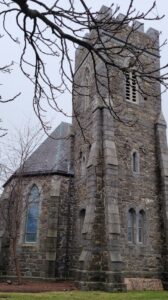
Louisa Jacobs epitomized a woman of deep faith characteristic of the evangelical tradition of the nineteenth century. Her faith and church attendance guaranteed her acceptance into the various communities where she lived. Although baptized in and buried from the Episcopal Church, [Image at right] she attended several different churches during her life, drawn more to specific churches at different times by their extraordinary music, the eloquence of their ministers, or by her own curiosity than by the doctrine of the church itself. Living at a time when many people were deeply religious, Jacobs kept her deep faith and love for Jesus Christ, yet she consistently maintained her independence of thought.
This combination of independent thought and unwavering faith also prompted Louisa Jacobs to help those less fortunate than herself. Nineteenth-century evangelical religion encouraged social justice activism, yet not all believers put that mandate into practice. Jacobs engaged in social justice activism from a wellspring of kindness and morality, usually reinforced by the teachings of the church, but she did not depend upon the church to give her the energy she expended on helping others. Despite the difficulty of determining the source of Jacobs’ care and concern for others, clearly her church attendance nurtured her faith.
IMAGES
Image #1: Photograph of Louisa Matilda Jacobs, daughter of Harriet Jacobs. In the public domain, courtesy of Jean Fagan Yellin. Unknown photographer. Picture taken between 1852 and 1870. https://cdm16694.contentdm.oclc.org/digital/collection/p16694coll52/id/635.
Image #2: St. Paul’s Episcopal Church, Edenton, NC, where Louisa Jacobs was baptized. Photograph by Chris Anderson, July 2023. Used by permission.
Image #3: Harriet Jacobs, the mother of Louisa Jacobs. In the public domain.
Image #4: The Jacobs Free School, Alexandria, VA. Taken in 1864, this photograph shows students in front of the Jacobs school. The “x” marks Harriet Jacobs. It is not certain if Louisa Jacobs is pictured in the photograph. https://encyclopediavirginia.org/jacobs-school/.
Image #5: Fifteenth Street Presbyterian Church, Washington, D.C. [1899?]. Reproduction Number: LC-DIG-ds-07872. https://loc.gov/pictures/resource/cph.3b15749/.
Image #6: 55 Monmouth Street, Brookline, MA, where Louisa Jacobs lived from 1914–1917. Photograph by Susan Goodier, October 2023. Used by permission.
Image #7: Church of Our Saviour Episcopal Church, Brookline, MA. Reverend Reginald Heber Howe officiated at Louisa Jacobs’ funeral. Photograph by Susan Goodier, October 2023. Used by permission.
REFERENCES
Barnes, Albert. 1857. The Church and Slavery. Philadelphia, PA: Parry & McMillan.
Baumgartner, Kabria. 2019. In Pursuit of Knowledge: Black Women and Educational Activism in Antebellum America. New York: New York University Press.
Boylan, Anne M. 1988. Sunday School: The Formation of an American Institution, 1790–1880. New Haven, CT: Yale University Press.
Chapman, Maria Weston. 1839. Right and Wrong in Massachusetts. Boston: Dow & Jackson’s Anti-Slavery Press. In the Massachusetts Historical Society, Boston, MA.
Douglass, Frederick. 1848. “St. Thomas Church, Philadelphia.” North Star, December 8.
Faust, Drew Gilpin. 2008. This Republic of Suffering: Death and the American Civil War. New York: Alfred A. Knopf.
Goodier, Susan. 2021. “Doublespeak: Louisa Jacobs, the American Equal Rights Association, and Complicating Racism in the Early U.S. Women’s Suffrage Movement.” New York History 101:195–211.
Goodier, Susan. 2024. “Louisa Jacobs and the St. Thomas Sanitary Committee Fair of 1864.” Pennsylvania Magazine of History and Biography 148:21–53.
Grimké, Charlotte Forten. 1898. “The Rights of the Negro,” Washington Post, February 24, p.5.
Jacobs, Harriet. 1861. Incidents in the Life of a Slave Girl, Boston: Published for the Author, Boston Stereotype Foundry. In the Massachusetts Historical Society, Boston, MA.
Lapsansky, Emma Jones. 1984. “Friends, Wives, and Strivings: Networks and Community Values among Nineteenth-Century Philadelphia Afroamerican Elites.” Pennsylvania Magazine of History and Biography 108:3–24.
Maillard, Mary, ed. 2017. Whispers of Cruel Wrongs: The Correspondence of Louisa Jacobs and Her Circle, 1879–1911. Madison: University of Wisconsin Press.
McMillen, Sally G. 2001. To Raise Up the South: Sunday Schools in Black and White Churches, 1865–1915. Baton Rouge: Louisiana State University Press.
Proctor, Adelaide A. 1873. The Poems of Adelaide A. Proctor. Boston: James R. Osgood and Company.
Phelps, Elizabeth Stuart. [1868] 1964. The Gates Ajar, ed. Helen Sootin Smith. Cambridge, MA: Belknap Press of Harvard University Press.
Quarles, Benjamin. 1969. Black Abolitionists. New York: Oxford University Press.
Yellin, Jean Fagan. 2004. Harriet Jacobs: A Life. New York: Basic Civitas Books.
Yellin, Jean Fagan, ed. 2008. The Harriet Jacobs Family Papers, Two Volumes. Chapel Hill: University of North Carolina Press.
SUPPLEMENTARY RESOURCES
Anderson, James. 1988. The Education of Blacks in the South, 1860–1935. Chapel Hill: University of North Carolina Press.
Ballard, Allen B. 1984. One More Day’s Journey: The Story of a Family and a People. New York: McGraw-Hill.
Butchart, Ronald B. 2010. Schooling the Freed People: Teaching, Learning, and the Struggle for Black Freedom, 1861–1876. Chapel Hill: University of North Carolina Press.
Crummell, Alexander. 1882. The Greatness of Christ and Other Sermons. New York: Thomas Whittaker.
Ginzberg, Lori D. 2024. Tangled Journeys: One Family’s Story and the Making of American History. Chapel Hill: University of North Carolina Press.
Luker, Ralph E. [1991] 1998. The Social Gospel in Black and White: American Racial Reform, 1885–1912. Chapel Hill: University of North Carolina Press.
Schroeder, Jonathan D. S., ed. 2024. The United States Governed by Six Hundred Despots: A True Story of Slavery. Chicago: University of Chicago Press.
Whitacre, Paula Tarnapol. 2017. A Civil Life in an Uncivil Time: Julia Wilbur’s Struggle for Purpose. Lincoln: Potomac Books/University of Nebraska Press.
Williams, Heather Andrea. 2005. Self-Taught: African American Education in Slavery and Freedom. Chapel Hill: University of North Carolina Press.
Post date:
15 March 2025
